A practical way to build a simple blackout lighting and charging setup without pretending to power the whole house, but most advice is either too generic, too gear-focused, or too late.
As an Amazon Associate, I earn from qualifying purchases.
Late April is when the grid starts feeling stress from rising temperatures and storm threats grow closer on the horizon. Power outages can happen unexpectedly, and the worst mistake is waiting for a crisis to scramble for light and phone charging options. Waiting too long isn’t about alarm, it’s about lost time, avoidable frustration, and unnecessary risk. Having a simple, focused backup lighting and phone charging setup is the low-hanging fruit of preparedness that every household can handle right now.
Why Focus on a Minimal Blackout Setup in Late Spring?
This timing is practical. Before hurricane season, before the peak heat waves, before grid stress compounds, a quick system check can reveal weak points. You don’t need a full home generator running every appliance. Instead, build a basic, reliable fallback specifically for lighting and critical communication. These two needs tap out your priority channels during blackouts: seeing safely in the dark and keeping your phone powered for information and emergency calls.
This minimal setup helps you test equipment, rotate supplies, and train household roles on the simplest, most crucial tasks. Later upgrades can expand power and function, but late April is the best reminder the core can’t be skipped.
The Most Common Mistake: Putting Off Simplicity to Chase Full-Power Solutions
Too many get stuck aiming for a full-house backup system from the start. It’s costly, complicated, and intimidating. That leads to procrastination or system paralysis. Another error is relying on a single power source with no redundancy, such as one solar panel or one power station without manual charging options.
Your goal is to focus on essentials first: light for safe movement and phone charging for communication. These two can be handled without powering the whole house, without running a noisy generator for hours, and without waiting for disaster signals. Having a reliable minimal system in place today means you’re covered when the lights go out tomorrow.
Recon Survival’s Minimal Blackout Lighting and Phone Charging System
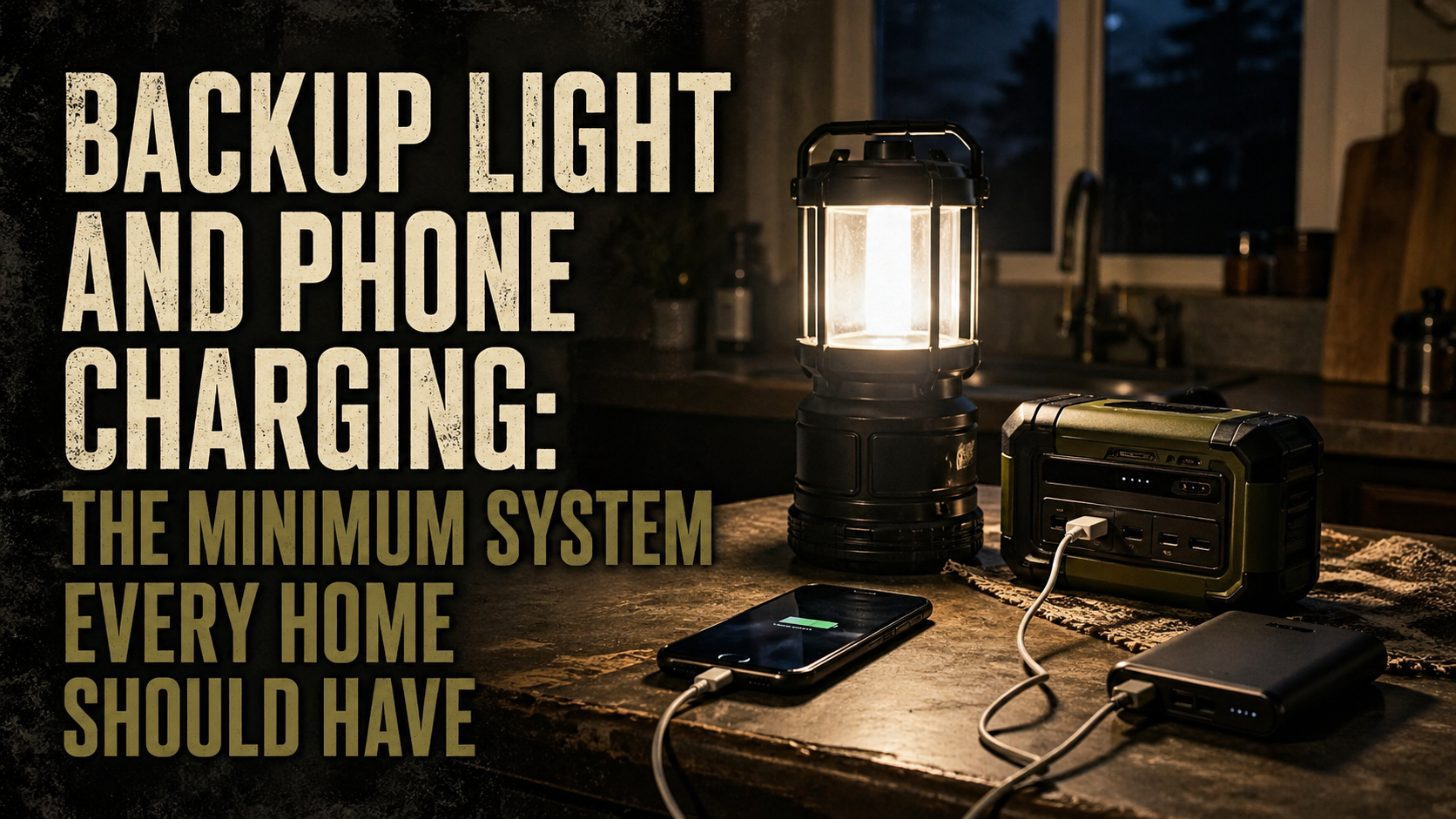
- Lighting: Use high-quality, rechargeable led lantern or flashlights rated for long run time. Keep one lantern or flashlight in every major living area and bedroom. Include fresh AA or aaa batteries stored nearby, with duplicates rotated every 6 months. Consider lanterns with adjustable brightness to conserve power overnight.
- Phone Charging: Select portable power banks with at least 10,000mAh capacity, able to recharge a typical smartphone two or three times. Store power banks fully charged in a designated spot, test charging monthly, and charge them fully after every use. Include at least one universal phone charging cable per power bank, labeled with device compatibility.
- Power Source: Have a small solar trickle charger or hand-crank charger as a backup to recharge batteries and power banks when the grid is down for days. Keep these accessible, test them quarterly, and store with full manuals.
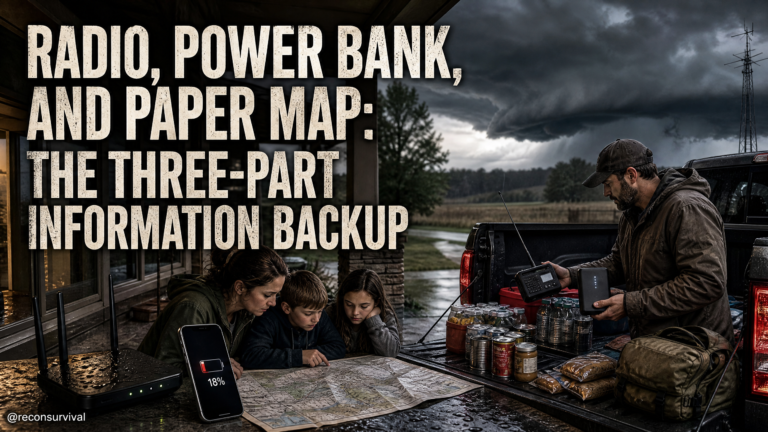
- Communication Tools: Include a battery-powered or hand-crank AM/FM NOAA weather radio with at least 7-10 days of battery life. Rotate batteries twice per year and assign a household role to monitor broadcasts during outages.
Break this System into Practical Household Steps
- Inventory and label existing lanterns, flashlights, power banks, and chargers.
- Assign one person per room responsible for the flashlight or lantern and battery rotation schedule.
- Test flashlight and lantern run times by turning them on for an hour and noting brightness and heat levels.
- Charge and test power banks monthly on phones, swapping to a spare if runtime drops under expected levels.
- Physically write down phone charging cables and device matches to prevent scrambling in the dark.
- Once a quarter, place a cup of water with a coin frozen on top in your freezer, then test thaw by late spring, this is a simple indicator of freezer function during outages or power fluctuations.
- Develop a communication plan for phone use where essential calls get priority and radios keep a broadcast link going.
Defining the Minimum Viable System Before Upgrades
The core system revolves around just two things: basic light and phone power.
- At least one lantern or flashlight per key room, each with fresh batteries and a backup set.
- At least one 10,000mAh power bank per adult in the household, with charging cables verified for all devices.
- One small off-grid charging source (solar or crank) able to recharge these items if the blackout extends beyond two days.
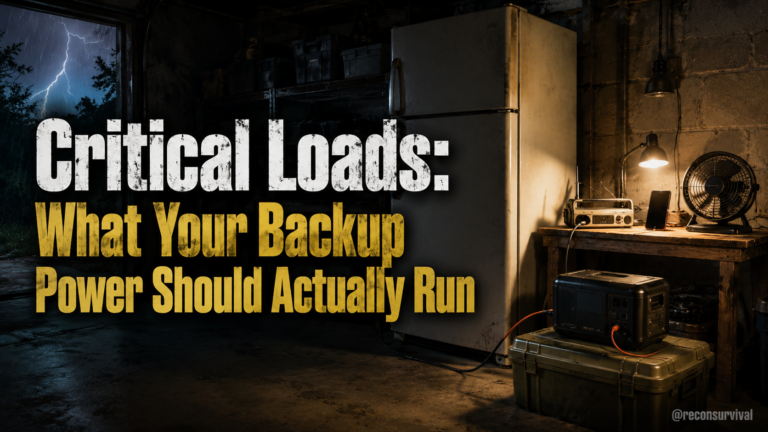
This is the bare minimum. Don’t stretch to power small appliances or run the refrigerator with this setup. Your goal is safe navigation and communication, not full-house performance.
Upgrades can come after you’ve proven the minimum system reliable: adding larger solar panels, multiple generators, whole-home battery storage, or fuel reserves. But each upgrade costs time, money, and management. Starting small gets you through immediate outages without complication.
Safety Limits, Maintenance, and Realistic Failure Points
- Never run gasoline or propane generators indoors, poison risk is fatal. Always use outside and away from windows.
- Keep carbon monoxide detectors current year-round; replace batteries at least annually.
- Avoid mixing battery chemistries to prevent damage. Use recommended chargers from manufacturers.
- Store fuels safely and legally according to local regulations, away from living areas and ventilation intakes.
- Keep cords and devices dry and protected from physical damage.
- Rotate batteries every 6 months; lose stored batteries over a year and their charge capacity drops sharply.
- Test all gear under load before a blackout, not during.
- Plan for partial failures: a power bank losing half its capacity or a lantern with reduced brightness. Always keep spare units ready.
- Remember: lightweight solar trickle chargers don’t recharge everything quickly. They extend run time but don’t replace mains power fully.
Recon Survival Takeaway
A simple backup lighting and phone charging system is the foundation of blackout readiness. Build it now, test it often, and assign clear household roles. This approach removes guesswork during outages and makes critical systems visible and actionable. Avoid chasing full-house solutions first, it’s better to have reliable light and communication than no power at all while overwhelmed.
Do Today: Practical Steps to Build Your Minimal Blackout System
- Locate and label one lantern or flashlight for each bedroom and common space. Put fresh batteries next to each.
- Check capacity and condition of portable power banks. Charge fully and list device compatibility cables.
- Acquire a small solar trickle charger or hand-crank charger if you don’t have one. Test existing chargers quarterly.
- Test run each lantern or flashlight for 60 minutes. Replace batteries if brightness dims significantly.
- Identify a safe, dry charging station for power banks and chargers. Assign a household member to manage this.
- Put a fully charged NOAA weather radio in a known spot. Replace batteries twice per year.
- Write and post a blackout action list that includes who checks light and charging gear, who fills water containers, and who monitors weather alerts.
- Freeze a coin in water to check your freezer’s emergency thaw time. This simple indicator can help you plan food safety during outages.
This minimum system isn’t flashy or complex, but it’s the critical first step to managing power outages calmly and effectively. Address these tasks now before heat waves, storms, and grid pressures stretch your readiness thin.