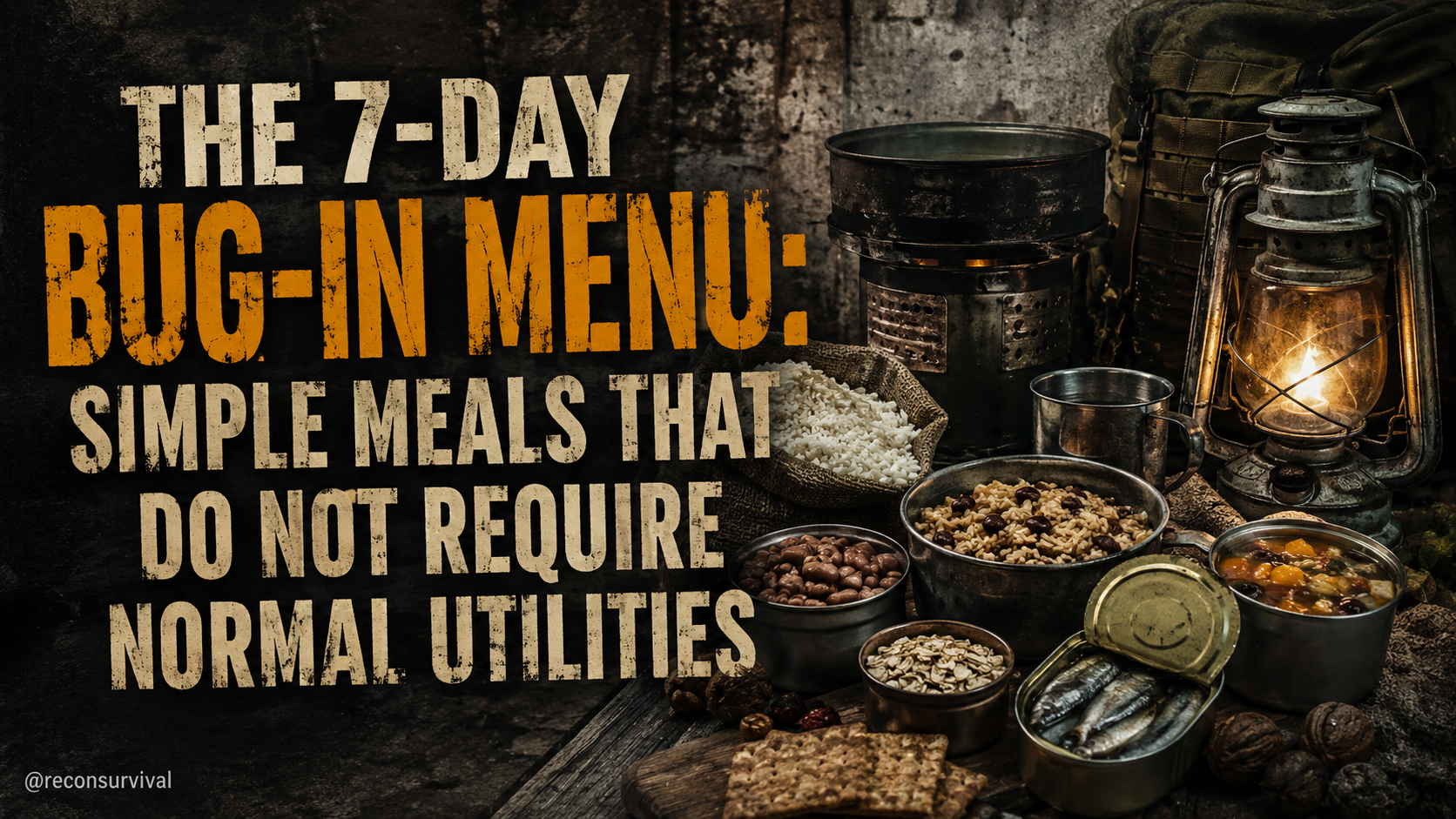
A practical way to build a practical one-week meal plan with shelf-stable foods, low water use, and limited cooking fuel, but most advice is either too generic, too gear-focused, or too late.
As an Amazon Associate, I earn from qualifying purchases.
The Real Problem with Pantries
When heat waves push power grids to the limit or a severe storm knocks out the grid for days, the most stressful element of survival is not the cold or the rain. It is hunger. Most households face a common crisis: they have boxes of food sitting on high shelves that are difficult to reach or access, yet their fridge is full of items that will spoil within forty-eight hours without electricity. The goal is not to survive a disaster in isolation but to manage the immediate transition from a normal day to a contained scenario. This guide solves the problem of building a one-week meal plan that functions without normal utilities, using shelf-stable foods, low water use, and limited cooking fuel. The aim is to build a routine that allows a family to eat comfortably while the power returns, reducing the anxiety that comes from relying on a failing refrigerator.
Why This Matters for a Realistic Bug-In
A realistic family bug-in plan focuses on the first seventy-two hours when external rescue or supply lines are disrupted. During this window, the standard advice to "grab your bug-out bag and leave" is often unnecessary or impractical for families with small children or pets who cannot walk for miles. Staying home is safer if the weather is mild, and the priority shifts to keeping the household fed and hydrated. This matters because panic often leads to food waste. If you cannot access your supplies, or if you run out of water, the situation degrades quickly. A practical meal plan ensures that every calorie purchased serves a purpose in the event of a grid failure. It provides a buffer that allows parents to focus on safety rather than rationing out of desperation.
The Most Common Mistake
The most common mistake people make with this topic is waiting for a crisis to happen before looking at their pantry. Many individuals assume that having a box of canned goods is a preparedness plan. This is not true if the food cannot be turned into a meal due to lack of fuel, or if the storage conditions are poor. Another frequent error is buying foods that require significant water consumption, such as ready-to-eat oatmeal or frozen vegetables, which are useless without a running tap. These items consume valuable storage space and mental energy that should be reserved for foods that work within strict constraints. Relying on complex recipes that require fresh ingredients or specific appliances sets a household up for failure when the grid goes down.
The Recon Survival System for Meal Planning
The Recon Survival practical system for building a one-week meal plan centers on three variables: shelf-life, water footprint, and fuel efficiency. This approach prioritizes foods that do not require a refrigerator, use minimal water to rehydrate, and can be cooked using basic fuel sources like a camp stove or a propane grill. The system assumes a scenario where the water pump may fail and where cooking fuel is precious. The focus is on simplicity and durability. By selecting ingredients that are robust and easy to prepare, a household can maintain nutritional intake without exhausting their emergency reserves. This method ensures that the food stored today remains useful next month and next year, preventing the cycle of buying and throwing away expired items.
Step-by-Step Steps for a Normal Household
Building a functional menu follows a clear sequence of steps. First, audit your current inventory to identify items that are nearing expiration or are incompatible with your storage plan. Second, map out a menu for seven days that repeats simple dishes. Third, select only those ingredients that meet the water and fuel constraints. Fourth, purchase shelf-stable substitutes for perishable favorites. Fifth, calculate the exact water required for rehydration and storage. Finally, store the new supplies in an accessible location where they are easy to reach in the dark. This process removes the guesswork and ensures that the plan is executable by anyone in the family, regardless of age or experience level.
Connecting Supplies to Actual Meals
Connecting supplies to actual meals ensures that ingredients are used efficiently and nothing goes to waste. Consider a simple meal like stew. It requires a base of shelf-stable protein, such as canned beans or tuna, and a starch like rice or pasta. The water required is only for rehydrating the rice and heating the pot. This meal provides fiber and protein while using a single fuel source for boiling. Contrast this with a meal plan that relies on powdered eggs or pre-made entrees that require significant water reconstitution. The ideal plan uses ingredients that can be combined in various ways. For example, dried beans can be used in chili, soups, or side dishes. This flexibility allows a family to eat different meals each day without increasing the complexity of preparation. It also reduces the need to carry excess food weight.
Water Use, Rotation, and Storage Conditions
Water use, rotation, and storage conditions are the pillars of a sustainable emergency food supply. Water is the most critical resource during a disaster, often consumed by the body and the cooking process. A practical system tracks water usage per meal to ensure the household does not deplete its emergency reserve. For example, boiling rice takes about one cup of water for every cup of rice, while rehydrating dried vegetables takes a similar ratio. Storage conditions must remain cool, dry, and dark to prevent spoilage and nutrient loss. Canned goods should be checked for dents or swelling, while dry goods must be kept in moisture-proof containers. Regular rotation ensures that older items are consumed before they degrade. This discipline prevents the accumulation of "zombie food" that takes up space but offers no nutritional value.
Pantry and Water Checklist to Reduce Waste
A pantry or water checklist that reduces waste focuses on expiration dates and ingredient compatibility. Review your canned goods every six months to check for leaks or rust. Inspect dry goods for signs of pest infestation or moisture. Verify that your water storage containers are cleaned and rotated annually. The checklist should include specific quantities needed for one person per day, such as two hundred calories of food and one gallon of water. This prevents over-purchasing and ensures that the household has enough resources to last through the initial shock of an event. By adhering to these limits, a family can stretch their supplies further. The checklist also serves as a reminder to cook before using the freezer or fridge, maximizing the shelf life of perishable items.
Recon Survival Principle
Recon Survival Principle: Simplicity Over Complexity
In emergency situations, complexity is the enemy. A meal plan that requires twenty ingredients is harder to execute than one that uses five. Simplicity allows for faster decision-making when stress is high. It also reduces the physical and mental load on the individuals responsible for cooking. A robust plan relies on basic staples that are universally available and easy to use. This principle applies to all aspects of survival planning. Do not over-engineer your system. The best solution is the one that works reliably under pressure. Trust the basics.
Do Today
- Audit your current pantry and remove any expired or damaged food items immediately.
- Write down a simple seven-day menu using only shelf-stable ingredients like canned beans, pasta, and peanut butter.
- Calculate the water required to prepare each meal on your list and ensure you have that volume available in your emergency supply.
- Replace perishable fridge items with long-shelf-life alternatives for future meals, such as jerky or dried fruit.
- Store your new supplies in an accessible location that can be reached without needing to clear debris.
- Check your water containers for leaks and rotate any water that has been sitting for over a year.
- Commit to reviewing your meal plan every month to ensure it remains practical and aligned with your current inventory.