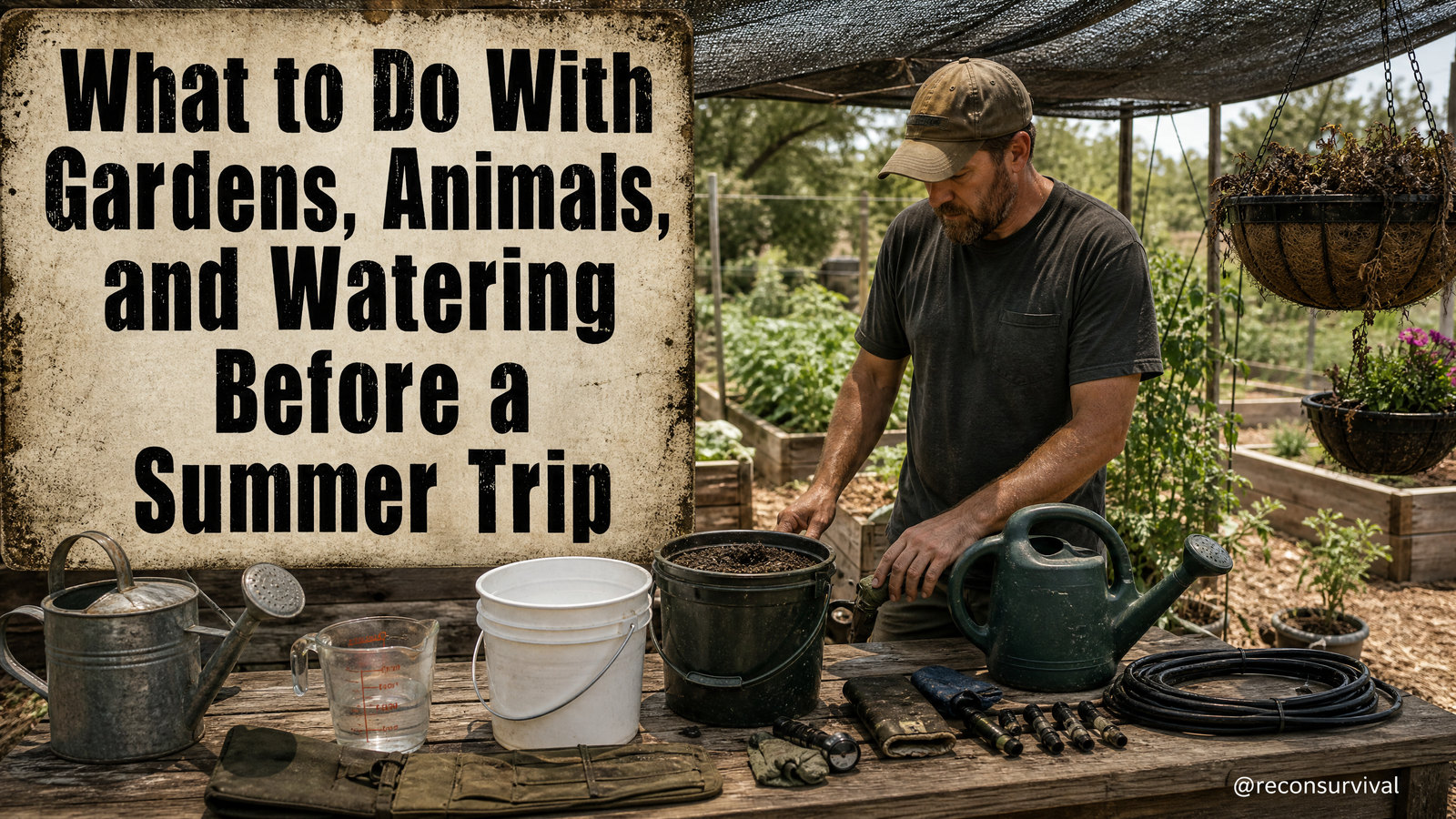
Hanging baskets and shallow pots are the first to crisp in heat. If you leave them to guesswork while you pack, you will come home to brown stems and a stressed flock. Start with what fails first, fix it, and build outward into a simple system that a neighbor can run without you.
As an Amazon Associate, I earn from qualifying purchases.
Containers, Beds, and Mulch: What Dies First in Summer Heat
Containers and raised beds lose water fast. Shallow soil bakes, wind pulls moisture, and small root balls have no buffer. Before you think about fancy timers, slow down evaporation and stabilize moisture. A system that keeps moisture in the top 6 inches of soil will carry most gardens through a normal vacation window.
Practical checks you can do on the patio shelf and bed edges:
- Add 2 to 3 inches of mulch to all exposed soil. Use shredded leaves, straw, or wood chips. Count bags, cover all bed surfaces, and leave a small ring clear around stems to avoid rot.
- Group containers by water need and size. Heavy drinkers like tomatoes and cucumbers together, herbs and succulents separate. Move them to one shady corner near a spigot so one hose reach covers all. – Stage saucers under medium pots. Fill them to create a short wick reserve for 12 to 24 hours of buffer. Avoid this for plants that hate wet feet like rosemary. – Deep soak test today. Water a bed until a finger pushed 3 inches down finds moisture. Note timer duration that achieves this. Write it on painter's tape stuck to the timer face. – Tie a shade cloth or an old white sheet to a fence or T-posts to cut midday sun for sensitive crops. A 30 to 50 percent shade cloth over leafy greens and containers buys days of survival.
Animals in Heat: Waterers, Shade, and Ventilation
Small livestock fail on water and heat long before feed runs out. Your caretaker can add feed easily. They cannot fix a dehydrated animal or a coop turned into an oven. Build redundancy in water and shade, and make air move.
What to set in the coop, hutch, or pen:
- Water double redundancy. Place two separate waterers per pen, each able to hold at least 24 hours of drinking for your head count. As a safe buffer in heat, plan 1 quart per adult chicken per day and more for larger species. Overbuild capacity. Top both to full the morning you leave.
- Shade and airflow. Inspect vents with a flashlight. Open upper vents. Add a breathable shade tarp over the run. Do not block low cross breeze. Clip a reflective emergency blanket to the sunny side of wire to bounce heat. – Freeze a few 1 liter bottles and stage them in the chest freezer. On days above 95 F, caretaker places one bottle in each waterer tub to cool water. Leave this instruction in bold on the care sheet. – Dust bath and heat relief. For chickens, refresh a shallow tote with sand or dry soil in a shaded corner. For rabbits, pre-chill ceramic tiles in the fridge and instruct caretaker to swap them in during heat spikes. – Night lock and morning open. If you use an automatic coop door, test it three cycles with fresh batteries. Leave a mechanical method to secure the door if it fails. A simple carabiner on the latch and a clear photo of how to set it is enough.
Irrigation Gear: Hoses, Splitters, Timers, Drip Lines
Your timer is only as good as the gasket you forgot to replace. Irrigation that is not tested under pressure is a garden failure waiting to happen. Set, run, and label.
Bench test on the side yard spigot:
- Build a clean chain. Spigot to brass splitter to pressure regulator if needed to filter to timer to main hose. Replace flat gaskets now. Keep two spare gaskets taped to the splitter with a zip tie.
- Program by soil depth. In summer heat, most beds do better with a deep soak every 2 to 3 days than a daily sprinkle. Set a timer duration that gets water to the root zone. Start with 20 to 30 minutes for drip lines or soaker hoses and adjust after a finger test. – Run a same-day leak patrol. Walk the lines with the water on. Look for pinhole sprays, puddles by fittings, and a meter that spins when the system is off. Tighten by hand, then add a quarter turn with pliers only if needed. Label any questionable joints with tape so your caretaker knows to recheck there. – Elevate hose joins on bricks and keep them off bare soil to reduce chew risk. Place a bucket under the main splitter to catch drips and show a leak at a glance. – Add a manual backup. Stage a 2 gallon watering can on the back stoop for your caretaker. Write which bed needs extra on a hot day. Example note: "Bed 3 tomatoes. If leaves droop at noon, add one can at base."
Storm and Power Contingencies at the Homestead
Heat is the baseline. Storms stack on top. A summer squall can dump inches of water, push wind under tarps, and knock out power. Aim for secured structures, directed water, and a no power fallback.
Secure the outside now:
- Tie down and close. Ratchet strap light greenhouses, clamp floating row covers, and remove dead limbs near coops. Walk the yard, pick up loose buckets, and stash tools in the shed.
- Clear gutters and check downspouts. Place splash blocks to route water away from foundation and animal areas. If you have a basement sump, test the pump by pouring a bucket into the pit and confirm it cycles. – Power loss plan for animals. If your auto door or fans are powered, add new batteries today and leave a spare pack in a labeled drawer by the back door. Show the caretaker a manual option to prop a coop window for safe ventilation without letting predators in. – Feed and bedding staged inside. Move one full bin of feed to a dry interior corner where roof leaks will not reach. Put a scoop inside the bin. Top off deep litter to absorb moisture if the run floods. – Lightning and hose timers. Some electronic timers fail after surges. Unplug non-essential electronics. If you have a timer with a rain sensor, test it and leave a written note on how to override if the sensor sticks.
Caretaker Packet: Instructions, Labels, and Check-in Triggers
Your system only works if a real person can run it. Set up the person. Write it down, label the yard, and make the first visit easy. The caretaker should never have to guess which hen you call "Red."
Build a single folder and a few yard labels:
- Print a one page checklist with headings in bold. Garden Watering, Container Corner, Animals and Water, Lock and Lights, Trash and Mail. Use short bullets with times. Example: "Sun, Tue, Thu at 7 pm. Timer runs 25 minutes. Check Bed 2 cucumbers for droop. Add 1 can if needed."
- Add photos. One photo per key area. Circle the spigot handle, the coop latch, and the correct breaker for the well pump if you are on a well. Tape a copy inside the mudroom door at eye level.
- Label bins and keys. "Chicken Feed" in big marker on the tote lid. "Back Gate Key" in a small lockbox near the porch, code on the printed sheet. Do not hide loose keys under mats. – Contacts and thresholds. List your cell, a local backup, the vet number, and a neighbor who can help lift. Write triggers to call you. Example: "If any animal is not eating or breathing fast and open mouthed for more than 5 minutes, call." "If timer display is blank, text photo."
- Check in times. Agree on two windows. Example: "Text 7 pm after watering and before dark chicken check. Text 8 am if any issue overnight." Leave a small envelope with cash for extra ice, feed, or parts.
Travel Gaps and Home Security: Lights, Gates, and Signals of Absence
A quiet house reads like an invitation. You do not need to fortify. You need to look lived in and remove easy signals of absence. Tie this into your caretaker routine.
Pass the street view test:
- Lights and blinds. Put one indoor lamp on a basic mechanical timer in a front room. Set it from 7 pm to 11 pm. Leave blinds in their normal half-closed position. Do not black out the house.
- Mail and trash. Suspend mail or have your caretaker pick it up. Put your trash cans on the curb only on pickup morning. Leave a note in the packet about the day and time. An empty can put back behind the fence matters more than a camera. – Gates and locks. Oil gate hinges, test latches, and replace split screws. Use one keyed lock standard for all side gates, and leave two labeled keys. A dragging gate that will not close is a risk you can fix with a wrench today. – Cameras and motion lights. Angle a motion light to cover the back gate and coop path for the caretaker. Replace bulbs and test at dusk. Keep notifications reasonable so you do not silence them out of annoyance. – Vehicles and yard cues. Park one car visible in the driveway if possible. Ask a neighbor to change its position once midweek. Leave a hose stretched naturally near the container corner instead of coiling everything as if staged for a week away.
The Mistake That Burns Gardens and Friends Out
Most people make two linked errors. They wait until the last night to set watering, and they hand a friend a long, vague text about animal care with no pictures. That creates two failure modes. The system is untested, and the human is overloaded.
Fix it by doing the opposite. Set and test water 48 hours before you go. Walk your caretaker through the yard one day before, hand them a printed sheet, and watch them do each step while you say nothing. If they get stuck, you fix the label or the step, not the person.
Triage Ladder: First Hour, Same Day, Next Day
If you are short on time, handle tasks in this order. You are buying survival hours for plants and animals first, then hardening for weather, then making things convenient.
First hour before you leave:
- Deep soak containers and beds. Water until moisture reaches the top knuckle depth.
- Fill and place redundant animal waterers. Test each for leaks by running a paper towel under the base. – Set shade cloth or move pots to afternoon shade near the spigot. – Replace timer and gate lock batteries if applicable.
Same day:
- Program and test irrigation for one full cycle. Walk the lines and write down run times on tape at the timer and on the printed sheet.
- Stage feed, bedding, and tools where the caretaker will use them. Scoop inside the feed bin, watering can by the patio, pliers on the splitter. – Print and tape the caretaker checklist. Label keys and bins. Confirm tomorrow's first check-in time. – Tie down loose yard items and clear gutters.
Next day, before departure:
- Walk the caretaker through. Hand them the sheet, watch one full run. They lock the coop, open the gate, run the hose, and text you a photo of the timer display.
- Do a storm check against the forecast. If high winds are likely, add one more strap to light structures and move vehicles under shelter if available.
Small Backyard Setup: Two Beds, One Hose, Two Hens
You do not need acreage to make this work. A small backyard can be set in an hour if you plan placement and capacity.
Practical layout:
- Beds. Two 4 by 8 beds with 2 inches of wood chip mulch. One soaker hose per bed, both fed by a single hose timer. Label Bed 1 and Bed 2 with paint sticks at the corners.
- Containers. Six 5 gallon buckets planted with peppers and tomatoes grouped on the north fence where they get morning sun and afternoon shade. Each with a saucer. – Watering. One timer runs the beds for 25 minutes every 2 days. Containers get manual watering on the same evenings. Caretaker adds one 2 gallon can to containers if leaves droop at noon. – Hens. Two hens in a small coop with a shaded run. Two 1 gallon waterers hung at beak height, plus a 5 gallon gravity waterer on a cinder block as backup. One small feeder set inside the coop to stay dry. – Security. A motion light over the back gate, a lamp on a living room timer, and a neighbor with a key who brings cans in. The caretaker's path is short and obvious.
Low-Cost Now vs Durable Upgrade Path
You can get most of the benefit with simple gear. If you want set and forget reliability for longer trips, invest in the parts that fail least.
Low-cost now:
- Mechanical or basic digital hose timer, two pack of rubber gaskets, one brass splitter, two soaker hoses.
- Shade sheet or an old white cotton sheet and a handful of spring clamps. – Extra waterers made from clean buckets with poultry nipples, or an extra 2 gallon waterer per pen. – Painter's tape and a Sharpie for labels, a printed one page care sheet with photos. – A small lockbox with a key for the gate instead of hiding keys.
Durable upgrade path:
- Pressure regulated drip system with filter and 1 gallon per hour emitters, plumbed with a dedicated line and a quality controller that has a rain skip function.
- Rigid 30 to 50 percent shade cloth on a simple frame that withstands wind. Proper grommets and UV resistant ties. – Insulated or nipple style waterers with larger capacity and covers, plus an automatic float valve on a stock tank if you have reliable water pressure and freeze safe conditions. – A permanent outdoor spigot box with a vacuum breaker, quick connects, and a covered power outlet for timers. – A sturdy coop with ridge venting, predator proof latches you can lock, and a manual override on any automated door.
Recon Survival Principle
Systems fail where you assume, not where you verify. Write down the job of water, shade, and access, then test each link with the person who will run it. Simple, labeled, and visible beats feature rich and hidden every time. Early checks and clear triggers give you time to fix small problems instead of reading about them in a frantic text later.
Do Today
- Walk the yard and count all the containers. Cluster them by water need near one spigot and move the hose there.
- Lay 2 to 3 inches of mulch on exposed soil in each bed. Use a bucket to measure depth and cover until you cannot see soil between plants.
- Install a hose timer, splitter, and soaker hoses. Replace gaskets and run a full test. Write run times on tape at the timer.
- Add a second waterer in every animal pen and fill both. Place a frozen 1 liter bottle in the freezer for each waterer, labeled.
- Print a one page caretaker sheet with bold headings and photos. Tape one copy inside the mudroom door and set another on the kitchen counter.
- Label the feed bin, the back gate key, and the coop latch with plain words. Put the gate key in a small lockbox and text the code to your caretaker.
- Set a lamp timer in the front room from 7 pm to 11 pm. Leave blinds in their normal position.
- Do a storm walk. Strap light structures, clear gutters, and pick up loose tools. Test the sump pump with a bucket of water if you have one.
- Confirm two daily check-in times with your caretaker and ask for a photo of the timer display after the first watering.
- Stage a 2 gallon watering can by the patio, a pair of pliers by the splitter, and a roll of tape with a marker for on the fly labels.