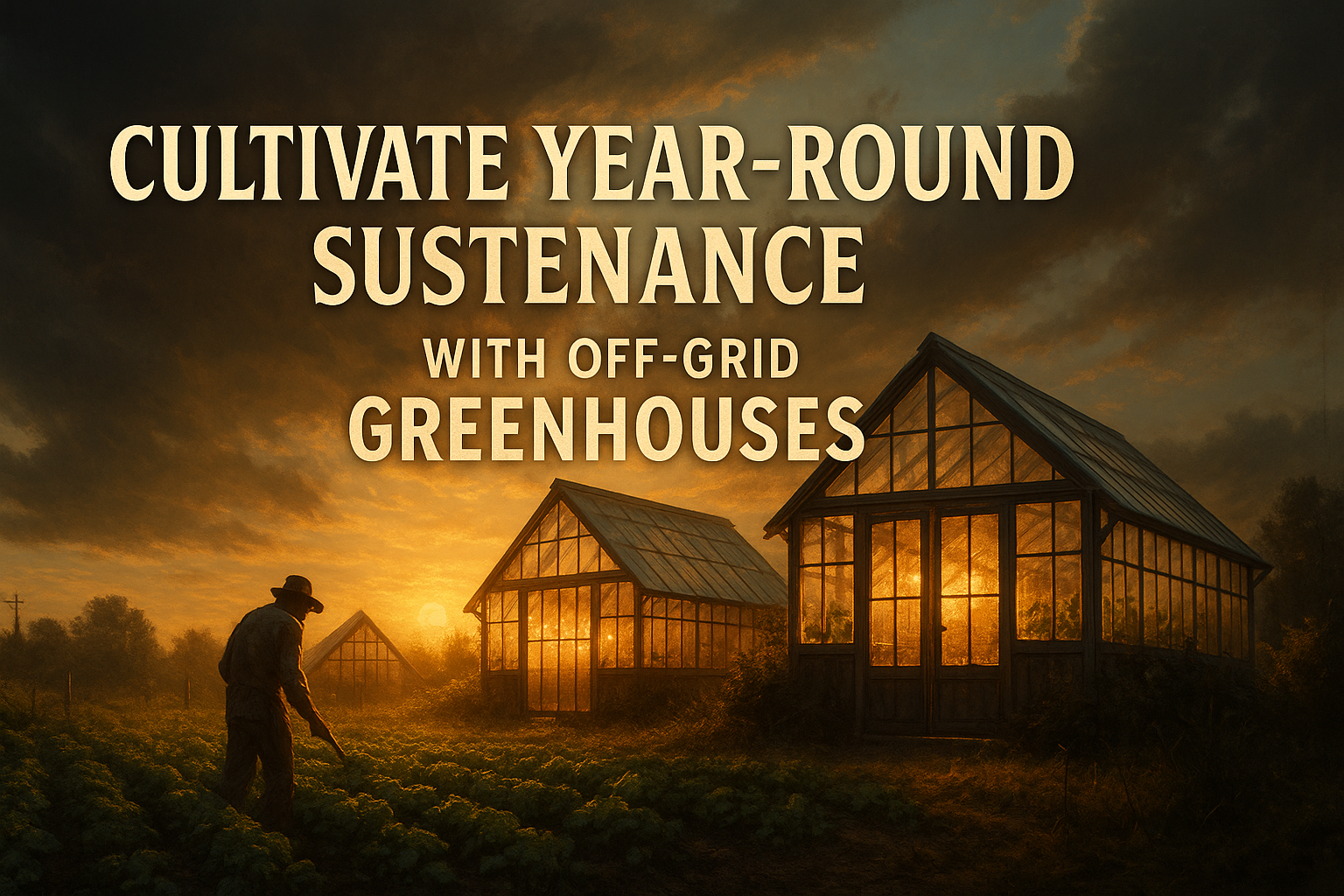
In the realm of self-reliance, there’s no room for half-measures, and when it comes to securing your food supply, this adage rings especially true. Imagine a life where the supermarket is no longer your go-to for vegetables, fruits, and herbs – instead, you step into a sanctuary of green that provides irrespective of the season. The allure of year-round food production has driven many to explore innovative solutions, particularly when faced with the harsh realities of climates that are anything but forgiving. Unpredictable weather patterns can wreak havoc on traditional gardening efforts, underscoring the need for a more robust approach to self-sufficiency. This is where the concept of off-grid greenhouses emerges as a game-changing solution.
The Greenhouse Solution
Off-grid greenhouses stand as bastions of food security, enabling you to take the reins of your food supply. They are designed to function without reliance on external power sources or water supplies, making them ideal for those seeking to reduce their carbon footprint and reconnect with nature. These structures are not just about sustaining plant life; they are about sustaining ourselves, both physically and spiritually. By integrating advanced technologies and innovative design principles, off-grid greenhouses are revolutionizing the way we approach personal agriculture.
The Basics of Off-Grid Greenhouse Design
Understanding Climate Control
The cornerstone of any successful off-grid greenhouse is climate control. A well-designed structure must maintain a stable environment for plants to thrive. Insulation is critical in retaining heat during cooler months and keeping the interior cool when the sun is relentless. Ventilation systems are equally important, allowing for air circulation that prevents the buildup of humidity and heat, which can lead to plant diseases. Passive solar design principles utilize the sun’s energy for heating, while thoughtfully positioned thermal mass, such as water barrels or stone, can absorb and release heat, stabilizing temperature fluctuations.
Selecting Sustainable Building Materials
When constructing an off-grid greenhouse, the choice of materials can have a significant impact on its efficiency and sustainability. Glazing options should be evaluated carefully; glass is traditional but can be expensive and fragile, while polycarbonate provides excellent insulation with added durability. For those looking to minimize environmental impact, recycled materials offer a viable alternative, and natural materials, like wood and bamboo, provide structural integrity with a reduced carbon footprint.
Location and Orientation
The siting of your greenhouse will dictate its performance. Maximum light exposure is achieved by orienting the structure to capture the sun’s path most effectively. In the Northern Hemisphere, this generally means a south-facing orientation. Additionally, protecting your greenhouse from prevailing winds will reduce heat loss and prevent structural damage. Consideration of the surrounding landscape can also provide natural shelter and integrate your greenhouse seamlessly with its environment.
Innovative Off-Grid Greenhouse Features
Advanced Watering Systems
Water is the lifeblood of any greenhouse, and off-grid systems need to be resourceful. Rainwater harvesting systems can capture and store precipitation for irrigation purposes. Solar-powered pumps can then distribute this water as needed, reducing reliance on external power sources. Aquaponics and hydroponics are innovative growing methods that maximize water efficiency, circulating nutrients directly to plant roots in a closed-loop system that conserves and recycles water.
Energy Solutions for Year-Round Production
Achieving year-round production means overcoming the limitations of seasonal sunlight and temperature swings. Solar panels can harness the sun’s energy to power fans, lights, and pumps. Wind turbines offer an alternative energy source in areas with consistent wind patterns. For maintaining optimal growing temperatures, geothermal systems exploit the constant temperature of the earth below the frost line to heat or cool the greenhouse air as needed.
Automating for Efficiency
Automation technology can streamline greenhouse operations, making them more efficient and less labor-intensive. Sensor-based climate control systems can monitor temperature, humidity, and light levels, adjusting environmental conditions in real-time. Automated planting and harvesting technologies are in development, promising to further revolutionize the off-grid greenhouse experience.
Case Studies: Successful Off-Grid Greenhouses
Urban Rooftop Greenhouses
Urban environments present unique challenges and opportunities for off-grid greenhouse design. Rooftop greenhouses make use of otherwise unused space and can significantly reduce food transport costs and emissions. Success stories from cities around the world demonstrate that with the right design considerations, such as weight distribution and wind resistance, productive greenhouses can flourish in the heart of the concrete jungle.
Rural and Remote Greenhouses
For those in rural or remote areas, large-scale off-grid greenhouses offer a path to self-sufficiency. These operations are tailored to withstand extreme weather and often incorporate advanced technologies to automate and optimize production. Through innovation and adaptation, these greenhouses demonstrate that even in the most challenging environments, a reliable food source is within reach.
Seasonal Planning and Crop Rotation
Seasonal Guides for Planting and Harvesting
Tailoring greenhouse crops to the changing seasons allows for a diverse and continuous harvest. Seasonal planting guides can help you determine the best times to sow and transplant various crops, ensuring a steady supply of fresh produce. Strategic planning can also extend the growing season, allowing for the cultivation of plants that would otherwise be impossible to grow in your climate.
Maximizing Space with Vertical Farming
Space is a premium resource in any greenhouse, and vertical farming is an effective way to maximize its use. Techniques such as trellising, shelving, and tower gardens allow plants to grow upwards rather than outwards, increasing yield per square foot. Vertical farming is not only space-efficient but can also reduce pest pressure and facilitate harvesting.
Community and Educational Impact
Building Community Through Greenhouses
Off-grid greenhouses have the potential to become hubs of community resilience. They can provide fresh produce in food deserts, serve as centers for knowledge exchange, and foster a sense of collective self-reliance. Community-led greenhouse projects highlight the power of collective effort in achieving food security and sustainability.
Educational Opportunities
As interest in off-grid greenhouses grows, so do opportunities for education. Workshops and courses for aspiring greenhouse owners can cover everything from basic design principles to advanced technology integration. Schools can also get involved by incorporating greenhouse management into their curriculum, providing hands-on learning experiences that prepare the next generation for a more sustainable future.
Conclusion
The Future of Off-Grid Greenhouses
The off-grid greenhouse is more than just a means to grow food; it’s a symbol of innovation in the quest for self-sufficiency. As we look forward, the integration of technology and sustainable practices will continue to play a crucial role in refining and improving these systems. The future of off-grid greenhouses is one of endless possibilities, limited only by our imagination and willingness to adapt.
Call-to-Action
Whether you’re an experienced off-grid gardener or just beginning to explore the possibilities, your experiences and plans are invaluable to the community. Share your stories, engage with others, and seek out resources to expand your knowledge. Together, we can push the boundaries of what’s possible in off-grid food production.
Stay ready. Stay dangerous.