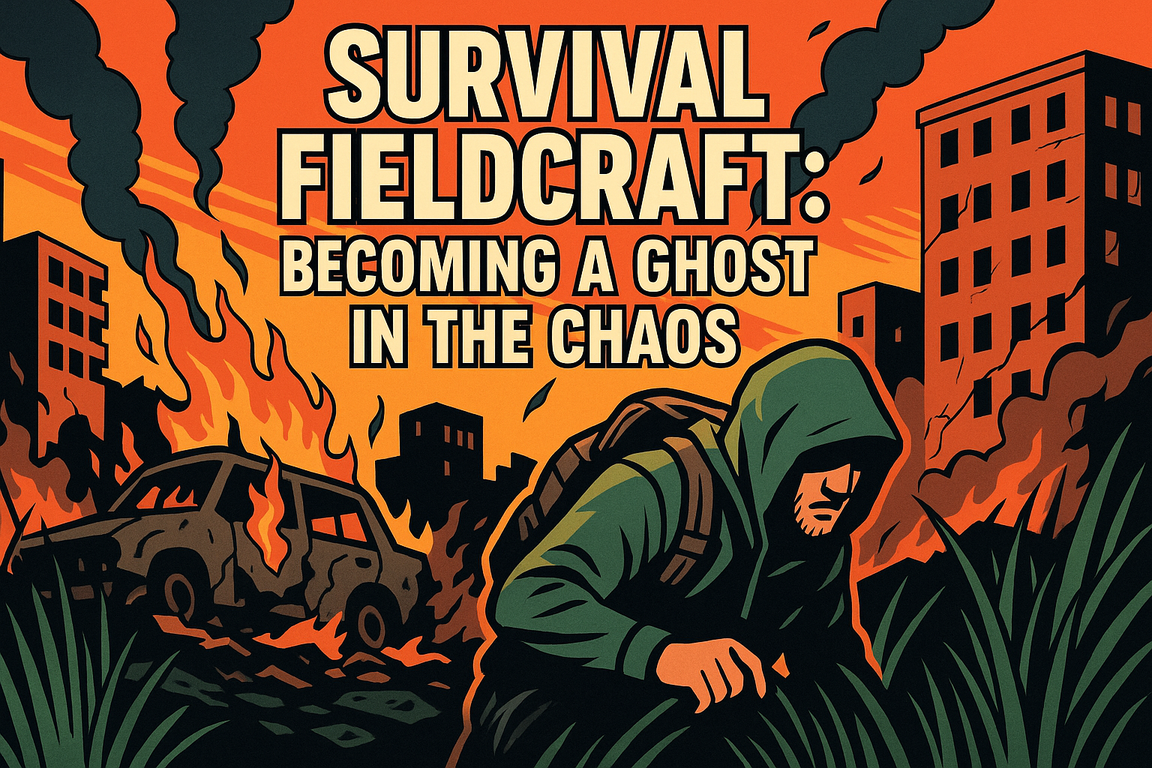
When the sky’s falling and the world’s on fire, there’s no room for sugar-coating or half-measures. Let me tell you straight – if you’re going to survive when society’s fabric rips apart, the one skill you can’t skimp on is fieldcraft. It’s the difference between being a ghost in the chaos and being a target.
Out there, in the high-threat environments, where the rule of law is just a memory, your life hinges on how well you blend in, move unseen, and stay ahead of the curve. We’re not talking about just keeping your head down. We’re talking about merging with the shadows, knowing the land like the back of your hand, and always having an ace up your sleeve.
I’ve seen this stuff save lives. Real lives. Like that time when we were in Helmand Province and our spotter used some genius-level natural camouflage to evade a Taliban search party. Or when a buddy of mine, caught in the chaos of post-Katrina New Orleans, used his knowledge of urban movement to slip through the cracks while everyone else was panicking. This is no bull; this is real-world application.
Fieldcraft is your set of survival skills – camouflage, stealth, tactical movement – it’s how you remain a ghost in the eyes of the enemy. Whether you’re evading a hostile force or just want to stay invisible in a world gone sideways, these skills are your lifeline.
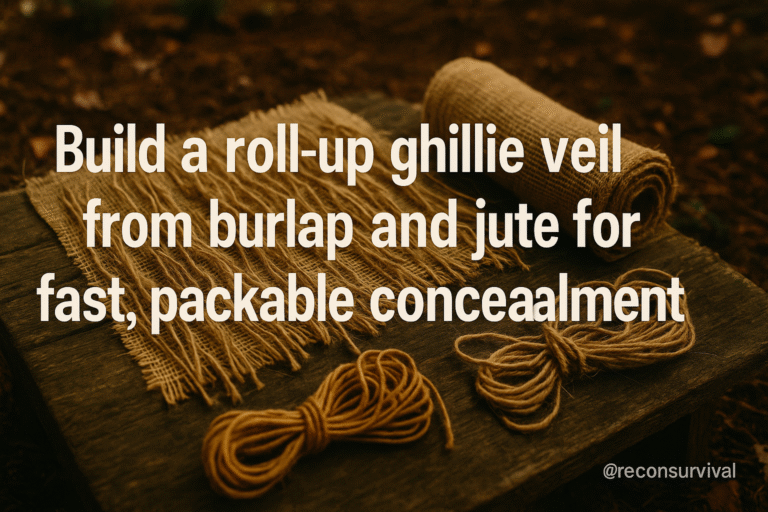
Take camouflage: It’s not just about slapping on some face paint and calling it a day. It’s an art form. You’ve got to understand patterns and colors, how to break up your silhouette, and how to use your environment to disappear. And it’s not just about you – your gear needs to vanish, too.
And when it comes to movement in hostile territories, remember these basics:
– Move slow when you have to, fast when you must.
– Use natural terrain to your advantage.
– Always have an exit strategy.
Let’s get into some advanced techniques now. Visual camouflage is about using the right patterns for your environment whether it’s woodland, urban, or desert. You have to know your surroundings and adapt. Use natural materials when you can, but don’t shy away from modern tech if it gives you an edge.
When personalizing your camouflage, don’t forget your face and hands – they catch light and move the most. And your gear – it has to blend in as much as you do.
Now, mastering stealth movement isn’t just about being quiet. It’s about understanding how to read the environment. It’s using brush, buildings, or even the noise of the world around you to cover your tracks. Remember, it’s about moving with purpose and always staying off the radar.
For tactical positioning and observation, choose your spots with care. Use the lay of the land to become part of it. Elevation is your friend for a good vantage point, but it can also silhouette you against the skyline. Learn to find the balance.
Don’t just rely on your eyes and ears. Tech like drones or motion sensors can extend your reach without exposing you. They’re another tool in your arsenal, so don’t dismiss them.
When the stakes are life and death, you need to have escape and evasion strategies planned out. Know your routes, have backups, and when things go south, have the wherewithal to adapt on the fly. If you’re compromised, remember: being unpredictable can save your skin.
Training and mindset aren’t just about physical readiness; they’re about mental resilience. Push yourself in training so that when the world crumbles, you’re not just reacting; you’re two steps ahead. Survival is as much about psychology as it is about tactics.
Integrating this advanced fieldcraft into your survival plan isn’t an option; it’s a necessity. As society evolves or collapses, so must your skills. Stay sharp, keep adapting, and never stop learning.
Stay ready. Stay dangerous.