Unlocking Sustainable Independence: The Power of Solar-Powered Hydroponics
Imagine standing on the edge of your homestead, the persistent sun above powering a system that keeps you fed and free from the clutches of the grid. This isn’t a distant dream—it’s the potent reality of solar-powered hydroponics. This integration offers a lifeline for those seeking true independence. By harnessing the sun’s relentless energy and combining it with innovative, soil-free plant cultivation, you’re paving the way to a more self-sufficient, resilient lifestyle. Whether you’re nestled in sprawling fields or confined to a compact urban space, solar-powered hydroponics adapts to your needs, promising a stable food solution irrespective of external volatility.
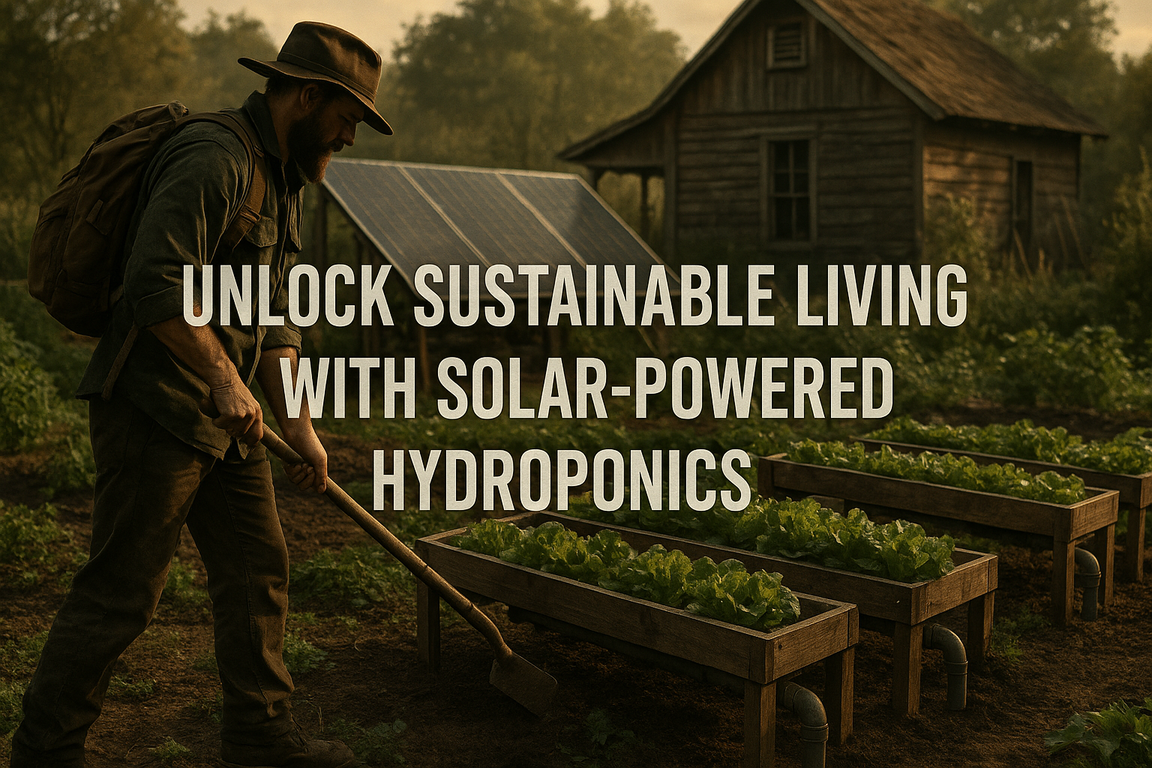
Start by visualizing the solar panels as the heart of your operation. They draw in sunlight, a renewable and bountiful resource, converting it into electricity to power your hydroponic system. This synergy reduces reliance on fossil fuels, slashing your carbon footprint while ensuring that your crops continue to thrive without the dependency on traditional power sources. Picture rows of lush greens and ripe fruits fostered by nutrient-rich water, continuously circulated by solar-powered pumps—this is the essence of efficient, sustainable agriculture.
Consider the resilience you’re building by adopting this method. Weather fluctuations may threaten traditional farming, but your controlled environment shields your crops from the whims of nature. In turn, this stability translates to a year-round bounty, securing your food supply even as global markets fluctuate wildly. Plus, with advancements in battery storage technologies, the energy captured during sun-drenched days can be stored for use on overcast ones, making your system robust against natural variability.
For those ready to dig in, the path forward is clear: focus on understanding the core components, from photovoltaic panels to nutrient delivery systems. Each piece plays a crucial role in this intricate dance of energy and growth. The initial investment may seem daunting, but the rewards—total food independence and a decisive step towards sustainability—are well worth the effort. By embracing solar-powered hydroponics, you’re not just cultivating crops; you’re cultivating freedom.
The Promise of Year-Round Food Security
In the rugged landscape of off-grid living, securing a consistent food supply stands as both a challenge and a necessity. This is where solar-powered hydroponics shines as a beacon of promise, offering a resilient solution to year-round food security in even the harshest climates. Imagine harvesting fresh produce every week without worrying about soil quality, seasonal constraints, or adverse weather conditions. With hydroponics, plants grow in nutrient-rich water, bypassing the soil entirely. This method not only accelerates growth but also increases yield, allowing you to cultivate a diverse array of crops from leafy greens to juicy tomatoes, regardless of outdoor conditions.
The integration of solar power into your hydroponic system is a game-changer. Solar energy ensures that your system remains operational off-grid, drawing power from the sun to run pumps, lights, and climate control. This marriage of renewable energy and efficient agriculture means you can maintain a stable, diverse food supply without relying on external power grids or traditional farming methods. For example, during the short days of winter, solar-powered grow lights can extend your plants’ “day” length, ensuring they thrive when sunlight is scarce.
Take practical steps to harness this promise: start small with a basic setup and scale as you learn. Aim for redundancy, having backup solar batteries to store energy for cloudy days and ensure your system’s resilience. By controlling the environment, from temperature to humidity, you can prevent common agricultural pitfalls like pests and diseases. In doing so, you not only safeguard your food source but also fortify it against the unpredictability of weather and climate change.
Year-round food production is not just a dream—it’s a tangible reality with solar-powered hydroponics, empowering you to take control of your food supply sustainably. This level of independence is not only smart; it’s vital for those looking to truly thrive off-grid. By investing in this innovative technology, you’re investing in a future where food scarcity is a relic of the past, and every meal celebrates self-sufficiency and sustainability.
Revolutionizing Off-Grid Living with Renewable Resources
Harnessing renewable resources for off-grid homesteads is more than a trend—it’s a gritty necessity driving the next frontier of sustainable living. Solar-powered hydroponics stands at the vanguard of this revolution, offering a robust solution for year-round food security. Imagine a life unanchored from traditional power grids and grocery store aisles, where you wield direct control over your food supply. Solar energy, with its boundless reliability, transforms your homestead into a fortified bastion of self-reliance. The upfront investment in quality solar panels may seem daunting, but the reward is a lifetime of independence, with the sun’s rays powering your journey to sustainability. Pairing solar power with hydroponics elevates your capability to produce fresh, nutrient-rich crops without the limitations of seasonal change or soil quality.
Consider the benefits: solar panels convert sunlight into energy, which, in turn, powers water pumps, grow lights, and nutrient distribution systems of your hydroponic setup. This synergy between solar and hydroponics does more than just underpin your food supply; it offers a practical, scalable model for expanding your homestead capabilities. With careful planning, these systems can thrive in almost any climate, making them adaptable to various off-grid scenarios, from remote wilderness cabins to suburban backyard plots. As you navigate this transformation, prioritize components that ensure efficiency and adaptability. Select solar panels tailored to your region’s sunlight exposure, integrate efficient batteries for energy storage, and choose hydroponic configurations—like nutrient film technique (NFT) or deep water culture (DWC)—that best suit your space and crop selection.
Revolutionizing your off-grid life with renewable resources isn’t merely about survival; it’s about thriving through adversity and unpredictability. As you commit to this path, you’ll gain not only food security but also the empowerment that comes from mastering your environment. Join the wave of pioneers who are proving that with the right tools and mindset, self-sufficiency is within your grasp. Push the boundaries of what’s possible on your homestead and forge a legacy of resilience and innovation for future generations.
Why Combining Solar and Hydroponics is a Game-Changer
In the realm of off-grid living, the union of solar energy and hydroponics is transforming the way we think about sustainable food production and energy independence. By harnessing the relentless power of the sun, solar panels provide the lifeblood—electricity—to fuel hydroponic systems that grow food without a lick of soil. This combination is more than innovative; it’s revolutionary. No longer are off-grid homesteaders chained to the seasonal cycles or the limitations of traditional farming. With solar-powered hydroponics, you’re not just growing plants; you’re cultivating resilience.
Practicality is at the core of this synergy. Solar panels, expertly positioned, convert sunlight into electricity that powers pumps, grow lights, and monitoring systems within hydroponics setups. This means you can produce nutritious food year-round, regardless of external climate conditions. Imagine growing fresh lettuce in the dead of winter or juicy tomatoes during the summer droughts. The self-reliant homesteader becomes less vulnerable to erratic weather patterns and more adaptable to challenging environments.
The financial benefits are also significant. While initial setup costs can be daunting, the return on investment is substantial. By generating your own power and growing your food, you significantly cut down utility and grocery bills. Plus, solar technology costs continue to plummet, making this a more accessible option than ever. For the off-grid homesteader, independence from fossil fuels and the ability to control food sources are invaluable. This dynamic duo of technology isn’t just a step forward; it’s a leap into a future where off-grid living isn’t just possible, but thriving.
Ultimately, integrating solar-powered hydroponics is about more than energy efficiency or food security; it’s about the freedom to live sustainably and independently. The transformation to this lifestyle is within reach, and with the right knowledge and determination, you can revolutionize your homestead. The path to becoming a true pioneer in off-grid living demands bold action and innovative thinking. Solar-powered hydroponics is precisely the game-changing strategy that embodies that spirit.
Understanding the Basics: What Is Solar-Powered Hydroponics?
Imagine a system where you grow your food without soil, powered entirely by the sun. This is solar-powered hydroponics, a robust solution for the modern off-grid homesteader. Combining the precision of hydroponics with the sustainability of solar energy, this approach ensures year-round food security regardless of the season or weather conditions. At its core, solar-powered hydroponics uses photovoltaic panels to harness the sun’s energy, which is then converted to electricity to power essential components like water pumps, grow lights, and air systems. This method not only minimizes reliance on external resources but also optimizes plant growth by eliminating the constraints of traditional soil-based gardening.
Hydroponics, fundamentally, is about growing plants in a nutrient-rich water solution, bypassing the limitations of soil. When you pair this with solar power, you create a closed-loop system that thrives on renewable energy, leading to lower utility costs and reduced environmental impact. Picture this: solar panels soaking up rays during the day to keep your system running efficiently, driving pumps that circulate nutrient solutions to plant roots, and powering LED grow lights that extend “daylight” hours. This synergy allows for consistent crop yields, maximizing your homestead’s productivity.
Practical implementation starts with understanding your energy requirements. Calculate the wattage needed for your hydroponic system, and ensure your solar setup can meet those demands even during shorter winter days. Invest in quality panels and energy storage solutions, like batteries, to store surplus energy. This ensures reliable operation, even on cloudy days, and prepares you for unexpected power outages.
Solar-powered hydroponics isn’t just a trend; it’s a game-changer for anyone aiming for self-reliance. It empowers you to grow diverse crops such as leafy greens, tomatoes, and herbs, ensuring a steady supply of fresh produce at any time of the year. By mastering this system, you harness the raw power of the sun to fuel your independence—an essential step toward true sustainable living.
Demystifying Hydroponics: The Soil-Free Gardening Revolution
Hydroponics represents a seismic shift in how we cultivate food, especially crucial for off-grid homesteaders seeking sustainability. This soil-free gardening method isn’t just a trend; it’s a revolution, breaking free from traditional farming constraints. By leveraging nutrient-rich water solutions, hydroponics empowers you to grow plants with precision, efficiency, and less environmental impact. Forget about battling poor soil conditions or worrying about seasonal changes. With hydroponics, you control every aspect of plant growth—from nutrients to water levels—tailoring the environment to meet your crops’ exact needs.
Imagine fresh produce all year round, regardless of weather conditions. Hydroponics divorces you from the tyranny of climate, allowing for robust and continuous food production. This method is a game changer for those living off-grid; it minimizes water usage—up to 90% less than traditional agriculture—and eliminates the need for harmful pesticides, offering a cleaner, healthier food source. Compact systems let you grow vertically, maximizing space and output, a boon for any homesteader with limited area.
To start, embrace simplicity. A basic setup might include a nutrient film technique (NFT) system, where a thin film of nutrient solution cascades over plant roots, or a deep water culture (DWC) system where roots dangle in nutrient-rich water. These systems are accessible to beginners and can be powered by a minimal solar setup, merging seamlessly with your off-grid lifestyle. Choose crops that offer high yields and nutritional value, like leafy greens, tomatoes, or herbs, ensuring your effort translates into maximum food security.
The revolution doesn’t just end at food production—it extends to your homestead’s environmental footprint, reducing reliance on fossil fuels and harmful agrochemicals. As you dive into hydroponics, you contribute to a larger movement towards sustainable living, paving the way for a resilient and independent future. Take the first step; begin by researching simple systems, and watch your off-grid garden thrive against all odds.
Harnessing Solar Power: The Backbone of Energy Independence
In the rugged world of off-grid living, achieving true energy independence is akin to claiming victory in a battle where the odds are often stacked against you. Solar power, with its relentless harnessing of the sun’s energy, stands as your unwavering ally in this endeavor. To build a robust off-grid homestead, you must first understand that solar power is more than just a fleeting trend—it’s the backbone of sustainable energy solutions and the key to year-round food security. Embrace it not just for its environmental benefits but for the sheer practicality it offers in powering your hydroponic systems without reliance on external power grids.
Imagine the sun as your perpetual power plant, tirelessly working to energize your crops. By converting sunlight into electricity using photovoltaic panels, you create a closed-loop system that not only sustains your food production but also safeguards your energy resources. To start, invest in high-quality solar panels tailored to your climate and energy needs. Consider the geographical positioning of your homestead and optimize the angle of your panels to capture maximum sunlight throughout the year. This strategic setup allows you to store excess energy during sunnier months, ensuring uninterrupted power during less favorable conditions.
A well-integrated solar system is essential for powering the pumps and grow lights in your hydroponic setup. These components are the heart and soul of maintaining a thriving, soil-free garden. Choose energy-efficient pumps and LED grow lights that are designed for low energy consumption while providing adequate illumination and water flow. Be diligent in monitoring and maintaining your system—regularly clean solar panels, check battery storage, and ensure your wiring is secure to prevent energy loss.
Ultimately, solar power isn’t just about lighting up your homestead; it’s about illuminating the path toward self-reliance. By embedding solar technology into your off-grid hydroponic system, you create a resilient, sustainable environment that empowers you to live independently, free from the shackles of traditional utilities. This commitment to renewable energy not only supports your immediate goals but also paves the way for a future where off-grid living is not merely a dream, but a thriving reality.
Integrating the Systems: How They Work Together
Integrating solar power with hydroponics in your off-grid homestead is like orchestrating a symphony of sustainability, where energy, technology, and nature collaborate in perfect harmony. The process begins by harnessing the sun’s immense energy through photovoltaic solar panels. These panels, mounted strategically to capture the sun’s rays, convert sunlight into direct current (DC) electricity. This energy is then fed into an inverter, transforming it into alternating current (AC) electricity, which powers your hydroponic system’s pumps, grow lights, and climate control systems. This seamless integration ensures that your plants receive the perfect conditions for growth, rain or shine.
In practical terms, the key to effective integration lies in understanding the energy demands of your hydroponic setup. Consider your crop selection—some plants require more light and water circulation than others. Tailor your solar array and battery storage to accommodate these needs. For instance, leafy greens like lettuce and herbs can thrive with less power than fruiting crops such as tomatoes or peppers, allowing you to prioritize energy allocation. Implementing timers and sensors further streamlines energy usage, automatically adjusting lighting and irrigation schedules to coincide with power availability and plant requirements.
Moreover, ensure your system is designed for optimal synergy. Utilize energy-efficient LED grow lights to minimize power consumption. Incorporate a battery storage solution to maintain continuous operation during cloudy days or night hours, ensuring your plants are never deprived of essential resources. Using a backup power source, such as a generator, can safeguard against extended periods of low sunlight, securing your food supply against unpredictable weather patterns.
Finally, the beauty of integrating solar power with hydroponics lies in its modularity. Start small, perfect your setup, then scale up as your confidence and skills grow. Experiment with different layouts and plant varieties, and continuously monitor your system’s performance, tweaking as necessary. By mastering this integration, you’re not just growing food; you’re crafting resilience, independence, and a blueprint for sustainable off-grid living.
Setting Up Your System: Key Components and Requirements
Creating a sustainable homestead with solar-powered hydroponics requires a careful balance between technology and nature. The bedrock of this system lies in three key components: solar panels, hydroponic equipment, and an efficient energy storage solution. Begin with selecting robust solar panels. Opt for high-efficiency monocrystalline panels that can deliver maximum output even under cloudy conditions. Remember, the sun is your system’s lifeline; positioning and angling the panels correctly is essential to harnessing its full potential. Pair these with high-capacity batteries to store excess energy, ensuring you have a reliable backup during those fickle weather days. Lithium-ion batteries are the gold standard here, offering longevity and dependable performance.
Next, dive into the heart of hydroponics. Your system will need a nutrient reservoir, a water pump, and a delivery mechanism—like nutrient film technique (NFT) channels or a deep water culture (DWC) setup. Ensure the water pump is solar-compatible, with a design optimized for low-energy consumption. It’s vital to select durable, food-grade materials for your reservoirs and channels to prevent contamination and ensure plant health. Insulate these areas to maintain a stable temperature, a crucial factor for year-round productivity.
Lighting is another critical element. While natural sunlight should be your primary source, supplemental grow lights become indispensable during shorter winter days. LED grow lights are your best bet; they consume less power and provide a full spectrum that closely mimics sunlight. Integrate timers to automate lighting cycles, optimizing energy use and preventing overexposure.
To tie everything together, implement a reliable monitoring system. Use sensors to track pH levels, nutrient concentrations, and water temperature, adjusting them as needed for optimal plant growth. With these components meticulously chosen and integrated, your solar-powered hydroponic system will stand as a resilient pillar of your off-grid homestead, championing food security through every season.
Essential Equipment: Solar Panels, Pumps, and Grow Lights
In the rugged world of off-grid homesteading, ensuring year-round food production necessitates a marriage between reliable technology and natural resources. At the heart of this synergy lie three indispensable components: solar panels, pumps, and grow lights. Each plays a critical role in transforming your hydroponic ambitions into a sustainable reality, and understanding their function will keep your system running optimally.
Start with solar panels—the backbone of your energy system. Investing in high-efficiency photovoltaic panels is non-negotiable. They harness the sun’s power, converting it into the electricity needed to run your entire setup. Choose panels that offer durability against harsh weather and have a strong warranty. Aim for at least 100 watts per panel as a starting point, scaling up based on your system’s needs. Pair these panels with a reliable battery storage system to ensure a steady energy supply, even on cloudy days or during the long nights of winter.
Next, consider the pumps. These unsung heroes circulate nutrient-rich water throughout your hydroponic system, mimicking nature’s flows without soil. Opt for energy-efficient, durable, and corrosion-resistant pumps. Submersible pumps are a common choice for smaller setups, while inline pumps might be necessary for larger systems. Remember, the pump’s capacity should match the size of your hydroponic garden—aim for a turnover of at least your system’s total volume every one to two hours.
Finally, grow lights are your plants’ lifeline when the sun hides away. LED grow lights, known for their longevity and energy efficiency, are the preferred option. Customize the light spectrum to the growth stage of your plants—vegetative stages thrive under blue light, while flowering benefits from red light. Position these lights to mimic natural sunlight paths, enabling your plants to photosynthesize effectively.
Integrating these components creates a robust system resilient to the challenges of off-grid living. With the right equipment, your solar-powered hydroponic garden becomes a selfsustaining force, offering food security amid nature’s unpredictabilities.
Building Your Hydroponic System: Types and Configurations
Stepping into the realm of solar-powered hydroponics is akin to harnessing the twin powers of the sun and technology to cultivate life itself. When building your system, understanding the diverse types and configurations is your first battle. Hydroponics comes in various forms, each suited to different crops and spaces. The simplicity of the Wick System, where nutrients move through a wick to the plant roots, makes it a cornerstone for beginners looking for low-maintenance options. Meanwhile, the Deep Water Culture (DWC) is all about submersion; plants dangle their roots directly into a nutrient-laden bath, ideal for leafy greens like lettuce and spinach. On the more complex end, the Nutrient Film Technique (NFT) and Ebb and Flow (Flood and Drain) systems offer intense efficiency and higher yields. NFT channels a thin film of nutrients under plant roots, perfect for herbs and strawberries, while Ebb and Flow alternates flooding plants and then allowing the medium to drain, providing robust oxygenation for fruit-bearing plants.
With solar power as your energy workhorse, each system transforms into a self-sufficient food factory. Selecting the right configuration should align with your homestead’s solar capacity and climate. For sprawling spaces with abundant sunlight, a large-scale DWC or NFT system can maximize production. Limited sunlight or space? A compact Wick System or vertical Ebb and Flow setup might be your answer. Remember, your configuration isn’t set in stone; adaptability is key. Modular designs allow for gradual expansion as your confidence and demand grow.
Your mission is to integrate these systems seamlessly. Align your hydroponic setup to capture optimal sunlight and ensure solar panels are angled for maximum exposure throughout the year. Equip your system to withstand seasonal changes, possibly incorporating battery backups for gloomy days. As you configure your system, think about your water sources and nutrient delivery as these are the lifelines of your operation. Don’t just build a system; craft an ecosystem where each component feeds the next, and the whole thrives on harmony and balance. Here, in these configurations, lies the blueprint for a new era of self-reliant living.
Space and Location Considerations for Optimal Performance
Choosing the right space for your solar-powered hydroponic setup is crucial for maximizing efficiency and ensuring uninterrupted food production. Start by evaluating the natural sunlight available—this is your most vital resource. Ideally, locate your setup in a south-facing area with minimal shading from trees or structures, as consistent sunlight directly impacts your solar panels’ effectiveness. If your options are limited, consider trimming overhanging branches or strategically repositioning smaller structures. While the panels harness the sun, your hydroponic system needs room to breathe and grow. A space must be large enough to accommodate not only the plants but also the necessary equipment like pumps, reservoirs, and nutrient tanks. Don’t just think horizontally; use vertical space to your advantage. Stacked or tiered systems can exponentially increase yield without expanding your footprint.
Next, factor in accessibility and protection from the elements. While exposure is essential for solar power, extreme conditions can wreak havoc on your system. Windbreaks such as fences or nearby buildings can shield against harsh gusts, while greenhouses or hoop houses provide additional protection from temperature extremes and pests. Accessibility is not just about walking distance from your living quarters—consider how easily you can perform maintenance tasks or harvest produce, especially in off-season months when weather conditions might be unfavorable.
Remember, environment matters. Proximity to a water source is vital, as water is the lifeblood of hydroponics. Consider how water will be transported—gravity-fed systems minimize pump stress and conserve energy, making them an ideal choice for off-grid setups. Lastly, plan for expansion. As your homestead evolves, so should your hydroponic operation. Maintain flexible space that allows you to scale up your system, ensuring your food supply grows alongside your needs. By meticulously planning your space and location, you’ll lay the groundwork for a resilient, sustainable, and autonomous food production system that stands the test of time.
Maximizing Efficiency: Tips for Effective Operation
To maximize the efficiency of your solar-powered hydroponics system, you need to adopt a no-nonsense approach that blends technological know-how with hands-on practicality. Start by optimizing sunlight exposure. Position your solar panels in a location with maximum sun exposure, ideally facing south in the northern hemisphere, and keep them free from obstructions like trees or buildings. Routine cleaning of panels is non-negotiable; a simple wipe-down can boost energy capture by up to 20%. Next, make sure your hydroponic setup is tailored to your climate zone. Consider the use of reflective materials around your system to bump up light levels, ensuring your plants get the most out of even the weakest winter sun.
Smart use of technology will put you ahead. Invest in a robust solar battery bank to store excess energy. This ensures continuous operation during cloudy stretches or at night, allowing your system’s pump and grow lights to function without hiccup. Keep an eye on your energy consumption patterns, and adjust your setup as needed. Implementing timers and sensors can help regulate energy usage, cutting down unnecessary consumption and ensuring resources are directed where they’re most needed.
Water efficiency is another critical factor. Use a closed-loop system to recycle water, minimizing waste. Consider incorporating drip irrigation within your hydroponic setup. It delivers nutrients directly to the root zone, curtailing evaporation losses. Precision here saves both water and nutrients, ensuring your solar-powered system doesn’t suck up more resources than necessary.
Lastly, maintain a vigilant eye on your system’s performance. Regularly inspect and clean pumps, tubing, and grow beds to prevent clogs and inefficiencies. Monitor your plants for any signs of distress, as they can be early indicators of systemic issues. An efficient system is one that runs smoothly without constant intervention, so get familiar with every component and be proactive in your maintenance. With these tactics, you’ll forge a resilient off-grid food security system that stands the test of time and seasons.
Maintaining Your System: Routine Checks and Balances
Maintaining a solar-powered hydroponic system is the backbone of ensuring your off-grid homestead thrives with consistent food production. Start with a daily ritual: inspect your solar panels for dust or debris that might block sunlight. A soft brush or cloth can remove any unwanted buildup to maintain peak efficiency. Weekly, check your hydroponic system pH levels and nutrient concentrations—slight imbalances can stunt plant growth or worse. Invest in a reliable pH meter and a nutrient solution kit to keep your system in check. The heart of your setup, the pumps and plumbing, require bi-weekly attention. Listen for irregular sounds that hint at obstructions or wear; early detection can save you from costly repairs or crop loss.
Monthly, dedicate time to unplug and clean the entire system. Soak and scrub the reservoirs, pipes, and growing trays to prevent algae growth, one of the most common disruptors in hydroponic systems. This scrubbing ritual not only ensures cleanliness but it also gives you the opportunity to scrutinize any developing cracks or leaks. Don’t let energy efficiency slip through the cracks: check battery storage levels and ensure they’re holding a charge effectively, particularly when cloudy days stretch into weeks. Remember, a neglected battery might betray you when you need it most during long, sunless winters.
A quarterly plan should involve recalibrating your solar inverter settings. This crucial step can keep your power output optimal as the seasons change. As you line up your system checks like soldiers standing at attention, remember that each routine serves the mission of year-round food security. The grit and elbow grease you apply today will pay off in life-giving dividends when the bounty of fresh produce graces your table, regardless of what the world outside hurls your way. In the realm of off-grid living, routine is not only a survival tool; it is the art of thriving.
Optimizing Growth: Nutrient Solutions and Water Management
Integral to the success of solar-powered hydroponics is the flawless management of your nutrient solutions and water. Think of this as your system’s lifeblood—without it, even the best setup will stumble. Start by understanding your plants’ nutritional needs. Hydroponics demands precision, with a focus on macro and micronutrients delivered in the right proportions. Invest in quality nutrient solutions specifically formulated for hydroponics systems. Look for balanced solutions containing nitrogen, phosphorus, and potassium, alongside calcium, magnesium, and trace elements. Pre-mixed solutions are convenient, but mastering custom mixes can fine-tune growth conditions tailored to your crop varieties.
Water quality is paramount. Tap water may seem convenient but often contains chlorine and other chemicals detrimental to plant health. Employ a water filtration system to eliminate impurities and achieve an ideal pH level—typically between 5.5 and 6.5 for most hydroponic plants. Regularly monitor your water’s electrical conductivity (EC) and pH. These readings are critical indicators of nutrient absorption rates and potential imbalances. A digital pH meter and EC meter are your best allies in maintaining optimal conditions.
Efficiency doesn’t stop at nutrient delivery. Water management must focus on conservation and cyclical reuse, essential for any off-grid operation. Incorporate a recirculating system, where unused nutrient solutions return to the reservoir, minimizing waste. Regularly inspect and clean your setup to prevent clogs, as stagnant water can become a breeding ground for pathogens. Moreover, fine-tune your irrigation schedule based on plant demands and environmental conditions. Remember, overwatering can be just as harmful as underwatering, especially since root zones in hydroponics systems are highly oxygenated.
Ultimately, achieving mastery in nutrient solutions and water management is an ongoing process. Log your data, observe plant responses, and adjust your strategies. This is a dynamic system—learn to anticipate and react. By doing so, you’ll ensure robust, resilient growth, securing your pathway to sustainable food independence.
Energy Management: Ensuring Solar Efficiency Throughout the Seasons
For those of you looking to rely on solar power to drive your hydroponic systems, the key to success is mastering energy management across all seasons. Solar energy is abundant and clean, but its efficiency can fluctuate with the changing seasons. To ensure your off-grid homestead remains productive year-round, you need to harness every ray the sun offers. Start by optimizing your solar panel setup. Position your panels at the correct angle, adjusting as needed throughout the year to capture maximum sunlight. In winter, tilt them more vertically to catch the sun’s low arc, while in summer, a shallower angle will suffice.
Next, invest in high-efficiency battery storage systems. These are non-negotiable for buffering energy supply during cloudy spells or long winter nights. Opt for lithium-ion batteries due to their long life and high efficiency, and regularly monitor their health to prevent downtime. Remember, energy efficiency isn’t just about storing power—it’s about using it wisely. Integrate timers and energy-efficient grow lights to ensure electricity use aligns with your plants’ needs rather than wastage. Consider LED grow lights, which offer powerful illumination with minimal power draw.
However, technology can only do so much; good maintenance routines are vital. Keep your panels clean, free of dust, snow, or debris, which can significantly reduce their effectiveness. Implement a regular inspection schedule to identify any issues before they escalate. Further, diversify your energy sources by incorporating backup systems like a small wind turbine or a generator fueled by biofuels. This redundancy ensures you’ll always have the power you need, regardless of what nature throws at you.
In your quest for energy independence, seasonal foresight is your ally. Plan and adjust proactively, understanding that what works in summer won’t suffice in winter. By adapting your energy strategy to the seasons, you not only ensure the steady operation of your hydroponic system but also take a firm stride towards genuine off-grid resilience. This level of preparedness and adaptability is what will truly set your homestead apart.
Navigating Challenges: Troubleshooting Common Issues
In the rugged terrain of off-grid living, your solar-powered hydroponic system stands as a beacon of self-reliance and sustainability. However, it’s not without its challenges. When problems arise, a proactive and systematic approach to troubleshooting ensures the resilience and longevity of your system. Begin by addressing the heart of your setup: water flow and quality. A common issue is clogging in the irrigation system due to particulate matter or algae buildup. Regularly inspect and clean filters, and consider installing a secondary filtration system for added protection. If water pumps falter due to power inconsistencies, verify the connections to your solar array and inspect wiring for wear and tear caused by harsh weather conditions. In areas with fluctuating solar output, integrating a battery backup can mitigate energy shortages and stabilize operations during gloomy days.
Grow lights are critical, especially during shorter daylight hours. If plants exhibit poor growth or discoloration, ensure your lights are functioning optimally and positioned correctly. Opt for LED grow lights that offer the intensity and spectrum needed without drawing excessive power. Nutrient imbalances can also lead to wilting or leaf spotting. Regularly test nutrient solutions and water pH to maintain an optimal level tailored to your crop variety. Consider keeping a logbook to track changes and interventions, which can reveal patterns and help preempt future problems.
In the face of pest and disease intrusion, prevention is paramount. Implement row covers or netting as physical barriers and introduce beneficial insects like ladybugs to control aphid populations naturally. Regularly inspect plants for signs of fungal infections, and remove affected foliage promptly. Isolation chambers for new or sick plants can prevent widespread contamination. Remember, your system’s efficiency is a reflection of your vigilance. With a keen eye and steady hands, these challenges become opportunities for growth and learning, reinforcing your path toward food resilience and independence.
Addressing System Malfunctions: Quick Fixes and Long-Term Solutions
When you’re off the grid, your solar-powered hydroponic system is more than just a tool—it’s your lifeline to sustainable living. System malfunctions can disrupt this vital link, but knowing how to address these issues effectively will keep your homestead thriving. Start with the basics: regular inspections are your best defense. Check for clogged or leaking pipes; they’re often the culprits behind nutrient delivery failures. A quick fix might involve cleaning blockages with a flexible brush or replacing damaged sections with spare tubing—a smart stockpile item for any serious homesteader.
Then there’s the issue of pump failure, a critical vulnerability in any hydroponic setup. If your pump stops working, it’s essential to act fast to prevent your plants from drying out. First, verify the power connection—sometimes, it’s just a loose cable. If the pump itself is faulty, having a backup on hand is crucial. Investing in a high-quality, reliable pump ensures long-term peace of mind, saving you from frequent replacements and frustrations.
Solar power adds another layer of complexity. Panel malfunction can mean anything from dirty panels to inverter issues. Regularly clean your panels to maintain efficiency and check inverter connections to avoid unnecessary system downtime. In the event of a persistent power drop, consider installing a hybrid inverter, which can switch between grid and solar sources, offering a reliable power backup even during cloudy days.
Water quality issues also demand your attention. Algae buildup and pH imbalances can spiral into full-blown crises if not managed. Use UV filters to tackle algae and regularly test your system’s pH levels. Adjustments can be made with pH up or down solutions—small, but powerful allies in maintaining system health.
Ultimately, integrating solar-powered hydroponics into your off-grid lifestyle isn’t just about assembling components; it’s about cultivating resilience and adaptability. By preparing for malfunctions with quick fixes and long-term strategies, you’re not just safeguarding your food supply—you’re embracing the rugged, self-reliant spirit that defines off-grid living.
Dealing with Power Fluctuations: Backup Plans and Storage Options
In the unforgiving realm of off-grid living, power fluctuations can be the Achilles’ heel of your solar-powered hydroponic system. But a true survivalist knows that preparation is key. To ensure year-round food security, you must build a safety net that keeps your crops thriving even when the sun isn’t shining as brightly. Begin by investing in robust energy storage solutions, like deep-cycle batteries, which are crucial for bridging the gap during cloudy days or unexpected outages. These batteries, designed for solar applications, can store excess energy generated during peak sunlight hours, providing a consistent power supply when you need it most.
Consider coupling your system with a generator as a secondary backup. A diesel or propane generator can be a lifesaver in extended periods of low sunlight, offering the needed power to sustain your hydroponic operations. Make sure it’s readily accessible and regularly maintained; a generator that fails you in a crisis is as good as none. With technological advancements, small wind turbines are another viable option for off-grid enthusiasts. By integrating wind power, you diversify your energy sources, reducing reliance on sunlight alone.
Beyond just backup power, think strategically about energy management. Equip your solar setup with an intelligent inverter that can seamlessly switch between different power sources, ensuring minimal disruption to your hydroponic system. Meanwhile, installing a battery management system will help monitor and optimize battery health, extending their lifespan and efficiency.
Consider smart forecasting tools that predict solar output based on weather patterns. These can guide you on when to store extra energy or activate additional power sources. With these tools, you’ll be able to anticipate dips in solar efficiency and plan accordingly. Embrace these power strategies, and you’ll reinforce the backbone of your off-grid homestead, turning potential vulnerabilities into avenues of strength and resilience. This proactive approach will not only protect your food supply but will cement your status as a master of sustainable, independent living.
Pest and Disease Management: Keeping Your Crops Healthy
In the rugged world of off-grid living, maintaining the health of your crops in a solar-powered hydroponic system demands vigilance and grit. Without the backup of industrial pest control, you’re the frontline defense against threats that could ravage your food supply. Yet, the controlled environment of hydroponics gives you the upper hand in this battle. First, equip yourself with knowledge—understand the lifecycle and common vulnerabilities of potential invaders like aphids, spider mites, and fungal gnats. Embrace the power of prevention by maintaining strict system hygiene; regular cleaning of trays, reservoirs, and pipes is non-negotiable. Inspect your plants frequently; a quick eye can catch infestations before they escalate. Implement physical barriers, like fine mesh screens, to keep intruders at bay.
Don’t shy away from natural allies; deploy beneficial insects such as ladybugs and predatory mites, which are relentless in their pursuit of pests. For diseases, ensure proper air circulation and avoid overcrowding to reduce humidity levels that mold and mildew thrive on. When prevention isn’t enough, act decisively with biological controls. Neem oil sprays, diatomaceous earth, and homemade garlic or chili sprays can help you reclaim your system without introducing harmful chemicals.
Remember, the key to successful pest and disease management is resilience and responsiveness. Keep records of what works and what fails—every setback is a lesson. As you hone your skills, you’ll cultivate a robust defense mechanism that thrives on adaptability. Your solar-powered hydroponic setup isn’t just about growing food; it’s about developing a sustainable relationship with your environment, where you and your crops stand strong against the elements. This marriage of technology and tenacity is what makes off-grid living not just a possibility, but a thriving reality. Stay vigilant, stay informed, and above all, keep fighting the good fight for your homestead’s food security.
Real-Life Success Stories: Learning from Pioneers
In the realm of off-grid homesteading, few have blazed a trail as successfully as the pioneers who have integrated solar-powered hydroponics into their daily lives. Consider the case of the Thompson family in rural Oregon, who faced the harsh realities of food scarcity with grit and innovation. The Thompsons transformed their 2-acre plot into a year-round food oasis by marrying the synergy of solar energy with hydroponic technology. Starting with a modest 10-panel solar array and a basic nutrient film technique (NFT) setup, they propelled their system to new heights through trial and error. A key takeaway from their journey is the importance of scalability. Begin with a small, manageable system, and let your confidence and abilities guide gradual expansion.
Another inspiring story emerges from the high desert of New Mexico, where Clara and Javier Mendez turned adversity into advantage. With sunlight aplenty but water scarce, they optimized their solar-powered hydroponic system to achieve maximum efficiency. By employing drip irrigation and deep water culture techniques, they reduced water usage by over 80% compared to traditional agriculture. Their success lies in meticulous planning and understanding the nuances of nutrient management, a lesson hard-learned after an initial crop failure due to nutrient imbalance. For the aspiring homesteader, the Mendezes’ experience underscores the criticality of constant monitoring and adjustment of nutrient solutions.
These pioneers teach us that resilience and adaptation are vital in crafting a self-sufficient lifestyle. Look to these stories not only for inspiration but as a practical guide—learn their lessons on troubleshooting and foreseeing challenges before they arise. Whether dealing with unexpected weather patterns or fine-tuning electricity storage for overcast days, these forerunners remind us that an off-grid homestead’s true strength lies in its adaptability. Embrace the mindset of an innovator, constantly seeking ways to refine and improve your system. The path to food independence is paved with determination, practical knowledge, and the willingness to embrace sustainable technology. Follow in their footsteps to carve your own story of success.
Case Study: A Family’s Journey to Total Food Independence
In the rugged wilderness of northern Idaho, the Thompson family embarked on a bold journey towards total food independence by integrating solar-powered hydroponics into their off-grid homestead. Three years ago, burdened by unreliable food supplies and escalating costs, they made a decisive change. The heart of their operation rests on a 2,000-watt solar array strategically positioned to capture the maximum sunlight available through the seasons. This array powers a versatile hydroponic system housed in a repurposed shipping container, providing a controlled environment for cultivating a diverse range of crops, from leafy greens to tomatoes and even strawberries.
The Thompsons’ journey began with meticulous planning. Understanding their specific nutritional needs and local climate challenges, they selected a nutrient film technique (NFT) system for its efficient use of water and nutrients. What sets their approach apart is the unwavering commitment to sustainability—every component, from the energy-efficient pumps to the LED grow lights, was selected for its ability to optimize energy consumption. A battery bank and an inverter ensure continuous operation even during cloudy spells, showcasing their foresight in energy management.
Embracing a trial-and-error approach, the family navigated initial hurdles, such as pH imbalances and nutrient deficiencies, by keeping detailed logs and continuously adjusting their nutrient solutions. They’ve learned the importance of routine checks and balances—ensuring that the system remains in peak condition with minimal disruptions. Their persistence paid off; the Thompsons now enjoy a bountiful harvest all year round, reducing their grocery bills by 70% and freeing themselves from the constraints of conventional agriculture.
The real triumph of their journey is the communal impact—neighbors intrigued by their success often seek guidance, inspired to adopt similar strategies for their own self-sufficiency goals. The Thompsons’ experience underscores a vital lesson: achieving total food independence is within reach for those willing to invest the time, effort, and heart into leveraging the synergistic power of solar energy and hydroponics. By turning aspirations into action, they have not only secured their food future but have also become beacons of innovation in the off-grid living movement.
Innovative Uses: Beyond Traditional Vegetables
In the realm of solar-powered hydroponics, the possibilities stretch far beyond the confines of traditional vegetable farming. This innovative approach allows off-grid homesteaders to diversify their food production with unique and nutrient-rich crops, transforming culinary habits and boosting self-sufficiency. One compelling avenue to explore is the cultivation of medicinal herbs such as basil, mint, and chamomile, which can be seamlessly integrated into a hydroponic setup. Not only do these herbs enhance your culinary creations, but they also serve as natural remedies, offering therapeutic benefits and reducing your reliance on pharmaceutical products.
Consider the addition of edible flowers like nasturtiums and violas. These vibrant blooms are not only aesthetically pleasing but also provide vitamins and antioxidants. They can elevate your meals visually and nutritionally, giving you an edge in maintaining a balanced diet. Furthermore, hydroponic systems are highly adaptable and can accommodate high-value crops like saffron and vanilla, traditionally difficult to grow in conventional settings. These crops, with their lucrative market value, can open the door to additional income streams for your homestead, ensuring economic resilience alongside food security.
Another frontier to explore is the cultivation of microgreens. These nutrient-dense young greens are a powerhouse of vitamins and minerals, reaching harvest readiness in as little as ten days. Their rapid growth cycle and minimal space requirements make them an ideal addition to any solar-powered hydroponic system. Not only do they enrich your diet, but they also present commercial opportunities at local markets. Lastly, don’t overlook the potential for integrating aquaponics—a symbiotic relationship where fish farming complements plant growth. This dual system not only provides a more comprehensive source of food, including protein from fish, but also enriches the nutrient solutions for your plants, amplifying their growth and yield without additional resources.
Lessons Learned: Insights from Experienced Homesteaders
Transitioning to an off-grid lifestyle by integrating solar-powered hydroponics presents its own unique set of challenges, but seasoned homesteaders have paved the way with a wealth of hard-earned wisdom. The first crucial lesson is to start small and scale up. Many have jumped in too quickly, overwhelmed by the complex dynamics of managing both solar energy and hydroponic systems. Begin with a modest setup to learn the ropes; this allows for easy troubleshooting without the risk of losing a significant part of your investment or crop. For instance, a small herb garden can teach you about nutrient balancing and energy consumption before expanding to more complex plant arrays.
Experienced homesteaders also stress the importance of redundancy. Relying solely on solar power might leave you vulnerable during extended periods of low sunlight. Backup generators and battery storage systems are not just luxuries—they’re necessities. As one veteran homesteader bluntly put it, “Your plants don’t care if it’s cloudy. They need light and water, not excuses.” Incorporating these backup systems ensures that unforeseen weather patterns won’t disrupt your food supply chain.
Moreover, maintaining a robust pest and disease management plan is non-negotiable. Without the natural predators found in traditional soil ecosystems, pests can become a major issue. Implementing preventative measures like insect netting and manual inspections can save your crops from devastation. Additionally, many homesteaders recommend integrating companion planting where possible, using natural deterrents like marigolds to ward off unwanted bugs.
Lastly, the human element cannot be understated. Building a network with other homesteaders can be invaluable. The exchange of ideas, solutions, and even seeds can help you adapt swiftly and remain resilient. Attend local meetups or online forums dedicated to off-grid living; the shared knowledge can equip you with skills and confidence that books simply can’t offer. As you carve out a sustainable existence off the grid, remember these lessons—grounded in reality, borne of experience, and vital for enduring success.
Taking the Leap: Your Roadmap to Sustainable Living
Embarking on a journey toward sustainable living with solar-powered hydroponics requires more than just a vision; it demands determination, strategic planning, and hands-on execution. Begin by outlining your objectives: assess your current lifestyle and pinpoint the areas where renewable resources could replace or supplement your existing systems. Evaluate your energy needs first. Calculate the power your hydroponic system demands, factoring in the sunniest months and the bleakest to ensure year-round reliability. Start with a modest solar setup – perhaps a couple of panels and a basic battery storage unit – that allows scalability as your needs grow. Remember, every kilowatt counts.
Next, focus on water management, the lifeblood of your hydroponic success. Explore local water sources and consider rainfall harvesting to supplement your system, reducing dependency on external supplies. Invest in efficient water filtration and recycling systems to maximize usage. A beginner-friendly approach involves using deep water culture (DWC) or nutrient film technique (NFT) setups, which are less complex and offer stable environments for plant roots.
Your choice of crops will dictate your nutritional independence. Opt for high-yield, fast-growing vegetables such as lettuce, spinach, and herbs to ensure rapid turnover and consistent supply. Diversify your plant selection to avoid nutrient deficiencies and optimize your meals. Acknowledge the learning curve – failures are springboards for innovation and better solutions. Document your process, noting what works and what doesn’t, fostering a cycle of continuous improvement.
Finally, integrate your systems seamlessly. Build a routine that includes regular system checks and maintenance tasks, ensuring every component operates at peak performance. Embrace the power of community by joining online forums and local groups of like-minded individuals who can offer support and share insights. Possess the grit to adapt and evolve, never settling for mediocrity. Sustainable living is a daily commitment; each step you take solidifies your independence, transforming your homestead into a fortress of resilience and self-sufficiency.
Cost Breakdown and Budgeting Tips
Building an off-grid solar-powered hydroponic system might seem daunting, especially financially. But breaking it down can make the process less overwhelming and more manageable. First, assess the most significant investment: solar panels. Depending on your energy needs, a decent solar array could cost anywhere from $3,000 to $10,000. It pays to invest in high-efficiency monocrystalline panels, which offer better performance and durability.
This investment pairs with a quality inverter, essential for converting solar power into usable energy for your hydroponics system. A reliable inverter costs between $1,000 and $2,500. Budget for battery storage to ensure your crops receive power during cloudy days or at night. A typical battery bank for a small to medium system might range from $2,000 to $5,000.
Now, onto the hydroponic components. Starting with your grow beds, nutrient reservoir, and pumps, you need to budget around $800 to $2,000 depending on your setup size. This includes the cost of air pumps, water pumps, and plumbing materials, all critical to maintaining constant nutrient flow. Opt for durable, high-quality materials to avoid frequent replacements. For grow lights, which are non-negotiable for indoor setups or during low sunlight periods, expect to spend upwards of $500 to $1,500. LED lights are preferred; they consume less energy and last longer.
Factor in construction or setup expenses, whether you’re DIY or hiring help. If you opt for a prefab greenhouse, that might set you back $2,000 to $6,000 but offers a controlled environment essential for year-round production. For those on a tighter budget, consider modular or DIY options using locally available materials, which still provide effective protection against the elements.
Finally, allocate for recurring costs. Nutrient solutions, pH testing kits, and system maintenance supplies can cost approximately $200 to $500 annually. Plan for unforeseen repairs and scaling up as your needs grow. Always keep a contingency fund to tackle unexpected breakdowns swiftly, ensuring your food supply remains uninterrupted.
Step-by-Step Guide to Implementing Your System
Embarking on the journey to integrate solar-powered hydroponics into your off-grid homestead is no small feat. It’s a bold move towards self-reliance and year-round food security. Begin by assessing your site for optimal sunlight exposure, as this will form the backbone of your energy source. Select a location that receives at least six to eight hours of direct sunlight daily. Next, calculate your energy needs by evaluating the size of your hydroponic system and the power requirements of your pumps, grow lights, and any additional equipment. Choosing the right solar panels is critical; prefer monocrystalline panels for their efficiency and durability.
With solar energy sorted, turn your attention to constructing your hydroponic system. Start small with a system like Nutrient Film Technique (NFT) or Deep Water Culture (DWC), which are easier for beginners. This decision will influence the types of crops you can grow, so research which plants thrive in these systems. Gather essential materials: PVC pipes or containers for the plants, a reservoir for the nutrient solution, and a pump to circulate the water. Ensure your grow lights are efficient LED models, as they use less power and emit less heat, crucial for maintaining optimal plant growth conditions.
Once your infrastructure is in place, it’s time to connect the systems. Begin by linking your solar panels to a charge controller, which feeds into a battery bank. This setup will store surplus energy, ensuring your system runs smoothly even during overcast days. Connect the battery bank to your hydroponic equipment, ensuring each component operates within its voltage range to avoid damage. Regularly monitor and adjust your nutrient solution’s pH and concentration, as these factors are pivotal for healthy plant growth.
Finally, create a schedule for maintenance checks to ensure everything operates seamlessly. Inspect solar connections, clean solar panels, and verify the functionality of pumps and lights. Implement a backup power plan, such as a generator, to safeguard against unexpected power outages. With determination and a meticulous approach, your off-grid homestead will soon thrive with sustainable, homegrown produce all year round.
The Future of Off-Grid Living: Expanding Your Homestead’s Capabilities
As we look to the future of off-grid living, expanding your homestead’s capabilities is not just an option; it’s a necessity. Survival today demands more than just living off the land – it requires an evolved approach that leverages technology to secure long-term resilience. Integrating solar-powered hydroponics is a strategic game-changer, but it is only the tip of the iceberg. To truly expand your homestead’s capabilities, consider incorporating a diverse array of renewable resources and sustainable practices that can transform your off-grid experience into a self-sufficient powerhouse.
Diversification is key. Start by exploring the possibilities of vertical farming systems that maximize space efficiency and increase yield. These systems can be scaled to fit your specific needs, from compact setups for small plots to expansive arrangements for larger homesteads. Another powerful addition is aquaponics, which combines aquaculture with hydroponics, allowing you to raise fish and plants symbiotically. This closed-loop system not only produces fresh vegetables but also provides a protein source, enhancing your food security.
Energy independence is another critical frontier. Alongside solar, consider integrating wind turbines or micro-hydro power if your location allows. Each of these renewable energy sources can complement one another, ensuring a steady power supply even when conditions for solar generation are not ideal. Advanced battery storage systems can further stabilize your energy management, allowing you to store excess energy for those leaner days.
Furthermore, water conservation techniques such as rainwater harvesting can support your hydroponic systems, reducing reliance on external water sources. Composting toilets and greywater recycling systems can further enhance sustainability by reducing waste and reusing resources efficiently. By implementing these systems, you create a robust, resilient, and adaptable homestead that can withstand environmental challenges and evolve with technological advancements.
The future of off-grid living is not just about surviving; it’s about thriving. By expanding your homestead’s capabilities with innovative, sustainable solutions, you set the stage for a lifestyle of independence, security, and ecological harmony. Embrace the challenge, push the boundaries, and lead the way into a sustainable future.