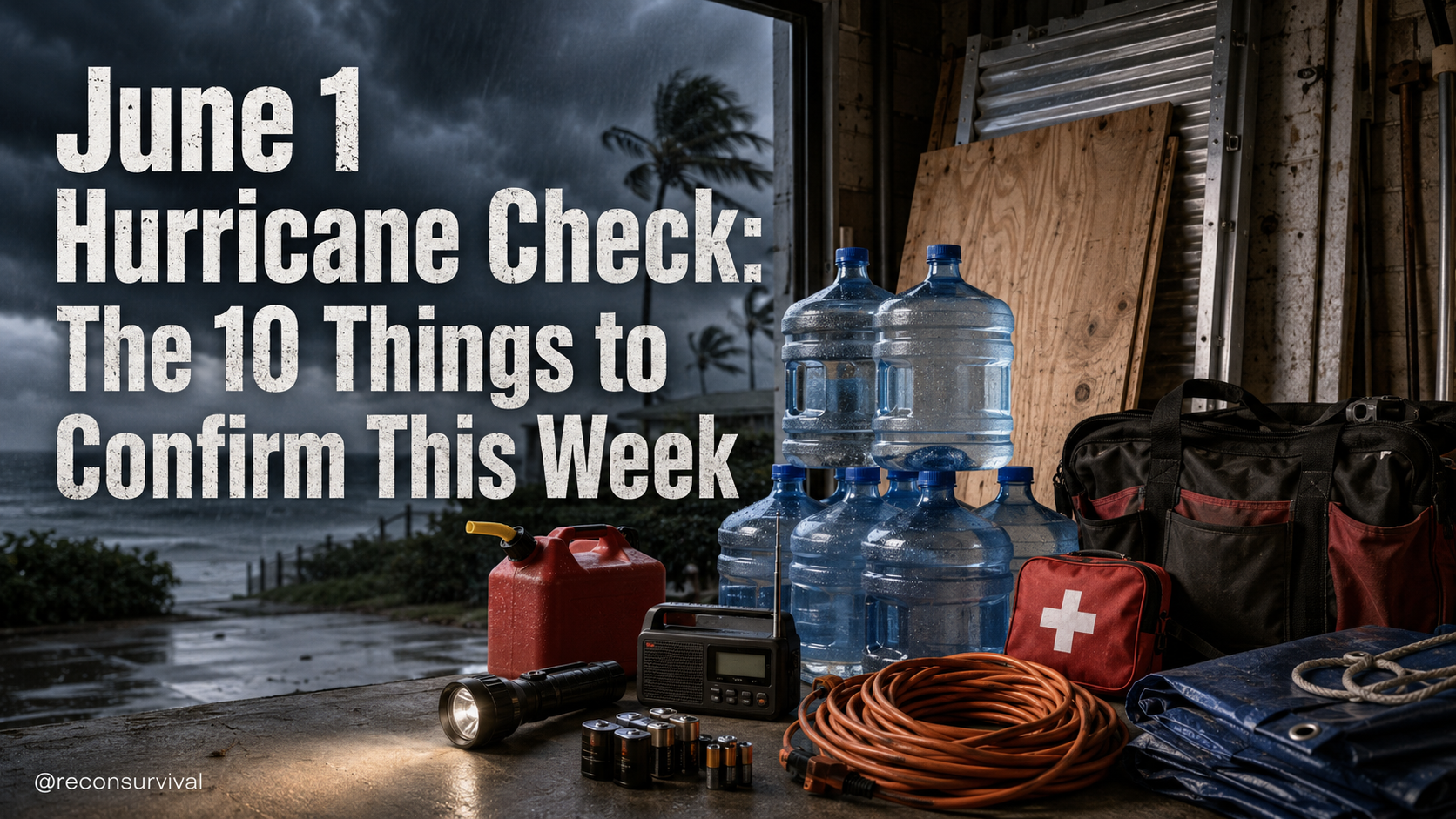
A practical way to confirm the household storm plan, evacuation options, insurance photos, medicine, documents, and supplies, but most advice is either too generic, too gear-focused, or too late.
As an Amazon Associate, I earn from qualifying purchases.
When a storm system moves inland, the time to execute your family safety plan shrinks from days to hours. Most homeowners do not realize that their current plan will fail until the first official warning arrives. By June 1, you are no longer preparing for a hypothetical scenario; you are verifying that your household can survive an event that is statistically certain to occur somewhere in the region eventually. This article solves the problem of uncertainty. It provides a concrete method to confirm that your evacuation routes, medical supplies, and digital records are actually ready to be used when the electricity goes out and the roads turn to mud.
The Critical Window of the First Week of Hurricane Season
The first week of June marks the transition into the official Atlantic hurricane season. For many residents in the coastal zones, this is not a time for panic but a time for annual calibration. The National Weather Service defines the season as starting June 1, which coincides with a shift in jet stream patterns that allows tropical systems to form in the Pacific or Atlantic and move toward the continent.
It is vital to understand that waiting for a name to be attached to a storm is the single most dangerous mistake a household can make. A storm with a name is already moving at a speed that leaves very little time for evacuation. The purpose of the June 1 check is to ensure your household is ready before the first named storm hits. This involves reviewing your insurance policy's deductible requirements, verifying that your digital photo archive is up to date, and ensuring everyone knows exactly which exit route they will take. These actions remove the cognitive load required during a high-stress event. When adrenaline spikes, families rely entirely on pre-decided plans. If that plan is untested or contains outdated information, safety is compromised.
The Common Failure Point in Family Plans
The most frequent error observed during post-storm recovery is a failure in communication and access. Families assume everyone knows the plan, but they rarely test it. A parent may have saved insurance documents in a cloud account that a younger family member does not know how to access, or they may have assumed that a specific road is clear during evacuation only to find it blocked by debris. Another common mistake is underestimating the power duration needed for medical devices or refrigeration. Many households believe a battery backup is sufficient, only to find the batteries are old or the device is incompatible with the current power setup. This lack of granularity in planning leads to situations where a family is physically safe but unable to maintain essential health or life-sustaining conditions.
The Recon Survival Confirmation System
To address these failure points, Recon Survival utilizes a systematic approach to household storm confirmation. This system focuses on the six critical pillars of storm readiness: the written plan, evacuation logistics, insurance documentation, medical inventory, essential documents, and supply verification. The goal is not to stockpile unnecessary gear but to ensure that the items you have are functional and accessible. This process is designed to be calm, realistic, and focused on value rather than fear. By following this system, you transform vague ideas into executable actions.
Step-by-Step Household Verification
The process begins with a thorough review of your primary plan. Open your notebook or digital planner and walk through the scenario of a power outage lasting more than 48 hours. Check that every family member can identify their role. Next, verify your evacuation options. Look at the map of your neighborhood and confirm which routes lead to higher ground or a pre-designated shelter. Ensure your vehicle fuel gauge is checked and your phone is charged. For insurance, do not wait until a disaster to take photos of your property. Review your policy and take clear, high-resolution images of every room, piece of furniture, and specific items you want to replace. Store these images in multiple locations: one on a cloud service, one on a USB drive, and one in a physical binder. Regarding medicine, check expiration dates. Discard anything expired and replace it. Verify that you have a manual tourniquet and trauma kit available, not just first aid bandages. Finally, gather essential documents like birth certificates and identification. Store them in a waterproof container.
A Simple Readiness Checklist
To make this manageable, use this readiness checklist to track your progress:
- Written Family Plan confirmed with all members.
- Two evacuation routes identified and mapped. – Vehicle fuel tank full and emergency kit packed. – High-resolution insurance photos taken and backed up. – Medical inventory checked for expiration dates. – Waterproof document container ready. – Communication plan (radios, batteries) tested. – Cash on hand verified for ATM outages. – Pet supplies and identification located. – Shutoff valves for gas and water located.
Follow this list systematically. If any item is not ready, note it and schedule a time to fix it. Do not rush through the list without checking each detail. A small gap in preparation, such as a missing battery in a radio, can become a fatal flaw later.
Immediate Actions for Today, This Week, and Later
Start today by checking the expiration dates on your medicine. This is a small action with immediate value. If you find expired items, replace them now. This week, focus on the evacuation routes. Drive them when it is safe to see if there are any new obstacles, such as construction or narrow bridges that might block larger vehicles. Later in the season, as the probability of tropical systems increases, review your insurance photos again to ensure you captured any changes to your home. If you move or renovate, update your inventory immediately. Consistency is the key to long-term readiness.
Recon Survival Principle
There is a core principle that guides this approach. Early warning is not about predicting the exact time of a disaster but about recognizing the signals that indicate a decision is required. Signal awareness means understanding that a shift in wind patterns or a rising tide is a trigger to activate your pre-decided plan. The goal is to reach a state where the household responds with calm action rather than reactive panic. This involves setting up decision triggers. For example, when a tropical storm watch is issued, the trigger is to move to the shelter. When a warning is issued, the trigger is to evacuate. By aligning your actions with these signals, you ensure that your household moves as a coordinated unit. This mission is about supporting the household in making the right decisions at the right time, regardless of the external circumstances.
Do Today
Use this checklist to begin your confirmation process immediately. These actions are practical and can be completed within a few hours.
- Open your household binder or digital folder. Locate the specific page containing the evacuation map and read it aloud to a family member to confirm they understand it.
- Walk to your car. Check the tire pressure and ensure you have a portable jump pack and a charged phone. Place a flashlight with fresh batteries on the center console.
- Open the medicine cabinet. Inspect every bottle for expiration dates. Toss anything that has passed its date. Take a photo of the organized shelf to show a visitor how you store it.
- Go to the bank or a local office. Print copies of your last two months of bank statements if you have not done so recently. Keep one copy in your emergency bag.
- Locate your home's water and gas shutoff valves. Clean the area around them so you can see them easily. Mark the wall with an arrow pointing to the valve.
- Test your weather radio or emergency alert app on your phone. Ensure the volume is loud enough to be heard in the bedroom and the living room.
- Review the insurance binder. Confirm the deductible amount and the date of the policy renewal. Write the deductible amount on a sticky note or post-it note on the fridge for visibility.
By completing these steps, you are not just checking boxes; you are building a buffer of safety for your family. The difference between a stressful experience and a manageable event often lies in these small, verified details. Focus on the reality of your home, your community, and your resources. Use the June 1 checkpoint to get one step ahead of the potential threats. The best preparation is the kind that happens before the first drop of rain or the first gust of wind. Start with the plan, verify the tools, and move forward with confidence.