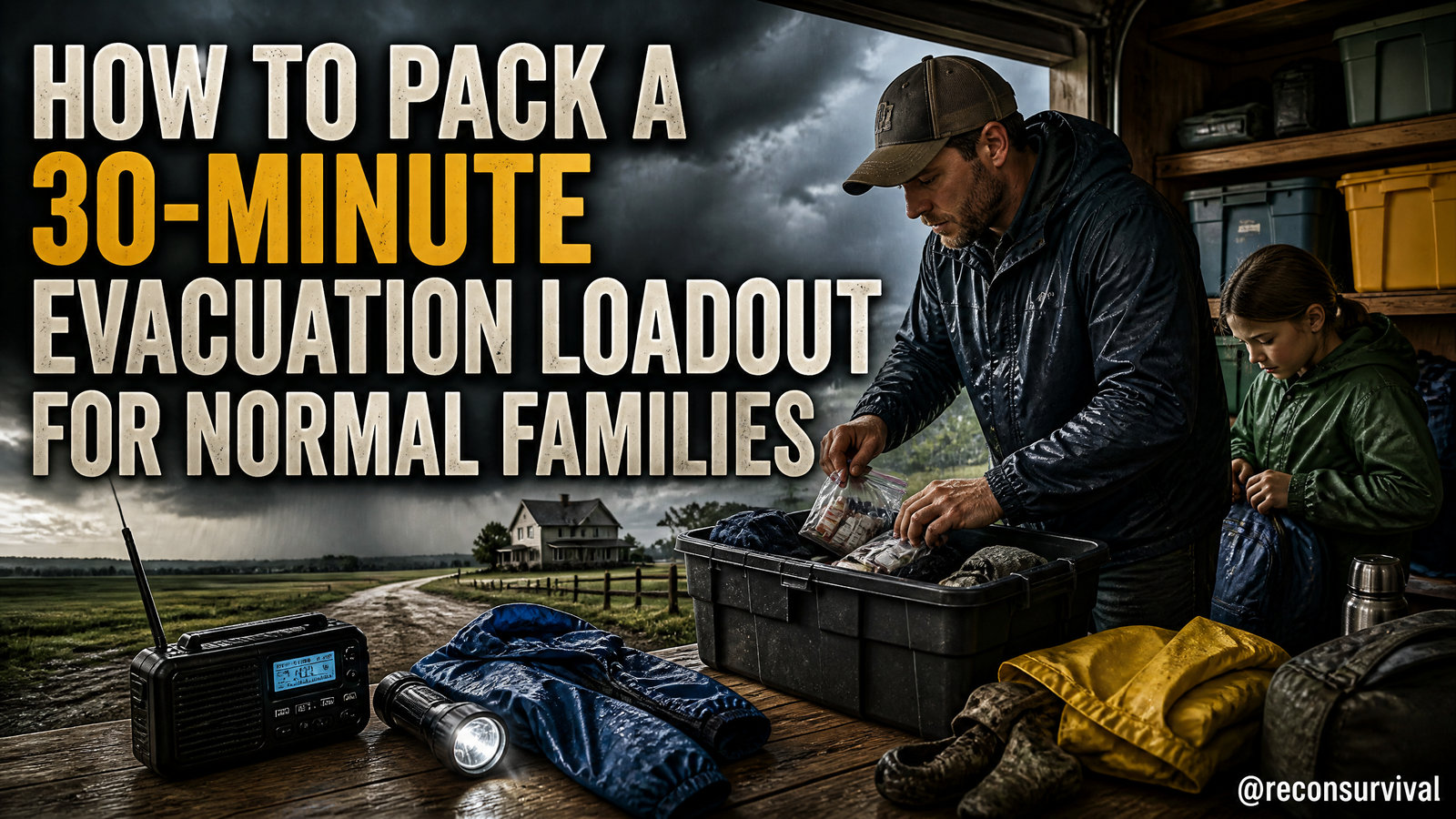
If you had 30 minutes to leave, could you load your people, pets, documents, meds, water, and chargers without tearing the house apart? Hurricanes punish delay. Decide early, pack by what fails first, and move with a checklist instead of panic.
As an Amazon Associate, I earn from qualifying purchases.
First-Hour Triage: Power, Meds, Phones
The first hour of any fast evacuation is defined by what spoils or dies first. Phones drop to 20 percent while you're still arguing about route options. Refrigerated medicine warms on the counter. Fuel disappears across town. Your loadout must protect those early failures right away, then widen into everything else.
Stage on one surface near your exit door. A kitchen island or the front hall rug works. Put one empty laundry basket or tote there for each category: documents, meds, water/food, power/chargers, pets, clothing, and comfort. You are not "packing" yet. You are stopping losses.
First-hour triage actions:
- Power phones and battery banks now. Plug into wall outlets while you pack. Move one car close to the front door and plug a 12V charger into the console.
- Pull refrigerated meds into a small cooler with two frozen gel packs from the freezer door. – Text your household check-in group, then switch phones to Low Power mode. Put one phone on a countertop charger immediately.
Evacuate or Bug-In: Decide Before You Touch a Bag
Hurricane decisions punish hesitation. Evacuate if water or wind will remove your ability to stay safe at home, or if staying blocks medical needs. Bug-in if your structure is safe from surge and flooding, you can maintain water and power for several days, and roads are already unsafe. Early August is a smart time to set these triggers before peak hurricane pressure arrives.
Decide using written triggers pinned to your fridge with a magnet:
- Your zone or neighborhood receives an official evacuation order.
- Forecast or local briefings indicate storm surge or river flooding into your block or first-floor elevation. – You rely on powered medical devices or refrigerated meds and you cannot guarantee safe power and temperature control. – You live in a manufactured home, basement apartment in a flood-risk area, or a structure with known roof or drainage issues. – Fuel at home is below a quarter tank and stations are uncertain; leaving early is safer than gambling on later refills.
Write your decision on paper: "We are evacuating by [time]." That single line removes debate and speeds the loadout.
The Costly Mistake Most Families Make
Most people try to pack from memory under stress, room by room, mixing categories, and losing time retracing steps. They grab clothes, then remember the passports, then back to the kitchen for a can opener, then to the garage for pet food, with five open bags and no load order.
The fix is a single staging zone and category containers. You put items in the right tote once, check the category list, and carry that tote to the trunk. You never set something down "just for a second" on a random end table. Use sticky notes as temporary labels on each tote: Docs, Meds, Water/Food, Power, Pets, Clothes, Comfort. A Sharpie on masking tape works when humidity kills sticky notes.
Triage Ladder: First Hour, Same Day, Next Day
You don't need every comfort in the first 30 minutes. Rank the work and move.
First hour:
- Power phones and banks, pull meds, print or grab the document folder, fill water, pack no-cook food, crate pets, and load the vehicle.
Same day:
- Refill fuel if safe. Call insurance and a trusted contact with your route and lodging plan. Check tire pressure at a station and buy ice for the cooler.
Next day:
- Replace any used meds from your pharmacy, update copies of documents you noticed were missing, and rebuild your water and food buffer at home.
Tape this ladder inside a kitchen cabinet door. It turns "we forgot" into "we'll hit that next."
Documents and IDs: Folder, Backups, Proof
Documents prove who you are, where you live, and what you own. Keep them in one grab folder on the top shelf of the hall closet or in a locking file drawer you can open fast. Use a waterproof zipper pouch or a gallon freezer bag inside a small pouch.
Pack:
- Government IDs and passports
- Insurance cards and policy numbers
- Vehicle title and registration copies
- A printed contact sheet with at least three out-of-area numbers
- Cash in small bills in a labeled envelope
- A thumb drive or cloud access to photos of rooms, serial numbers, and key papers
- A recent utility bill or lease/mortgage statement to prove residence
Write your name and two phone numbers on the outside of the folder with a permanent marker. If you've never made the folder, lay each item on the kitchen table and tick it off a checklist before it goes in.
Medicine and Health Gear: Cold Chain, Daily Doses, List
If anyone in your home needs medicine, that is a non-negotiable first-drawer priority. Use a small hard-sided lunch cooler and two gel packs. Keep the cooler on the fridge's top shelf so it's easy to find.
Pack:
- At least 3 days of all daily meds in original labeled containers
- One printed medication list with dosages and prescribing clinic info
- A weeklong pill organizer prefilled if you use one
- Spare eyeglasses and contacts with solution in a zip bag
- Basic first aid kit with bandages, tape, antiseptic wipes, pain reliever
- Thermometer and any specialty items you use weekly
Move refrigerated meds last just before you walk out. Put the cooler in the passenger footwell, not the trunk, so you can monitor temperature and access during stops.
Water and Food: Ready-to-Eat, No-Cook, Clean
Shelters, hotels, and relatives' homes all become easier when you arrive with your own water and calories. Work from the kitchen counter. Fill what you have and favor food that opens and eats cold.
Pack:
- Water at 1 gallon per person per day if space allows; minimum 1 day on departure and top up later
- Personal bottles filled from the sink and capped tight; label with names using tape
- No-cook food: peanut butter, packets or cans of tuna/chicken, crackers, granola bars, nuts, dried fruit, instant oatmeal you can make with hot water from a gas station
- Manual can opener and a metal spoon for each person
- Napkins, paper towels, and two trash bags
- Small bottle of dish soap and a sponge in a zip bag
Count your people and pets, then count liters or gallons on the floor next to the tote. The visual check prevents wishful math.
Chargers and Power: Cables, Banks, Vehicle Outlets
Dead phones blind you to road changes and cut your ability to coordinate. Stage all cables and power gear on the coffee table, then pair each device.
Pack:
- Two wall chargers and USB cables for every device you'll carry; wrap cables with rubber bands
- At least two fully charged battery banks and one 12V car adapter
- Headlamps or small flashlights with fresh AA or aaa batteries in a labeled zip bag
- A small outlet strip for hotel rooms with limited plugs
- Printed paper maps for your region in the glove box in case networks fail
Test every battery bank for at least 10 minutes on a phone before it goes into the tote. Put one bank in the glove box and one in your bag so you're not digging in the trunk at a rest stop.
Pets and Carriers: ID, Leash, 72-Hour Kit
Pets complicate hotel and shelter options, but they are family. You keep them safe by making their load simple and fast. Bring the crate into the living room now. Tape a spare leash to the handle.
Pack:
- Carrier or crate with your contact info taped on top
- Collar with tags and a second leash
- 3 days of food in zip bags, labeled with pet's name and feeding amount
- Collapsible bowls, water, and treats
- Pet meds and vaccination records in a zip pouch
- Waste bags or litter with a small tray for cats, rolled in a trash bag
Assign one person as the animal handler. Their only job for 30 minutes is to crate, calm, and carry the pets. They do not leave that role to "help with the trunk."
Clothing and Comfort Items: Shoes, Layers, Kids' Settle Kit
People can function in the same clothes for a day, but feet and warmth matter. Prioritize sturdy shoes and one layer per person. Use the bedroom floor or the hallway runner to stage one stack per person.
Pack:
- 2 changes of clothes per person, rolled tight: underwear, socks, shirts
- Sturdy closed-toe shoes if anyone is currently wearing sandals
- Light jacket or hoodie for over-air-conditioned shelters and nighttime
- Toiletries: toothbrush, toothpaste, deodorant, wipes, hand sanitizer
- Comfort kit: a paperback, deck of cards, a small stuffed animal, earbuds, and a notepad with two pens
Place each person's set into a separate bag or packing cube with a name on painter's tape. One person grabs one bag. No rummaging in the parking lot.
The 30-Minute Loadout: Room-by-Room and Roles
A time-boxed loadout removes most chaos. Assign roles on a whiteboard or a sheet of paper with names and areas, then start the timer on the microwave.
0 to 5 minutes:
- Driver moves the car to the driveway, points it out, and checks fuel. If below half, note "fuel stop A" on the contact sheet.
- Document runner grabs the folder from the hall closet, adds cash and contact sheet, and places it on the front seat. – Power runner plugs phones and battery banks into wall outlets. One phone stays charging on the kitchen counter.
5 to 15 minutes:
- Kitchen lead fills personal bottles, counts gallons, and loads no-cook food into a tote with opener and utensils. Place on the living room staging rug.
- Med lead pulls daily meds, fills the pill organizer if needed, and loads the cooler. Leaves refrigerated meds in cooler on the counter with a sticky note: "Grab last."
- Pet handler crates pets, clips leashes, packs pet food and records into the carrier side pocket.
15 to 25 minutes:
- Clothing lead pulls two outfits per person from bedroom drawers, adds shoes and layers, and zips into named bags.
- Power runner bundles chargers, outlet strip, headlamps, and maps into the power tote. – Driver starts loading the trunk: heavy water first against the back seats, then totes in order: Water/Food, Power, Meds (but keep med cooler accessible), Clothes, Comfort.
25 to 30 minutes:
- Everyone does a room sweep: open the fridge for the med cooler, grab it and place it in the passenger footwell.
- Turn off stovetop and small appliances, lock windows, leave a note on the kitchen table with date/time, destination, and contact number for responders or neighbors. – Final walk-through: wallet, keys, phones, pets, document folder. Pull the door shut. Buckle up. Go.
Write this sequence on one page and tape it inside a kitchen cabinet. When the timer is running, you follow the page, not opinions.
Practice Drill: 15-Minute Dry Run
Practice removes decision friction. Choose a calm evening. Tell the household you're doing a 15-minute dry run without driving away. Set a timer on a phone and use the same roles and staging rug you would in a real event.
Drill steps:
- Move the car, power the banks, and start staging totes on the living room floor.
- Everyone packs their assigned category using only what's on the printed checklist on the fridge. – At minute 12, call "wrap." Load everything into the trunk in the correct order, close it, and sit in the car. Stop the timer.
After the drill, open each bag on the coffee table. Count what's missing. Write down any bottlenecks: wrong tote size, missing pet records, dead headlamp, no spare car charger. Fix one issue before bed.
Measure Progress: Timers, Photos, Weight
Skills improve when you measure them. Keep a simple log sheet in the document folder with dates, times, and notes. One household earned 9 minutes back just by placing the doc folder on the hall shelf and pre-packing chargers.
Ways to measure:
- Time to "car doors closed" using the same start conditions
- Photo of the trunk after loading to compare order and access to the med cooler
- Total water weight loaded; write gallons on the tote with a marker
- Number of backtracks during packing; tally marks on a sticky note
- Battery bank readiness; write last full charge date on painter's tape
Set a target: a clean, complete loadout in 25 minutes with no backtracks and every phone above 80 percent. When you hit it twice, your system is working.
Recon Survival Principle
Pack by failure order, not by room. Phones, medicine, water, and proof of identity are your first-protect items. Roles, labels, and a single staging zone replace memory and debate. The goal is not a perfect kit. The goal is a fast, repeatable loadout that keeps your household functional on the road and steady when you land.
Do Today
- Put a grab-ready document folder on a hall shelf. Include IDs, insurance, a printed contact list, and $100 in small bills in a labeled envelope.
- Place a small cooler with two gel packs on the top shelf of your fridge. Add a blank meds list and a pen inside the cooler lid.
- Coil two phone chargers and one 12V car adapter in a zip bag labeled "Car Power" and store it in your glove box.
- Stage a pet crate in the living room closet with a spare leash taped to the handle. Pre-pack 3 days of pet food in zip bags.
- Pre-pack a "kitchen evac tote" with a manual can opener, utensils, napkins, dish soap, sponge, and two trash bags. Store it on the bottom pantry shelf.
- Put one flashlight with fresh batteries on each bedroom nightstand. Write the battery change date on tape around the body.
- Create a one-page loadout checklist with roles and the 0-30 minute sequence. Tape it inside a kitchen cabinet.
- Fill two spare water jugs today, label them with the fill date, and store them on the garage floor against the wall near the trunk loading area.
- Do a 15-minute dry run this week. Time it, load the trunk, take a photo, and note what you missed.
- Write evacuation triggers on a sticky note and put it on the fridge: "Evacuate if [zone order, surge risk, power-med risk, structure risk]."
- Move your document folder, cooler, and kitchen tote to the same side of the house as your driveway for faster carries.
- Top off your vehicle to at least a half tank and put a paper map in the glove box.