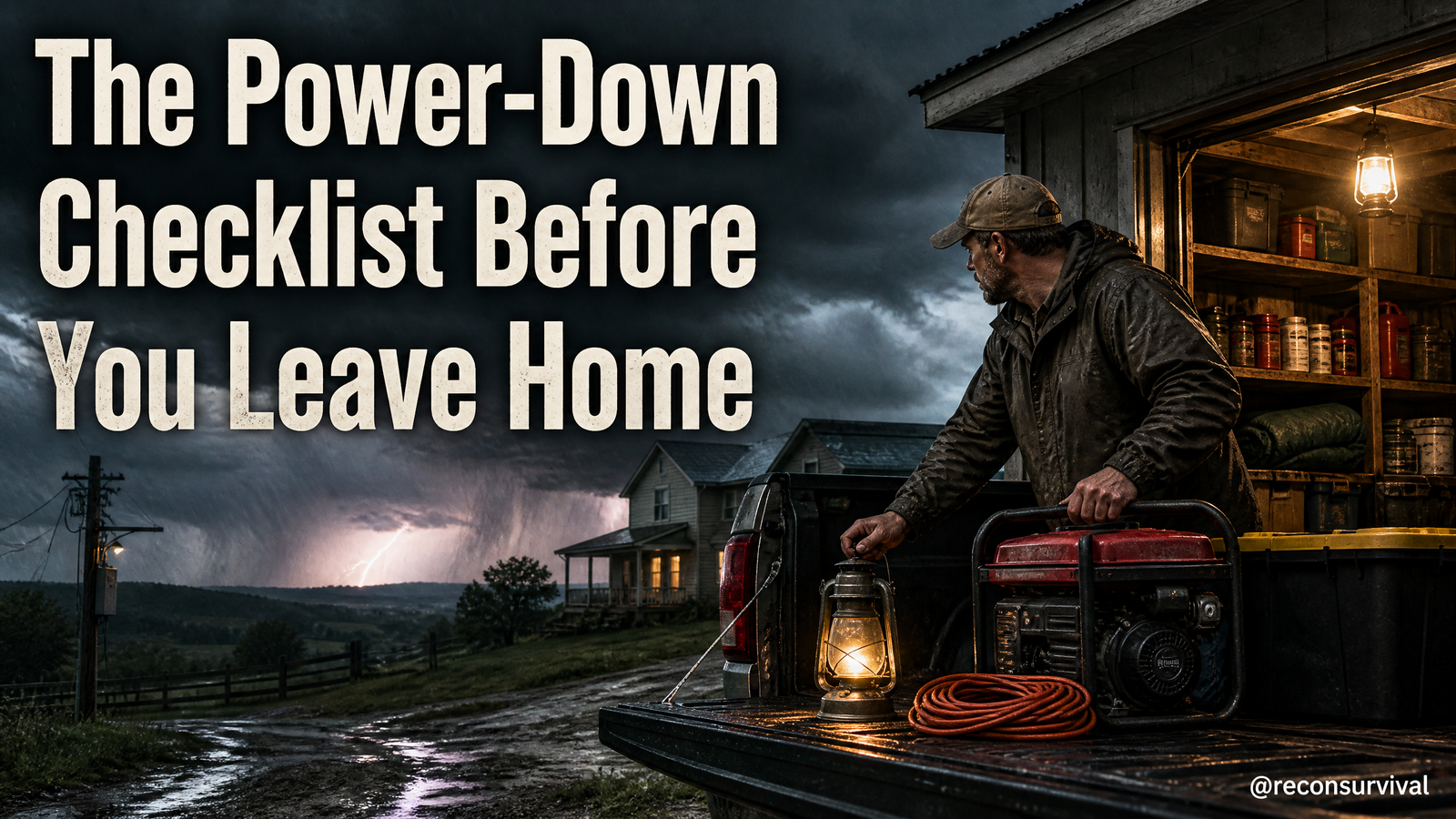
Wind pushes rain under shingles, the grid wobbles, and compressors slam on against low voltage. That's how freezers thaw, pumps burn out, and small leaks become large claims while you're driving away. The fix isn't a bunker of gear. It's a clean power-down routine that turns random failures into controlled off-switches you can check with your hand before you close the door.
As an Amazon Associate, I earn from qualifying purchases.
Evacuation Signal to House Loads: The Chain You Can Control
Hurricane tracks and evacuation orders translate into a predictable strain on your house. High winds cause line faults. Utilities switch, shed, and reclose. The result is brownouts and spikes. Motors and electronics hate erratic power. If you leave everything energized and plugged in, your house rides every surge without you there to catch a smell, flip a switch, or pull a plug.
One short seasonal note: when peak hurricane pressure gets close, lead time shrinks. Your routine needs to be ready before someone on a radio tells you to go. The chain is simple: wind to unstable power to hidden load to failure. Break the chain at your breaker panel and outlets. Pull the heat out of the system by turning off what you don't need running in an empty home.
The Mistake People Make: Waiting and Guessing
The most common failure isn't a fancy technical one. It's waiting until the car is packed to think about the house and then guessing which switches matter. People leave refrigerators stuffed, water heaters hot, small appliances plugged in, garage doors live, and valves unmarked. They count on luck and a neighbor's text to find out if anything went wrong.
Guessing shows up later as tripped GFCI outlets feeding freezers, fried routers that never sent one camera clip, a washing machine hose that split under city pressure, or a generator that was left with a half-choke and a fuel sheen pooling under it. Replace the guess with a written sequence, labels on real hardware, and a 10-minute walk-through you can run while the house is calm.
Evacuation vs Bug-In: What Changes in the Power-Down
If you're bugging in, you keep more systems alive: sump pumps, refrigerators, your network, medical devices, and lighting. Your plan is surge protection, safe generator placement, and careful load management. If you're evacuating, you're protecting an empty shell from power events, water leaks, and fuel hazards until you return.
That means more off-switches when you evacuate. You'll deactivate many outlets and appliances you'd otherwise protect and use. You'll shut water at the main instead of trusting hoses and seals. You'll lock down fuel, take photos, and leave a narrow set of circuits either off entirely or explicitly staged (for example, a dedicated camera UPS if you have that capability). Decide which path you're on as early as possible. The sooner you choose, the simpler your house becomes.
Main Breaker and Circuits: What to Cut, What to Leave
Your breaker panel is the house's spine. You don't need to be an electrician to make it safer; you do need a marker, painter's tape, and a flashlight.
Do this on the panel in the garage, basement, or utility closet:
- Open the panel, stand to the side, and use a flashlight to read labels. If they're vague, write clear ones on painter's tape: "Fridge," "Sump," "Garage Door," "Water Heater," "HVAC," "Bedrooms," "Living Room Outlets."
- Photograph the panel with the door open. Get one wide shot and a close-up on the legend.
- For evacuation, switch off non-critical breakers in this order: living room/kitchen outlets, dishwasher, microwave, laundry, electric range (if electric), HVAC air handler. Leave life-safety devices (hardwired smoke/CO alarms) energized if they're on a dedicated breaker. – If you plan to keep a single circuit on (for a camera or a sump with battery backup), tape a bright label next to that breaker and verify with a plug-in tester that nothing else shares it. If you aren't sure, don't leave it on.
About the main: many households simply turn the main breaker off before leaving. That removes surge risk to everything hardwired. If you rely on a sump pump or a monitored alarm that requires power, set that up before storm season with a battery/UPS or cellular gateway so you don't need the grid. If you don't have that, your safer move during evacuation is usually to turn the main off and accept the house is truly dark while you're gone.
Water Heater and Main Valve: Stopping Leaks Before They Start
Water under pressure is quiet until it isn't. One failed hose or a hairline crack in a tank can run for days. Shutting water off costs nothing and prevents the most common property damage claim during evacuations.
Run this sequence at the utility corner where your water main and water heater live:
- Find the main water shutoff. It's often a wheel valve or a lever on the wall where the line enters the house. Turn the lever 90 degrees to perpendicular to the pipe, or close the wheel clockwise. Label it with tape and a Sharpie: "Main Water – OFF for evacuation."
- Stand at a sink, open the hot and cold taps, and watch flow stop after the main is off. This bleeds pressure and confirms you got the right valve.
- At the water heater: set the control to Vacation or Pilot (gas), or switch off the dedicated breaker (electric). If yours has a clear cold-water inlet valve on top, close it. Note your steps on a tag tied to the heater's relief valve with a zip tie. – Close the supply valves to your washing machine (two knobs behind the unit). Write the date on blue tape on the wall: "Washer valves closed for evacuation."
If you're on a well: switch off the well pump breaker and shut the pressure tank's supply. If you're not sure, leave the well system as-is and focus on the main house valve. Follow manufacturer instructions for any specialized system.
Refrigerator and Freezer: Cold Strategy and Food Decisions
A refrigerator that cycles through brownouts can lose its compressor or simply thaw and become a mold box. Decide what it does before you leave.
In the kitchen:
- 24 hours before a likely departure, turn the fridge to its coldest safe setting and move as many perishables as possible into the freezer. Add a few sealed water jugs or freezer packs to fill air space. A full freezer stays cold longer than an empty one.
- Freeze a small cup of water and place a coin on top. Leave it in the freezer. If you return and the coin is at the bottom, you know the freezer fully thawed at some point. – If evacuation timing is uncertain or you expect a long outage, empty perishables into a cooler for the road or discard them. Wash the interiors with a mild bleach solution, dry them, and leave doors propped open with a towel to prevent odor. – Unplug countertop appliances: coffee maker, toaster, blender, microwave. Wrap cords and place them on the middle shelf so they aren't sitting on the counter if water enters.
If your plan is to leave the fridge running on grid power while away, plug it into a quality surge protector and verify the fridge is on a dedicated breaker. Understand that power fluctuations still stress compressors; the safest option for the house, with you gone, is usually to empty it.
Fuel, Propane, and Generator: Safe Shut-Down and Staging
Fuel is helpful outside and dangerous inside. Before you leave, make fuel and generator status visible, stable, and separated from ignition sources.
In the garage or shed:
- Move gasoline into DOT/UL-listed containers with caps tight. Write the date and fuel type on each can. Store them on the lowest shelf away from the water heater or furnace. Never leave a can near a pilot light or inside the house.
- For portable propane cylinders, close the service valve by turning clockwise. Store cylinders upright on a paved or dirt patch outside, not in the garage. Use a chain or bracket to keep them from tipping. Do not store inside. – For a portable generator, wheel it to a dry corner with airflow, a cable lock point, and the toolkit in a small bin: spare spark plug, wrench, oil, funnel, and a printed start/stop card. If you practiced a shutdown, write the steps on that card: fuel valve off, wait for engine to stall, switch off, cover once cool. Never run it in a garage, even with the door open. – If you have a transfer switch or interlock, set it to the non-generator position and tag it with blue tape: "Grid only – generator disconnected." Photograph the switch position.
Don't backfeed a house and don't defeat interlocks. Follow the manufacturer's instructions and your local codes. Carbon monoxide kills quickly and invisibly; your CO alarms should stay in place with fresh batteries.
Garage Door and Vehicles: Last-Out Steps
Garage doors draw power and can be a weak entry point if their logic boards fry and leave them unlatched. Vehicles are your exit option; set them up like you'll actually need them.
At the garage:
- With power still on inside, test the garage door manual release cord (usually a red handle). Lift the door by hand to confirm it moves freely. Re-engage the trolley.
- Unplug the garage door opener from the ceiling outlet. Zip-tie the cord up so it doesn't dangle. – Park the car facing out, with a paper map and a small flashlight in the glove box. Put one pair of work gloves and a poncho under the driver seat. Top off windshield washer fluid. – If flooding is a concern, move the vehicle to a known higher point on your property before you leave. Take the spare key with a label on it.
Photos, Labels, and Meter Readings: Documentation That Pays You Back
Documentation isn't just for insurance; it's how you reset the house fast when you get back.
On your phone and on paper:
- Walk each room and take wide photos that show floor, outlets, windows, and furniture. Open closets and take one photo inside. Take one shot of each shelf in the pantry and the inside of the fridge/freezer before you empty.
- Photograph your electric, gas, and water meters. Write down the readings on a notepad on the fridge with the date and time. Leave the pad there when you go. – Print or write a one-page "Power-Down" card and tape it inside the breaker panel door. Include your shutoff sequence and the location of the main valve, water heater controls, and generator key. – Create a contact sheet: utility numbers, a neighbor, and one out-of-area contact. Tape a copy inside a kitchen cabinet and keep a copy in the glove box. – Label three keys: front door, back door, and gate. Put a spare set in a zip-top bag in the car.
Minimum Viable Power-Down: The 20-Minute Version
Not every departure is tidy. If you get a short-notice evacuation, do the core moves that remove the biggest risks in the least time.
Run this fast list, room to room:
- Utility corner: turn off the main water valve; set water heater to Vacation/Pilot or flip its breaker off.
- Kitchen: empty perishables or at least the meat and dairy; unplug small appliances; coin-on-cup in the freezer; wipe door gaskets dry. – Living areas and bedrooms: unplug TVs, game consoles, desktop PCs, and lamps. Put cords on top of furniture, not on the floor. – Garage: unplug the opener; move fuel to safe storage; close portable propane valves; wheel generator to a clean, locked corner; check funnel and oil are in the bin. – Panel: switch off non-critical breakers; photograph the panel; tape your fast checklist inside the door. – Doors and windows: close interior doors; lock windows; pull shades on street-facing windows. – Smoke/CO alarms: press test buttons in the hallway and bedrooms; replace any dead batteries from the junk drawer.
That's the minimum. It buys you time and removes the top three danger sources: bad power on empty loads, water under pressure with no one home, and fuel stored carelessly.
Safety Limits and Realistic Failure Points
A few edges to respect keep you out of trouble.
- Natural gas: only shut off the main gas service valve if you smell gas, hear it hissing, or see damage. Once the main service is off, many areas require a professional to turn it back on and relight appliances. Appliance-specific controls (like a water heater set to Vacation/Pilot) are fine to use. Follow your utility's guidance.
- Electricity and water: never operate the breaker panel if you're standing in water or the wall is wet. If the basement floods, stay out and call your utility if you suspect electrical hazards.
- Sump pumps: if you rely on a sump pump in heavy rain, plan for that before evacuation day. Install a battery backup sump or a water-driven backup if available in your area. Do not leave a random circuit on and hope it covers the sump. Most general-use circuits share outlets and can energize more than you think.
- Rooftop solar and batteries: grid-tied solar typically disconnects automatically during outages. If your system has an AC/DC disconnect, use the labeled shutoff steps from your installer. Take a photo of the inverter screen before leaving. If you're not sure, leave it. Don't pull covers or open enclosures.
- Food safety: if in doubt about refrigerator or freezer temperatures on return, discard questionable food. The coin-in-cup gives you a clue; your nose and common sense do the rest.
- Generators: do not run a generator indoors, in a garage, or under a window. Keep it on level ground, far from openings, and follow the manual for shutdown. Install and test CO alarms in sleeping areas.
Build maintenance into your calendar. Test the main water valve quarterly. Exercise the generator under light load for 15-20 minutes monthly in a safe location. Replace washing machine hoses every 5 years. Review and refresh labels as they fade.
Action Thresholds: When to Pull Each Lever
Decision triggers make the house simpler under stress. Not everything has to happen at once.
- Signal: credible forecast of significant wind and outage risk. Action: freeze water jugs, move perishables to freezer, charge battery banks, print the latest checklist.
- Signal: official evacuation watch or strong likelihood of leaving within 24-48 hours. Action: shut off water at the main, set water heater to Vacation/Pilot or flip off the breaker, photograph meters, label breakers you'll cut, top off fuel and washer fluid.
- Signal: clear leave window within the next 12-24 hours. Action: empty perishables, switch off non-critical breakers, unplug small appliances, unplug garage opener, stage generator safe and locked, move vehicle facing out, place documentation on the fridge.
- Signal: you're walking out the door. Action: confirm main water is off, confirm the panel is set as planned and photographed, test smoke/CO alarms, lock windows and doors, pocket spare keys and contact sheet.
Heat to load to water demand to decision trigger: heat drives grid instability, your loads cycle harder, water demand can drop in the city while pressure spikes, and seals let go. The earlier you act, the less energy and pressure are left in the house to do damage.
Recon Survival Principle
Control the flows. Electricity, water, fuel, and cold are the four streams running through your house. When you stay, you shape them. When you leave, you close them. The habit that keeps households out of trouble is simple: label the controls, practice the sequence, and act on the first solid signal instead of the last urgent one.
Do Today
- Find and tag your main water shutoff. Turn it off and back on once to confirm it moves. Write the direction of off/on on a piece of tape by the valve.
- Open your breaker panel, photograph it, and relabel at least five breakers with clear names using painter's tape and a Sharpie.
- At the water heater, locate the control (Vacation/Pilot switch or dedicated breaker). Write a small tag with your shutdown steps and zip-tie it to the heater.
- Make a one-page Power-Down card: your shutoff order, panel location, main valve location, and generator notes. Tape a copy inside the panel door and another inside a kitchen cabinet.
- Stage a documentation kit on the fridge: notepad, pen, and a printed contact sheet with utilities and one out-of-area contact.
- Test smoke and CO alarms in bedrooms and hallways; replace batteries where needed and write today's date inside the cover.
- Put a red zip tie on your garage door opener cord and practice the manual release once; re-engage and unplug the opener.
- Consolidate countertop appliances: unplug them, wrap cords, and place them in a single cabinet so you can clear counters fast on departure day.
- If you own a generator, verify the fuel valve, choke, and switch positions. Write start/stop steps on an index card and place it in the generator bin with a funnel, oil, and plug wrench.
- Freeze one small cup of water with a coin on top and keep it in your freezer as your simple thaw indicator.
- Close the hot and cold valves to your washing machine and write today's date on blue tape behind it to mark the check.
A quiet house survives better. Label, practice, and power down on your terms before you roll out.