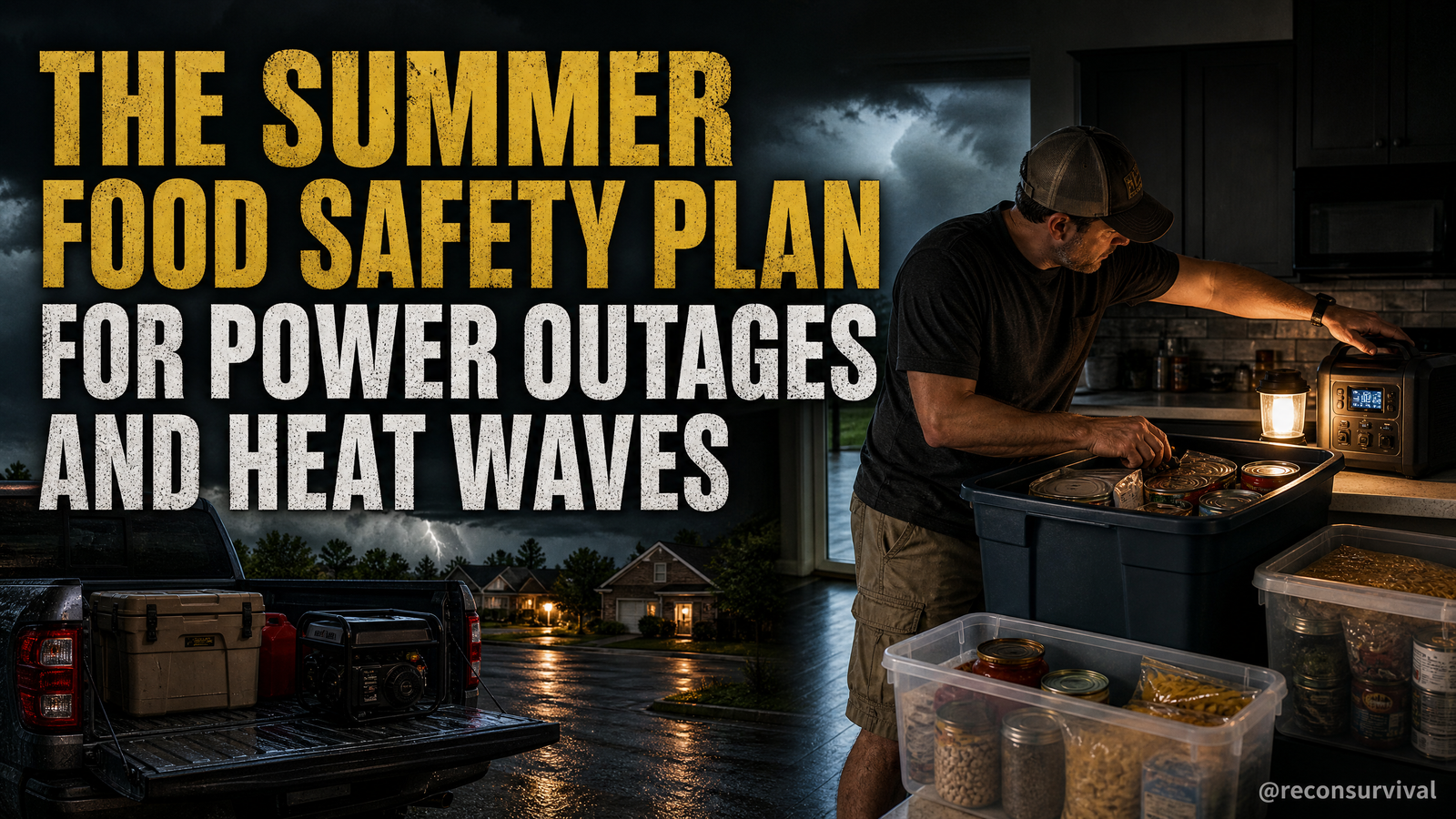
The first item to fail during a summer power outage is rarely the generator or the freezer. It is the cold chain. Within hours of a heat wave combined with a grid failure, the internal temperature of a refrigerator climbs past the safe zone, turning perishable groceries into a biological hazard long before the ice cream melts. Most households react only after the first item spoils, triggering a scramble to buy replacement food at a time when shelves are empty and prices spike. This reaction creates a cascade of poor decisions: throwing away money, risking foodborne illness, or consuming questionable leftovers during a crisis.
The solution is not panic buying or panic eating. The solution is a pre-planned decision framework that dictates exactly which foods go first, how to manage limited cooling resources, and when to discard items to keep the family safe. This approach treats food safety as a triage operation, where household decisions are made calmly before the stress of a blackout or extreme heat sets in.
The First Hour of Heat and Power Loss
When the lights go out in July, the battle is for time. The window to save perishable food narrows rapidly as ambient temperatures climb. The immediate goal is not to preserve every last ounce of food for a week; it is to maintain safety for the first 24 to 48 hours by managing the most volatile items first.
Start by knowing your appliance limits without guessing. A full, unopened refrigerator will keep food cold for about four hours if the door remains sealed. A full freezer will hold its temperature for roughly 48 hours, whereas a half-full freezer lasts only 24 hours. These are not theoretical numbers; they are the physical reality of insulation and mass.
Your immediate action is to limit door openings. Every time you open the fridge, the cold air escapes and is replaced by hot air. In a heat wave, the external temperature might be 100°F, making the internal environment rise to unsafe levels in minutes if you are checking contents.
Create a visible "Do Not Open" trigger. Place a piece of paper with "DO NOT OPEN" written in large letters on the front of your freezer and refrigerator. If you have children, assign a specific person, perhaps a teen or a responsible adult, to be the sole gatekeeper. No one touches the handle unless there is a fire or a medical emergency. This single habit preserves the cold air and buys you critical time.
The Spoilage Triage Ladder
Not all foods spoil at the same speed. Treating a block of cheese the same way as a carton of milk leads to unnecessary waste or, worse, accidental consumption of unsafe items. You need a decision ladder that prioritizes items based on their bacterial growth potential.
Rank your perishables into three tiers immediately. Tier 1 items are the highest risk and must be evaluated first: raw meat, poultry, seafood, eggs, milk, and soft cheeses. These items become unsafe rapidly once the temperature rises above 40°F. If you have a food thermometer, check the temperature of these items. If you do not have one, assume these items are unsafe if they have been at ambient temperature for more than two hours during a power outage, or one hour if the room temperature exceeds 90°F.
Tier 2 items include cut fruits and vegetables, deli meats, and cooked leftovers. These items have a slightly longer window but still require strict temperature control. If you are unsure about the safety of these items, do not taste them. Smell or visual inspection is not a reliable safety check for bacterial toxins.
Tier 3 items are the most resilient: hard cheeses, butter, margarine, whole fruits, and vegetables. These can often remain safe longer or can be salvaged by peeling, cutting away the outer layer, or cooking thoroughly if the power is restored.
Managing the Cooler and Limited Power
Once the initial hours of a blackout deplete your appliance cooling, you will need to move to coolers. This is where many households fail because they wait until the freezer is warm before retrieving ice packs.
Prepare a dedicated "cooling station" indoors. This should be a location away from the direct sun, such as a basement, a north-facing room, or a shaded garage. Keep two large coolers ready in advance. Fill one with block ice, which melts slower than cubed ice, and the other with ice packs or frozen water bottles.
The rule for cooler usage is strict: place Tier 1 items in the cooler immediately if the power is out for more than four hours and the ambient temperature is high. Do not wait. If you have a portable battery-powered fan, place it near the cooler to circulate air, but keep the cooler lid sealed.
For vehicles, the strategy changes. If you are stuck or have to shelter in a car during a heat wave, never leave food in the passenger compartment for more than two hours. The glass of a car creates a greenhouse effect, raising the interior temperature far above the outside air. Store any perishables in the trunk, which is slightly cooler, or move them to a shaded area immediately upon arrival at a shelter or safe location.
The Cooling Method Decision Matrix
When deciding whether to move food to a cooler, use a simple decision matrix based on your resources. You do not need to burn through your ice supply if you don't have to.
Check your freezer temperature daily during a heat advisory. If your freezer is already warm to the touch, do not wait for it to reach room temperature to act. Open it as little as possible to consolidate items into smaller, more manageable groups. If you have a generator, place it outside in a well-ventilated area to power a small fan or keep a single appliance running, but prioritize the cooling of the freezer over the refrigerator.
If you lack ice, freeze water bottles the day before a predicted outage. These serve a dual purpose: they cool the cooler as they freeze and provide drinking water once melted. Use a bucket or large tub to catch meltwater, ensuring you do not contaminate your drinking supply or your food storage.
The Two-Hour Rule in Practice
The most common mistake people make with food safety during summer outages is relying on intuition rather than the two-hour rule. This rule states that perishable food should not be left at room temperature for more than two hours. In a heat wave, that window shrinks to one hour.
Many people assume that if food still looks and smells fine, it is safe to eat. Bacteria like Salmonella and E. coli can grow rapidly in warm food without changing its appearance. If you are unsure whether food has been held at a safe temperature for the full two hours, the only safe decision is to discard it.
Apply this rule to leftovers as well. If you have cooked food in the fridge, it must be eaten or frozen within 3-4 days of cooking. If the power goes out, and you cannot determine the temperature, err on the side of caution. It is better to throw away a few dollars worth of food than to risk a medical emergency during a crisis.
The Post-Outage Verification
Once power is restored, do not immediately assume the food is safe. The temperature may have fluctuated in a way that killed some bacteria but allowed others to thrive. Use a food thermometer to check the internal temperature of perishables. If the internal temperature of meat, poultry, or seafood has exceeded 140°F for more than two hours, discard it.
Check the temperature of frozen items. If the food has thawed and the internal temperature is still at 40°F or below, it can be refrozen or cooked. However, if the food has a warm core or a slimy texture, discard it immediately. Do not refreeze food that has been at room temperature for an extended period.
Recon Survival Principle
The core principle guiding all these actions is that food safety is a binary decision: safe or unsafe. There is no middle ground where "a little risk is acceptable" when it comes to bacterial growth in warm temperatures. This mindset prevents the common failure of trying to "make it work" with borderline items. You must treat every hour of heat exposure as a permanent loss of safety for Tier 1 items. This forces you to act decisively rather than hesitating, which is the single most important factor in preventing illness during a crisis.
Do Today
To ensure you are ready for the next heat wave or outage, perform these specific actions this week. First, check your freezer and refrigerator thermometers. If they are not calibrated, replace them or use a separate digital thermometer to verify accuracy. Second, write down your emergency contact numbers and local shelter locations on a piece of paper and tape it to the inside of your refrigerator door. Third, gather two large coolers and fill one with water bottles to freeze; place them in your freezer now so they are ready for immediate deployment. Fourth, date and label your current stock of perishables to know exactly what is nearing expiration. Finally, practice the "Do Not Open" protocol with your household members. Assign one person to be the gatekeeper and have them lock the door or place a sign over the handle for one hour to simulate the discipline needed during a real event.
These steps create a field-ready system that relies on preparation rather than reaction. By prioritizing the most volatile items and establishing clear triggers for action, you protect your family from foodborne illness during the most vulnerable hours of a crisis. The goal is not just to have food, but to have safe food when you need it most.
- Count stored water by person and day, then write the number where the household can see it.
- Date the oldest container and move it to the front of the rotation.
- Add extra water for pets, heat, illness, cooking, or anyone with higher needs.
- Stage the filter, clean pot, funnel, and water-moving container together.
- Write the no-power water sequence on paper: drink, cook, wash, flush, refill.
- Check every cap, container, shelf, and storage spot for leaks or heat exposure.
- Assign one person to refill, one to rotate, and one to recheck after the next alert.