Guests arrive, deliveries pile up, and the kitchen becomes a high-traffic zone.
The Entryway and the Door
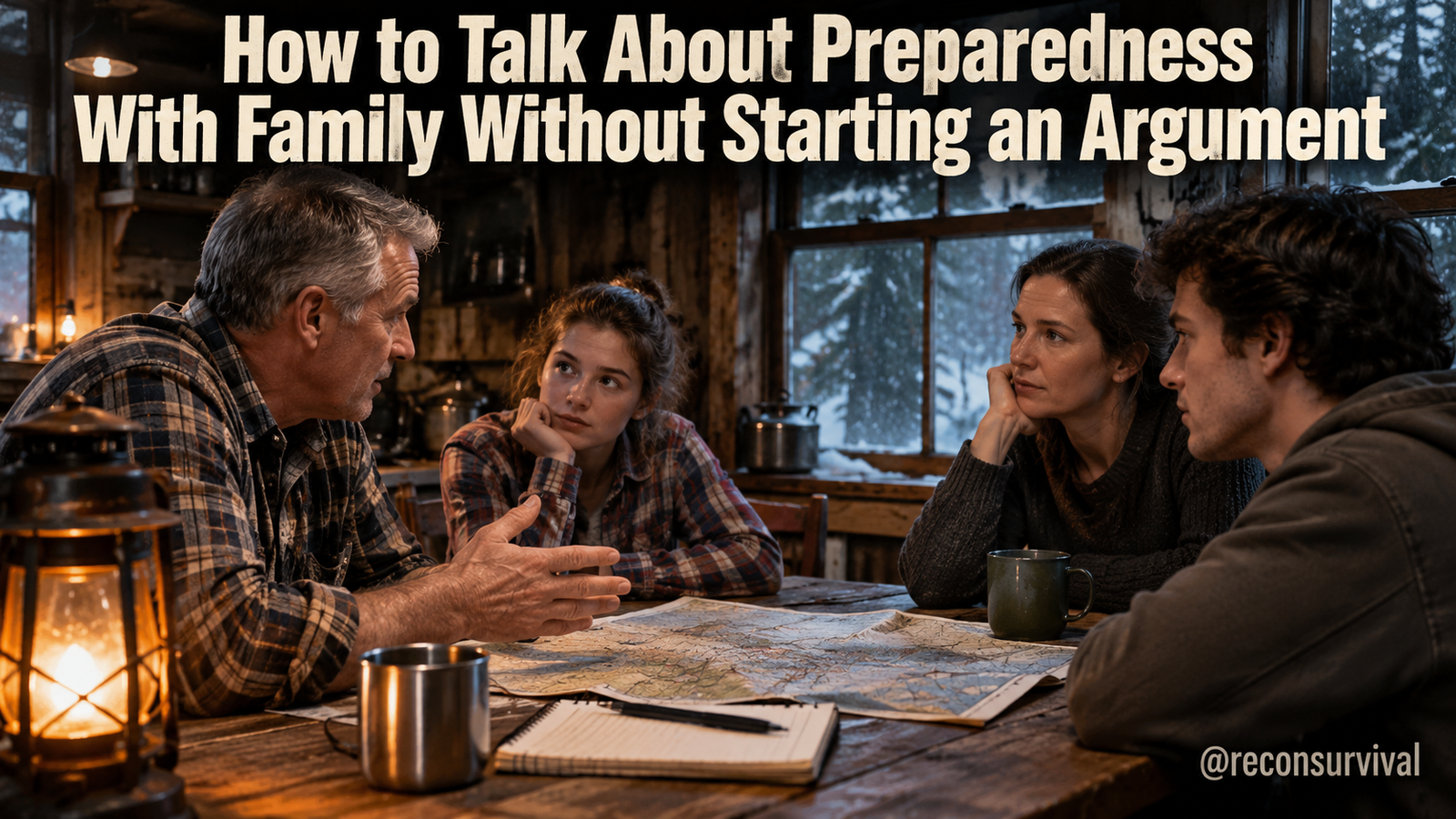
Guests arrive, deliveries pile up, and the kitchen becomes high-traffic. A preparedness conversation often derails when it starts as a warning about a disaster or a lecture on buying gear. The result is usually deflection, not planning. The problem is that most advice focuses on "what if" scenarios that sound like threats. When a conversation feels like a threat, the listener prepares to argue, not to solve. The solution is a physical anchor that shifts the talk from abstract fear to concrete action. It starts with a simple card. Take a standard 4×6 inch index card or a piece of notebook paper. On the front, write one clear instruction for the family to follow if the power goes out or the phone lines are dead. Keep the wording neutral and instructional, not alarming. Examples include "Call Grandma's house first" or "Check the water supply before we leave." On the back, list the specific roles for each household member. Keep it short: one task per person. Place this card on the kitchen counter near the phone or on the main entryway hook where keys go. This object does the work of the conversation. It makes the plan visible without requiring a speech. When a storm is forecast or a neighbor calls about a local outage, you can point to the card. The conversation becomes about checking the list, not debating the risk.
The Kitchen and the Calendar
The kitchen is the center of holiday planning. This is where meals are cooked and schedules are made. It is also the most logical place to attach a preparedness discussion to an existing routine. Do not introduce a new meeting or a special "safety talk." Instead, attach the discussion to the act of checking the calendar or preparing food. Ask a family member to check the weather or review the guest list. Use that pause to mention the card on the counter. "Hey, while we're looking at the calendar, let's just confirm who is doing what if the power stays off for a few hours."
This approach treats preparedness as a standard part of household management, like checking the gas gauge or locking the door. It removes the stigma that preparedness is only for experts or for times of crisis. The role-based method works because it distributes the cognitive load. One person handles the radio, another handles the food, a third handles the children. When everyone knows their specific job, there is less confusion and less anxiety. The family does not need to agree on a single grand strategy; they only need to agree on the assignments.
The Utility Room and the Storage Area
Preparedness often fails because it relies on gear that is hidden or inaccessible. If the plan requires a specific radio that is packed away in a basement, the plan fails in the moment. The utility room, the garage, or a dedicated storage closet is where the physical checks happen. This is where you verify that the items needed for the roles on the card are actually there. Do not conduct a full inventory check. Instead, perform a quick visual verification of the items assigned to the card. If the card says "Check the flashlight," the flashlight should be visible and turned on recently. If the card says "Call the neighbor," the phone number should be written down or saved in the phone. If a necessary item is missing, add it to the card as a temporary action item. Write "Buy extra batteries" on the back of the card and put it in the shopping list. This turns a gap in the plan into a specific, solvable task. It prevents the conversation from stalling on "we need to get that."
This step also addresses the common mistake of hoarding gear that no one knows how to use. By tying every item to a specific role on the card, you ensure that every piece of equipment has a purpose. If an item has no role, it does not belong in the active storage area for the family.
The Living Room and the Social Circle
This framing positions the family as a unit that is ready, rather than a group that is preparing for a disaster. It invites others to ask questions or offer help without feeling pressured to adopt the same level of preparedness immediately. The social dynamic shifts from "You should be ready" to "Here is what we are doing, and it helps us stay together." This is the value-first approach. The value is family cohesion and calm, not the gear itself.
A Simple Decision Tree for the Family
When a situation arises, the family can use the card to decide the next step. The decision tree is simple enough to be read by a child or a tired adult. ## Step 1: Is the power out or is the phone down? * Yes: Everyone goes to their assigned station on the card. * No: Continue normal activities. ## Step 2: Does everyone know their role? * Yes: Execute the role. * No: Pause. The person responsible for the role checks the card again. If the card is missing, the adult in charge reads the card aloud to the family. ## Step 3: Is the situation escalating? * Yes: Follow the emergency contact on the card. Call the designated neighbor or family member. * No: Monitor the situation. Wait for the status update. This tree is not a complex algorithm. It is a visual guide that removes the need for debate in the moment. If the family has practiced the roles on the card, the tree becomes a routine, not a crisis.
Today, This Week, This Season
Write the card. Pick one emergency scenario relevant to your current season, like a winter storm or a power outage. Write the instruction and the roles on a piece of paper. Tape it to a visible surface in the home.
This Week Perform a quick visual check of the items needed for the roles. Ensure flashlights have batteries, water is accessible, and phones are charged. If an item is missing, add it to the shopping list on the card. ## Later This Season Review the card with the family during a meal or a calm evening. Ask if the roles still make sense. Update the contact numbers or add a new role if the family has grown. Keep the card in the same spot so it remains the default reference. This rhythm ensures the plan stays current without becoming a burden. It respects the family's time and energy while maintaining a baseline of readiness. ## The Recon Survival Takeaway
Readiness is not about having the most expensive gear or the longest list of supplies. It is about having a clear, shared plan that works when the day gets loud. The most effective preparedness tool is often a simple card that turns a potential argument into a coordinated action. When the family knows exactly what to do, the panic disappears. The focus shifts from fear to function. This is how you make readiness conversations practical, calm, and role-based during family gatherings.
Action Checklist
- Write one clear instruction for a specific scenario on a 4×6 card. – List the household member and their specific role on the back. – Tape the card to a high-traffic area like the kitchen counter or entryway. – Verify that the tools for the roles (flashlights, phones, water) are present and functional. – Review the card with the family once this week to ensure everyone knows their job.