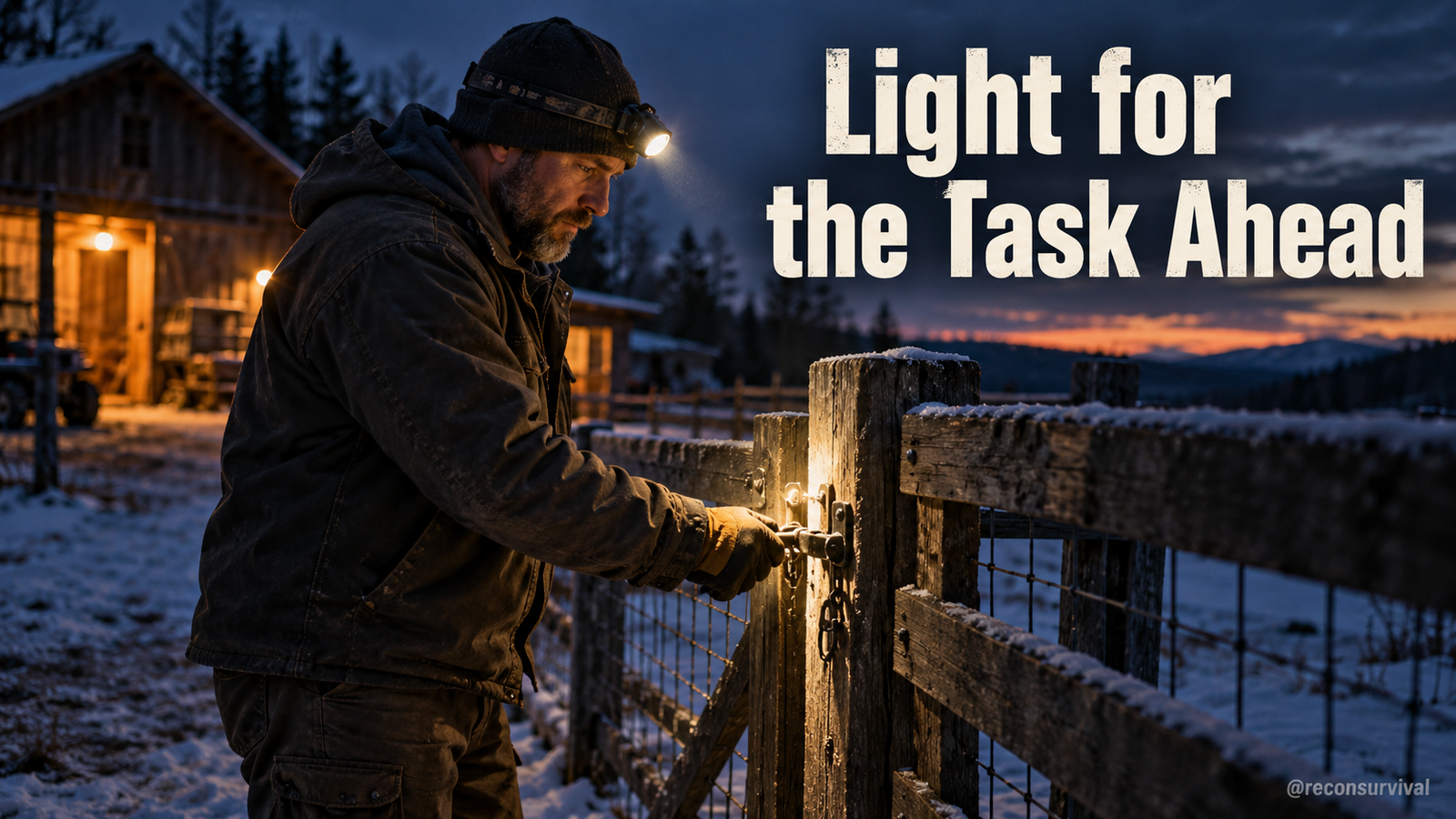
Many preparedness guides focus on the most expensive gear first or wait until the power lines are down before thinking about visibility. This delay is the most common mistake: assuming gear will work because it exists. Low-light work isn't just about seeing a book cover; it's about maintaining situational awareness when your eyes need time to adjust. Headlamps, lanterns, and reflective gear allow you to complete chores or navigate dark hallways safely.
As an Amazon Associate, I earn from qualifying purchases.
The Recon Survival System: Building a Safe Kit
The practical solution is to assemble a kit based on function, not on brand names or future fantasies. This system treats light as a utility for specific tasks rather than a general household convenience. The core of this system relies on three categories of visibility:
- Hands-free illumination for work (headlamps)
- Area lighting for movement and safety (lanterns)
- Passive visibility for roadside or outdoor work (reflective gear)
By separating these functions, you ensure that if one item fails or is misplaced, the others are still available for the task at hand.
Step 1: The First Physical Check
Start with the item you will use most often: the headlamp. This is your primary tool for working with your hands. Perform this check today to ensure readiness. 1. Locate your headlamp. Find one that is readily accessible, not buried in a box with seasonal gear. 2. Install fresh batteries. Use batteries that are within their expiration date and have been stored at room temperature. Do not mix old and new batteries, as this reduces performance and can cause leaks. 3. Confirm it lights a dark room. Turn the headlamp on in a dark environment to verify the beam is active and the battery connection is solid. 4. Verify the fit. Adjust the headband so the light sits just above your eye level. If the strap is too loose, the light will swing when you look down; if too tight, it will be uncomfortable for long tasks. If the headlamp does not light the room, the current setup is not ready for use. Consult your specific device's manual for troubleshooting or replacement procedures.
Step 2: Area Lighting and Passive Visibility
Once your headlamp is confirmed, address the need to see where you are going and be seen by others. * Lanterns: Place a lantern on a stable surface in your main work area or near an exit. A lantern provides omnidirectional light, helping you spot obstacles in your path or tripping hazards you might miss with a directional beam. Ensure it is secured so it does not tip over if bumped. * Reflective Gear: For roadside tasks or moving near traffic, reflective tape or vests are critical. These items do not generate light; they return it from headlights. They are essential for making yourself visible to drivers in low-light conditions.
Step 3: The Minimum Viable System
Before considering upgrades like high-lumen spotlights or specialized work lights, define the minimum viable system. A safe low-light work kit for outages, homestead chores, and roadside tasks consists of:
- One working headlamp with fresh batteries. * One area light (lantern) that operates independently. * Reflective material for any task near a road or path. This minimum setup allows you to perform essential chores safely. You do not need a dozen lights to manage an outage; you need one light that works and the ability to see where you are walking. ### Safety Limits and Failure Points
Lighting gear has clear limits that must be respected to ensure safety. * Battery Failure: The most common failure point is a battery that has leaked or died. This is why the physical check in Step 1 is mandatory. If a battery fails during a task, stop immediately and consult the device's instructions for handling a depleted or leaking battery. * Ventilation and Carbon Monoxide: If your lighting system involves fuel, such as propane or gasoline lanterns, never use them in an enclosed space. Ventilation is required to prevent carbon monoxide buildup. Follow the manufacturer's instructions for fuel handling and ventilation strictly. * Heat and Contact: Some high-lumen headlamps and lanterns generate significant heat. Avoid touching the lens or housing while they are running to prevent burns. * Driver Safety: Reflective gear is only effective if there is a light source to reflect. It does not work in total darkness without an external beam. Always pair reflective gear with a working headlamp or lantern for your own visibility.
The Recon Survival Takeaway
Preparation is not about having the most expensive gear; it is about having a reliable system that functions when stress makes decisions harder. Building a safe low-light work kit for outages, homestead chores, and roadside tasks ensures you are not reacting to darkness but managing it. The value is in the immediate availability of a working light and the confidence to move safely in the dark.
One Clear Action Step
Today, perform this specific check: Install fresh batteries in one headlamp and confirm it lights a dark room.
If the light works, the foundation of your kit is solid. If it does not, follow the manufacturer's instructions to address the issue. Do not wait for the lights to go out to test your gear.