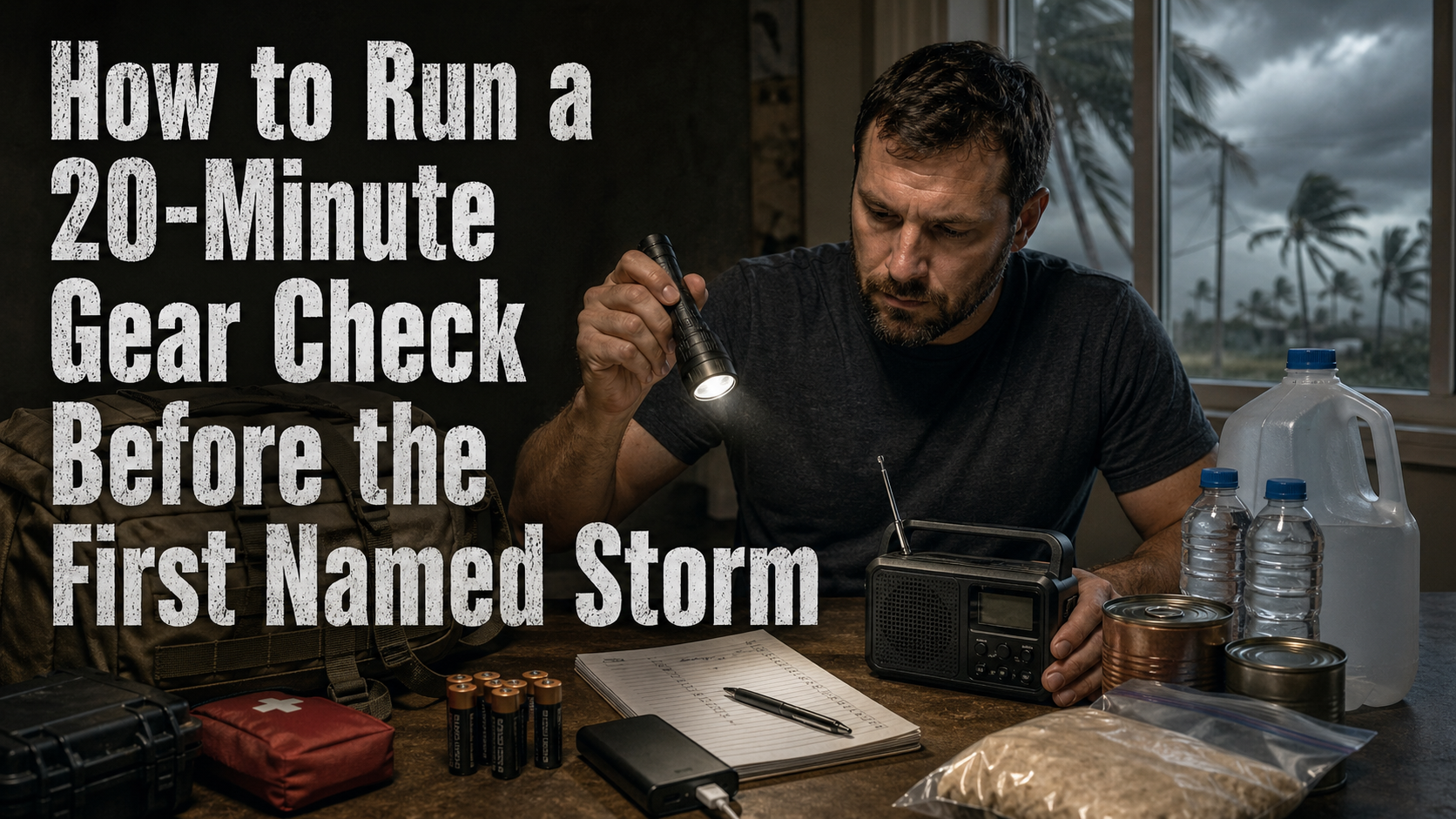
A practical way to inspect flashlights, radios, batteries, chargers, tarps, fuel, and medical basics before the season starts, but most advice is either too generic, too gear-focused, or too late.
Late April sets the stage for hands-on readiness, a window to catch weaknesses in your gear and basics before the hurricane season, summer heat, and increased grid stress push preparedness into critical mode. Waiting until a storm has a name makes decisions rushed and mistakes costly. A focused 20-minute gear check now ensures that flashlights turn on, radios tune in, batteries hold a charge, tarps are intact, fuel is fresh, and medical basics aren't crawling toward expiration.
The problem is common: many wait too long, overlooking simple inspections that would spotlight failures early. This leaves them scrambling when power flickers or weather turns bad. Most advice you'll find either lists gear without a clear process or comes too late, after the first warnings are out. Fixing that is straightforward if you break it down properly.
Why Late-Spring Readiness Matters
Late spring is the sweet spot to act. Utilities begin to strain, storms gain strength in warmer waters, and demand for emergency supplies spikes. This seasonal stress can kick off problems that drag into summer and fall. A quick but thorough pre-season check helps you avoid last-minute panic and costly replacements.
This isn't just about gear; it's about systems, knowing what's ready, and what isn't, in your home, so your family can rely on you when it counts. The 20-minute check is manageable for any household. It's a skill to run often, not a big annual scramble.
The Most Common Mistake with Seasonal Gear Checks
People focus on having supplies, not on their function or accessibility. Flashlights sit in drawers with dead batteries. Radios have weak reception or missing channels. Tarps get brittle or torn in storage. Fuel for generators sits in containers left too long or in improper conditions, risking damage or fire hazards. And medical kits expire silently, becoming useless when needed.
Ignoring even one category can unravel your whole emergency plan. This isn't gear hoarding; it's system assurance. You're confirming each item is ready to deliver when called upon, not just present on a shelf.
The Recon Survival System for Your 20-Minute Gear Check
Recon Survival keeps it tactical and efficient. Your gear check is a rapid cycle through critical categories with exact criteria for pass/fail, so you don't guess:
- Flashlights: Physical function, brightness, battery status
- Radios: Reception, battery type, and backup power
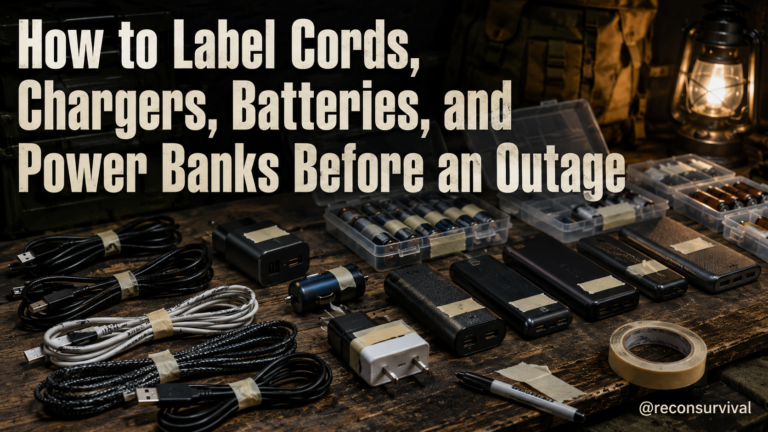
- Batteries and Chargers: Freshness, charge-holding ability, charger functionality
- Tarps: Structural integrity and size coverage
- Fuel: Proper storage, freshness, and safe quantity
- Medical Basics: Expiration dates, essential contents, and replenishment plan
This system can be done within 20 minutes with a simple checklist and basic testing as you go. Assign roles if needed to speed it up and reduce oversight.
Step-by-Step Inspection Process
1. Flashlights Check
Locating flashlights in each key area (bedrooms, living room, kitchen) ensures immediate access. Pull out each one:
- Turn on for full brightness. Flicker or dim means battery replacement or bulb check.
- Replace batteries with fresh stock if older than 12 months or if dim. Keep at least 2 spares per flashlight.
- Test spare or rechargeable batteries with a battery tester. Dispose of old, corroded batteries safely.
2. Radios Check
Grab your weather radio and portable radios:
- Power on and scan for local emergency channels. Confirm you can receive NOAA alerts or equivalent.
- Test backup power sources, batteries, hand crank, or solar. Recharge or replace supplies where weak or missing.
- Program or verify your family emergency frequency or channel.
3. Batteries and Chargers Check
Look at your battery storage area and charging kits:
- For rechargeable batteries, do a full charge cycle. Measure if they hold charge for at least 8 hours standby [FACT CHECK REQUIRED: Minimum charge-holding time for your brand].
- Check condition of chargers, power cords, USB ports, indicator lights. Replace frayed cords.
- Rotate stock so older batteries get used first. Maintain a two-month supply buffer of AAs, AAAs, and other household sizes.
4. Tarps Check
Retrieve all tarps:
- Spread them out and inspect for holes, tears, or brittle edges. Repair small tears with tarp repair tape.
- Confirm tarp sizes cover your intended uses, carports, windows, or roof areas.
- Store dry and folded neatly to avoid mildew or damage.
5. Fuel Check
Evaluate emergency fuel supplies for generators, stoves, or lanterns:
- Check container labels for purchase date. Replace or rotate if over 12 months old.
- Ensure containers are properly sealed, stored safely away from living spaces, and approved for fuel.
- For portable stoves or heaters, test ignition and burner function safely outdoors. Never store fuel indoors.
6. Medical Basics Check
Open your medical kit(s):
- Note expiration dates on critical meds, antiseptics, bandages, and other consumables. Replace any expired.
- Confirm you have essential supplies: gloves, dressings, pain relievers, antihistamines, and ointments.
- Add a simple injury practice by cleaning and dressing a simulated wound with your kit to check usability.
A Safe Beginner Practice Drill
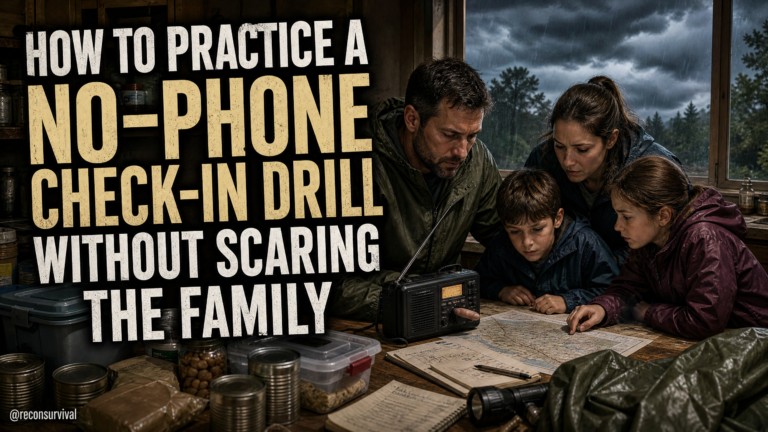
Pick one category, flashlights are easiest, and run a "power outage drill." Turn off household lights and test all flashlights for at least 10 minutes in multiple rooms, confirming which batteries need replacement. This drills both gear function and family familiarity with where flashlights are stored.
For radios, tune in weather and emergency channels during a non-critical event to practice using the device and hearing official alerts.
Repeat drills quarterly or before known weather threats.
Measuring Skill Improvement and Readiness
Track your gear check results on a simple log sheet:
- Date of each check
- Items replaced or repaired
- Test results (brightness levels, radio channel reception)
- Notes on storage or usability improvements
Set a monthly reminder to inspect at least one category outside the seasonal 20-minute audit. Use your log to reduce overlooked items and ensure rotating supplies.
The real test is how smoothly your household manages a short simulated outage or emergency drill without scrambling for gear or batteries.
Recon Survival Principle: Clarity Over Quantity
Preparedness is about clarity and function, not piles of gear. Confirming your gear actually works removes guesswork under pressure. Set clear parameters for what counts as "ready" before the season starts, so last-minute stress never drives your decisions.
Regular gear checks focus you on small failures before they become failures in the field. That's the disciplined posture Recon Survival practices, not rushing or hoarding, but clear, simple verification systems that prove readiness in real time.
Do Today: Your 7-Point 20-Minute Gear Check
- Pull out every flashlight from commonly used rooms; turn each on and replace batteries older than 12 months.
- Power on your emergency radio(s); verify local NOAA or equivalent reception and backup power functionality.
- Test rechargeable batteries and chargers; rotate the oldest in your battery stockpile out.
- Lay out each tarp; inspect, repair or replace damaged tarps, and confirm size coverage for protection needs.
- Check emergency fuel containers: note purchase dates and confirm safe sealed storage. Replace any older than 12 months.
- Review your medical kit, discarding expired meds; add or replenish basics missing from your go-bag or home kit.
- Run a brief "lights out" flashlight drill to test gear in realistic conditions; note what needs replacement or better storage.
Completing this 20-minute audit gives you a clear snapshot of readiness well before conditions become critical. The goal is knowing your gear isn't just there but is reliable right now, so your household can act swiftly and effectively when the first storm cloud swells.