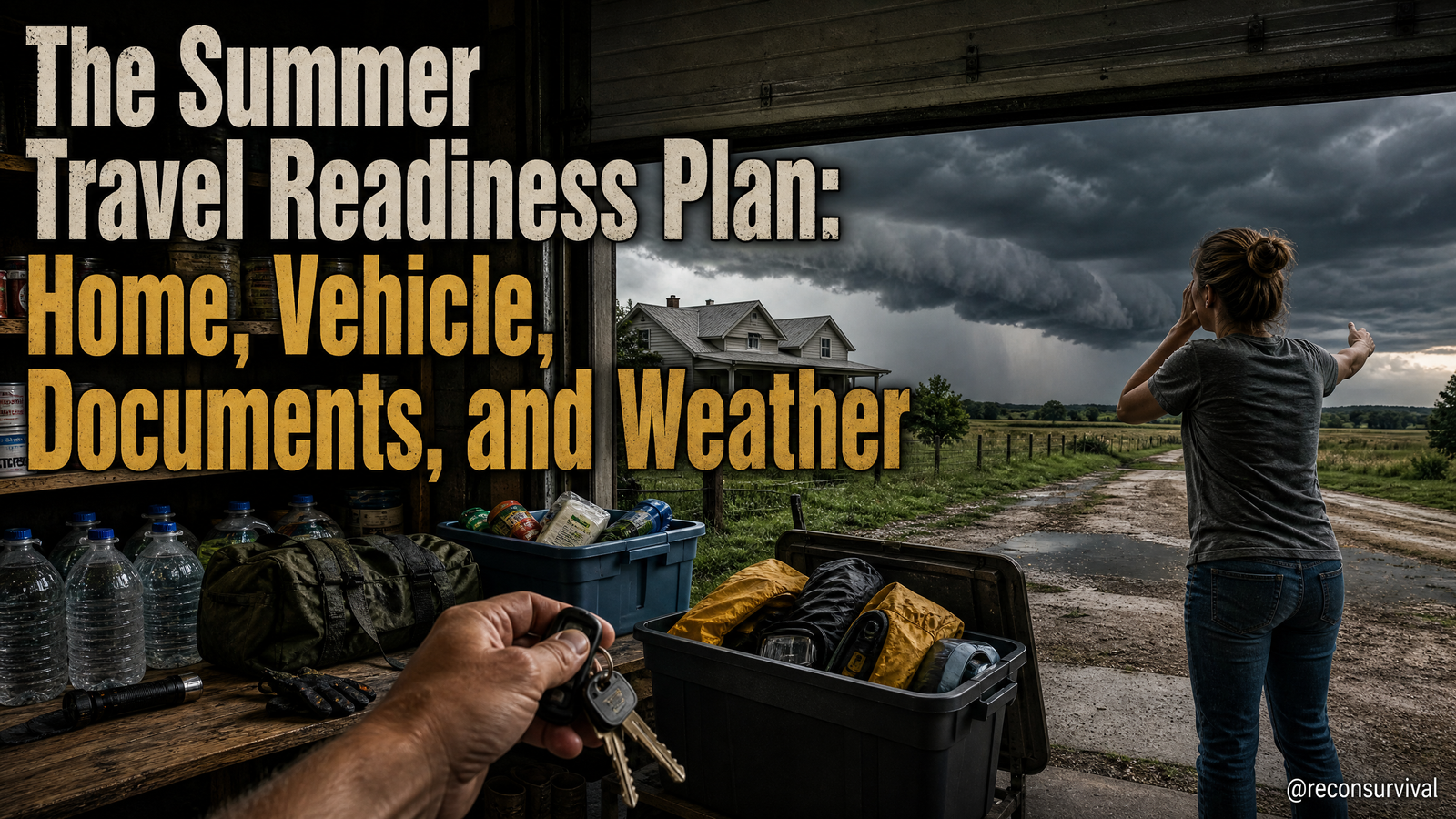
Keys in your hand, garage door halfway down, someone yells "Did we lock the back door?" That's the moment we're cutting out. Summer trips add moving parts. The fix is a room-by-room plan you can run in minutes without guesswork.
As an Amazon Associate, I earn from qualifying purchases.
Front Door and Home Perimeter
Your departure passes through the front door twice: once in mindset, once in motion. Most preventable problems show up here because this is where people decide they're "done." The common mistake is leaving readiness to the last five minutes, when the car is idling and brains are already on the road. That's when packages get left visible, timers don't get set, and a spare key hides under a mat like an open invitation.
Walk the perimeter with intent. Start at the mailbox and work around the house clockwise. – Count exterior lights. Replace any burnt bulbs. Set one lamp on an indoor timer near a front window for evening hours. – Stage a neighbor handoff: one porch check midweek, bring trash bins out/back, and text confirmation if anything looks off. Write the neighbor's name and number on a sticky note next to your door. – Label and lock: test each exterior door and window latch with your hand, then tug once. If you feel play, adjust strike plates or add a dowel in the track. Date a small strip of painter's tape across the backyard gate latch so you can see if it's disturbed when you return. – Hold deliveries: pause package deliveries and ask the post office to hold mail. Screenshot the holds and leave a printout on the kitchen counter.
Why it matters: an empty-looking home is predictable. Lights on a timer, no piling mail, and clean sightlines at doors change that pattern. No fear, just friction against easy mistakes.
Kitchen and Water Before You Go
The kitchen is where smells start, leaks start, and power-loss losses start. Don't skip it. Ten minutes here can prevent a ruined floor or a fridge full of waste.
Work the sink side first. – Empty the dishwasher and leave the door cracked one inch. Turn off the dishwasher's under-sink water valve quarter-turn closed. Do the same for the fridge water line if you'll be gone more than 3 days and you don't have an automatic leak shutoff. – Run the garbage disposal with cold water and a handful of ice to clear the trap. Empty all trash and wipe the rim of the bin. Take the bag to the outside can with a tight lid. – Open the cabinet under the sink and check for any drip. Place a paper towel under the P-trap. That white square will show any leak line when you return.
Now the fridge and freezer. – Freeze a small cup of water and place a coin on top of the ice in the freezer. If the coin is sunk when you return, you had a thaw and refreeze. Plan to discard questionable food. Label the cup "power check". – Set fridge to 37 F and freezer to 0 F the day before you leave to bank cold. Do not overpack; allow air flow. – Stage return food: two no-cook meals on the top shelf (canned soup, peanut butter, crackers, tuna pouches) and a manual can opener in the drawer. If you walk into a hot house or arrive at midnight, you won't be scrounging.
Water note: if your washing machine uses rubber hoses, close its supply valves before you go. They are a top failure point. Consider shutting off the whole-house main for week-long trips if you won't have anyone checking the house and you've confirmed appliances that need water will be fine. If unsure, leave main on and close individual appliance valves.
Bedroom Nightstands and Family Roles
Bedrooms are where comms and lights live when the power is out or when you arrive home late. They're also where you can assign roles on paper so nobody argues in the driveway.
On each nightstand:
- Place one working flashlight with fresh AA or aaa batteries. Click-test. Write the date on the battery with a Sharpie.
- Place one fully charged 10,000 mAh battery bank and a short charge cable. Top it off the night before departure. – Print a one-page "Departure Roles" sheet and tape it inside the bedroom door:
- Who turns off dishwasher/fridge water lines (name)
- Who sets lights/timers (name)
- Who locks windows and sliders (name)
- Who loads first-aid kit and water in the vehicle (name)
- Who texts neighbor/house-sitter the exact departure time and return window (name)
- Put travel meds by the door: a quart zip bag with a 3-day personal med supply, allergy tabs, pain reliever, motion sickness pills, and any prescriptions in original labeled bottles. Weigh the bag once in your hand so you remember its feel and don't leave it behind.
Timing rhythm:
- Today: assign roles and place the sheet.
- This week: run a 5-minute lights-out drill at bedtime. Walk to each nightstand light and battery bank by feel. – Later this season: swap all battery banks between rooms so every unit gets cycled at least once per quarter.
Office Drawer: Documents and Copies
Documents are boring until they're not. Put everything you'd hunt for in one folder you can feel with your hand in the dark: top right desk drawer or a labeled red folder on the bookshelf, second shelf, left side.
Create two tiers:
- Originals to travel with (inside a waterproof zip pouch in your carry-on or glovebox):
- Driver's licenses, passports, vehicle registration, vehicle insurance card, health insurance card, roadside assistance cards. – Printed reservation confirmations and addresses for destination and a backup hotel. Include check-in times. – Copies and backups (stay at home and as digital scans on an encrypted USB or secure cloud):
- Photocopies of all IDs, a printed list of emergency contacts with phone numbers, a printed medication list with dosages, pet vaccination records if applicable. – Printed map overview of your route with primary and two alternate highways.
Field actions:
- Pair each original with one printed copy in the folder. Use binder clips labeled with names. Write the date in pencil on the first page.
- Put one paper map in the glovebox even if you use GPS. Highlight the first 100 miles of your route before you load the vehicle. – Open your phone and verify emergency contacts are labeled "ICE" and favorites are sorted. Add a note on each contact with any medical info or address you might need quickly.
Today, this week, later season:
- Today: assemble originals and scans; print the contact sheet.
- This week: review passport and ID expirations. If within 6 months, start renewal. – Later this season: add a second encrypted USB with these scans to your safe or firebox.
Garage and Vehicle Loadout
Your garage is where readiness gets real. Do a 15-minute vehicle prep on the concrete, driver's side facing light.
Mechanical checks:
- Tire pressure: set all four plus the spare to the correct PSI on the driver door jamb. Typical passenger car tires are 32-36 PSI; verify the sticker. Use a digital gauge. Check the spare for dry rot.
- Fluids: check oil level (dipstick between hash marks), coolant reservoir at the "Full Cold" line, windshield washer fluid filled. Keep a 1-gallon water jug in the trunk for you, not the radiator. – Battery: verify terminals are tight and free of corrosion. If the car struggles to start, get a test at an auto parts store this week.
Loadout basics in the trunk, left-to-right so you can reach by the roadside:
- Roadside kit: reflective triangle or LED flares, high-vis vest, jumper cables or a lithium jump pack, tire plug kit, 12V air compressor. Test the compressor now: inflate to 35 PSI and time it.
- First aid: a kit with trauma shears, gauze, bandages, splints, gloves. Place it in a red pouch on top. – Water and food: at least 1 gallon per person per day for the first day's travel. Pack 2 liters per person within arm's reach in the cabin. Add calorie-dense snacks: nuts, bars, jerky. – Power and comms: a car charger, one spare charging cable, and a printed list of radio stations for weather and news along your route if you lose data.
Fuel strategy:
- Top off the day before. At departure, reset trip odometer. Refuel when you hit half a tank in rural areas, one-third in extreme heat or heavy traffic forecasts.
Label the trunk lid underside with painter's tape: "Water, FA, Triangle, Jump, Plug." When you open it at night, you can see if anything is missing.
Weather Desk: Forecasts and Triggers
Don't wait to check the sky at the on-ramp. Build a simple "weather desk" on the kitchen counter or entry shelf 24 hours before departure.
Tools:
- A weather app from a trusted source and local emergency text alerts signed up for both your home and your first night's stop.
- A small NOAA weather radio with AA batteries on the counter, tested on the same day. Keep the radio in the glovebox during travel if you don't have reliable data service.
Set triggers you can act on:
- Heat: if forecast heat index along your route exceeds 100 F during your drive window, shift departure two hours earlier. Pack extra 1 liter per person.
- Thunderstorms: if your route shows severe storm potential during your slated pass-through time, identify a bypass or a safe stop with indoor parking. Print it. – Wind or wildfire smoke: if winds exceed 30 mph sustained or AQI shows unhealthy along your route, plan for a slower average speed and more fuel stops. [FACT CHECK REQUIRED: verify your region's AQI thresholds from local health guidance]
Home weather monitoring:
- If you live in a flood-prone area, leave sandbags or barriers stacked by the garage side door and raise items 12 inches off the floor if a watch is posted before you go.
- Place one cheap humidity/temperature sensor on a kitchen shelf with a logged baseline. If you have a smart thermostat, set an alert for temp rising above 85 F, which can indicate an HVAC issue.
Timing cadence:
- Today: set alerts for departure day and destination county. Print a one-page route weather snapshot.
- This week: identify two alternate routes with rest stops every 90-120 minutes. – Later this season: standardize a laminated "Weather Triggers" card kept in the glovebox with your thresholds and actions.
Departure Walk-Through: The 8-Minute House Sweep
Run this in order, one person reads, one person completes, then both sign the sheet on the counter.
- Living room: close blinds to slat-tilt (light in, low view). Set one lamp timer 7 pm to 11 pm.
- Kitchen: valve check at dishwasher and fridge, empty trash, coin-in-cup freezer test visible, sink clean, stove knobs off.
- Laundry: turn off washer supply valves. Leave dryer door open one inch and clean the lint trap.
- Bedrooms: check windows latched, nightstand flashlights clicked, battery banks green, roles sheet taped.
- Office: documents folder in bag, copies in drawer, contact sheet printed. USB backup in safe.
- Bathrooms: crack one cabinet door for airflow, check for drips under sinks with a paper towel.
- Thermostat: set to 78-82 F cooling or 60-65 F heating, depending on climate. Fan to Auto.
- Garage: unplug non-essential chargers, close and lock interior door, check main garage door fully seals. Put one painter's tape tab on the inside top corner; if it's different on return, you'll notice.
- Exterior: lock back door and gate, verify porch light on dusk-to-dawn or timer, mail/parcel holds printed on counter for neighbor.
Write the time you finished on the sheet. Take a photo of it. That photo is your memory when you doubt yourself 30 miles down the road.
Departure Decision Tree
Use this quick pass at the door right before you grab keys.
Home Check Question: Are all exterior doors and windows latched and a lamp timer set? If no: Walk the perimeter and set one timer to 7 pm.
Water Check Question: Did you close appliance water valves and clear kitchen trash? If no: Close valves at dishwasher and washer, take trash to outside bin.
Power Check Question: Are thermostat and non-essential plugs set for away mode? If no: Set thermostat to away temperature and unplug chargers.
Vehicle Check Question: Have you checked tire pressures, spare, and fuel above half? If no: Inflate to door-jamb PSI and refuel before leaving town.
Documents Check Question: Do you have IDs, insurance, registration, and printed contacts? If no: Pull the office folder, place originals in glovebox pouch, print contacts.
Weather Check Question: Do you have route alerts set and an alternate if storms build? If no: Set alerts for home and destination counties and mark a detour.
Recon Survival Principle
Readiness is a chain of small, verified actions done in a known order, not a pile of gear tossed into a trunk. The earlier you separate signal from noise, the easier each choice gets: one light on a timer, one neighbor text, one fuel threshold, one weather trigger. That early-warning mindset is the same idea behind Oracle AXIS: pay attention to the right signals, set decision triggers you've agreed on, and move when a threshold is hit. It doesn't predict the future. It keeps your household ahead of avoidable problems.
Do Today
- Tape a one-page Departure Roles sheet inside a bedroom door and assign names for locks, water valves, lights, vehicle loadout, and neighbor text.
- Set one lamp in a front-facing room on a timer from 7 pm to 11 pm and test it tonight.
- Close the dishwasher and washing machine water valves, and place a paper towel under the kitchen sink P-trap as a leak sentinel.
- Build a red "Documents" folder: licenses, registration, insurance, health cards, and a printed emergency contact sheet with two out-of-area contacts.
- Put one working flashlight and one charged 10,000 mAh battery bank on each nightstand; Sharpie today's date on the batteries.
- In the garage, inflate all tires to the door-jamb PSI and confirm the spare's condition; set a reminder to refuel at half tank on travel day.
- Pack the trunk left-to-right with triangle, jump pack or cables, air compressor, tire plug kit, first aid kit, and 1 gallon of water per person; stage 2 liters per person in the cabin.
- Freeze a cup of water, place a coin on top in the freezer, and label it "power check" for your return.
- Set weather alerts for your home and first-night stop; print a one-page route forecast and mark one alternate route.
- Place mail and package holds and print confirmations; lay them on the kitchen counter for your neighbor.
- Run the 8-minute house sweep in order, write finish time on the sheet, photograph it, and leave the sheet on the counter.