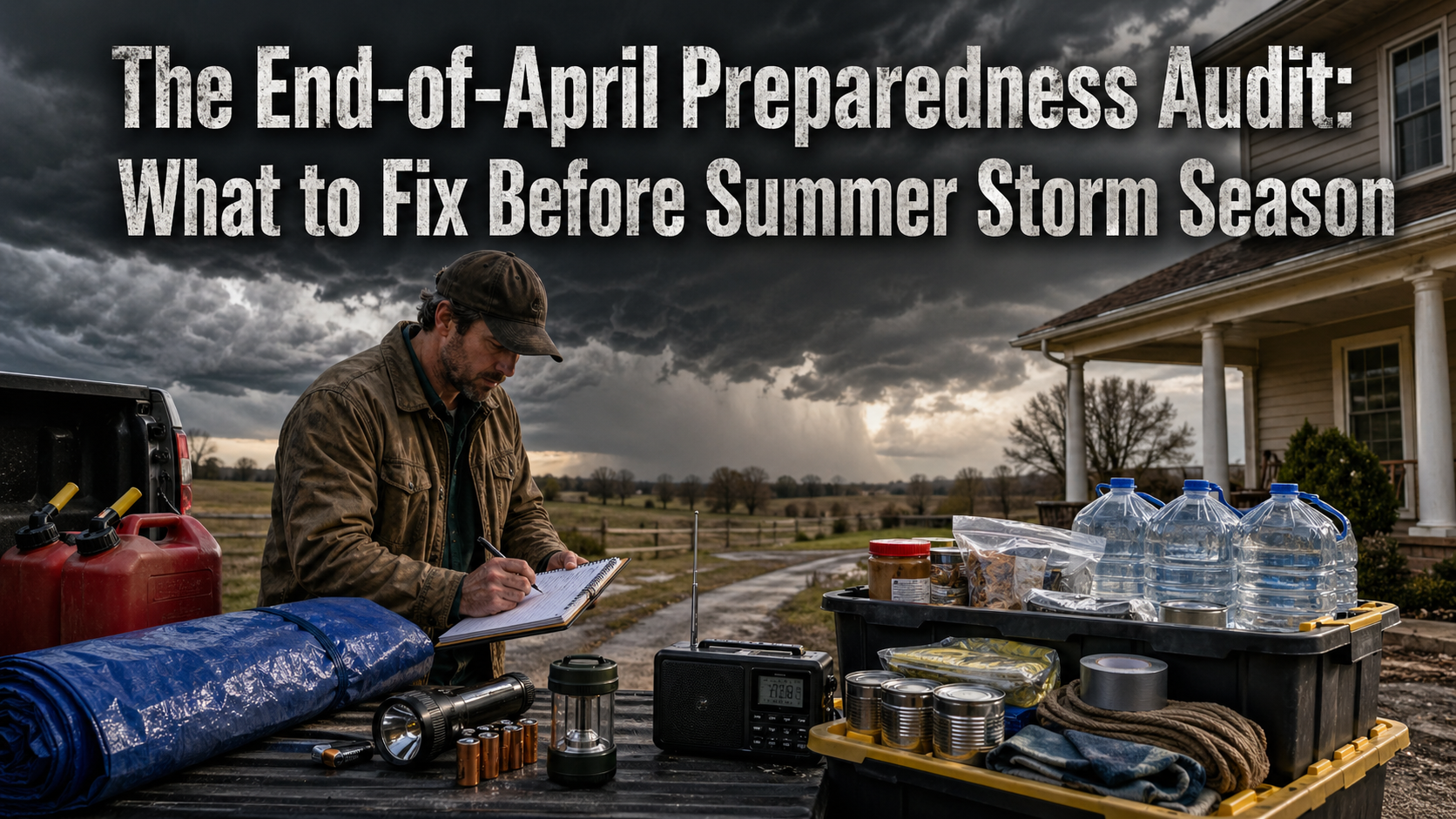
A practical way to complete a late-spring readiness audit across water, power, food, communications, security, and family roles, but most advice is either too generic, too gear-focused, or too late.
Late April is the critical moment to tighten your household readiness before summer storms, heat, and potential grid strain test your plans. Waiting until a named storm appears or power flickers is too late, weak links become glaring vulnerabilities under pressure. Running a thorough end-of-April preparedness audit across water, power, food, communications, security, and family roles ensures weak points get fixed before the first severe event arrives.
Many households delay this seasonal check, assuming their supplies or plans from last year still hold strong or will be fine at the last minute. The reality is that things shift: water supplies expire or dwindle, batteries drain, food rots or gets overlooked, communication tools lose charge or signal, security measures show wear, and family roles get fuzzy without refreshers. The best time to find and fix these gaps is right now.
Here's a direct-to-the-point Recon Survival system for completing a late-spring readiness audit that any household can follow. Focus on what you can verify, rotate, assign, and label. No fluff. No gear impulse buys. Just solid work you can get done today to patch risks and clarify roles before summer pressure begins.
Water Readiness: Confirm Supply and Quality
Water tops the list because you can't postpone it. Late spring often means hotter weather, more irrigation demands, or storm-related interruptions that affect municipal water or well systems.
- Check your stored water quantity. The baseline is 1 gallon per person per day for at least 3 days; 7 days is better if space allows.
- Inspect stored water containers for damage, leaks, or cloudiness. Replace or treat any that look questionable.
- Test your water purification methods, do you have tablets, filters, or boil capability ready? Check expiration dates on chemical tablets.
- Refill and label all containers. Freeze a cup of water with a small coin on top to check thaw times for your freezer if you rely on ice for cooling or emergency water.
- Know who in your family is responsible for monitoring water levels weekly this season.
Power Backup: Test and Maintain Systems
Summer heat puts grid power under strain, and storms can interrupt supply with outages lasting hours to days.
- Test your backup power sources for readiness. That means running a generator or inverter under load for 30 minutes every month to confirm starting ability and fuel condition.
- Check the age and charge levels of all spare batteries, AA, AAA, 9V, and rechargeable packs.
- Verify flashlights and battery banks, ensuring at least one in each sleeping area. Replace old bulbs and recharge backup devices now.
- Make sure fuel storage complies with safety rules and isn't stale; rotate fuel according to manufacturer recommendations.
- Assign one person to monitor local outage reports and grid warnings regularly during storm season.
Food Storage: Rotate and Confirm Accessibility
Long-term food stockpiles can degrade or become inaccessible if humidity and temperature rise. Cooking restrictions may apply during outages, so consider no-cook or quick-prep options.
- Inventory your food stocks, focusing on expiration dates, packaging integrity, and variety.
- Rotate out items past their prime, and add at least 3 days' worth of ready-to-eat, no-cook meals.
- Check your cooking capabilities during power outages: do you have charcoal, propane, or alternative cooking methods prepped?
- Label and store foods in a cool, dry place with easy access.
- Plan a weekly shelf check to avoid surprises during emergency conditions.
Communications: Confirm Tools and Family Contact Plans
Reliable communication is essential for situational awareness and staying connected during storms and outages.
- Test your NOAA weather radio and ensure you know how to switch to alert mode.
- Charge or replace batteries in all communication devices: cell phones, walkie-talkies, ham radios.
- Keep at least one charged backup phone or tablet with emergency apps installed.
- Update and distribute a printed contact list with key family, neighbors, and emergency numbers.
- Review your family's communication plan, including roles for who calls whom and when, if phone lines go down.
Security: Inspect and Sharpen Home and Personal Safety Measures
Incidents increase during extended outages where law enforcement might have delayed response times. Security also means monitoring dangerous weather or environmental conditions without raising alarm unnecessarily.
- Inspect door and window locks. Replace or repair weak latches and reinforce sliding doors with a bar or rod.
- Confirm all exterior lights work with backup power or solar options.
- Secure sheds, garages, and gates. Remove or lock up tools that could be unsafe.
- Check your emergency escape routes are clear and known to every family member.
- Assign roles for security watch rotations or neighborhood communication during sustained emergencies.
Family Roles and Decision Triggers: Define Who Does What and When
Good gear is useless without clear roles and agreed decision points, especially when tension rises.
- Write down who is responsible for water refills, fuel monitoring, battery charging, pet care, communications, and security checks.
- Agree on weather alert triggers that prompt action: e.g., storm watches, hurricane warnings, grid strain announcements.
- Schedule a family meeting to review these roles and rehearse communication protocols.
- Prepare contingency plans if primary roles are unavailable, backup people and instructions.
- Keep this plan posted in a common area for quick reference.
Decision Tree for Late-Spring Readiness Audit
Water Check
Question: Do you have at least 3 days of water stored and tested?
If no: Refill or buy water today.
Power Check
Question: Has your backup power been tested under load in the last 30 days and batteries checked?
If no: Run a 30-minute generator or inverter test now, and replace batteries.
Food Check
Question: Do you have at least 3 days of no-cook, ready-to-eat food in accessible storage?
If no: Rotate old food out and add fresh supplies.
Communications Check
Question: Is your NOAA weather radio working and all communication devices charged?
If no: Test the radio, replace batteries, and charge devices.
Security Check
Question: Are locks, lights, and escape routes verified and ready?
If no: Inspect and fix weak points immediately.
Family Roles Check
Question: Are all preparedness roles assigned and known by everyone with clear trigger points?
If no: Assign roles and communicate the plan today.
Recon Survival Principle
Preparation is a living system, not a set-and-forget box of gear. Late spring offers a defined window to reexamine each critical area before conditions shift. The mindset is about early warning, recognizing real signals versus background noise, and triggering calm, decisive household actions. That is the same early-warning mindset behind Oracle AXIS, focusing on separating useful signals from noise and setting household thresholds for action when conditions change.
By making a point to verify, rotate, test, and assign right now, you lessen guesswork and scramble closer to storm season. Ready systems produce clear decisions. Clear decisions maintain control.
What To Do Today
- Check and refill your stored water supplies to a minimum 3-day baseline; replace old containers.
- Conduct a 30-minute load test on your backup power system; rotate fuel if outdated.
- Inventory and rotate food stocks, add at least 3 days' worth of no-cook meals.
- Test NOAA weather radio and charge all communication device batteries.
- Inspect and repair locks, lights, and ensure escape routes are clear.
- Write down and review family roles for water, power, food, comms, security, and pet care.
- Set household triggers for weather alerts and power outage signals that launch your emergency plan.
Completing these steps will close gaps before summer storms and heat bring real stress. Staying proactive is how you keep your family safe and ready without last-minute panic. Late April readiness audits aren't a chore, they're your preparation line of defense.