Most people buy security gear backward.
They spend money on flashy gadgets, cheap cameras, or gear that looks impressive online, but does very little when a real emergency happens. The truth is simple. Good security is not about looking tactical. It is about making your home harder to target, giving yourself early warning, improving your response time, and keeping your family safer when stress is high and seconds matter.
That matters even more during blackouts, severe storms, civil unrest, break ins, or any situation where normal services are delayed or unavailable. If the power goes out, if the internet drops, if police response times are stretched, or if you simply hear something outside at 2 a.m., the gear you chose ahead of time becomes very important.
Security gear should do one of four things. It should help you detect a threat early. It should slow someone down. It should help you communicate and respond. Or it should protect the tools that matter most. The best gear often is not the most expensive. It is the gear that works when conditions are bad, is easy to use under pressure, and fits into a real home defense and preparedness plan.
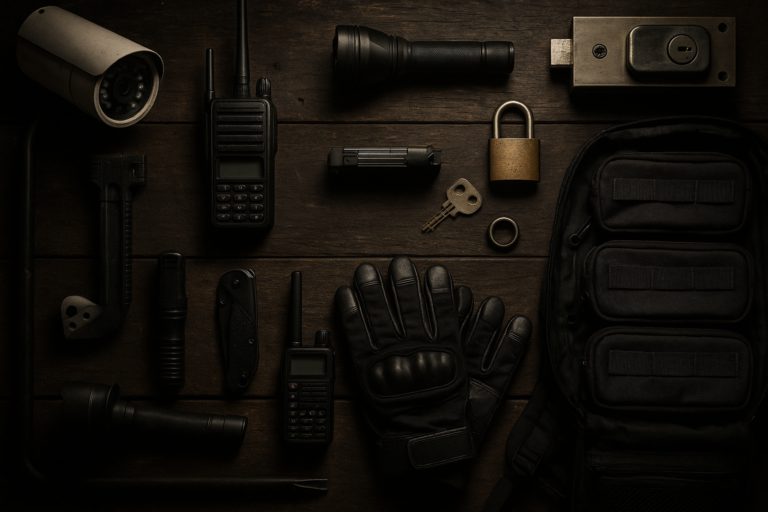
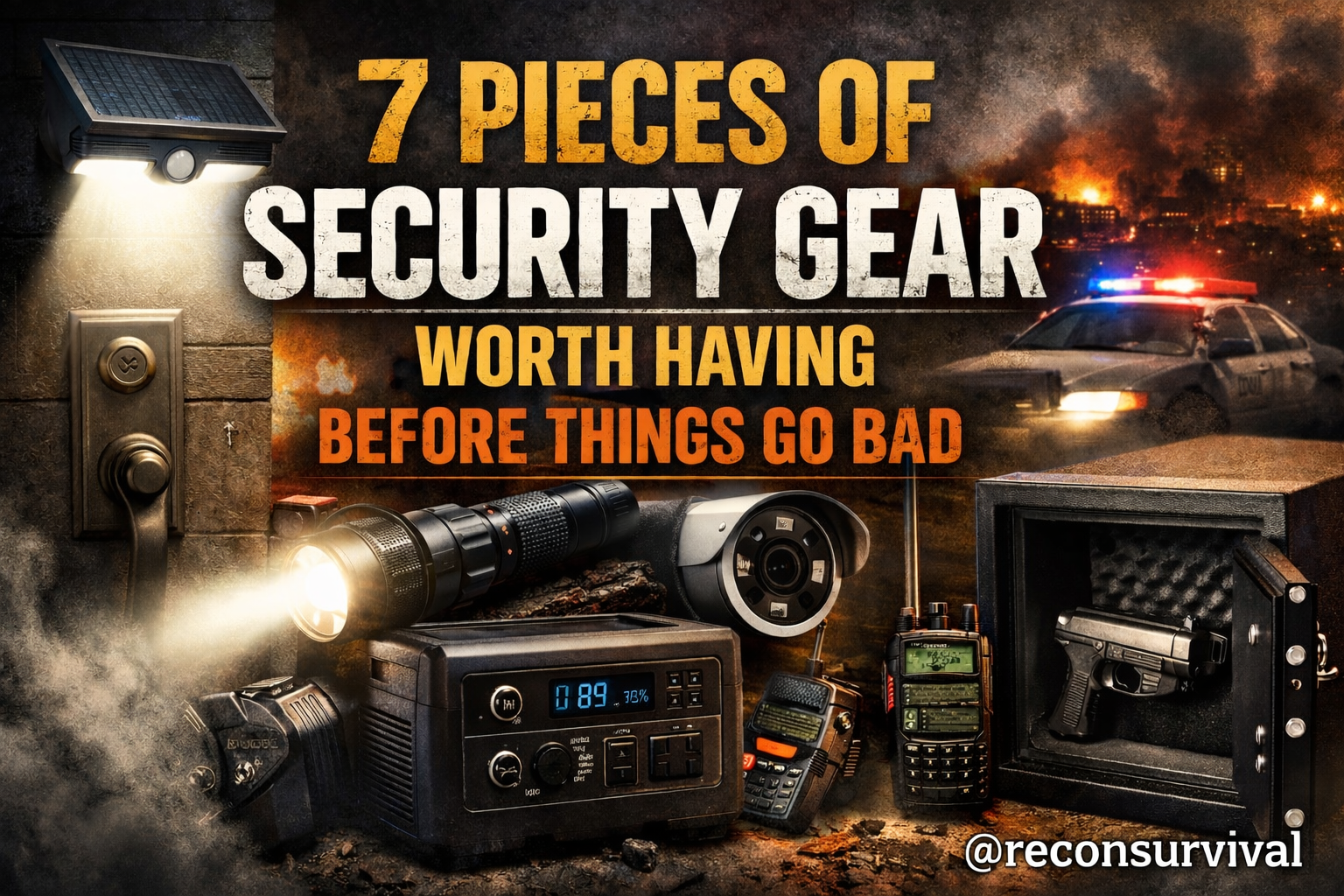
Here are seven pieces of security gear worth having before things go bad.
1. Motion Activated Solar Security Lights
Light changes everything.
A dark yard, driveway, gate, side path, or back porch gives cover to anyone who wants to move unnoticed. Motion activated security lights remove that advantage instantly. They also give you something just as valuable as deterrence. They give you awareness.
When a light snaps on unexpectedly, it tells you that something moved. That could be an animal, a family member, a delivery, or someone who should not be there. Either way, you know to pay attention. That is far better than finding out only after someone is already at a door or window.
Solar powered lights are especially useful because they keep working even if the grid is down. They are simple to install in places where wiring would be difficult, and they are ideal for preparedness minded homeowners who want independent layers of protection. Even a basic setup can make a house feel very different at night.
The best places to install them include:
- Front entry points
- Back doors and porches
- Garage sides and driveway edges
- Fence gates
- Walkways to windows or sheds
- Dark corners with no natural visibility
Look for lights with strong brightness, reliable weather resistance, and a motion sensor range that fits the area you are covering. You do not need stadium lighting. You need dependable light that activates when movement matters.
A good security light does two jobs at once. It can discourage a prowler, and it can alert you before a problem gets closer. That makes it one of the cheapest and smartest upgrades you can make.
2. Reinforced Door Hardware
If you do only one physical security upgrade to your home, reinforce your doors.
People often assume a locked front door is enough. In reality, the weakest part of many doors is not the lock itself. It is the frame, the strike plate, the short screws, and the overall strength of the hardware holding everything together. A cheap door setup can fail fast under force.
That is why reinforced door hardware is one of the best security investments you can make. It does not need batteries. It does not require internet. It does not need an app. It simply makes forced entry more difficult.
At minimum, this upgrade should include:
- Heavy duty strike plates
- Long screws that anchor into wall framing
- Quality deadbolts
- Reinforced hinge screws
- Door jamb reinforcement kits where needed
This kind of gear does not make your home invincible. Nothing does. But it can buy time, and time is one of the most valuable resources in a security situation. Extra seconds can mean the difference between a failed kick attempt and an intruder getting inside. It can give you time to wake up, gather family members, arm yourself if that is part of your plan, move to a safer position, call for help, or activate other layers of security.
Reinforced hardware is also one of the rare upgrades that helps in almost every scenario. It matters during normal crime. It matters during unrest. It matters when someone thinks your house is an easy target. Stronger doors send the message that getting in will not be quick or quiet.
People love complicated gear, but strong doors are still one of the most practical forms of home defense.
3. A Reliable High Output Flashlight
Every security plan needs light you control directly.
A good flashlight is one of the most overlooked pieces of security gear, but it becomes critical fast during power outages, suspicious noises, nighttime checks, and any moment where you need to identify what is actually in front of you. You should never investigate darkness blind, and you should never assume you know what you are seeing in low light.
A reliable flashlight gives you:
- Positive identification
- Control in dark environments
- Safer movement around your property
- An immediate response tool during blackouts
- The ability to inspect sounds, alarms, or disturbances without guessing
For security use, avoid junk flashlights that live in a drawer with dead batteries. Choose something durable, bright, easy to activate, and simple enough to use under stress. A handheld light that throws enough light to identify a person, animal, or obstacle at useful distance is far more valuable than a cheap light with fake brightness claims.
Rechargeable lights can be great, but there is also strong value in lights that use common batteries you can store in bulk. The best choice depends on how you already manage your preparedness gear. What matters most is reliability.
It is smart to keep flashlights in several key places:
- Near your bed
- In the kitchen
- In your vehicle
- Near your primary entry points
- Inside any emergency or blackout kit
And if you own a firearm for home defense, then low light identification matters even more. You are responsible for knowing exactly what you are looking at. Darkness, confusion, and stress can create terrible mistakes. Good light helps reduce that risk.
Do not think of a flashlight as just a convenience item. In a real emergency, it is a security tool.
4. Security Cameras That Still Matter During an Outage
A camera system is only useful if it works when things are going wrong.
Many people buy cameras that depend completely on constant power, stable WiFi, cloud access, and perfect internet conditions. That can be fine for casual convenience, but it is not enough if you are serious about security. The question is not whether a camera can send you a phone notification on a normal day. The question is whether it will still help you when the power goes out, the router is down, or the connection is unreliable.
Good security cameras can serve several roles:
- Deterrence
- Live awareness
- Evidence collection
- Remote property monitoring
- Confirmation before you act
But for preparedness, you should lean toward systems that offer local recording, dependable night performance, and some way to stay useful during outages. That could mean battery backed equipment, cameras tied to a backup power setup, or systems that record locally even if internet access is lost.
Important camera areas usually include:
- Front door
- Driveway
- Back yard or rear entry
- Garage
- Side gates
- Sheds or equipment storage areas
You do not need to cover every square inch of your property perfectly. You need good visibility on likely approach routes, access points, and areas where someone would spend time before trying to enter. Camera placement matters more than camera quantity.
Also remember that cameras are part of a system, not a complete solution. A camera can show you a problem, but it does not physically stop anything. That is why it pairs best with lighting, reinforced doors, alarms, and a backup power plan.
Think of cameras as your remote eyes. They should help you know what is happening, not just record what already happened.
5. A Backup Power Source for Security Equipment
Security gear that dies with the grid is only partial security gear.
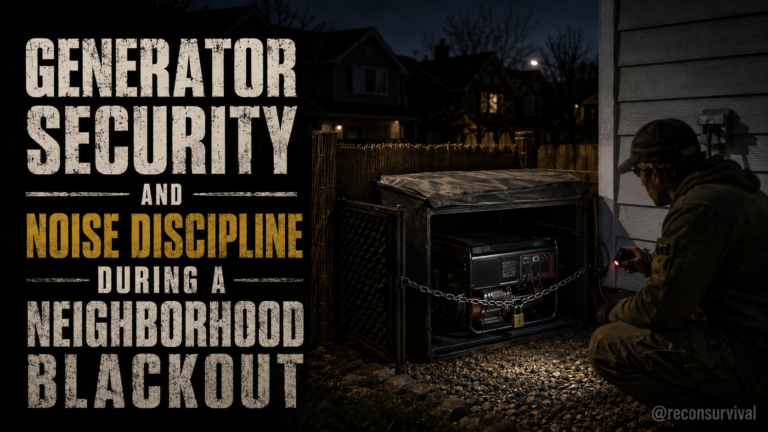
One of the biggest weaknesses in modern home security is dependence on electricity. Cameras, routers, NVRs, charging systems, communication devices, lights, and even electronically controlled locks may all become less useful or completely useless during an outage. That is why backup power deserves a place on this list.
A solid backup power setup can keep core security gear operating when everyone else goes dark. That matters during storms, blackouts, infrastructure failures, and any event where uncertainty rises fast after sunset.
At a minimum, your backup power plan should consider keeping these items running:
- Internet modem and router if service still exists
- Camera recorder or local monitoring hub
- Essential lights
- Radio chargers
- Flashlights and battery chargers
- Phones used for alerts and communication
This does not mean you need a giant whole house system on day one. Even a smaller battery power station can carry the most important parts of your security setup through shorter outages. If you already have solar, battery storage, or an off grid system, this becomes even more valuable because you can dedicate part of that power to surveillance, communications, and lighting.
The key is prioritization. Decide what absolutely must keep running. Build around that. A prepared home does not need everything online. It needs the right things online.
There is also a major psychological benefit here. When the power fails and your neighborhood goes dark, most people immediately lose visibility and communication. If your core security systems are still functioning, you stay calmer, more informed, and better able to respond. That is a major advantage.
6. Two Way Radios or a Scanner
Communication is security.
Most people think about locks and cameras first, but communication tools are incredibly important, especially if normal systems become overloaded or unreliable. A two way radio setup or a scanner can help you stay informed, coordinate with family members, monitor local conditions, and avoid operating in the dark.
Cell phones are convenient, but they are not invincible. Networks get overloaded. Batteries die. Coverage can be weak. Apps fail. In a fast moving emergency, simple radio communication can be more dependable than people expect.
Useful communication gear may include:
- Handheld radios for family coordination
- Vehicle radios for local movement
- A scanner for monitoring emergency traffic where legal
- NOAA weather radio for storm and alert coverage
For security and preparedness, radios help in practical ways:
- Coordinating between house and outbuildings
- Maintaining contact during power outages
- Monitoring conditions without relying only on social media
- Checking on family members across property lines
- Keeping communication open during travel or evacuation
A scanner can also provide valuable awareness during developing situations. If something major is happening nearby, hearing the rhythm of local emergency traffic can tell you more than waiting on delayed news reports. It helps you understand whether an event is isolated, expanding, or serious enough to change your plans.
You do not need to become a radio expert overnight. Start simple. Learn your equipment. Program it. Test it with family members. Use it before you need it. In any security setup, familiar gear beats complicated gear you barely understand.
7. A Secure Safe or Fast Access Lockbox
Your most important tools should not be left unsecured.
This applies to firearms, sensitive documents, spare cash, backup communications, hard drives, medication, and other critical items you may need quickly or want protected from theft, tampering, or misuse. A secure safe or fast access lockbox is not just about storage. It is about control.
Security is not only about keeping threats out. It is also about keeping important items protected inside your home. That matters for safety, responsibility, and preparedness.
A good lockbox or safe can help you:
- Prevent unauthorized access
- Keep defensive tools secured but available
- Protect documents and valuables during chaos
- Reduce theft losses during a break in
- Create a known location for critical gear
If you own defensive firearms, safe storage matters even more. You want a balance between access and security. That balance depends on your household, especially if children are present. A fast access safe near your bed may make sense for one purpose. A larger, more secure safe may make sense for long term storage and general protection. Many prepared families use both.
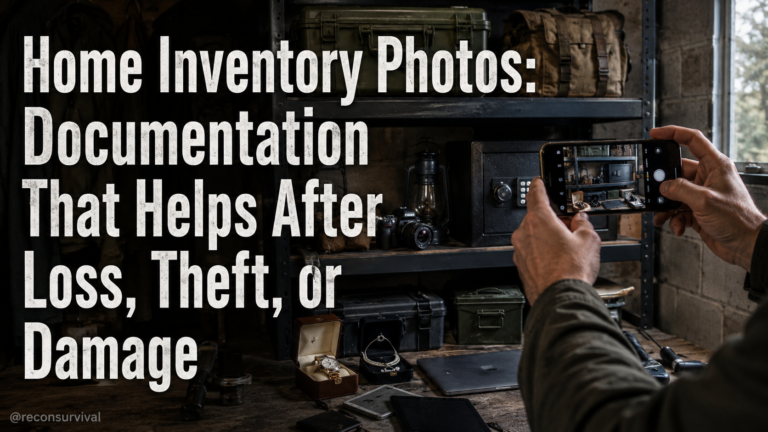
Do not forget that non weapon items can matter just as much in an emergency. Passports, birth certificates, backup radios, cash, batteries, important USB drives, printed plans, and medical supplies may all deserve protected storage. When stress is high, knowing exactly where your critical gear is located can reduce confusion and save time.
How to Build a Smarter Security Setup
The biggest mistake people make is treating security gear like a shopping list instead of a layered system.
Buying one camera, one flashlight, or one gadget does not create real preparedness. Good security comes from how your gear works together. You want overlapping layers that improve detection, delay entry, support communication, and help you respond with less confusion.
A simple layered approach might look like this:
- Outer layer: Motion lights, cameras, gates, visible deterrence
- Entry layer: Reinforced doors, solid locks, window awareness
- Awareness layer: Cameras, flashlights, radios, scanner, alerts
- Power layer: Battery backup, charging plan, stored batteries
- Control layer: Safes, lockboxes, organized critical gear
That kind of setup is far more useful than spending the same money on one expensive item that only covers a single problem.
It is also important to think through real use. If something goes bump in the night, what happens next? Who checks what? Where is your flashlight? How do you communicate with family? What still works if the power is out? Which areas of your home are actually vulnerable? Security gear makes the most difference when it fits into a plan that you have already thought through.
Start With What Matters Most
You do not need to buy everything at once.
If your budget is limited, start with the upgrades that give the biggest return right away. For most people, that means:
- Reinforce the doors
- Add motion activated lighting
- Get dependable flashlights
- Build backup power for core devices
- Add or improve camera coverage
- Expand into radios and protected storage
That order may change depending on where you live, what threats concern you most, and what you already own. But the goal stays the same. Build useful layers. Avoid gimmicks. Focus on gear that still matters when life is not running normally.
Preparedness is not fear. It is responsibility. And security gear is not just about defense. It is about awareness, control, and creating more options for your family when things get unpredictable.
Final Thoughts
The best security gear is not the gear that looks cool in a photo. It is the gear that makes your home harder to target, gives you earlier warning, keeps working during outages, and helps you respond with confidence instead of confusion.
If things ever do go bad, whether that means a blackout, a break in, a severe storm, or broader instability, you will not regret having practical security gear already in place. You will only regret the weak points you ignored.
Start simple. Strengthen the basics. Add layers that work together. And build a security setup that still matters when normal life does not.
Security is bought with planning long before it is tested.
Recon Survival