
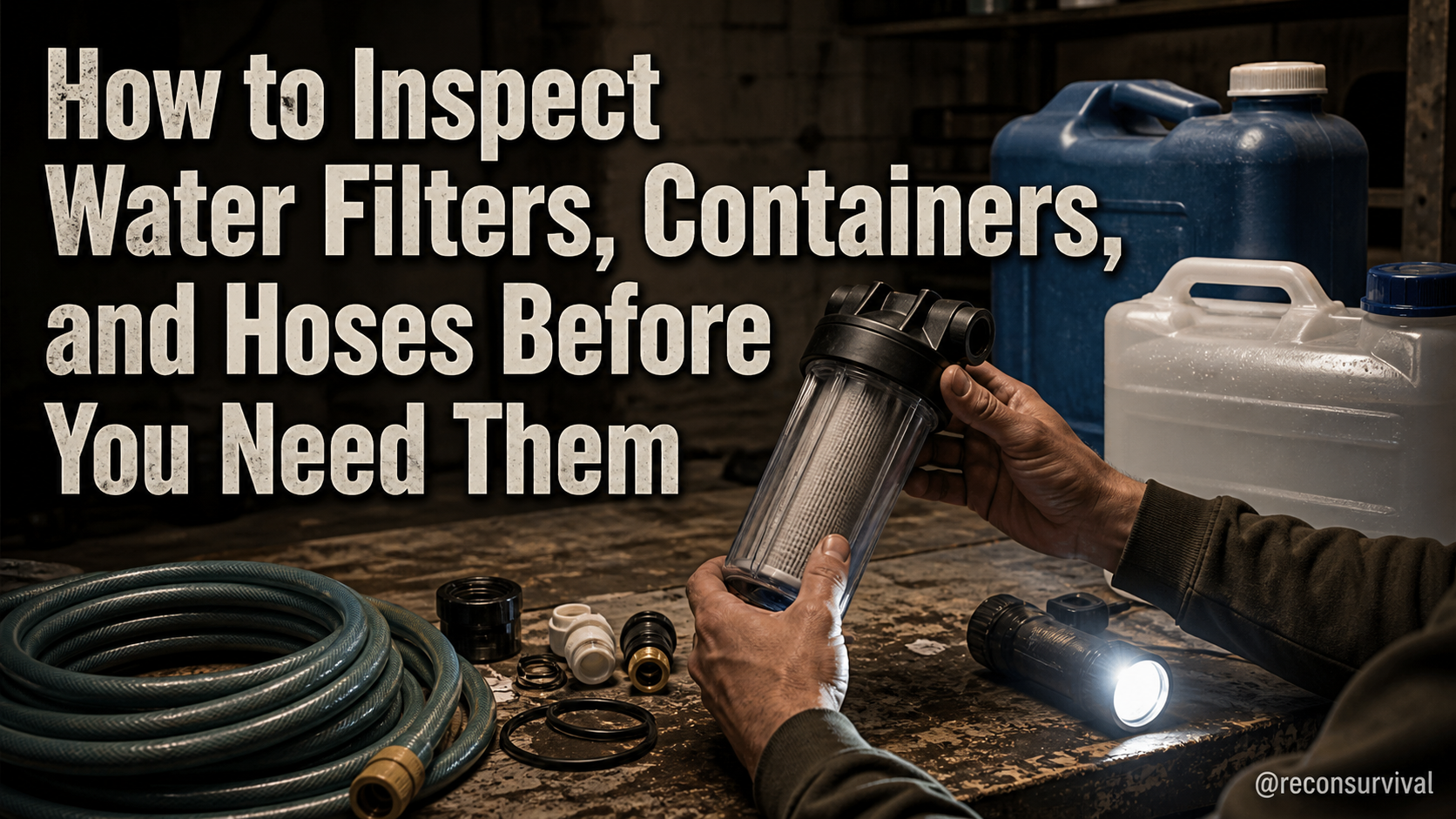
A practical way to check and organize water containers, filters, hoses, fittings, and gravity systems, but most advice is either too generic, too gear-focused, or too late.
As an Amazon Associate, I earn from qualifying purchases.
Early May is a strong time to solve water storage before summer storms and heat make water planning urgent. The real-world problem this article solves is simple: you likely have water stored in your home, but when a grid failure hits and pipes break, the most dangerous item in your cabinet is often not dirty water; it is broken seals, cracked filters, or disconnected hoses that turn a lifeline into a hazard. Today, we focus on the practical method to check and organize water containers, filters, hoses, fittings, and gravity systems before stress makes the decisions harder.
Why Water Systems Require Inspection Now
Water before storm season matters because summer brings two distinct threats: prolonged heat waves that increase dehydration risks and heavy rain events that can overwhelm municipal systems. When the power goes out, ice machines stop, and well pumps fail, your stored water becomes the primary source of hydration and hygiene. Without inspection, a plastic jug with a compromised seal can leak, creating a mold risk in a basement. A gravity filtration system with a clogged or loose filter can allow contaminants to pass through.
The Common Mistake in Water System Maintenance
The most common mistake people make with this topic is waiting for a crisis to test their systems. Many individuals will fill containers with water, store them away, and assume they are safe indefinitely. This assumes that seals remain intact, filters stay clear, and hoses do not develop micro-fractures. When a hurricane season begins, or heat waves arrive, these assumptions fail. People also make the mistake of treating water systems as a single, monolithic block. A complex gravity feed system is different from a stack of jugs under a sink. Each component requires specific attention. Failing to organize these different types of storage leads to wasted effort when the crisis strikes. You cannot simply grab a hose and expect it to function if it has been coiled tightly for years without checking for kinks or damage.
The Recon Survival Water System Check
The Recon Survival practical system for checking and organizing water containers, filters, hoses, fittings, and gravity systems involves a systematic approach. We break the system into three distinct categories: static storage (containers), flow components (filters and hoses), and active systems (gravity feeds). For each category, we check specific failure points. We start with visual inspection for damage, then move to functional testing where safe. We label everything clearly. We organize storage locations based on accessibility and ease of retrieval. Finally, we replace components that show signs of age. This system ensures that every element of your water setup is accounted for and maintained.
Step-by-Step Household Inspection Protocol
Follow these clear steps a normal household can use to inspect their water systems.
- Static Container Inspection: Gather all water jugs, canisters, and bladders. Check the seals around the caps. If the cap feels loose or the gasket is cracked, the seal has failed. Replace immediately. Check the container walls for hairline cracks, especially near the base. Do not use containers that are discolored or have residue inside. Write the current date on every container. If you store water for long-term survival, rotate it every six months. If you store it for short-term emergency use, you can rotate it annually, but checking it every six months is safer.
- Filter and Hose Inspection: Remove all point-of-entry filters and pitcher filters. Check the housing for cracks. Look at the O-rings inside the housing for signs of drying, cracking, or deformation. If an O-ring is brittle, the seal will fail under pressure. Inspect hoses for kinks, abrasions, or stiffness. A stiff hose indicates it may have frozen in the past or is old enough to burst. Flush the system by running water through the filter for two minutes before testing. If the flow is sluggish, the filter may be clogged. Do not force water through a clogged filter; it could rupture.
- Gravity System Inspection: If you have a gravity-fed system, check the lines for debris. Ensure the collection tank is clean and the inlet valve works. Check the height of the storage unit to ensure it provides adequate pressure for flow. Ensure the discharge hose does not have sharp bends that restrict flow. Disconnect the system from the water source and run a test loop with clean water to verify flow rates.
- Fitting and Connection Check: Inspect all PVC or plastic fittings. Check the threaded connections for cross-threading. Tighten loose fittings with a wrench, but do not overtighten, as this can crack the plastic. Replace any fittings with visible stress marks. Ensure all valves turn smoothly without sticking.
Safe Beginner Practice Drill
Include a safe beginner practice drill to build confidence. Start by gathering one household member and a single container of water. Practice opening and closing valves without force. Practice connecting a hose to a faucet and checking for leaks immediately. Practice labeling a container and placing it in a designated storage area. Do this once a month for the first three months. This builds muscle memory. It also helps you identify what tools you need to reach high shelves or behind cabinets. Keep a dedicated flashlight and a small wrench in the storage area. This ensures you have the immediate tools needed to fix a problem.
Measuring Skill Improvement
Explain how to measure whether the skill is actually improving. Track the time it takes to deploy your water system. If it took you forty minutes last time to set up a filter and fill containers, and it now takes twenty minutes, you are improving. Record the condition of your components. Note any failures you find during inspection. If you previously found a cracked hose, and now that hose is replaced, you have resolved a failure point. Keep a logbook. Write down the date of each inspection and any actions taken. Review this log every six months. If your log shows consistent maintenance and zero major failures, your skill is improving. If you find repeated failures, reassess your replacement schedule or the quality of your components.
Recon Survival Principle
Recon Survival Principle: Function Over Aesthetics
In survival situations, water systems must function, not look good. A beautiful filter system that leaks is useless. A stack of branded jugs that have cracked seals is a liability. Focus on the mechanical integrity of every component. A cracked O-ring is just as dangerous as a cracked container. Prioritize components that are easy to replace. Do not get attached to expensive equipment that is difficult to service. Simple, robust systems beat complex, fragile ones. This principle applies to all your gear. It means choosing standard sizes for containers so you can find replacements easily. It means choosing universal fittings for hoses. It means designing your system so you can reach every valve without stretching or climbing.
Do Today
- Walk the main system named in the brief and write down the first weak point.
- Assign one person to own that fix before the day ends.
- Check the related supplies, tools, batteries, labels, or documents by hand.
- Put the next review date on a calendar instead of relying on memory.
- Move one critical item to the place where it will actually be used.
- Tell the household what changed and where the updated item now lives.
- Repeat the check after the next outage, storm warning, trip, or schedule change.
Do Today
Here are seven concrete actions to take today to check and organize your water systems.
- Gather your water storage inventory. List every container, filter, hose, and fitting you own. Note the location of each item.
- Inspect one container. Check the cap seal and the container walls for cracks. If you find damage, set that item aside for replacement.
- Check a filter housing. Remove a filter and inspect the O-ring. If the O-ring is dry or cracked, replace it.
- Inspect a hose. Look for kinks, abrasions, or stiffness. If a hose is stiff, replace it.
- Label one item. Write the current date on a container or tape it to a hose. This helps you track rotation and usage.
- Test a valve. Turn a water valve on and off. If it sticks or leaks, plan to replace it.
- Clear an obstruction. Remove any debris or clutter blocking access to your water storage. Ensure you can grab a container or hose easily.