A practical way to watch runoff, low spots, rooflines, barrels, gardens, and animal areas to improve water resilience, but most advice is either too generic, too gear-focused, or too late.
Early May is the last calm window to inspect your property for water storage before summer storms and heat make planning urgent. This season solves a real problem: most households assume the municipal grid or neighbors will keep water flowing, so they delay fixing leaks, checking barrels, or clearing low spots. The goal is practical resilience, not fear. By watching runoff, low spots, rooflines, barrels, gardens, and animal areas, you build a system that functions when pressure drops.
Why Early May Matters for Water Before Storm Season
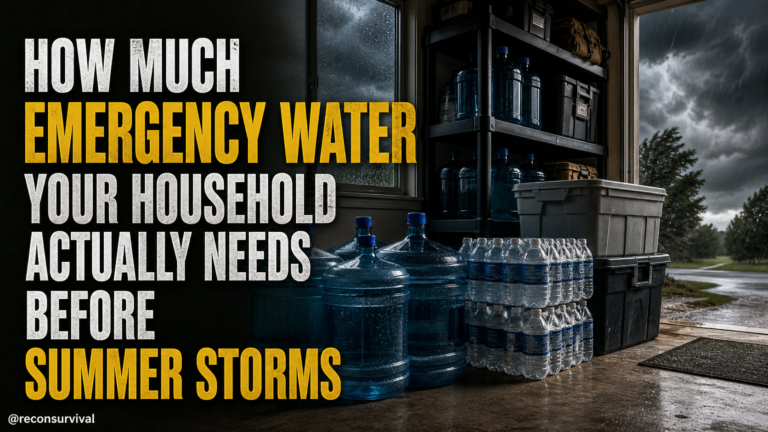
Water security is the foundation of resilience, especially before storm season. In early May, temperatures rise and humidity increases, creating conditions where evaporation reduces available storage. Storms can bring heavy rain, but they can also wash away sediment and damage infrastructure. The reality is that without proper planning, a single dry week can strain household resources. This is why checking your property now is critical. It is not about predicting disasters; it is about preparing for normal variations in water supply.
The Most Common Mistake with Water Storage
The most common mistake is waiting until a crisis to assess water systems. Many people believe that fixing leaks or cleaning barrels is a project for later, but delays lead to missed opportunities. When storms arrive, debris blocks gutters, and sediments clog intake systems. Another mistake is relying solely on municipal supply without backup storage. This leaves families vulnerable during power outages or grid failures. The Recon Survival approach is to act proactively, not reactively.
The Recon Survival Practical System for Watching Runoff, Low Spots, Rooflines, Barrels, Gardens, and Animal Areas
Step-by-Step Household Checks for Water Resilience
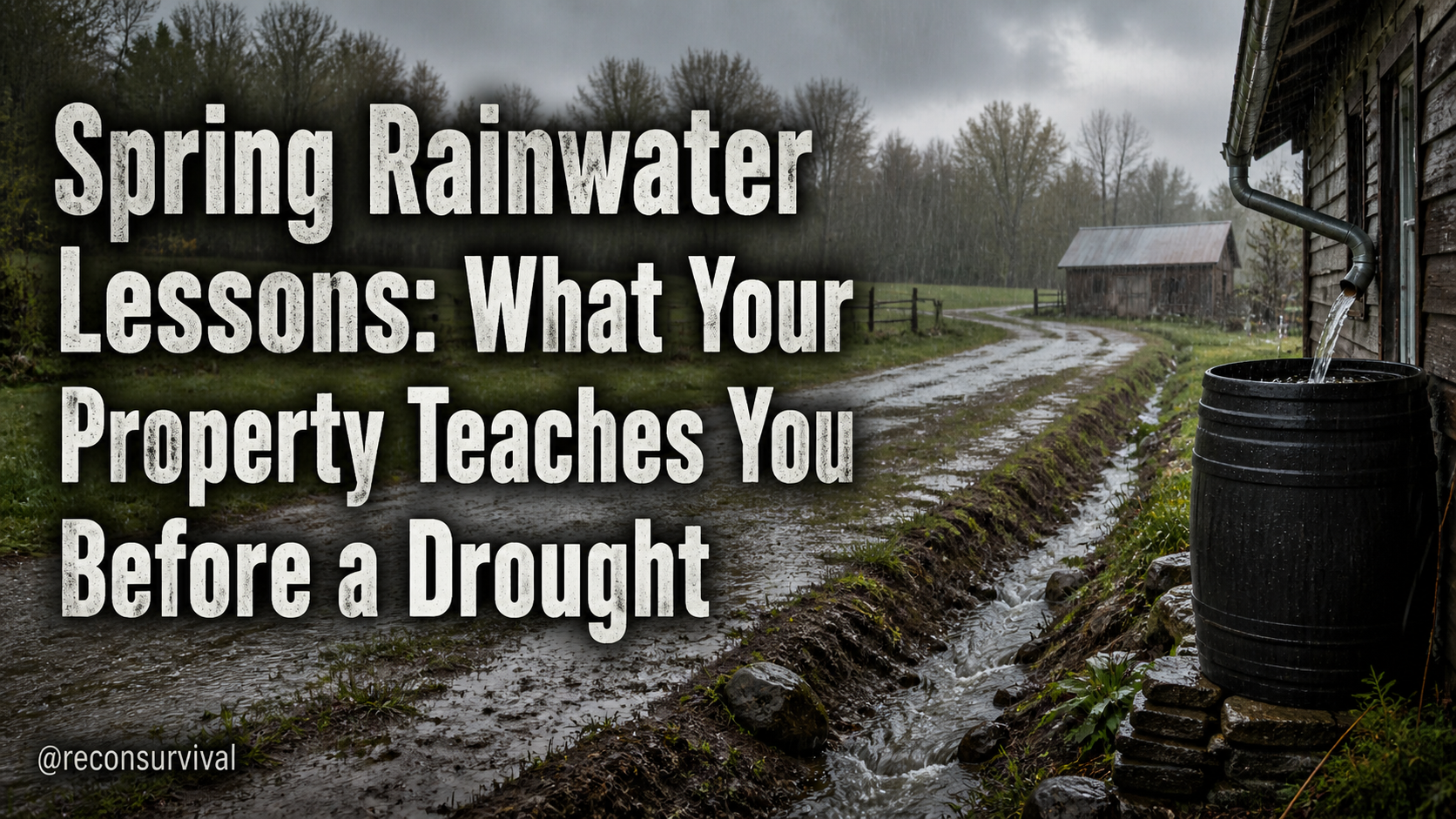
- Inspect Runoff Paths: Walk your property after a light rain to see where water pools. Look for erosion, cracks, or debris in gutters. Clear leaves and twigs to ensure water flows freely toward storage or safe drainage. Use a hose to simulate flow and identify blockages.
- Check Low Spots and Drainage: Identify areas where water accumulates, such as near foundations or under decks. These spots can flood during heavy rains and damage structures. Install French drains or gravel basins to redirect water away from critical areas.
- Examine Rooflines and Gutters: Climb safely onto your roof or hire a professional to inspect for damaged shingles or missing flashing. Ensure gutters slope toward downspouts and extend at least three feet from the foundation. Clean debris regularly to prevent clogs.
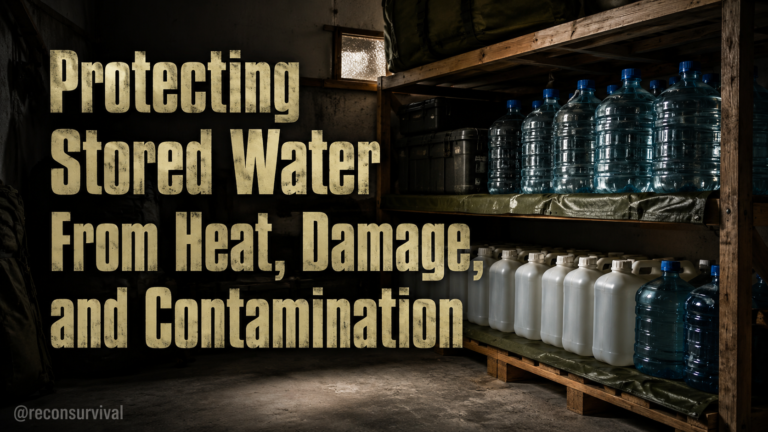
- Maintain Rain Barrels and Storage: Empty and clean barrels annually, removing sediment and algae. Check seals and caps to prevent mosquito breeding and contamination. Use food-grade containers and avoid storing chemicals near water sources.
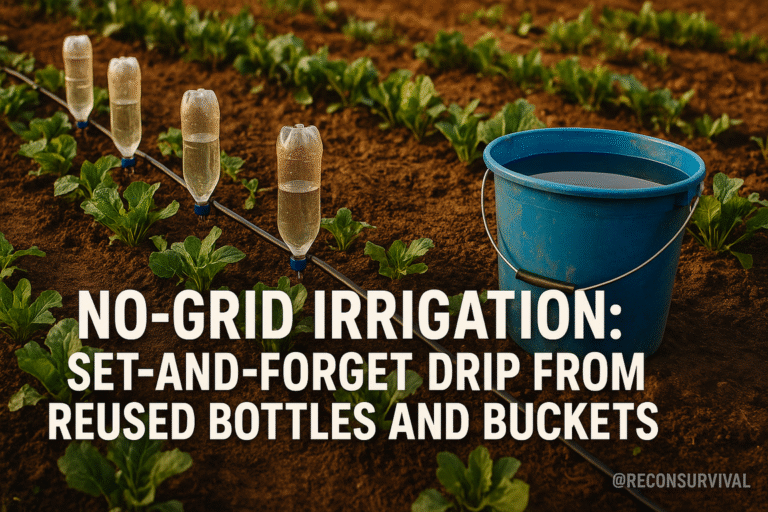
- Protect Garden Irrigation: Inspect drip lines and hose reels for wear. Replace cracked emitters to prevent waste. Consider installing a rainwater collector connected to your garden system for reuse.
- Secure Animal Water Sources: Ensure livestock tanks are covered and free of debris. Check troughs for cracks that allow leakage. Provide backup sources, such as portable tanks, in case of drought.
Applying the System to a Small Backyard or Homestead
For small properties, the system remains effective but scaled. Start with one rain barrel and a few garden beds. Focus on clearing one gutter and checking one low spot each week. As your skills grow, expand to additional storage and drainage solutions. This incremental approach builds confidence and avoids overwhelm.
Low-Cost Options and Durable Upgrade Paths
Low-cost options include using food-grade buckets with tight lids and simple gravel filters for runoff. These are inexpensive and easy to maintain. For a more durable upgrade, invest in UV-treated barrels with built-in sediment traps. These last longer and require less maintenance. You can also add solar-powered pumps for automated transfer from barrels to gardens.
Recon Survival Principle
Water is a finite resource that must be managed carefully. Resilience comes from observation, not speculation. By watching your property closely, you identify weak points before they become crises. This principle applies to all aspects of homesteading, from food storage to power independence.
Do Today
- Walk your property and mark any areas where water pools after rain.
- Clear gutters of leaves, twigs, and other debris to ensure proper flow.
- Check rain barrels for cracks, loose lids, or sediment buildup.
- Inspect garden irrigation lines for leaks or worn components.
- Verify that animal water tanks are secure and free of contamination.
- Document your findings in a notebook or app for future reference.
- Plan one improvement task for next week, such as installing a filter or clearing a downspout.
By following these steps, you build a practical foundation for water resilience. This article is part of a broader series on homesteading and gardening, where we explore sustainable practices and risk reduction. Stay tuned for more insights on food storage, off-grid living, and emergency preparedness.
Keep the standard practical: if the household cannot find it, use it, explain it, and repeat it under mild stress, the system is not finished. Write the owner and review date beside the item so the fix survives busy schedules, school nights, travel, and the first weather alert.
Close with a hands-on check. Touch the item, read the label, test the battery, confirm the contact, or walk the route. A plan that only exists in memory tends to fail at the first interruption.