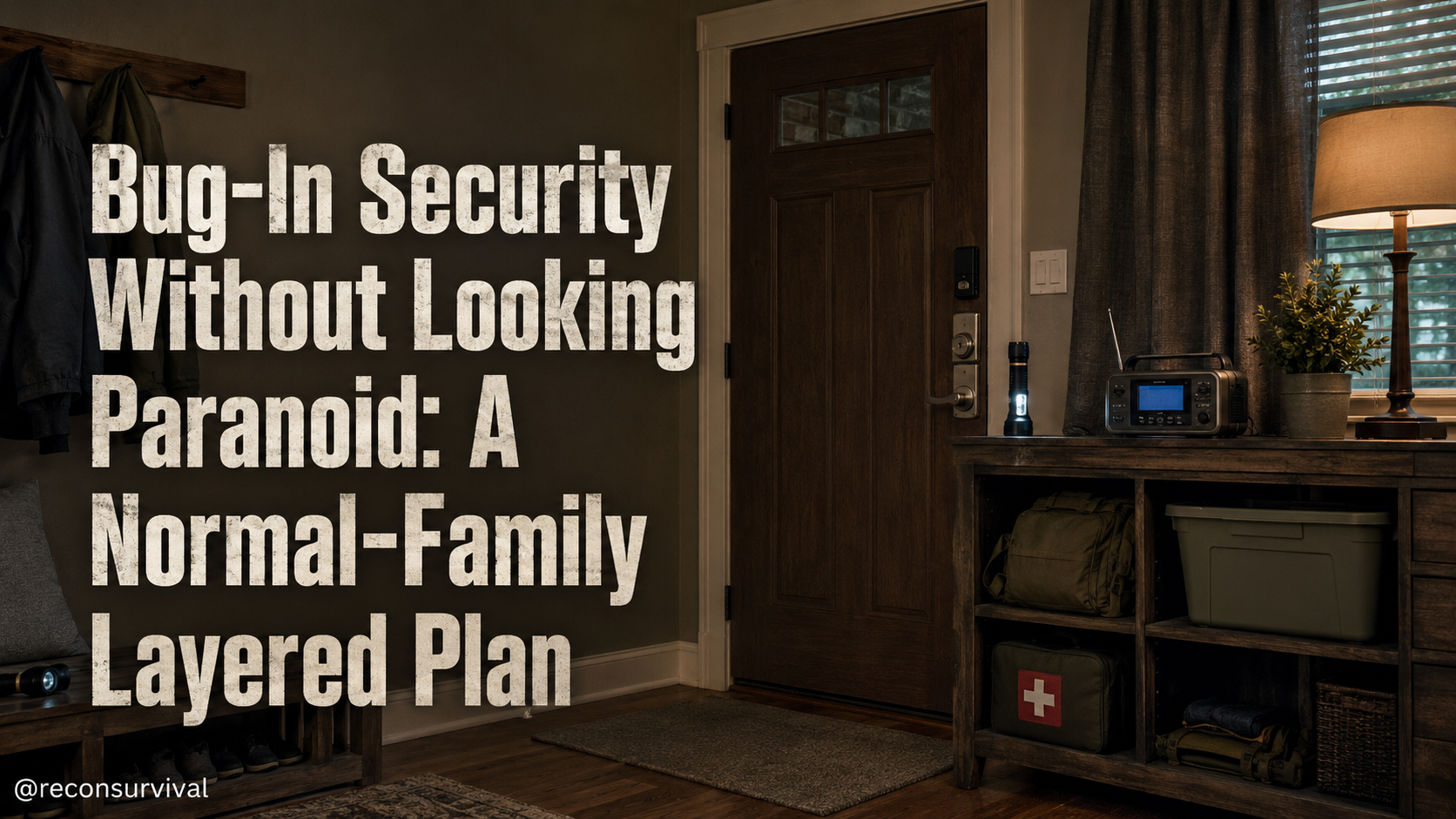
A practical way to improve visibility, locks, routines, neighborhood communication, and night procedures without escalating fear, but most advice is either too generic, too gear-focused, or too late.
As an Amazon Associate, I earn from qualifying purchases.
May offers a rare window to reset household routines before the heat of summer, the chaos of storm season, and the disruption of school transitions take over. This month, many families are focused on travel plans, vacation packing, or preparing for upcoming weather events. While those are valid priorities, there is a critical layer of home defense that gets neglected during these busy periods: improving visibility, reinforcing locks, and establishing clear night procedures without escalating fear. Most people assume their home is secure or decide to wait until a crisis is imminent to take action. Waiting is a strategic error that leaves households exposed when they need resilience most. This article provides a practical, layered approach to bug-in security that keeps families safe without looking paranoid or buying into the fantasy prepper narrative of needing a fortress.
The Real-World Problem of Reactive Security
The core issue facing most households today is not a lack of gear, but a lack of integrated systems. Homeowners often focus heavily on the latest camera technology or heavy-duty deadbolts while ignoring the routine behaviors that actually prevent intrusions. A burglar does not need to break through a reinforced door if they can simply slip past an unlocked sliding glass door while the homeowner is distracted, or if they see a motion light that never turns on. The problem is that security advice is frequently too generic, too focused on gear, or too late in the decision-making process. When stress spikes due to travel plans or weather warnings, people revert to their lowest-security habits because they have not practiced high-readiness routines. This article solves that by providing a calm, realistic plan to improve visibility, locks, and communication before the next heat wave or storm makes the window of opportunity close.
Why This Matters for the Realistic Bug-In Plan
The realistic family bug-in plan assumes that the primary threat is often to the household itself, from theft to violence, while a crisis unfolds outside. Improving home security is the first line of defense against the chaos of a bug-out or stay-at-home scenario. Without a solid foundation of home readiness, even the best evacuation plan fails because the family cannot secure their perimeter once in motion or return safely to a compromised property. This matters because it preserves the family's ability to function. Fear escalates when people feel their environment is vulnerable. By taking practical steps to improve lighting, locking habits, and neighborhood communication, you reduce the perceived and actual risk. This lowers stress levels and allows the family to focus on what really matters during a crisis: caring for each other and conserving resources. It transforms security from a source of anxiety into a manageable set of habits that protect the family unit.
The Most Common Mistake: Gear Before Habits
The most common mistake people make with this topic is purchasing advanced security gear while ignoring the low-hanging fruit of daily habits. A household might install a smart lock but leave the motion-sensor lights under the front porch broken, or they might buy a heavy-duty door bar but fail to sweep out the house in the evening. These small oversights create easy entry points that no amount of expensive technology can fix. Another frequent error is waiting for a specific threat event, like a natural disaster, to begin securing the home. By the time a crisis hits, people are in a reactive state, panic setting in, and making poor decisions. The mistake is treating security as a project rather than a lifestyle. Security is not a product you buy and install once; it is a continuous process of maintenance and routine refinement. Ignoring the basics like visibility and door sweeps while chasing high-tech solutions is a false economy that leaves the family vulnerable.
The Recon Survival System for Integrated Home Security
The Recon Survival system for home security prioritizes habits, visibility, communication, and prevention before gear. This approach ensures that any investment in technology supports a foundation of strong human behavior. The system is built on the principle that an intruder is a human being who seeks the path of least resistance. Removing that resistance through better lighting, clearer routines, and stronger locks makes the home secure by design, not just by accident. This method avoids escalating fear by framing security as a way to maintain control and calm during uncertain times. It focuses on what you can control: your own actions, your family's routines, and your neighborhood's collective awareness. By layering these elements, you create a robust defense that works even when power goes out or communication lines are strained. The goal is a home that feels safe without requiring constant vigilance or paranoia.
Step-by-Step Implementation for a Normal Household
To implement this system, follow these clear steps that a normal household can use immediately. First, conduct a visibility audit. Walk your property at night and identify dark spots near doors and windows. Install motion-sensor lights or replace battery-operated timers if needed. Second, evaluate your locks. Ensure all exterior doors use deadbolts with high-security cylinders and that door sweeps are intact. Third, establish a night routine. Designate a time each evening to sweep the house, checking for forgotten items in rooms and ensuring all interior lights are on or off according to the plan. Fourth, set up neighborhood communication. Create a group text or email list with neighbors who are willing to look out for each other. Agree on a code word or signal to alert one another without causing unnecessary alarm. Fifth, practice night procedures. Simulate a night scenario where family members enter the home and secure the perimeter without rushing. Finally, review and adjust the plan quarterly or after major life changes like moving or travel. These steps build a system that grows with your family's needs.
Defensive, Lawful, and Non-Escalatory Household Checklist
A defensive household checklist focuses on prevention and de-escalation. Use this list to assess your current readiness:
- Visibility Check: All exterior lights function, and motion sensors trigger within 10 seconds.
- Lock Integrity: All exterior doors have functioning deadbolts; peepholes and keyholes are clear.
- Door Sweeps: Weather stripping and door sweeps are in place on all exterior doors to prevent prying.
- Interior Lighting: Lights are scheduled to turn on automatically in the evening to simulate occupancy.
- Neighborhood Connection: A contact list of trusted neighbors is accessible to all family members.
- Escape Routes: At least two exits are clear and accessible from every room.
- Window Locks: All ground-floor windows have functioning locks, preferably key-lockable or latch-secured.
- Communication Plan: Family members know how to contact emergency services and each other without phones if necessary.
- Routine Sweep: A 5-minute evening sweep to ensure the home is locked and no items are left behind.
- Shelter Point: A safe location inside the home is identified where family members can wait if needed.
This checklist ensures that the household is prepared for a variety of scenarios without relying on illegal tactics or offensive weapons. It emphasizes de-escalation and the avoidance of confrontation whenever possible.
Recon Survival Principle
Recon Survival Principle
Security is a matter of habit, not panic. The most effective defense against intrusion is a family that operates on a predictable, high-readiness routine. When your home is well-lit, your locks are secure, and your neighbors are connected, the likelihood of a successful intrusion drops significantly. This principle rejects the idea that you need to be ready for every possible catastrophe to be safe. Instead, it advocates for a calm, value-first approach where you prioritize what you can control. By focusing on the basics like lighting, locks, and communication, you build a foundation that supports your family's resilience. This mindset allows you to handle stress without fear, knowing that your home is a secure base. It is a practical application of common sense that protects the family unit from the very start.
Conclusion and Next Steps
Do Today
- Check every exterior door for full latch contact and smooth deadbolt travel.
- Replace loose or short strike-plate screws where the frame and hardware allow it.
- Open, close, and lock each ground-level window, then note any stuck latch or broken screen.
- Test motion lights at doors, walkways, driveway edges, and dark corners after sunset.
- Trim one visibility problem near a door, window, gate, or walkway.
- Put a working flashlight and charged battery bank where people sleep.
- Write the household contact plan on paper and place it with the radio or main flashlight.
- Assign one person to recheck the list after the next storm, outage, or heat alert.