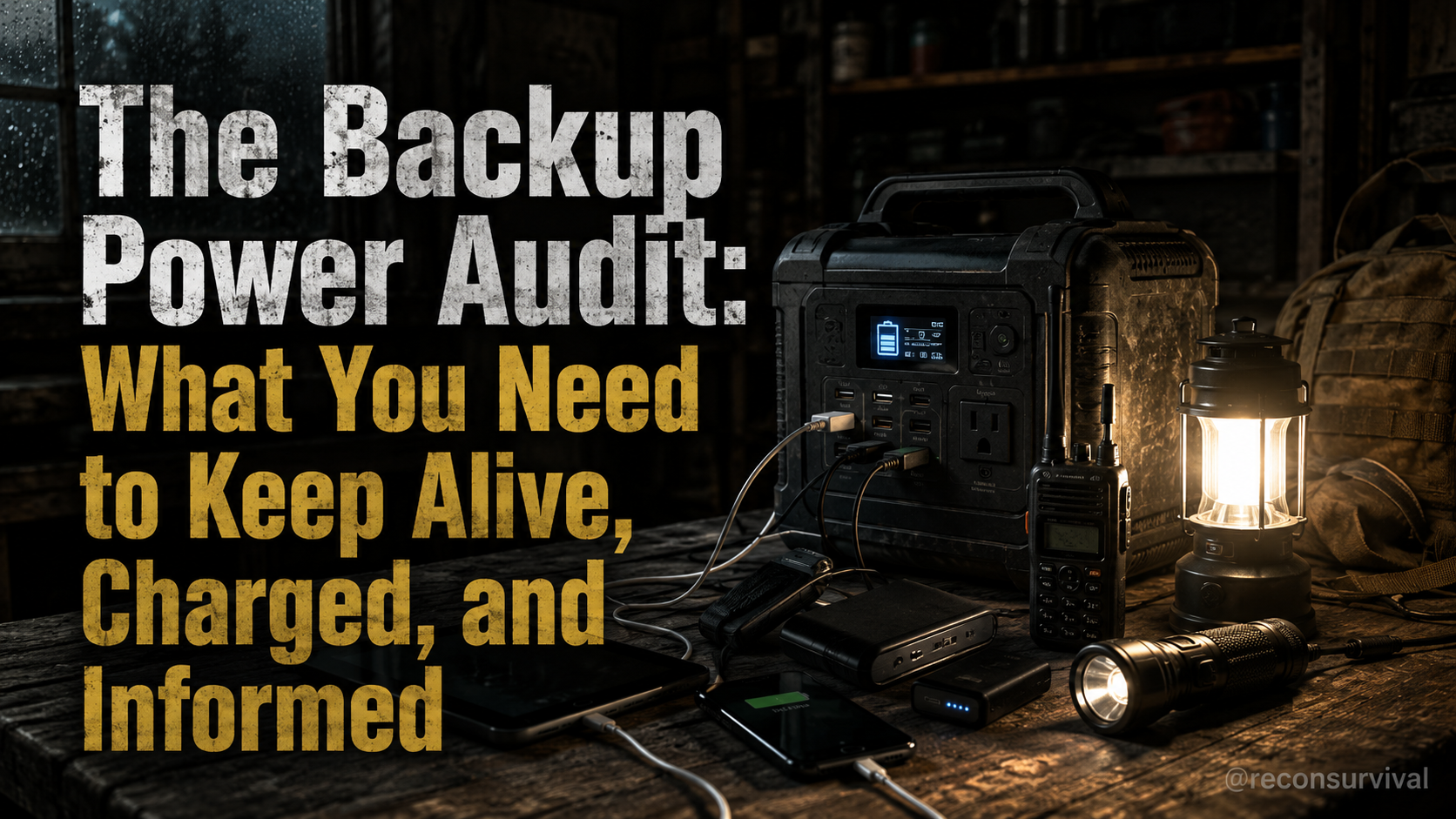
A practical way to identify critical loads, charging needs, medical considerations, food risks, and realistic runtime expectations, but most advice is either too generic, too gear-focused, or too late.
As an Amazon Associate, I earn from qualifying purchases.
The Seasonal Reality Check
Most households assume their backup systems are ready until a power event hits during peak heat. Mid-May brings the first sustained wave of summer demand, forcing utilities to manage grid stress. As temperatures climb in June and July, the strain on the grid increases significantly. This is not a time for panic, but a time for verification. The real problem is not a lack of generators or batteries, but a lack of precision regarding what those resources are actually powering. Many families own equipment but cannot determine which critical loads they can sustain and which they must discard when the grid fails. By May, the grid is under pressure, and the window to perform a low-stakes audit before the season peaks is closing. This guide provides a practical framework to ensure your critical systems remain alive, charged, and informed.
Why Timing Matters Before Summer Grid Stress
The Most Common Preparation Mistake
The most frequent error in this domain is the assumption of capacity. Homeowners often calculate runtime based on the generator's wattage rating rather than the actual devices required. A 20-amp generator does not mean you can run all 20 devices listed on your circuit breakers; it means you are limited by the total draw of the equipment you actually need to keep running. Another common mistake is neglecting the "charging gap." People buy batteries for lights or fans but forget that medical devices, satellite phones, or essential electronics require a specific charging profile that depletes quickly. Finally, many plans ignore the degradation of lithium-ion cells. Batteries purchased in winter or early spring may struggle in late spring heat, leading to reduced capacity. These gaps create a false sense of security that can be dangerous during an actual outage.
The Recon Survival Practical System for Power Planning
We use a systematic approach to identify critical loads, charging needs, medical considerations, food risks, and realistic runtime expectations. This method moves beyond wishful thinking to a data-driven household assessment. The first pillar is load categorization. You must separate "nice to have" loads from "critical loads." This is a binary decision process involving safety, security, and life-support. The second pillar is inventory auditing. This involves verifying the remaining capacity of your batteries, fuel tanks, and generator hours. The third pillar is environmental and medical alignment. You must ensure your setup supports medical device battery life and maintains food safety without a refrigerator. The fourth pillar is signal awareness. You need a method to know when to switch to backup systems. This system ensures that every component of your power plan serves a specific, pre-defined function.
Step-by-Step Household Implementation
- Identify Critical Loads: Create a list of the absolute essentials you need during a grid failure. Include medical devices, refrigerator/freezer units, communication devices, and lighting. Do not include entertainment systems or non-essential appliances.
- Map Charging Requirements: Determine how often your electronics need charging. A small battery bank might charge a smartphone once a day but fail to keep a portable oxygen concentrator running for 12 hours. Note the input voltage and amperage requirements for each device.
- Assess Medical Considerations: If you rely on a CPAP, oxygen concentrator, or insulin cooler, verify the runtime of your backup power against the device's battery needs. Ensure you have a backup plan if the backup power also fails.
- Analyze Food Risks: Calculate the load required to keep a refrigerator running. If you lose power for 24 hours, ensure you have enough ice or a backup fridge. If the outage lasts longer, you may need to consume non-perishables or use alternative cooling methods.
- Verify Fuel and Battery Capacity: Check the fuel level in your generator and the state of charge in your battery bank. Ensure you have the physical fuel needed for the duration of the anticipated outage plus a safety margin.
- Establish Signal Triggers: Define what prompts you to switch to backup power. Is it a local utility notification? A specific weather radar reading? A drop in grid voltage? Establish these triggers now.
- Calculate Realistic Runtime: Add up the total wattage of your critical loads. Compare this to your fuel tank capacity and battery bank capacity. Adjust your load list if the numbers do not add up.
Readiness Checklist
Use this checklist to verify your current status before the grid stress peaks. – List of critical loads written down and verified. – Fuel levels checked and topped off for immediate use. – Battery bank fully charged and tested under load. – Medical device runtime calculated and verified against backup power. – Food inventory audited for preservation during outage. – Communication devices tested and charged. – Switch to backup power defined and practiced. – carbon monoxide detectors checked and functional.
Decision Tree for Power Failure
When the grid goes down, confusion is the enemy. A simple decision tree helps maintain calm and ensures safety.
- Grid Failure Detected: Is there a local notification or confirmed outage?
- Yes: Switch to backup power system.
- No: Monitor signals; if outage occurs, proceed to step 2.
- System Start: Connect the generator or battery inverter to critical loads.
- Ensure ventilation is adequate to prevent carbon monoxide poisoning.
- Verify fuel levels are sufficient.
- Load Management: Are you running only critical loads?
- Yes: Monitor battery voltage.
- No: Disconnect non-critical devices immediately to preserve runtime.
- Runtime Check: Does the battery voltage drop below the safe threshold?
- Yes: Shut down non-essential loads first. Preserve life-safety devices.
- No: Maintain status until power is restored or fuel runs low.
- Transition Plan: Do you have a plan for when backup power fails?
- Yes: Activate food preservation methods and alternative communication.
- No: Stop current activities and secure resources for survival.
Recon Survival Principle
We integrate the Oracle AXIS mission into our readiness doctrine as a model for early warning and decision support. This platform is not about predicting specific disasters with certainty, but about maintaining awareness of signals that trigger a change in state. In the context of backup power, this means recognizing the shift in grid demand early enough to prepare your systems. It treats the power grid not as a static utility but as a dynamic system subject to stress. By aligning your preparation with early warning signals, you create a margin of safety that prevents reactive panic. This principle encourages calm, household-level action based on available data rather than speculation. It reinforces the idea that readiness is a continuous process of monitoring signals and adjusting your plan accordingly.
Action Timeline
- Today: Conduct the critical load audit. Write down exactly what you must keep running. Verify your fuel gauge.
- This Week: Charge all aaa batteries to full capacity. Test the generator load to ensure it starts and runs. Check your carbon monoxide detectors.
- Later This Season: Review your food storage. Ensure you have non-perishable meals ready if you must ration power. Re-check battery capacity as summer heat approaches.
Recon Survival Takeaway
Preparation is about clarity under stress. By the time the grid is under peak stress, you must have already made the difficult decisions about what to keep running and what to leave off. This audit removes uncertainty from the equation. It allows you to respond to a power event with a calm, deliberate plan rather than scrambling for resources. The goal is to ensure that when the lights go out, you know exactly what to do, where your resources are, and how long they will last. This confidence allows you to focus on safety and security rather than guessing.
Do Today
Perform these actions immediately to secure your readiness for the coming heat wave.
- Identify your top three critical loads and write them on a dedicated sheet of paper.
- Check the fuel level in your generator and fill the tank if low.
- Verify the state of charge on your battery bank and start charging devices.
- Inspect your carbon monoxide detectors and replace batteries if necessary.
- Review your medical device battery life against your backup power capacity.
- Test your communication devices to ensure they function on backup power.
- Establish a clear signal trigger for when to switch to backup power.
By following these steps, you ensure that your household is prepared for the realities of a stressed grid. This practical approach builds a foundation of safety that withstands the challenges of summer.