The first week of June brings the first sustained heat of summer, a time when household systems are under the most direct stress. It is also a moment to pause and address a gap that widens every time a disruption occurs: the lack of accurate documentation. When power fails or property is damaged, the difference between a covered loss and a denied claim often comes down to what you can prove existed before the event happened. This article solves the real-world problem of how to create useful photo records of property, valuables, serial numbers, supplies, and important household areas so they stand up when you need them most.
Why Household Documentation Matters for Recovery
Creating a photo record is not just about organizing a digital drawer; it is a critical component of household recovery, insurance clarity, theft reporting, and repair planning. Without this documentation, insurance adjusters often rely on generic estimates that do not reflect the true value or condition of your belongings. They may deny claims based on assumptions that contradict reality. Clear photos provide the evidence required to substantiate claims, ensuring that replacements are paid at current market rates rather than outdated policy limits.
In the event of a theft, local law enforcement relies heavily on serial numbers and photographic evidence to identify stolen goods. Without a record, items may be returned to your property as found, or the claim may be lost entirely in a system of duplicates. For repair planning, detailed photos allow you to track warranty expiration dates, verify part compatibility for future repairs, and demonstrate to contractors exactly what needs to be restored. This process is not about fearmongering or anticipating catastrophe; it is about maintaining administrative control over your physical assets. When you have proof of existence and value, you reduce the administrative burden during a stressful recovery window, allowing you to focus on safety and family needs rather than filling out forms from memory.
The Common Mistake: Waiting Until You Need It
The most common mistake people make with this topic is believing they will remember what everything looks like or where it is when disaster strikes. Many individuals assume that if they can identify an item, they can find its value or serial number mentally. This fails immediately in a high-stress environment where cognitive function is impaired. Another frequent error is creating a single, blurry photo of a room. A photo of a living room full of furniture is legally useless for an insurance claim regarding a specific lost item.
People also often forget to photograph the back of appliances, the underside of electronics, and the interior of safes. These are the exact locations where serial numbers reside. If you wait until a fire or flood to look for these numbers, you are too late. You must accept that the documentation process will be mundane and boring, and the only way to succeed is to complete it during a calm period when no one is panicking.
The Recon Survival Practical System
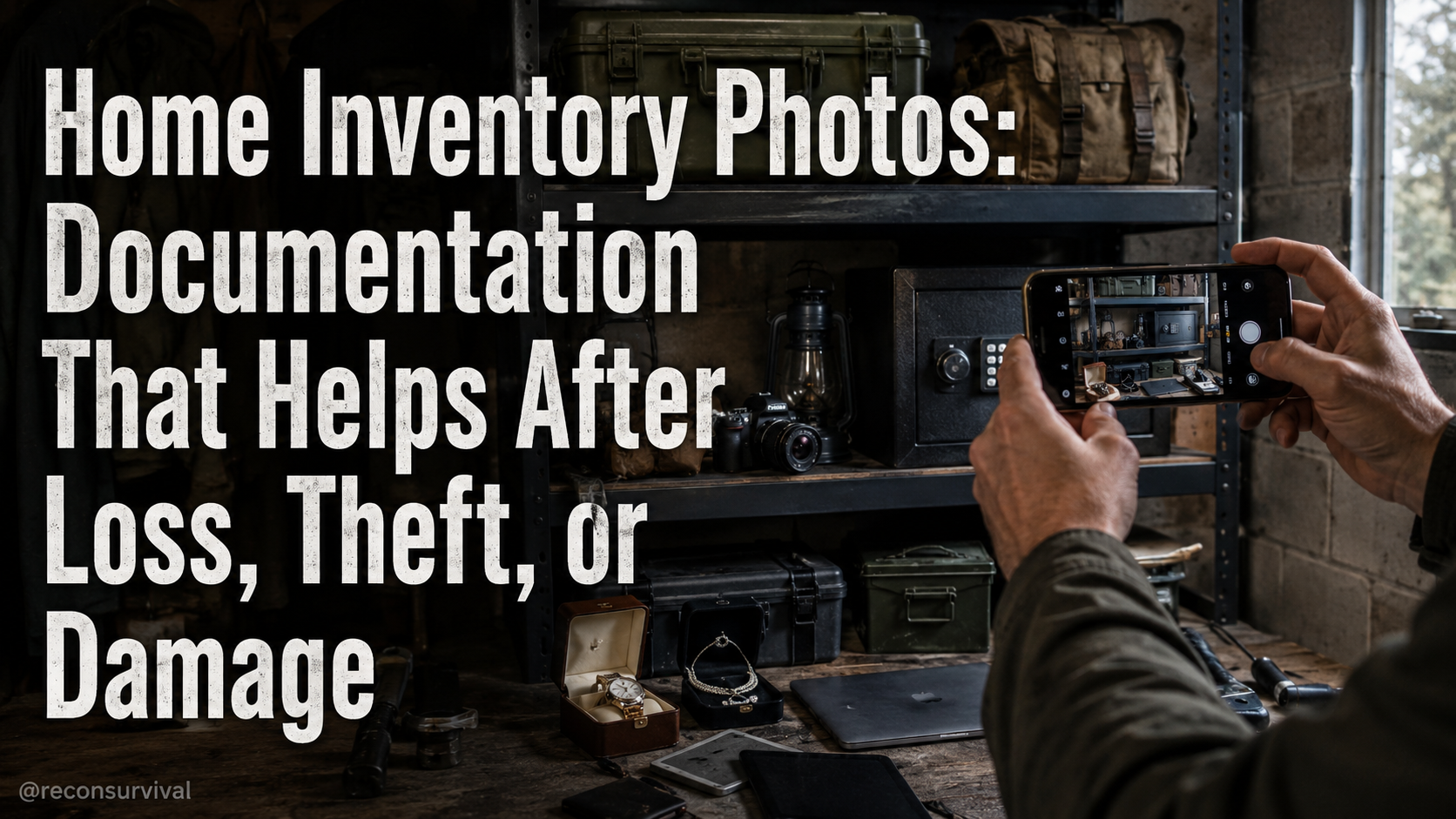
We break the process down into specific categories to ensure nothing is missed. We do not just take pictures of faces; we photograph items. We do not just record values; we record serial numbers, model numbers, and date codes. We do not just photograph rooms; we photograph the contents of those rooms in context. The system uses a standard smartphone camera for the photos, as they are readily available, and a simple notebook or digital note-taking app to record values and locations alongside the images.
Step-by-Step Guide to Creating Useful Records
To create useful photo records of property, valuables, serial numbers, supplies, and important household areas, follow these steps:
- Capture Serial Numbers: Locate every major appliance, electronics, tool, and piece of high-value furniture. Turn the item around to find the serial number plate. Photograph the number clearly, ensuring it is in focus. If the number is obscured by a logo or sticker, clean it or adjust the lighting so the text is legible. If possible, photograph the barcode as well.
- Record Value and Purchase Date: Next to the serial number, write down the current replacement cost. Do not guess; check receipts, online listings, or manufacturer pricing guides. Include the year of manufacture. This helps distinguish between a 20-year-old appliance with no warranty and a new one under protection.
- Photograph the Context: Take a second photo of the item within its normal location. This shows how much of the item was usable if only part is damaged, or how it fits into the room's layout. For example, take a photo of a gaming console sitting on a specific TV stand. This proves the item was in a habitable area if you are claiming for damage to the structure.
- Document Supplies and Inventory: Photograph your supply cabinets. Label the bins with their contents and expiration dates. Take a photo of the labels on the bins themselves. Document the quantity of critical items like water filters, batteries, and medical supplies. This is vital for tax write-offs or verifying that a disaster relief agency will reimburse you for stockpiles destroyed in an official emergency.
- Organize by Location: Create folders on your device labeled by room or zone (e.g., "Kitchen," "Garage," "Home Office"). Upload the photos in the correct folder. For valuable collections like jewelry or art, create a separate, secure folder. Use a naming convention that includes the item name and a brief description, such as "LivingRoom-Bookshelf-Lamp-01".
- Verify with a Second Eye: After you finish, review the images to ensure the serial numbers are readable. If you cannot read a number on a photo, retake it. Do not send a blurry image to an insurer or law enforcement.
Prioritizing Habits Over Gear
When discussing security and documentation, there is a temptation to buy a scanner or a specialized app. The Recon Survival approach prioritizes habits, visibility, communication, and prevention before gear. A smartphone with a decent camera is sufficient for 99% of documentation tasks. The real investment required is time and discipline. The habit of documenting should be integrated into your regular cleaning or maintenance routine.
Prevention is key. Regularly updating your photo records as you buy or replace items ensures the database remains current. Communication with household members is also essential. Everyone should know that documenting assets is a safety protocol, not a chore. If you lose your phone during an emergency, do not assume you are helpless. If you have a habit of storing backups on a password-protected cloud account or a physical drive that you keep with your important papers, you mitigate the risk of losing the data itself.
Visibility and communication extend beyond just the photos. Ensure that your household members know where to find these records. If you live in a shared residence, share access with authorized family members or emergency contacts. Prevention also means securing your physical assets against theft and damage, but documentation is the first line of defense for recovery.
Defensive, Lawful Household Checklist
Safety and security are about protecting your home from outside threats without escalating violence or breaking the law. When you are documenting your household, keep in mind that you are preparing for the worst but hoping for the best. The following checklist includes defensive, lawful, non-escalatory measures that align with standard safety guidance from organizations like Ready.gov and FEMA.
- Secure Access Points: Ensure all doors and windows are locked when you leave. Use deadbolts with a throw bolt that extends into the strike plate.
- Lighting and Visibility: Install motion-sensor lights around your perimeter. Ensure you have exterior lighting that is functional and visible to passersby.
- Communication Plan: Have a plan for how household members will check in if separated. Do not share your live location with unauthorized individuals.
- Defensive Awareness: Be aware of your surroundings. If you notice suspicious activity, do not engage. Retreat to a safe room if necessary.
- Legal Boundaries: Do not use weapons or aggressive tactics as a first line of defense. Your primary goal is to avoid injury and preserve the peace.
- Evidence Preservation: If a break-in occurs, do not touch anything except to lock the door. Call law enforcement immediately. Your photo inventory is the first piece of evidence they will request.
Recon Survival Takeaway
The core lesson is simple: documentation is a preventative habit that reduces stress during recovery. By taking the time to photograph your property, valuables, and supplies, you are essentially writing a will for your material goods. This ensures that if you lose your home or belongings, you are not starting from zero. You are starting from a position of knowledge. The photos you take today are boring to create, but they are critical to your future stability.
Recon Survival Principle
Recon Survival is not about waiting for stress to make the decision. It is about turning weak signals into household action while the fix is still small. A practical way to create useful photo records of property, valuables, serial numbers, supplies, and important household areas, but most advice is either too generic, too gear-focused, or too late.
Do Today
Complete one small readiness action today: create useful photo records of property, valuables, serial numbers, supplies, and important household areas. Use the checklist below to get started:
- Gather your smartphone and ensure your camera is set to the highest resolution.
- Walk through your home and identify three major appliances or pieces of electronics.
- Locate the serial number on each item.
- Take a clear, well-lit photo of each serial number.
- Write down the current estimated value and purchase year in a notebook or digital note.
- Save the photo in a dedicated folder named "Household Inventory."
- Repeat this process for one room per day until your entire household is documented.
This action is simple, takes only a few minutes per item, and has the potential to prevent financial ruin or significant administrative delay. Do not wait for a disaster to motivate you. The worst time to be without these records is after you have lost everything. The best time to start is now, while you are calm, collected, and in control.