A practical way to prioritize shutters, drainage, outdoor hazards, garage doors, entry points, and documentation, but most advice is either too generic, too gear-focused, or too late.
The Reality of Storm Windows and Door Management
There is a distinct difference between a home that has been hardened for a specific threat and one that has simply been neglected. The real-world problem most families face during hurricane season is not a lack of supplies; it is a failure to assess the physical vulnerabilities of their own property before the weather turns. You can stockpile canned goods and water, but if your garage door opener fails during high winds or your back window lacks proper reinforcement, your family's safety relies entirely on luck rather than preparation.
Why Home Hardening is a Core Component of the Ready Kit
Many assume that a hurricane season ready kit refers solely to a backpack or a storage bin in the garage. However, the home itself is the primary shelter. For a shelter to remain intact, the structure must resist the forces attempting to breach it. Securing entry points, managing water drainage, and reinforcing windows are not secondary tasks; they are the foundation of the shelter. If the outer shell fails, no amount of food or water inside will matter. This structural integrity is what protects a family from rising floodwaters and high-velocity winds. Without these physical upgrades, a household is vulnerable to water intrusion and structural damage that emergency services cannot reach.
The Most Common Mistake: Relying on Last-Minute Action
The most common mistake people make with this topic is waiting until the season officially begins to address structural weaknesses. This delay is dangerous because many materials required to reinforce a home, such as impact-resistant film for windows or specific shutter materials, are sold out or priced exorbitantly when demand spikes. Furthermore, homeowners who wait until the storm is named often find that their primary escape routes, like garage doors, are compromised by the storm surge or wind. A proactive approach is the only reliable way to ensure a home stands firm when the clouds darken.
The Recon Survival Priority System for Home Hardening
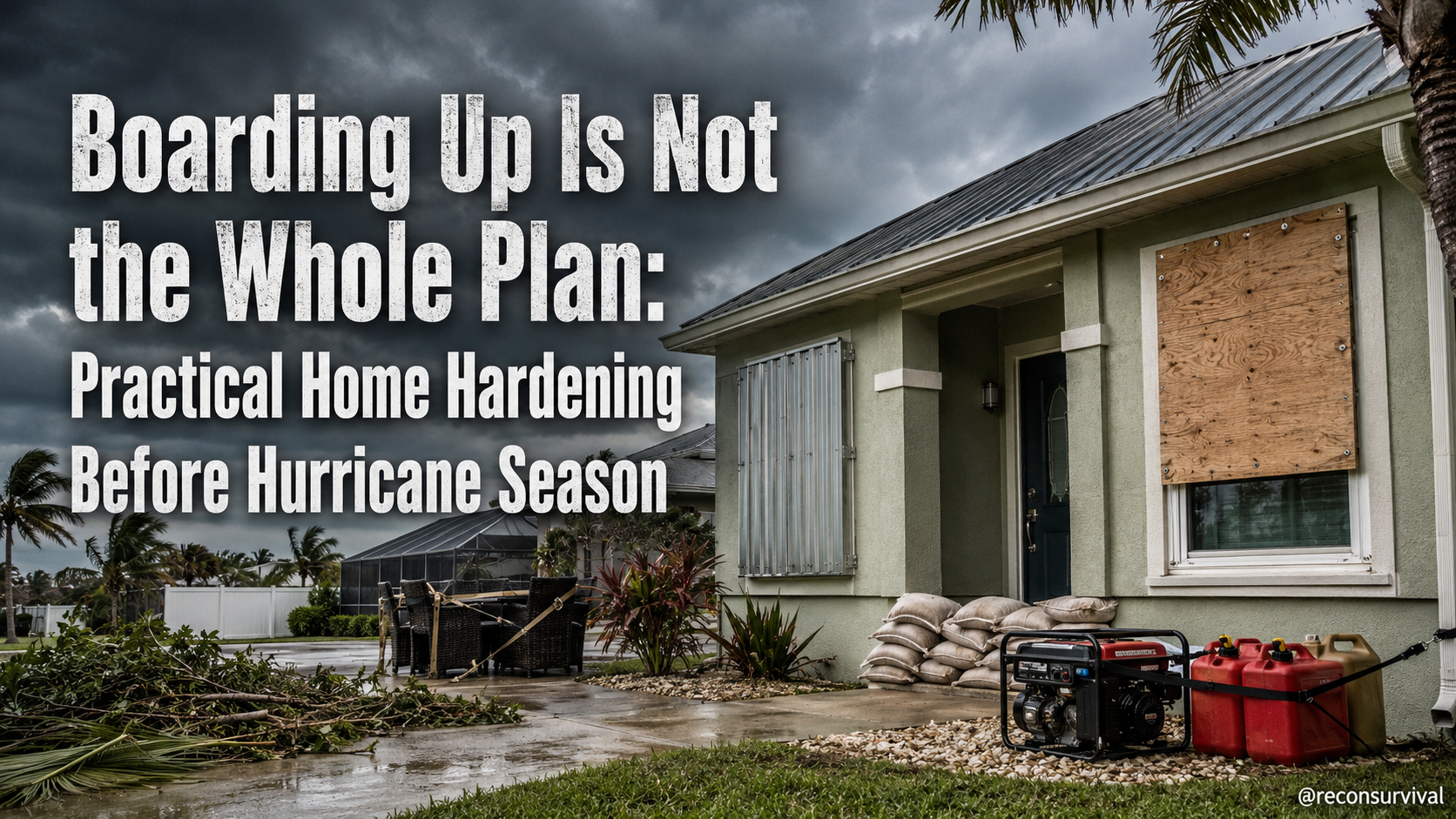
To address these vulnerabilities effectively, we must prioritize specific areas of the home based on their susceptibility to damage. This system focuses on the following key elements: shutters or window coverings, drainage systems, outdoor hazards, garage doors, entry points, and documentation. We begin by examining how the home interacts with its environment. Water damage often occurs before wind damage, making drainage a critical first step. Next, we look at the perimeter where debris can become projectiles. We then evaluate the strength of doors and windows against wind pressure. Finally, we address the documentation needed to recover from a loss.
Step-by-Step Assessment of Vulnerabilities
The first step in this system is a visual inspection of the drainage. Walk around the perimeter of the house and look for grading issues. The soil should slope away from the foundation to prevent water from pooling near entry points. Check gutters and downspouts for blockages that could overload the foundation during heavy rain.
Next, inspect the outdoor environment for hazards. Look for dead trees, leaning branches, or loose debris like AC units and old roof shingles that could be picked up by the wind. These items become lethal projectiles in high winds. Clear them before the season starts.
Then, evaluate the garage door. Modern high-velocity winds can easily rip a standard single-car or double-car door off its hinges. If you live in a coastal area or a zone prone to severe storms, ensure your garage door is properly braced.
Finally, check all entry points. Doors that do not latch securely or windows with broken seals are weak points. These areas require immediate attention.
Prioritizing Habits, Visibility, and Prevention
Before focusing on heavy gear, prioritize habits and visibility. Install motion-sensor lighting around the perimeter of the house. In low-light conditions, identifying hazards becomes much easier. This simple change improves safety and allows you to spot issues before they become critical. Communication is also vital. Share your home hardening plan with family members. Ensure everyone knows where the supply cache is located and how to secure the property. Prevention is always superior to reaction. A well-maintained home with clear sightlines is safer than a home filled with gear that cannot be accessed due to poor planning.
A Defensive, Lawful Household Safety Checklist
We include a defensive, lawful, non-escalatory household checklist. This checklist includes ensuring all locks are functional and that doors open smoothly from the inside. Test your emergency lighting and battery backups. Verify that you have a clear path to the front door free of clutter. Ensure that security cameras, if used, are set to record local activity and are not directed at neighbors in a way that violates local laws. Focus on de-escalation and prevention. Keep your neighborhood clean to avoid attracting pests or creating trip hazards. Maintain a safe distance from potential sources of conflict or danger.
Recon Survival Principle: Visibility Prevents Vulnerability
The principle of visibility is central to this strategy. When you can see your property clearly, you can identify problems before they escalate. A well-lit home with clear drainage paths and cleared debris zones is inherently safer. This principle applies to both physical security and hazard management. By ensuring that your home is visible and accessible, you reduce the risk of accidents and make it easier to respond quickly if an emergency occurs.
Documentation and Recovery Planning
Documentation is a critical but often overlooked part of home hardening. Before the storm, take photos and videos of your home, your belongings, and your emergency supplies. This documentation is essential for insurance claims and recovery efforts. Store digital copies in a secure cloud location. Keep a physical copy in a waterproof container outside the home. This ensures you have access to the information even if your primary digital files are lost.
Final Thoughts on Preparedness
Preparedness is a continuous process that requires constant evaluation. As the environment changes and new threats emerge, so must your strategy. The goal is to create a home that can withstand the elements and protect your family's well-being. By following these steps, you can ensure that your home is ready for whatever the future holds.
Do Today
The following actions are concrete steps to take immediately to improve your home's readiness.
- Inspect drainage grading around the foundation to ensure water flows away from the house.
- Clear gutters and downspouts of leaves, nests, and debris to prevent backups.
- Trim tree branches that hang low over the roof or yard to reduce wind damage risk.
- Test all garage door openers and ensure the door is balanced and secure.
- Check window seals for gaps or cracks that could let water in.
- Secure or reinforce entry points with deadbolts and reinforced frames where necessary.
- Update your emergency supply list to ensure all items are accessible and not expired.
Run the audit in one pass instead of scattering it across the week. Start outside, move through the entries, check the rooms where people sleep, then finish at the kitchen table with the contact list, radio, chargers, and written roles. The point is to turn the plan into something visible, assigned, and repeatable before weather, heat, or an outage starts making decisions for you.
Use a simple red, yellow, green pass for the security walk-through. Red means the item fails now, such as a deadbolt that will not seat, a window that will not lock, or a light that never turns on. Yellow means it works but needs a date, spare part, or owner. Green means it has been tested by hand and somebody knows when to check it again.
Close the loop with a named owner. If the back light needs batteries, assign the person who will buy them. If the window latch sticks, assign the person who will repair it. If the contact list is outdated, assign the person who will print a fresh copy. Security improves when the household knows exactly who owns the next step.