A practical way to plan cooking options that do not depend on normal power, water, or refrigeration, but most advice is either too generic, too gear-focused, or too late.
As an Amazon Associate, I earn from qualifying purchases.
Why This Matters for Your Hurricane Season Ready Kit
Hurricanes are not just about wind damage; they are about infrastructure collapse. When a storm makes landfall, the most critical function to fail is the ability to provide safe food. A hurricane season ready kit must account for scenarios where the power grid is down for days and water is contaminated. Relying on a gas stove requires a functioning meter and open lines, while an electric stove needs voltage that may be restored unpredictably. If your cooking methods rely on these utilities, you are vulnerable to the very event you are preparing for. This matters because it keeps the decision to eat safe. If you have a method that works without power or running water, you reduce the cognitive load of planning a meal under stress. It also allows you to keep a smaller, more manageable inventory of canned goods that do not require refrigeration, rather than hoarding perishables that will spoil when the electricity dies.
The Common Mistake People Make
The most common mistake people make is waiting until the storm warning arrives to decide what to eat. During a storm event, the mental load is overwhelming. There is no time to look for a camping stove, unpack a dry mix, or light a fire without proper ventilation. People also often over-engineer their system by trying to power every appliance, believing that "backup power" means running the kitchen as normal. This ignores the reality that once the storm passes, utility companies often tripping breakers or clearing fallen lines takes significant time. By the time power returns, it may be dark and unsafe to walk outside without a reliable light source, let alone boil water or cook. The mistake is treating food storage as a passive task of buying cans, rather than an active system of how to cook those cans without utilities.
The Recon Survival Practical System for Planning Off-Grid Cooking
The Recon Survival practical system for planning cooking options is built on a simple principle: plan for the failure of your main utility before the failure occurs. This involves separating your cooking plan into two distinct categories: immediate access meals and extended duration meals. Immediate access meals are those you can cook right away using portable gear and stored fuel. Extended duration meals are simpler items like jerky, freeze-dried food, or no-cook rations that require no energy at all. You must plan for both. The system prioritizes safety, specifically regarding ventilation and fuel storage. It also prioritizes simplicity, ensuring that the cooking method does not require complex setup or specialized skills that are difficult to perform in the dark or wet conditions of a disaster.
Steps to Build Your Off-Grid Cooking Plan
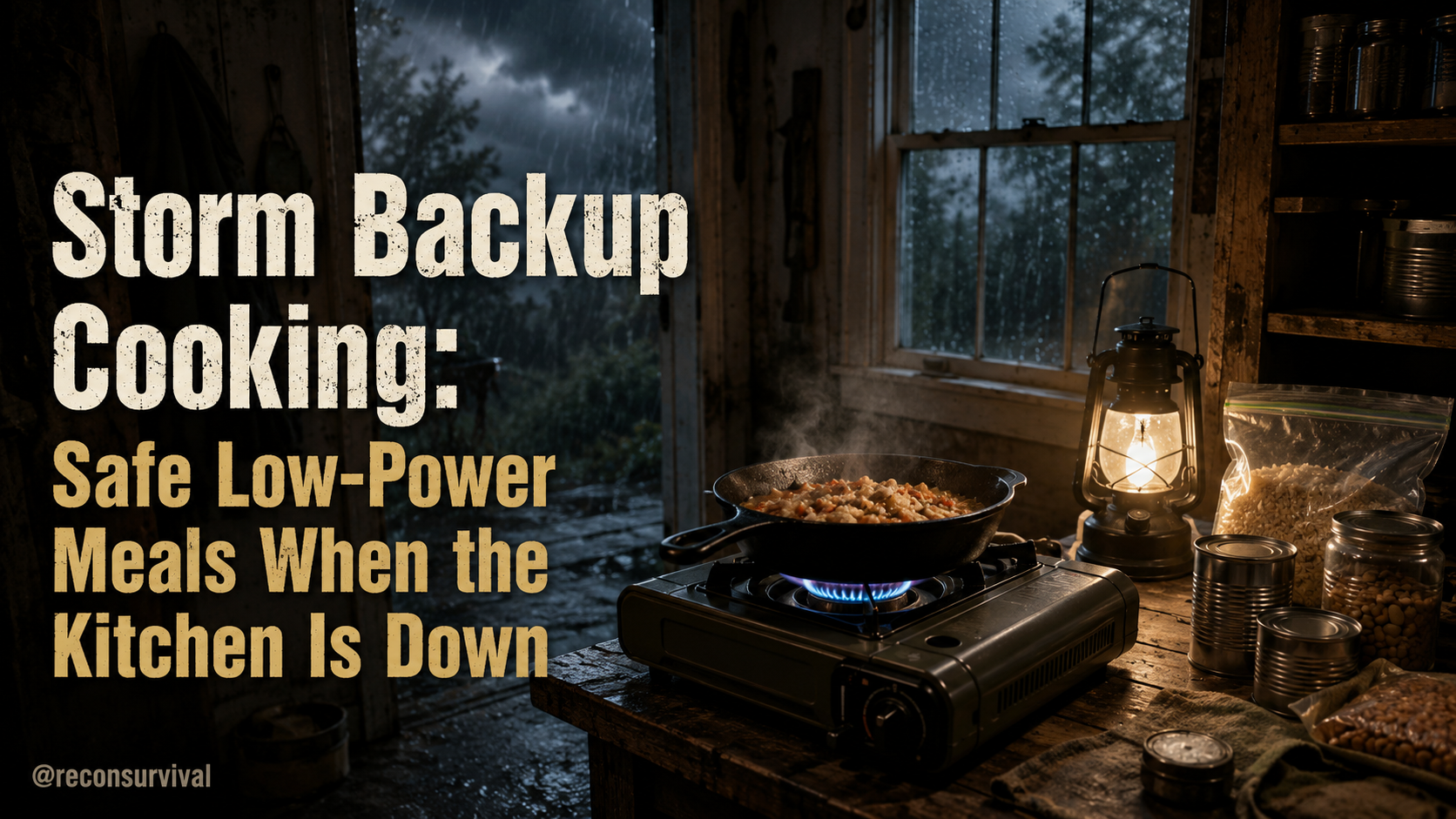
To build your off-grid cooking plan, start by auditing your current inventory. Look at your pantry and identify items that require no cooking. These form the baseline of your immediate access meals. Next, evaluate your portable gear. Check the condition of your camping stoves, led lantern, and fuel canisters. Ensure you have a manual for each piece of equipment and that you know how to use them without electricity. Third, establish a protocol for fuel safety. Store fuel in approved containers away from living quarters and sources of ignition. Fourth, create a simple menu. Decide in advance what meals you will make and ensure you have the ingredients stored. Finally, test your system. Practice lighting your stove and cooking a meal in a safe environment before an actual emergency occurs.
Defining the Minimum Viable System Before Upgrading
The minimum viable system consists of three components: a portable heat source, a safe fuel supply, and a food inventory that requires no refrigeration. The portable heat source can be a simple canister stove or a wood-burning camp stove with a spark screen. The safe fuel supply includes solid fuel tablets or liquid fuel cans stored in ventilated areas. The food inventory includes canned goods, dried meats, nuts, and freeze-dried meals. Upgrades to this system include adding a solar charger for a small battery backup to run a portable fridge, or adding a water filtration system if you plan to cook with non-potable water. However, do not rely on these upgrades as your primary source of food. The minimum viable system is about having a reliable way to boil water and heat food, not about replicating a full kitchen experience.
Safety Limits, Maintenance, and Realistic Failure Points
Every cooking method has safety limits and realistic failure points. For canister stoves, the fuel will eventually run out, and the chemical reaction that powers them can be inhibited by high humidity. For wood stoves, failure points include running out of dry kindling or failing to maintain proper ventilation to avoid carbon monoxide poisoning. For solar setups, failure points include cloudy days and the need for daily repositioning. Maintenance is critical. Clean your stove after every use to prevent clogging. Check fuel canisters for corrosion. Test your spark screen and ensure it is intact. Always use a carbon monoxide alarm when using any fuel-burning device indoors, even if the stove is designed for outdoor use. Realistic failure points also include the possibility that your fuel supply gets contaminated or that the packaging is damaged during transport. Always have a backup fuel type, such as both liquid fuel and solid fuel tablets, to ensure redundancy.
Recon Survival Principle
Recon Survival Principle
Your primary goal is food safety, not culinary variety. In a crisis, the most important factor is preventing foodborne illness. Do not attempt to cook raw meat in a situation where you lack a way to boil water for your dishes and utensils. Stick to pre-cooked meals, canned goods that do not require canning jars to be opened with a stove, or meals that only need heating. The principle is simple: if the meal cannot be eaten cold or hot, do not serve it.
Do Today
- Walk the main system named in the brief and write down the first weak point.
- Assign one person to own that fix before the day ends.
- Check the related supplies, tools, batteries, labels, or documents by hand.
- Put the next review date on a calendar instead of relying on memory.
- Move one critical item to the place where it will actually be used.
- Tell the household what changed and where the updated item now lives.
- Repeat the check after the next outage, storm warning, trip, or schedule change.
Do Today
Today, take one small readiness action to plan cooking options that do not depend on normal power, water, or refrigeration. Complete the following checklist:
- Audit your pantry and remove any items that require refrigeration if you do not have a reliable cooling system.
- Check the expiration dates of your canned goods and freeze-dried meals.
- Inspect your camping stove or cookware for damage or rust.
- Review the manufacturer instructions for your fuel canister or stove and practice lighting it once.
- Create a simple menu of meals that use only your stored non-perishable food.
- Check your carbon monoxide alarm to ensure it is working and has fresh batteries.
- Store your fuel safely in a designated area away from heat sources and living spaces.
- Label your fuel containers clearly and ensure they are secure from leaks.
- Verify that your ventilation plan for using a wood stove or charcoal grill is in place.
- Share your plan with a trusted neighbor or family member so they can help if you need to test your system.
Keep the standard practical: if the household cannot find it, use it, explain it, and repeat it under mild stress, the system is not finished. Write the owner and review date beside the item so the fix survives busy schedules, school nights, travel, and the first weather alert.