By mid-June, the heat shifts from a daily inconvenience to a primary threat to your property and assets. When utility grids falter, storm damage knocks out cooling, or infrastructure collapses, your garden and small livestock become immediate vulnerabilities. This guide provides a calm, realistic field system for managing shade, water, mulch, feeding schedules, and animal checks to survive an extreme heat event without panic.
As an Amazon Associate, I earn from qualifying purchases.
The Real-World Problem of High Heat
The reality of a power outage during a heatwave is simple: temperatures inside an uninsulated barn or greenhouse can rise fifteen to twenty degrees faster than the ambient air outside. Without active circulation or evaporative cooling, humidity remains trapped, and plants or animals begin to suffer heat stress rapidly. The problem most readers face is not a lack of will, but a lack of a pre-baked routine. When stress spikes, decision-making slows. You cannot improvise a shade structure while your chickens are overheating or while your tomato vines are wilting. You need a system that functions automatically once the grid goes dark. This preparation ensures that you can maintain productivity and life support even when modern conveniences fail.
Why This Matters for Extreme Heat Readiness
Extreme heat readiness is not about fearing a disaster; it is about managing a known risk that is increasingly common in the United States and globally. Heatwaves are a primary driver of agricultural failure and livestock mortality. For a homesteader, this translates to a direct loss of assets: crops rot before harvest, animals perish from dehydration or heatstroke, and feed reserves spoil faster due to lack of cooling or moisture control. Understanding the mechanics of heat transfer helps you prepare. Materials like metal roofing or asphalt absorb radiation and conduct heat into your structure. Concrete floors radiate stored heat back at occupants and livestock. By addressing these physical realities now, you prevent cascading failures later. This is about preserving your ability to feed your family and protect your small flock when the weather turns hostile.
The Most Common Mistake People Make
The most critical error made by homeowners and small homesteaders is treating heat preparation as a reactive measure. Many people wait until the news reports a heat advisory or until the sun feels uncomfortably hot on their skin to take action. By the time they realize they need to build a shade structure or stockpile water for livestock, they have lost the optimal window for installation and acclimatization. Animals also lose the ability to acclimate to heat if the temperature rises too quickly after a cooling period. Waiting until the crisis begins forces you to perform heavy labor while energy is low and resources are scarce. Effective readiness happens when the infrastructure is in place before the temperature climbs above safe thresholds.
The Recon Survival Practical System for High Heat
The Recon Survival system for heat readiness focuses on five core pillars: Shade, Water, Mulch, Timing, and Feed, along with a rigorous animal check routine. This system is designed to be built incrementally so that every component works independently if another fails.
The first pillar is shade. In a failure scenario, you cannot rely on trees that may have been damaged by a storm or a drought. You must construct permanent or semi-permanent shade structures over livestock pens and garden beds. The second pillar is water. You need a reliable source that is not solely dependent on a municipal tap that might be shut off. The third pillar is mulch, which regulates soil temperature and conserves moisture. The fourth pillar is timing, which dictates when work should be done to avoid peak heat. The fifth pillar is feed, ensuring that livestock receive nutrient-dense food without spoilage risks. These elements must be managed as an integrated network, not isolated tasks.
Breaking the System into Clear Steps
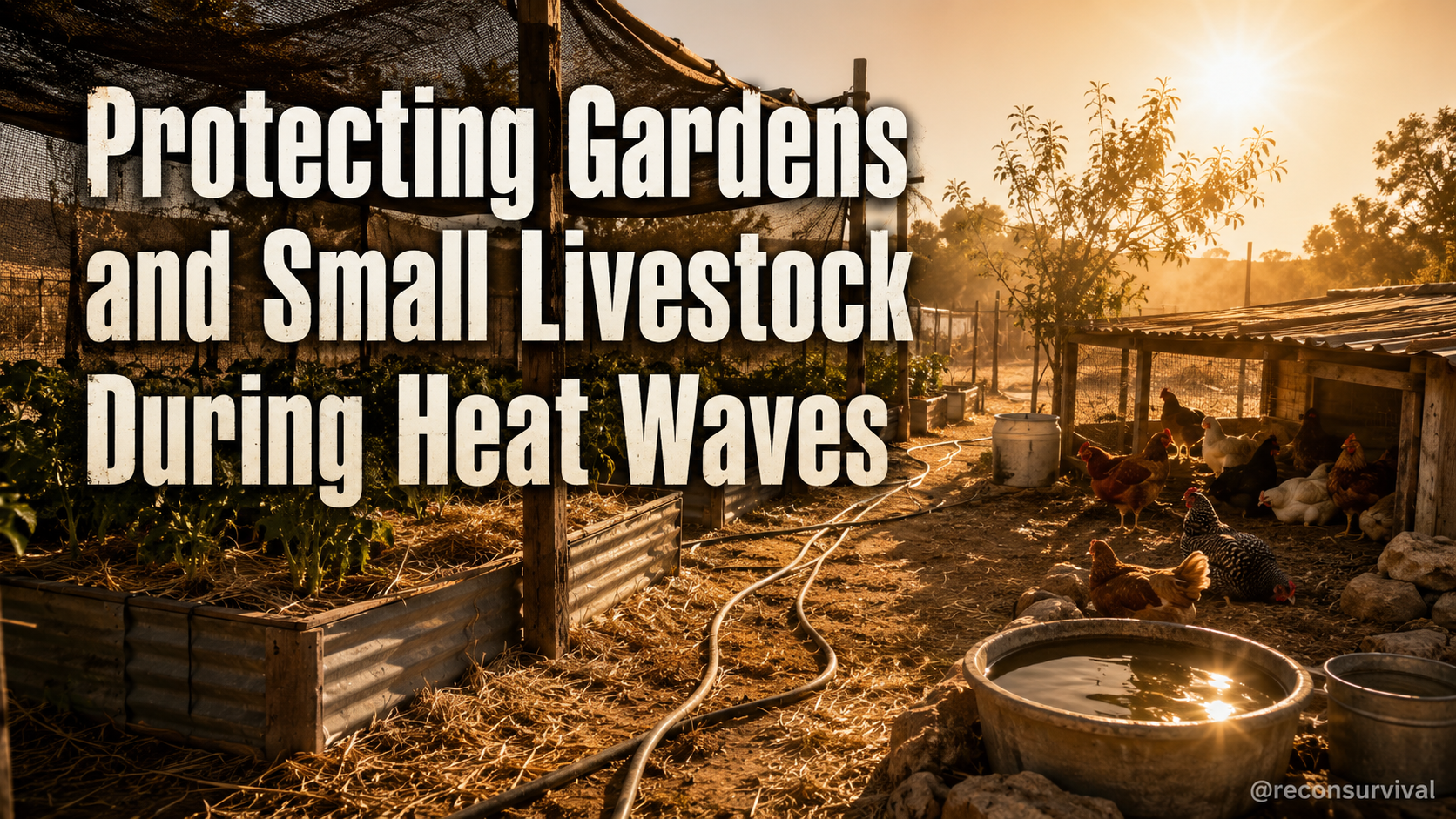
To implement this system, start with the shade structures. A simple canopy of shade cloth supported by wooden or metal frames can be installed over a run or greenhouse in a single weekend. Ensure these structures allow for airflow underneath. If you do not have shade cloth yet, use heavy-duty black plastic or tarps as a temporary measure, though they offer less UV protection. Next, address water storage. Position containers so they are accessible without heavy lifting during a heatwave. Ensure your livestock have access to a trough that can be refilled quickly from a reserve tank or barrel.
For mulch, apply a layer of straw, wood chips, or shredded bark to the soil in garden beds. This layer acts as an insulator, blocking solar radiation from hitting the soil directly. It also reduces evaporation, keeping the root zone cooler. You can also spread a light layer of organic material over the roof of structures to reduce radiant heat absorption from above, provided it does not add significant weight.
Regarding timing, move all heavy labor, such as digging, pruning, or feeding, into the early morning hours before 10 AM or late evening after 7 PM. Do not perform tasks that generate internal body heat in the middle of the day. For feed, store dry feed in a cool, ventilated area. If you use wet or silage feed, keep it in the shade and use it quickly to prevent spoilage bacteria from thriving. Establish a daily check routine for small livestock. Walk the pen twice a day to check for signs of heat stress: panting, lethargy, or sunken eyes. Adjust feed and water availability based on these observations.
Applying This to a Small Backyard or Homestead
Most readers operate on a small footprint, perhaps a raised bed garden and a few chickens or goats. This approach is perfect for that scale. A small homestead does not need massive industrial cooling; it needs efficient, localized management. For a backyard garden, create a shade tunnel using hoops and shade cloth for heat-sensitive plants like lettuce or herbs. For livestock, even a three-by-three-foot frame covered with breathable material makes a massive difference in a chicken coop.
Start by calculating your peak sun hours. Identify where the sun hits your garden or barn between 12 PM and 3 PM and install a shade structure there first. This area will see the most temperature fluctuation. Next, map your water lines. If you have a gravity-fed system, ensure it flows even if the pump fails. If you rely on electric pumps, have a manual backup or a solar-powered transfer pump ready. For a small flock, ensure that each bird or goat has immediate access to a water source that stays cool. You can achieve this by placing a stone or brick in a waterer, which helps keep the water cooler by absorbing heat.
Low-Cost Options and Durable Upgrades
You do not need expensive industrial equipment to succeed. A low-cost option for shade is using black trash bags cut and stapled to a frame, or using existing umbrellas and canopies. For water, standard 55-gallon plastic drums painted black or covered are inexpensive and effective. Mulch can be sourced from local tree services, often free or cheap, or purchased in bulk from local landscape supply houses.
As your budget allows, upgrade to durable materials. Replace the black plastic with UV-stable shade cloth rated for 50% light filtration. This allows for photosynthesis while blocking excess heat. Upgrade water storage to food-grade barrels with aeration tubes or a solar water heater to keep water cool. Install a windbreak of tall shrubs or a solid fence on the sun-exposed side of your livestock pen to reduce direct wind chill on animals that might be sensitive, or conversely, to block hot wind. Use stainless steel or coated steel for feed troughs, which will not rust and can be easily cleaned. These upgrades last for years and require less maintenance during a crisis.
A Recon Survival Takeaway
The core takeaway is that preparation must be anticipatory, not reactive. By mid-June, the risk profile of your property changes. Heat is no longer a weather event; it is a constant condition that must be managed. You must assume that one day, the lights will go out and the air conditioning will stop. In that scenario, your ability to care for your garden and livestock depends entirely on what you have built, stocked, and organized in the weeks prior. Do not wait for the thermometer to break a record before you act. Build your system now, when conditions are favorable and your energy levels are high.
Recon Survival Principle
Recon Survival is not about waiting for stress to make the decision. It is about turning weak signals into household action while the fix is still small. A practical way to prepare shade, water, mulch, timing, feed, and animal check routines during high heat, but most advice is either too generic, too gear-focused, or too late.
Do Today
Follow this checklist to initiate your heat readiness system immediately. You can complete these steps in a weekend or spread them out over the week, but do not wait for a heat advisory to begin.
- Audit Shade Gaps: Walk your garden and livestock areas. Identify which beds or pens receive direct overhead sun between 12:00 PM and 2:00 PM. Mark these spots on your property map for immediate shading.
- Secure Water Backup: Locate your primary water source. Ensure you have at least one large container (50-gallon minimum) filled and positioned within walking distance of your garden and livestock pens. Label it clearly so you know exactly how much reserve you have.
- Apply Mulch Layer: Take a shovel of straw, wood chips, or shredded bark to your hottest garden beds. Spread a two-inch layer evenly to block direct sunlight and retain soil moisture.
- Adjust Work Schedule: Review your daily chores. Move any physical labor, such as planting or harvesting, to occur before 9:00 AM or after 6:00 PM. Eliminate unnecessary exertion during peak heat hours.
- Inspect Feed Storage: Check your feed room or bin. Ensure it is located in a cool, shaded area. If you store wet feed, verify that it is used quickly or stored in a refrigerated area if possible.
- Establish Check Routine: Set a reminder to walk your livestock pens twice daily. Look for panting, excessive salivation, or reluctance to move. Adjust water and feed distribution based on what you observe.
- Prepare Shade Materials: Cut and assemble any shade cloth or tarps you need to construct temporary canopies. Secure them so they can be deployed quickly if a storm knocks out power.
By following these steps, you establish a resilient system that functions independently of the grid. You are not just preparing for a heatwave; you are building a more sustainable, productive homestead that can withstand environmental stress. Stay calm, stay practical, and get to work. Your garden and your animals depend on it.