A practical way to create a practical bug-in plan for roles, rooms, supplies, communications, sanitation, and decision points, but most advice is either too generic, too gear-focused, or too late.
As an Amazon Associate, I earn from qualifying purchases.
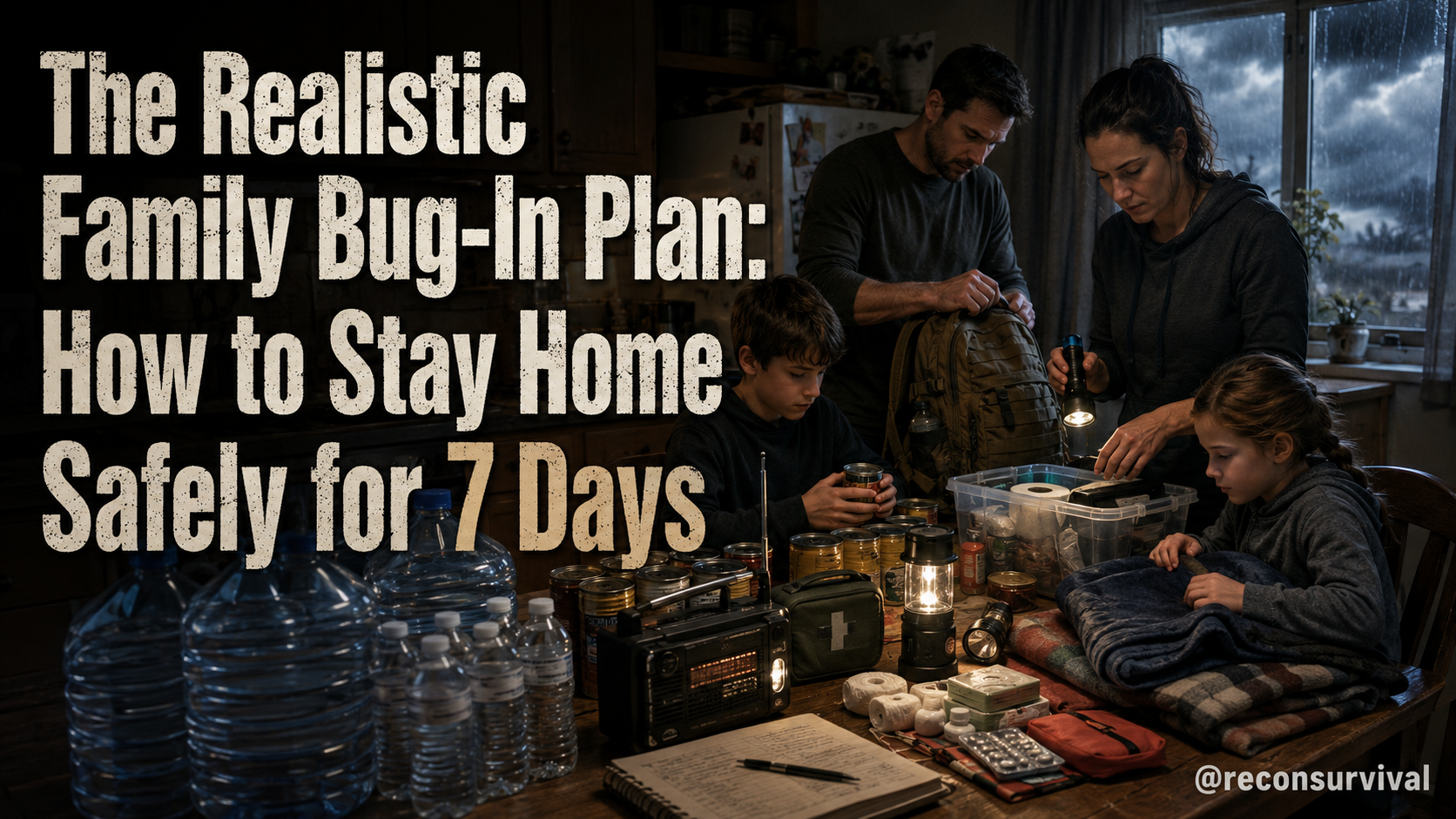
The transition from the cooler spring air to rising temperatures and potential weather volatility creates a specific window of opportunity for household readiness. This is the practical time to establish routines before travel, heat, storms, and school-year transitions disrupt normal life. The real-world problem this article solves is the gap between knowing you need a survival plan and actually having one that works when the power fails and the internet goes down. Most advice is either too generic, too gear-focused, or too late. You need a functional bug-in plan that allows your family to stay home safely for seven days without relying on external systems.
Why a Realistic Bug-In Plan Is Necessary Without Fear
A bug-in plan is the operational procedure for when you cannot leave your residence and must manage operations internally. This matters because the likelihood of disruption often exceeds the frequency of the event itself. When infrastructure fails due to grid instability, severe weather, or civil unrest, mobility often becomes the first casualty. Without a defined plan, confusion reigns, supplies are wasted, and stress levels spike rapidly.
The goal is not to fear the unknown but to respect the reality that your home is your primary command center for extended periods. A realistic plan accounts for the constraints of your specific living situation. It removes guesswork from a crisis moment, allowing calm decision-making rather than reactive panic. By defining roles, room assignments, supply thresholds, and communication limits now, you ensure that your household functions as a cohesive unit when the situation demands it.
The Most Common Preparation Mistake
The most common mistake people make with this topic is building a plan based on evacuation assumptions rather than home retention. Many readers spend excessive time securing vehicles for an exit they may never take and neglect the interior logistics required to sustain the family. They also tend to create plans that are too complex, requiring technology or skills they do not currently possess. If the plan relies on a smartphone app for inventory tracking or a specific internet connection that fails, it is useless. A practical bug-in plan must be low-tech, redundant, and executable by family members of varying skill levels. It must address the immediate physiological needs of sanitation, water, and food while managing psychological stability.
The Recon Survival System for Home Retention
The Recon Survival practical system for how to create a practical bug-in plan focuses on six core pillars: roles, rooms, supplies, communications, sanitation, and decision points. This framework ensures every aspect of domestic operations is covered.
Roles define who does what. Rooms designate safe zones and utility centers. Supplies inventory the actual stock on hand. Communications establish how information flows inside and out. Sanitation manages waste to prevent disease. Decision points determine when to act or hold. This system is designed to be value-first, focusing on what keeps the family alive and organized rather than what sounds impressive on social media.
Step-by-Step Implementation for a Normal Household
You can break this system into clear steps that any normal household can use immediately.
First, assign roles. Do not assume everyone has the same capacity. Identify the family member responsible for inventory checks, another for first aid, and a third for signal relaying. If a member is a child or an infant, their role is passive care, which still requires planning.
Second, map the rooms. Designate a main safe room, typically the living area or a bedroom with easy access to supplies. Assign this space to your primary group members. Identify secondary rooms for isolation or quiet if needed. Ensure that access routes to this main room are unobstructed.
Third, audit supplies. Count the actual gallons of water, pounds of food, and number of medical kits available. Do not guess based on "boxes of food." Calculate the daily consumption rate for your specific group size. Note that sanitation supplies, such as soap, hand sanitizer, and toilet paper, are often undercounted yet critical for maintaining hygiene in a closed environment.
Fourth, establish communications. Decide on a method to check in with neighbors or distant family members if the internet fails. Consider a walkie-talkie system for internal communication if the cell network is down. Define the protocol for receiving news: do you check local radio every hour? Do you trust social media updates?
Fifth, manage sanitation. Plan for waste removal if trash collection stops. Identify the location for holding waste if the sewer backs up or is inaccessible. Ensure you have sufficient toilet paper and hygiene products to last the planned duration of the event.
Sixth, set decision points. These are the conditions that trigger specific actions, such as "If the power is out for more than 12 hours, move to the main safe room" or "If water pressure is lost, ration immediately." These points remove the burden of decision-making from a stressed mind.
Decision Tree and Readiness Checklist
Here is a simple decision tree or readiness checklist to test your current position. Ask yourself these questions against your actual inventory.
Do I have at least two gallons of water per person per day stored? * Yes: Proceed to food inventory. * No: Immediate action required; prioritize water storage.
Do I know who holds the medical kit and can administer basic first aid? * Yes: Proceed to communication plan. * No: Assign a training session to a designated person.
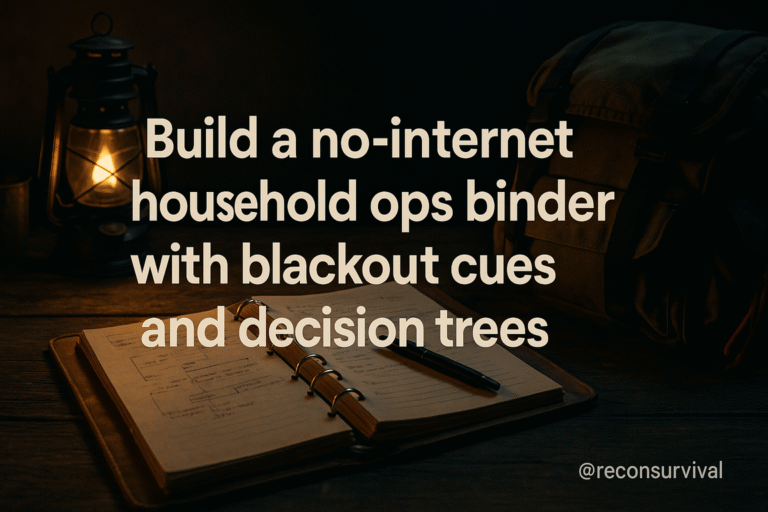
Can I communicate without a smartphone if the internet is down? * Yes: Verify you have a paper contact list. * No: Acquire a battery-powered radio or radio equipment.
Is there a designated safe room that is fully stocked? * Yes: Verify the route to it is clear. * No: Clear the path and stock the room.
Do we have a plan for waste disposal if the system fails? * Yes: Store sufficient toilet paper and hygiene products. * No: Acquire extra consumables.
What to Do Today, This Week, and Later This Season
Actionable steps should be divided by timeline to prevent overwhelm.
Today, conduct a physical inventory check. Go room by room and tally your actual water, food, and medical supplies. Write these numbers down on a paper log. Do not trust your memory or a digital note that requires a screen. Identify one gap in your sanitation or communication plan and address it immediately if possible.
This week, assign roles and run a simulation. Have family members walk through the bug-in scenario. If the power goes out tonight, who sleeps where? Who checks the water level? Who manages the trash? Practice these roles verbally to ensure they are understood. Discuss the decision points; agree on what signals mean for escalation or de-escalation.
Later this season, as heat and storms increase, review your supply rotation. Use your bug-in plan to ensure you are not storing perishables that will spoil. If you plan to stay home, ensure you have cooling strategies, such as fans or insulation, that do not rely on the grid. Update your contact list with new numbers and verify that radio batteries are charged.
Recon Survival Principle
The core principle connecting the realistic family bug-in plan to early warning, signal awareness, decision triggers, and calm household action is preparedness based on observation and redundancy. In the field, we do not wait for a disaster to occur to prepare; we prepare for the friction that will occur when systems degrade. Early warning is not about predicting the future with certainty but about recognizing the signals that indicate a system is changing. Signal awareness involves listening to local weather services, community advisories, and physical indicators like barometric pressure changes. Decision triggers are the pre-set rules that allow for calm action when stress is high. If you do not have a plan, a minor inconvenience becomes a crisis. By establishing a system that anticipates failure points, you maintain the calm necessary to make sound decisions. This mission is about supporting the household through uncertainty, not adding to it.
Do Today
Take the following concrete actions to establish your practical bug-in plan for roles, rooms, supplies, communications, sanitation, and decision points.
- Inventory Water and Food: Open your cupboard and pantry. Count the exact number of gallons of water and pounds of food available. Calculate how many days this sustains your specific household size.
- Assign Roles: Gather family members and assign specific responsibilities. Name the person responsible for water checks, food rationing, and first aid management.
- Designate a Safe Room: Choose a single room to serve as your main safe zone. Stock it with a water jug, flashlight, radio, and comfort items. Ensure the path to this room is clear of clutter.
- Audit Sanitation: Check your supply of toilet paper, hand sanitizer, and soap. Ensure you have enough to last at least two weeks in case of system failure.
- Establish Communication Protocols: Write down your emergency contact list on paper. Test a battery-powered radio to ensure it can receive local broadcasts without internet.
- Define Decision Points: Write down three specific triggers that will require a change in status. For example, "If water pressure is gone, stop showering immediately" or "If the radio warns of an impending storm, secure the main room."
- Review and Adjust: Re-evaluate your plan based on the inventory results. If you are missing a critical item, note where to acquire it. Do not let the lack of a perfect plan paralyze you; progress by improving the system incrementally.
Conclusion
The practical family bug-in plan for roles, rooms, supplies, communications, sanitation, and decision points is the difference between chaos and calm when systems fail. It is not about hoarding for a doomsday scenario; it is about ensuring that your home remains a sanctuary when the world around you is disrupted. By implementing these steps now, you build resilience that protects your family regardless of the cause of the disruption. The goal is to be ready for the unexpected without fear, focusing on the tangible actions that keep the household safe.