A practical way to manage stress, neighborhood friction, travel choices, and home routines during prolonged heat, but most advice is either too generic, too gear-focused, or too late.
As an Amazon Associate, I earn from qualifying purchases.
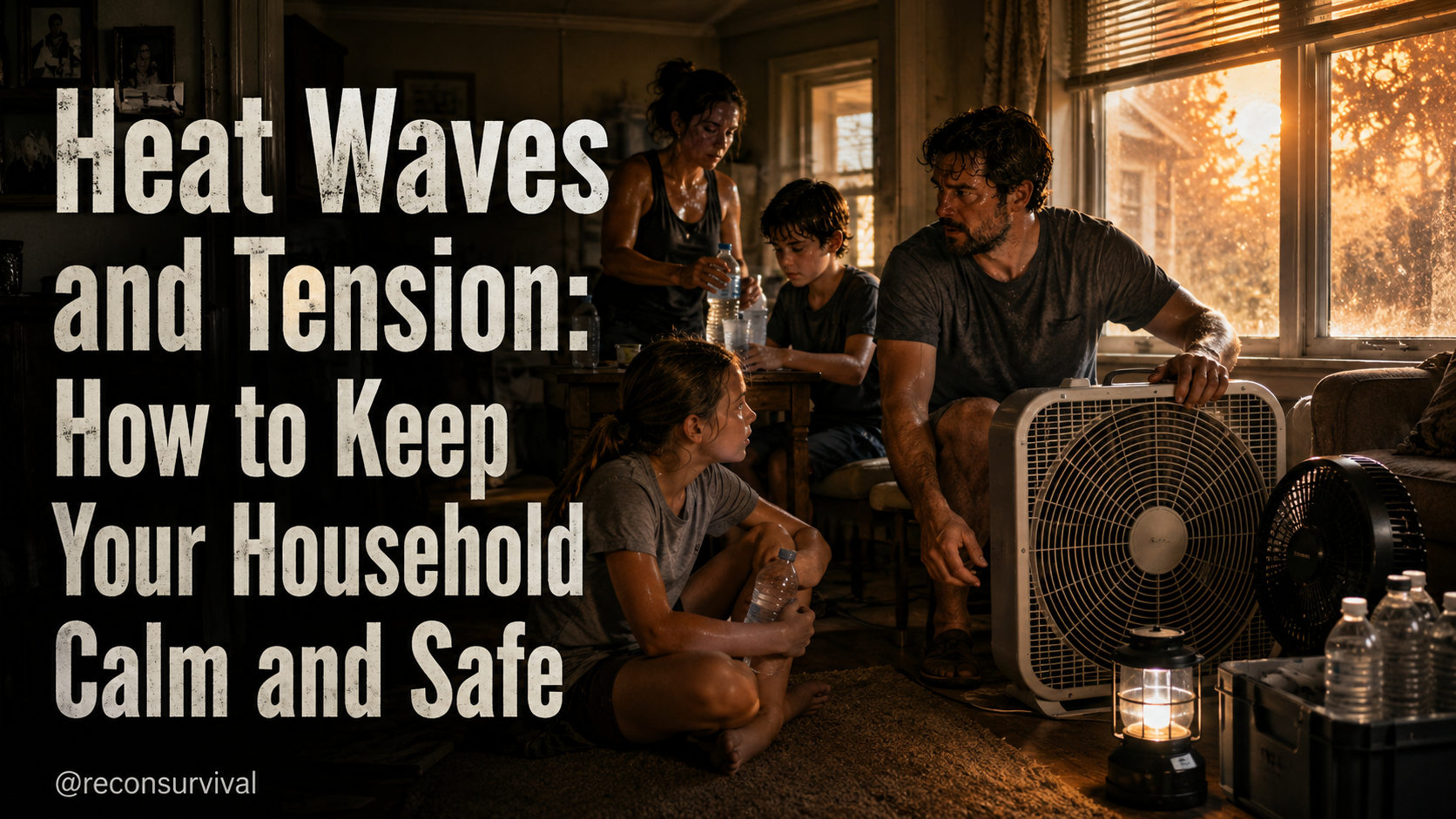
When the temperature spikes and power grids strain, the biggest risk to your safety isn't just the heat itself; it's the tension that builds inside your home and within your neighborhood when things go wrong. This article solves the real-world problem of maintaining order, safety, and calm when prolonged heat waves force difficult decisions on your household. You need a plan that covers stress management, friction with neighbors, smart travel choices, and adjusted home routines without relying on generic advice or panic-driven behavior.
Why Extreme Heat Readiness Requires Calm Discipline
Extreme heat readiness is often misunderstood as simply having more air conditioning or bottled water. While those are important, the real danger of extreme heat lies in how it affects human cognition and social dynamics. When your body is under thermal stress, your ability to make rational decisions diminishes. In a grid-down scenario where normal cooling is lost, the risk of heat illness rises, but the risk of household conflict and poor judgment rises even faster.
This matters because extreme heat events can last for days or weeks. If you wait until you are exhausted, dehydrated, or panicked to make safety decisions, you lose the time needed to execute a plan. Preparedness is not about waiting for disaster to strike; it is about maintaining a baseline of operational normalcy when the environment becomes hostile. By managing your stress levels and your household's emotional state, you preserve the mental bandwidth needed to follow safety protocols. This is a core component of extreme heat readiness that is often overlooked in favor of gear acquisitions.
The Common Mistake: Waiting for the Breakpoint
The most common mistake people make regarding this topic is waiting for the first power outage or the first warning of a heat advisory before addressing their home environment and mental state. This waiting game is dangerous. Many readers believe they can "fix" the house later, assuming the grid will hold or that they can adapt on the fly. However, the window to adapt closes quickly once the temperature crosses a certain threshold and humidity prevents effective cooling.
People also make the mistake of focusing solely on external threats like break-ins or storms while ignoring the internal threat of household tension. When heat stress sets in, patience becomes a luxury item. If your family has not practiced de-escalation techniques or established clear communication routines, a minor inconvenience – like a broken fan or a lack of water – can quickly turn into a source of major conflict. The mistake is assuming that the only variable to manage is the temperature. In reality, the human element of heat resilience is just as critical as the gear.
The Recon Survival Practical System for Heat Stress and Safety
The Recon Survival practical system for managing heat conditions is built on a foundation of prevention and routine. This system is designed to help you manage stress, neighborhood friction, travel choices, and home routines during prolonged heat in a calm, realistic way. It operates on the principle that safety is a state of mind as much as a state of matter.
The system works by breaking down your preparedness into four pillars: habits, visibility, communication, and prevention. These pillars are prioritized over gear because they are under your direct control and they create the conditions necessary for your equipment to function effectively. Gear without a calm mind and a coherent plan is just weight. A calm mind without a plan is just anxiety. This system integrates these elements to create a resilient household that can withstand the pressure of extreme heat.
Breaking the System into Clear Steps
To implement this system, you can break it down into specific actions that fit into a normal household's routine.
First, focus on habits. This means establishing a daily check-in routine for every family member, even when conditions are normal. Discuss how you feel, what resources are low, and if anyone is showing signs of heat exhaustion. This habit reduces the friction that occurs when everyone is struggling silently. It ensures that needs are identified early, before they become emergencies.
Second, manage visibility and lighting. Extreme heat can alter circadian rhythms, making it harder to sleep or stay alert. Ensure your home is secure and well-lit so you don't have to worry about intruders while you are vulnerable. This also applies to neighborhood friction; visible activity and good lighting deter opportunistic crime and reduce anxiety about safety at night.
Third, prioritize communication. Establish clear, low-stress communication channels with neighbors and family. Agree on who checks on whom if the grid fails. Practice these drills so that when the heat wave hits, you aren't scrambling for contacts. Communication reduces isolation and creates a sense of community trust, which is vital when resources are scarce.
Fourth, adjust travel choices. High heat and heavy traffic increase the risk of vehicle fires and heat stress. Plan routes to avoid peak heat exposure and identify safe havens along your path. If a storm or outage is forecast, have a clear decision trigger for when you stay put versus when you evacuate. This removes the panic from the decision-making process.
Defensive, Lawful, and Non-Escalatory Household Checklist
When heat drives you to the brink, your instincts might tell you to react aggressively to protect your resources or your home. It is crucial to maintain a defensive, lawful, and non-escalatory mindset. Aggression in high-stress situations often leads to injury or legal trouble, and it rarely solves the underlying problem of resource scarcity.
Here is a checklist to keep your household safe and calm:
- Assess the situation objectively: Is the threat real or imagined? Is the noise a neighbor or a storm? Do not assume the worst.
- Keep your voice low: Shouting raises cortisol levels and makes everyone more reactive. Use calm, firm tones.
- Secure the perimeter calmly: Check locks and lighting. Do this methodically, not out of panic.
- Focus on de-escalation: If a neighbor complains about your generator noise or lighting, acknowledge their concern and offer a reasonable solution if possible. Do not dismiss valid concerns from others.
- Prioritize health: If someone in your household is ill, focus on care and comfort first. Safety comes second to life in a heat emergency.
- Respect local codes: Ensure your generators are placed according to local fire department guidance and that you are not violating occupancy laws.
- Document interactions: If tension with a neighbor escalates, record the dates and times of interactions to protect yourself if legal issues arise later.
- Create a cool-down space: Have a designated room for the hottest parts of the day where stress is managed and cool air is circulated.
Recon Survival Principle: Calm is a Resource
In the Recon Survival view, calm is not just a feeling; it is a tangible resource that can be depleted and replenished. Just as water and food are essential for physical survival, mental composure is essential for operational survival. When heat waves strike, your cognitive processing slows. If you add stress and tension to that equation, you risk making errors that compromise your safety.
This principle dictates that you must conserve your mental energy. Do not engage in unnecessary arguments over resource distribution. Do not let heat stress cause you to lash out at family or neighbors. Treat your emotional state with the same seriousness as your water rationing. By maintaining a calm household environment, you ensure that you have the clarity needed to execute your plan when the heat becomes unmanageable. This approach is lawful, defensive, and effective.
Do Today
To begin building this resilience, start with these concrete actions. Do one small readiness action today to manage stress, neighborhood friction, travel choices, and home routines during prolonged heat. – Review your household's water storage and ensure you have a backup plan if the grid fails for more than 24 hours. – Inspect all locks and exterior lighting to ensure visibility and security are not compromised by heat-related issues like expanding seals or rust. – Hold a 10-minute family meeting to discuss how each person will react if the power goes out and agree on a calm protocol for conflict resolution. – Check carbon monoxide detectors and ensure they are within the manufacturer's recommended maintenance schedule. – Identify two safe meeting places in your neighborhood where your household can regroup if you are separated by a storm or outage. – Update your emergency contacts list and share it with your neighbors to establish a communication network. – Prepare a simple, low-stress itinerary for travel during the next heat advisory period to practice decision-making under pressure.
By taking these steps, you move from a reactive state to a proactive one. You are not waiting for disaster to strike; you are preparing your household to handle the reality of extreme heat with dignity, safety, and clarity.