The Reality of Summer Cooling Without Power
Why This Matters for Extreme Heat Readiness
The Most Common Mistake with Cooling Plans
The most common mistake people make with this topic is focusing entirely on preserving the air conditioner unit itself. Many readers look for ways to save their compressor, hoping that the unit will survive a power loss and restart automatically. This is a flawed priority. Your air conditioner is a machine, a tool that requires significant electricity to move air. It is not a life-support system. When the power fails, the air conditioner stops working, and the temperature in the house begins to climb. The mistake lies in trying to power the AC unit using portable generators or small battery systems that cannot sustain the load of a whole-house unit. This approach consumes power too quickly, leaving no energy for essential tasks.
As an Amazon Associate, I earn from qualifying purchases.
The Recon Survival Practical System
Step-by-Step Implementation for Normal Households
Breaking the system into clear steps a normal household can use begins with inventory. First, identify your most vulnerable occupants. If a family member relies on a powered medical device, that is the absolute first priority for cooling. Next, assess your windows and walls. In a low-power scenario, blocking direct sunlight is the single most effective way to slow heat gain. Light-colored curtains or shades that can be closed and opened with a timer or manual effort work well.
The next step involves ventilation strategy. You cannot simply shut the house down like a vault; you must manage airflow. Open cross-ventilation to push hot air out and draw cool air in at night. If the outside air is cooler than the inside air, use a fan to force the exchange. If the outside air is hotter than the inside air, which happens in many climates by early evening, close the windows and vents to trap the cooler interior air and use fans to circulate it.
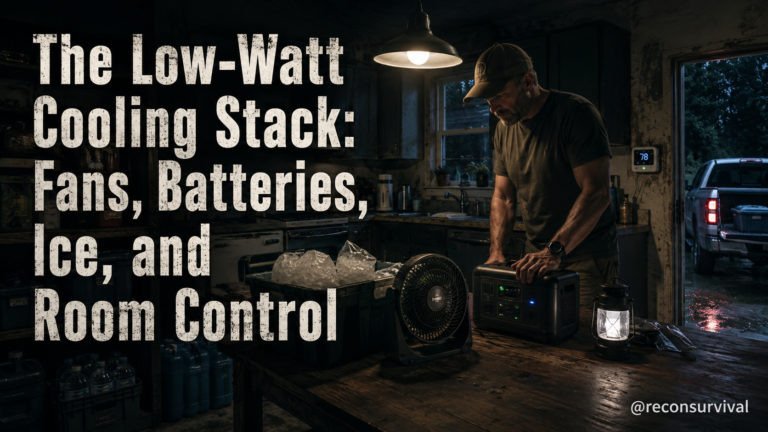
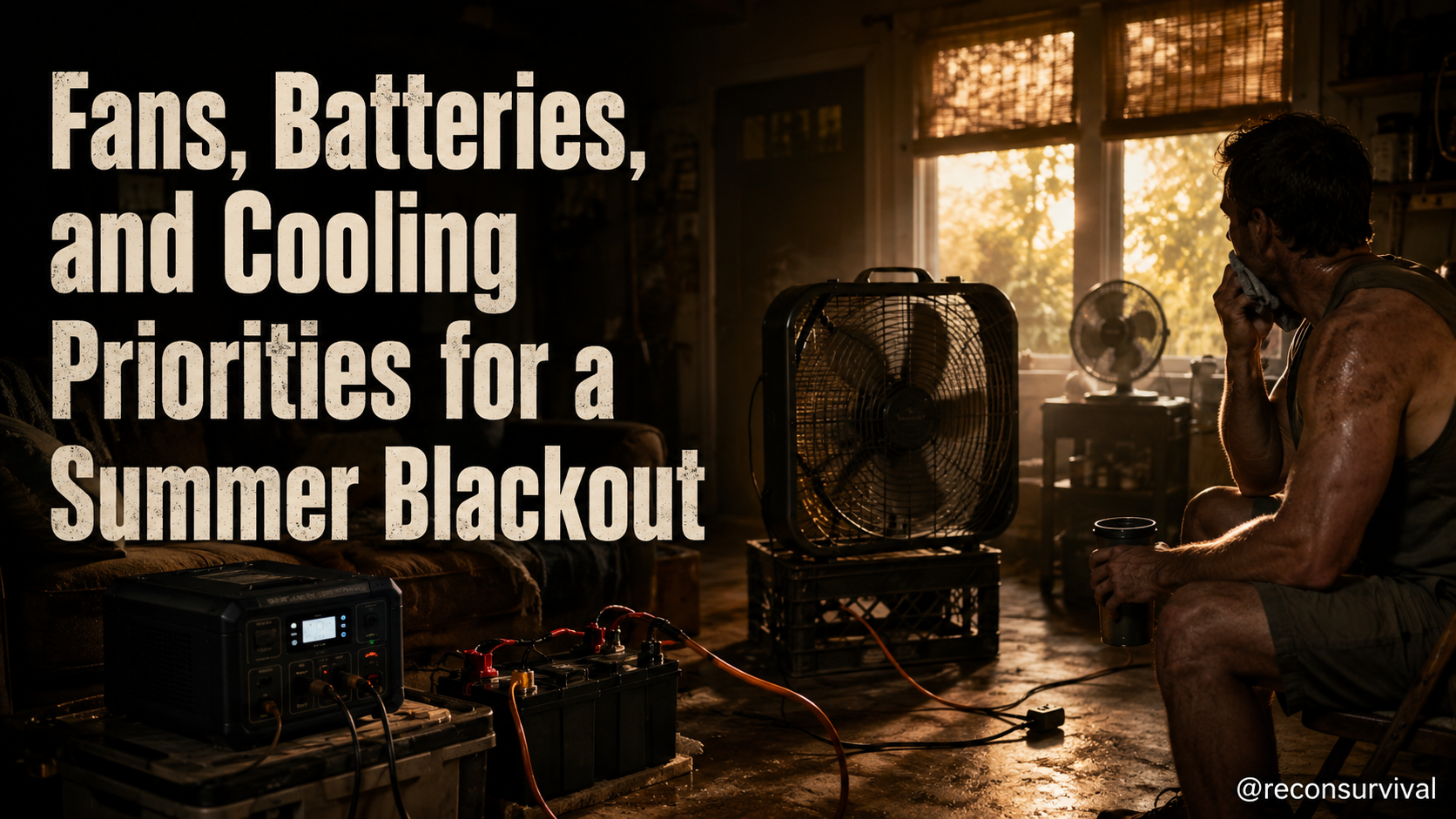
Finally, integrate low-power cooling devices. A high-quality battery-powered fan, a simple 12V fan powered by a battery bank, or a small, sealed window fan controlled by a timer can make a significant difference. These devices consume far less power than a central air compressor but provide constant air movement. This air movement allows the body to sweat more effectively, which is the primary cooling mechanism for humans. Without air movement, sweat evaporates less efficiently, and body temperature rises.
Defining the Minimum Viable System
Define the minimum viable system before discussing upgrades. Your minimum viable system consists of three components: passive insulation, active air circulation, and communication capability. Passive insulation includes closing blinds during the hottest parts of the day and using heavy curtains at night. Active air circulation involves at least one battery-operated fan or a battery-powered unit plugged into a UPS or small battery bank. Communication capability involves having a hand-crank radio or a fully charged phone capable of making calls or using messaging apps.
This system requires no complex electronics or large inverter systems initially. It relies on simple physics. By keeping the sun out and moving air through the space, you create a microclimate that feels cooler even if the thermostat reads the same. Upgrades from here include larger battery banks, solar trickle chargers to maintain power, and secondary ventilation fans. However, do not skip the basics. A complex system that fails because the battery bank is undersized is worse than a simple system that works reliably. The useful part is simple: plan low-power cooling that prioritizes people, sleep, medical needs, and communication before stress makes the decisions harder.
Safety Limits, Maintenance, and Failure Points
Explain safety limits, maintenance, and realistic failure points. Battery-powered fans are not indestructible. They rely on rechargeable batteries that degrade over time. If you do not recharge these batteries regularly, they will swell or fail. Check your batteries every three to six months. Do not store lead-acid batteries indoors without ventilation, though lithium batteries are generally safer, they still require proper disposal when they reach their end of life.
Another failure point is the wiring of your low-power systems. Fans plugged into a power strip that itself is not grounded can become a shock hazard if water gets involved. Ensure all cords are rated for the load and are free of damage. Ventilation can also be a safety risk. If you use a fan to vent outside air, ensure the exhaust side is directed away from windows and doors to avoid blowing hot air back into the room. If you use a generator to power any cooling equipment, never run it inside, in a garage, or in a partially enclosed space. Carbon monoxide poisoning is a silent killer, and it can occur within minutes of running a generator in a confined space.
Finally, understand the limits of your cooling. Even with fans, the temperature inside your home will likely be higher than outside if the outside air is extremely hot and humid. Your goal is comfort, not perfection. If the temperature rises above the point where your elderly parents or infants cannot sleep, you may need to move to a community cooling center or seek shelter. Know your neighbors and have a plan to move to a location with power if your home becomes uninhabitable.
Recon Survival Takeaway
End with a Recon Survival takeaway. The takeaway from this article is that preparedness is about priorities, not just power. The goal is not to power every appliance like nothing happened. You must define the essentials: people stay cool, sleep is possible, medical needs are met, and communication is maintained. A simple system of fans and shading can make the difference between a hot, miserable night and a restful one.
Recon Survival Principle
Recon Survival is not about waiting for stress to make the decision. It is about turning weak signals into household action while the fix is still small. A practical way to plan low-power cooling that prioritizes people, sleep, medical needs, and communication, but most advice is either too generic, too gear-focused, or too late.
Do Today
End with a clear action step or checklist. Here are seven concrete actions you can take today to improve your cooling readiness:
- Conduct a Heat Inventory: Walk through your home and identify all windows that face the afternoon sun. Mark these spots as high-priority targets for shading solutions like blackout curtains or reflective film.
- Check Your Battery Fans: Test all battery-operated fans in your home. Ensure the batteries hold a charge for at least 12 hours on a single charge. Replace any batteries that fail to sustain the fan for this duration.
- Prepare a "Cool Zone": Designate one room in your home as a cooling priority zone. Stock this room with extra pillows, light blankets for night air, and water. This is where your vulnerable family members will go if the temperature rises.
- Audit Your Shading: Ensure you have enough blackout curtains or shades to cover every south and west-facing window. If you do not have them, plan to purchase a few before the summer peak heat arrives.
- Test Your Hand-Crank Radio: Locate your emergency radio. If you do not have one, purchase a hand-crank model with a solar charger. Test the crank action and listen for a signal to ensure the microphone and speaker are working.
- Review Your Fan Locations: Plan where you will place your battery fans. Ideally, place one near a window for intake and one in the center of the room for circulation. Ensure the paths to these locations are clear of clutter.
- Create a Heat Protocol: Write down a simple decision tree for your family. For example, "If the temperature is above 85°F and the AC is off, move to the cool zone." Review this plan with your household members so everyone understands their role.