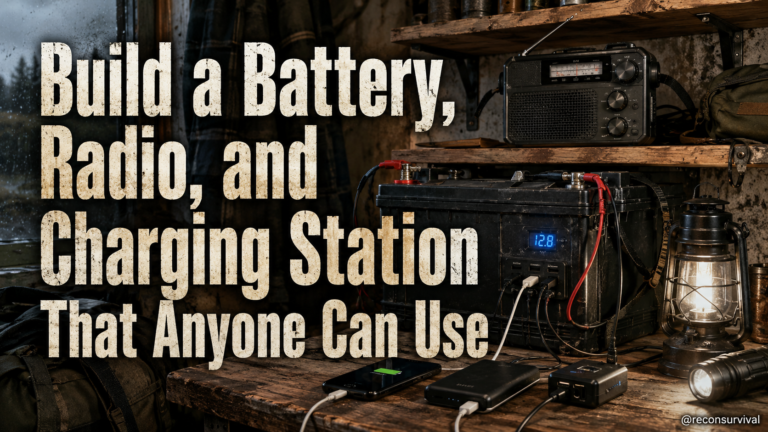
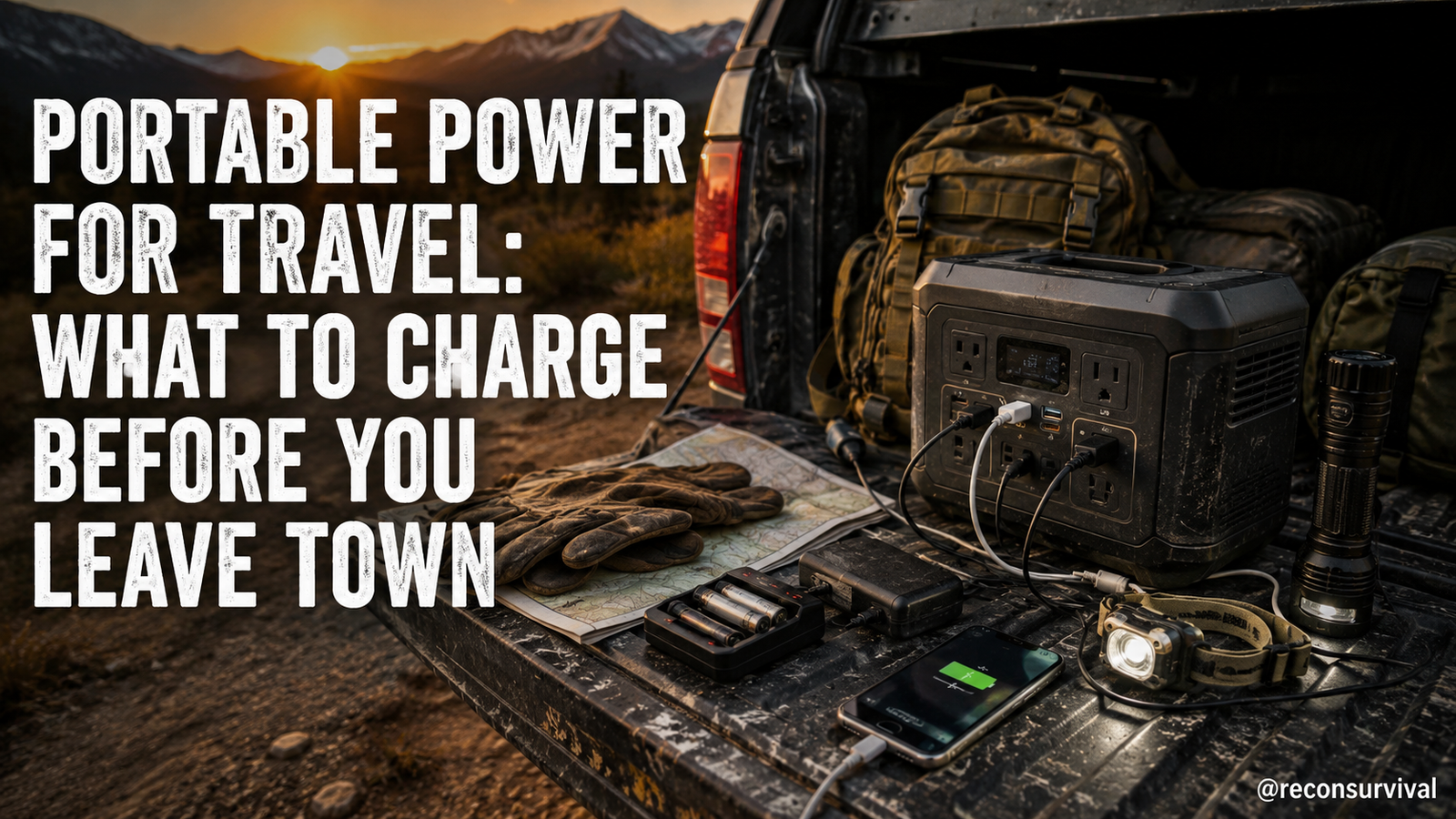
The Decision Point: Power Before the Road
You are standing at the garage door with your vehicle running, bags packed, and a family member urging you to move. There is a distinct moment when you must decide how to manage your electronics and power reserves for the trip ahead. Most households skip this specific window, assuming the next few hours of travel will naturally solve their communication needs. This assumption is incorrect. As you prepare for seasonal travel, the priority is ensuring your phones, radios, power banks, maps, and vehicle charging systems are fully prepared before you leave town. Without this preparation, a single power outage at a rest stop or a dead battery at a destination can isolate you from emergency information and local resources. The decision you make right now determines whether you travel with confidence or leave yourself vulnerable to common disruptions.
As an Amazon Associate, I earn from qualifying purchases.
Why Neighborhood Readiness Changes When Travel Increases
Around the holiday period, neighborhoods become significantly more active. Travel increases, and the density of people on the roads shifts. Consequently, power, fire, traffic, and security risks change. When a large portion of the population is traveling, the grid experiences higher load, and the risk of localized incidents rises. For independence week neighborhood readiness, this shift means your ability to stay connected cannot rely solely on the assumption that infrastructure will remain stable while you are away. Your readiness depends on your ability to function independently of the grid while in transit. If you are not prepared, a minor incident in the travel corridor can quickly escalate into a significant safety issue. You must ensure your personal systems are ready to handle the stress of the journey without relying on external support that may be compromised. This is not about fearing the worst, but about ensuring you have the tools to maintain safety when conditions shift.
The Critical Mistake of Waiting Until Departure
The most common mistake people make with this topic is waiting until the last possible moment to prepare their power systems. Individuals often pack their bags, only to realize their navigation maps are digital and their phones are at forty percent charge. They assume they can find a charger at their destination or that traffic will allow them to reach a service station without issue. In reality, traffic congestion delays access to power, and charging infrastructure is often unavailable or unreliable during peak travel times. Another mistake is relying on a single charging cable or one power bank for the entire household. This creates a single point of failure where the loss of one device incapacitates your entire communication network. You must prepare these items before you leave town to avoid the panic of realizing your systems are unprepared while on the road.
The Recon Survival System for Pre-Travel Power
The Recon Survival practical system for how to prepare phones, radios, power banks, maps, and vehicle charging before seasonal travel follows a specific order of operations. First, you verify the status of all digital devices. Second, you test the integrity of your backup power sources. Third, you organize your physical navigation tools. Fourth, you secure your vehicle charging points. Finally, you establish a protocol for what to do if the primary power source fails. This system ensures that every critical element is addressed systematically. It moves you from a state of uncertainty to a state of control. By following this sequence, you eliminate the guesswork and ensure that nothing is left to chance during a high-stress travel scenario. This approach allows you to focus on the journey rather than worrying about your ability to communicate or navigate.
Step-by-Step Preparation for Phones, Radios, and Power Banks
You can break this system into clear steps a normal household can use immediately.
- Assess Device Battery: Check every smartphone, tablet, and GPS unit. Charge each device to full capacity using a standard outlet. Do not leave a device partially charged and hoping to find power later.
- Test Radio Functionality: Turn on your emergency radio. Listen for local programming or weather updates. Replace any batteries that are low or old. A dead radio is useless during a travel delay.
- Verify Power Bank Health: Inspect your external battery packs for swelling, heat, or damage. Charge them fully. These units often drain quickly if used to charge phones during long trips.
- Organize Cables and Adapters: Gather all charging cables, car chargers, and wall adapters. Store them in a waterproof container or a dedicated pouch. Ensure you have different connector types, as you may encounter older devices or vehicles with different ports.
- Update Digital Maps: Download offline maps for your planned route and likely detour areas. A phone with full service is no good if the signal drops and you do not have stored navigation data.
By following these steps, you create a redundancy layer that protects you from unexpected grid failures or signal loss. This preparation takes time but prevents disaster when you are hours from home.
The Minimum Viable System and Path to Upgrades
Before discussing upgrades, you must define the minimum viable system. This system consists of one fully charged smartphone with offline maps, one handheld radio, and one fully charged power bank capable of charging one device multiple times. This is the baseline for safe travel. Upgrades are not about buying the most expensive gear; they are about adding reliability where it is missing.
- Trigger: If you have more than two devices that rely on the same power bank, you need a second power bank.
- Trigger: If you carry a camera or a specialized tool that requires power, add it to your baseline system.
- Trigger: If your vehicle does not have a USB port, you must acquire a multi-port charger immediately.
Do not feel pressured to buy a solar generator or a massive battery bank for casual travel. These are investments for static situations, not for vehicle-based transit. Focus your resources on the items you will actually use in the car or at a motel. If you need to upgrade, prioritize a second radio or a larger capacity power bank that matches your specific device needs.
Safety Limits, Maintenance, and Realistic Failure Points
Every power source has safety limits and realistic failure points. Lithium-ion batteries in phones and power banks degrade over time. They are sensitive to extreme cold and heat, which are common in travel scenarios. Never charge a battery inside a closed vehicle with the windows up or in direct sunlight, as heat can cause swelling or leakage. Fuel cells for generators must be ventilated to prevent carbon monoxide poisoning; do not run them inside a tent or a parked car. Always follow manufacturer instructions for battery storage and charging. If a battery gets hot while charging, stop the process immediately and allow it to cool. Recognizing these limits helps you avoid accidents. For example, if your power bank feels warm after a long drive, do not attempt to charge another device until it has cooled down. These small adjustments protect you from equipment failure and personal injury.
Recon Survival Principle: Redundancy Is Priority, Not Power Hoarding
Your goal is to ensure you can communicate and navigate, not to power every appliance in your car or hotel room. Power hoarding leads to complacency because people believe they have more capacity than they actually do. True redundancy means having a backup for the specific function you need most, which is usually communication. If your radio is the only device that can receive emergency broadcasts, it must be protected and charged first. If your phone is your primary map, it must be charged second. Anything else is secondary. By focusing on the right order of priority, you ensure that the most critical systems never fail. This mindset keeps you calm and effective when the unexpected happens.
Do Today
Execute these actions to prepare your systems for seasonal travel before you leave town.
- Check the battery level on all personal phones, tablets, and radios. Charge them to one hundred percent immediately.
- Inspect your power banks for physical damage or swelling. Replace any unit that shows signs of wear.
- Download offline maps for your entire route, including potential detour paths, onto your device storage.
- Test your handheld radio by tuning to a local frequency and listening for the broadcast signal.
- Organize all charging cables and adapters in a single waterproof bag within easy reach.
- Clean the charging ports of your phone and vehicle chargers to ensure a stable connection.
- Write down your current battery capacity estimate for each power bank so you know exactly how many devices you can charge.