You're at the rental counter, your phone dies at 2% as the system freezes, and the clerk asks for your reservation number and driver's license. Your wallet is in the checked bag. You have two choices: stall and hope the tech comes back, or reach for a slim paper folder and hand over what's needed in 20 seconds.
Trip Triggers: When the Paper Folder Gets Used
Paper backups earn their keep at specific moments. Set clear triggers so anyone in the family knows when to grab the folder and what to do next. Keep it in the carry-on outer sleeve or the glove box door pocket, labeled with a bold date on the tab.
Triggers with actions:
- Phone battery under 10% and no charger in hand: switch to paper for contacts and routes until power is back.
- Connectivity loss over 30 minutes: use printed reservations and maps to continue plans or rebook by phone. – Lost or stolen wallet: use ID copies and bank contacts to secure accounts and file reports. – Rental counter or hotel system down more than 10 minutes: present printed confirmations and policy numbers. – Minor injury or urgent care visit: hand over the medication/allergy list and insurance copy at check-in. – Highway closure longer than 20 minutes: shift to Route B on your printed map packet. – House sitter texts about a leak or alarm: pass them the home insurance contacts and neighbor numbers from the folder.
Assign owners:
- Traveler 1 (folder lead) keeps the folder in their personal item, moves it to the hotel nightstand each night, and returns it to the bag in the morning.
- Traveler 2 cross-checks the folder at departure and drives the rebooking calls using the printed contacts. – House sitter or neighbor gets a photo of the folder's "Red Card" front page with critical numbers before you leave.
One seasonal note: late-summer trips stretch systems. Paper closes the gap when phones, apps, or counters are jammed at the exact moment you need proof or a number.
Why Paper Backups Protect Travel And Home Security
When you're away, you split your risk between the road and your empty home. Paper isn't just "old-school"; it's a no-battery, no-login channel that lets you act fast from a hotel lobby, a shoulder on I-40, or a clinic waiting room.
Travel benefits:
- You speed through snafus that trap others at counters. A single sheet with your confirmation and a direct phone number often gets a manual check-in.
- You reduce exposure. You can show a copy instead of handing over your only passport or card unnecessarily.
Home security benefits:
- If something happens at your house, the sitter and a trusted neighbor have the right insurance and utility numbers to shut off water or file an initial claim.
- You make decisions faster. Printed contacts and policies help you, from a motel desk phone, direct someone at home without digging through email accounts.
Keep copies secure. Use a zip document pouch or a gallon freezer bag with a sliding seal. Do not print or carry Social Security numbers unless a specific task requires it. Copies of IDs are for reference and reporting loss, not a legal substitute for carrying required originals.
The Common Mistake: Printing Pieces With No Spine
Most people either trust their phone for everything or print random pages the night before departure. Both fail for the same reason: there's no spine to the information.
Typical failure points to avoid:
- A pile of emails without policy numbers, phone numbers, or lead traveler names visible.
- Single-copies stashed in one bag that gets gate-checked or lost. – Medication notes sitting only in a portal that requires a password and two-factor authentication you can't access on a dead phone. – No index page. In stress, flipping through 20 sheets wastes the exact minutes you're trying to save.
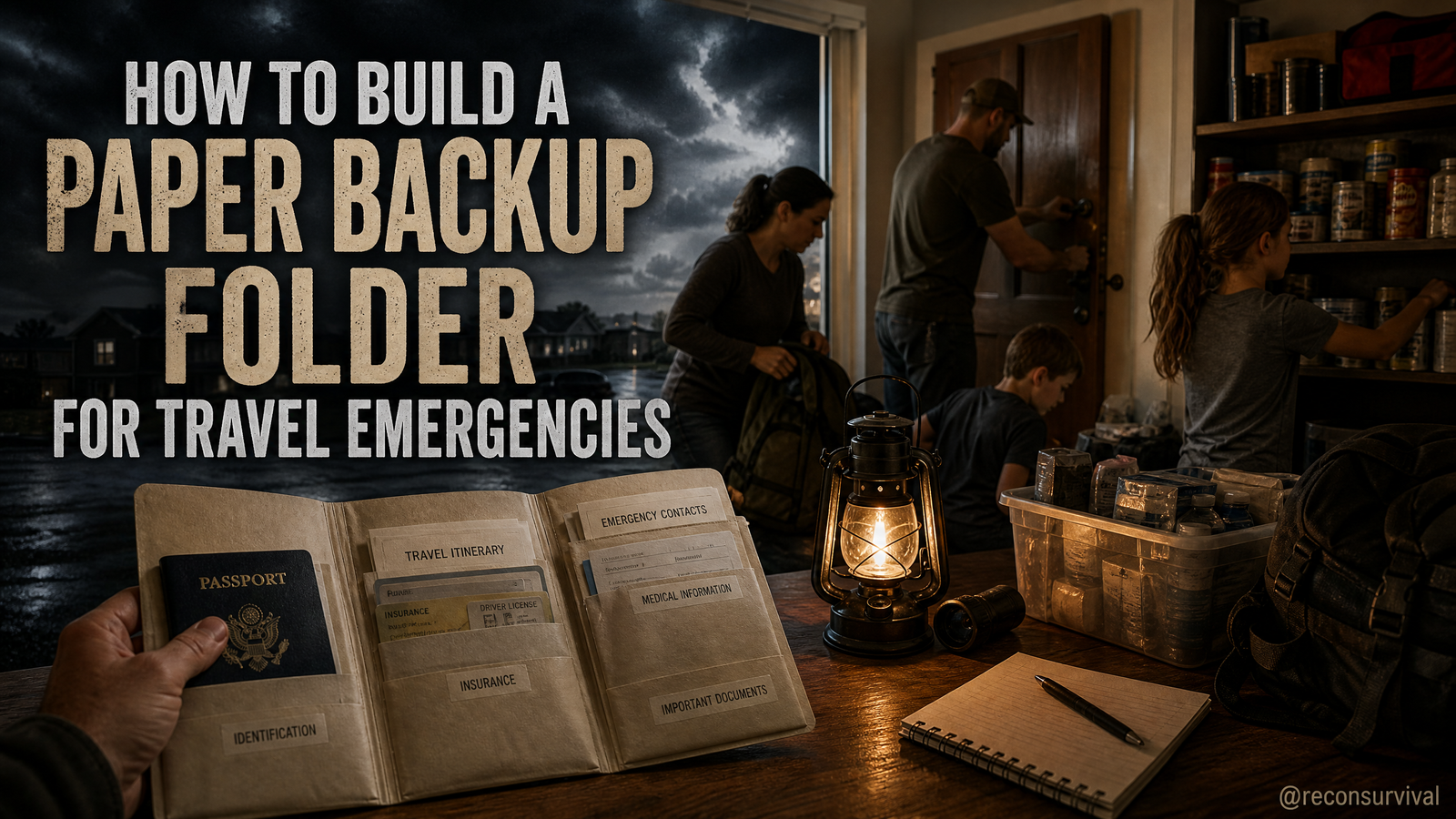
Fix the spine: one thin folder, one front "Red Card" index, six tabbed sections, two identical sets if you're traveling by car.
Build The Folder: A Step-Down System
You need a structure that works when you're tired, wet, or juggling kids at a counter. Build it the same way every time, then stop thinking about it.
What you need on the kitchen table:
- 1 slim plastic document pouch with a zipper or 1-gallon freezer bag
- 6 sheet protectors or six-tab divider pages
- Printer, stapler, highlighter, fine-tip marker, and two binder clips
- Two 3×5 index cards (for wallet-size "Red Card" duplicates)
Steps:
- Print the Red Card (front page)
- Top half: names of travelers, one local emergency contact, one out-of-area contact.
- Bottom half: three essentials per column: primary hotel name/number, auto/health insurance claims numbers, roadside assistance number. Date it. Put one copy in the folder front and one in your wallet.
- Create six sections in this order
- IDs
- Contacts
- Insurance
- Medical Needs
- Reservations
- Routes and Maps
- Assemble duplicates if road-tripping
- Make two identical folders. One goes in the glove box (driver's side) inside a zip bag; the other rides in the carry-on outer sleeve.
- Label and index
- Write trip name and departure date on the folder tab with a marker. Clip a one-sheet index of section contents to the inside front.
- Stage at departure
- At the front door shelf or mudroom hook, put the folder on top of the carry-on. As you load the car, move one folder to the glove box and confirm it closes easily without bending the pages.
- Update timing
- Print 48 hours before departure to catch last-minute reservation changes. Add handwritten corrections with a pen and re-date the Red Card.
IDs: Copies That Speed Reporting And Replacements
You still carry your original ID and passports where required. The folder gives you safe working copies if you need to report loss, book a flight change, or verify a reservation.
Include:
- Passport main page copies for all travelers, color if possible. Write the passport number and issuance country clearly under the copy.
- Driver's licenses, front and back. Mark "COPY" with a diagonal highlighter line. – Photos of each traveler's head and shoulders printed on plain paper (helps with police reports and hotel staff if you get separated). – Frequent traveler or program numbers printed next to your name only if you're comfortable carrying them.
Checks:
- Staple all IDs for one person together. Put adults first, then kids.
- Keep originals on your person. Keep copies flat in the folder. Never hand over the only original unless required by law or officials.
Trigger:
- If a wallet is lost, use the copies to file a report and start replacement calls within 30 minutes, not tomorrow.
Contacts: Who You Call When The Phone Is Dead
Your contact list must be usable from a motel lobby phone, a pay phone at a ferry terminal, or a neighbor's landline when your mobile is out.
Include:
- Family and emergency contacts with area codes in international format (+1-xxx-xxx-xxxx).
- Trusted neighbor, house sitter, and property manager, plus one backup neighbor. – Insurance claims numbers (auto, health, renters/home), roadside assistance, credit/debit card lost/stolen lines. – Primary care doctor, pediatrician, and pharmacy with store number and address. – Hotel front desk direct lines, not just central reservations. – Local consulate/embassy if traveling internationally.
Format:
- One full sheet alphabetized and a slim 3×5 wallet card with the top 10 numbers. Laminate the card or seal it with clear packing tape. Date both.
Trigger:
- If connectivity is down for 30 minutes, switch to landlines using this sheet to change or confirm plans.
Insurance: Policy Numbers And Claims Steps On One Page
In a glove box accident scene or a midnight pipe burst at home, you win by dialing the exact claims line with your policy open.
Include:
- Auto insurance: policy number, VIN, license plate, claims number, roadside assistance, and agent name. Print your state's proof of insurance card copy if allowed. Keep the official card as usual.
- Health insurance: front/back copies of each card. Add the 24-hour nurse line and pharmacy benefits number if available. – Renters/home insurance: policy number, claims line, deductible, and local agent. Add utility shutoff numbers (water, gas, electric). – Travel insurance: policy number, covered events summary, and 24/7 assistance number.
Placement and tools:
- Auto/roadside goes in the glove box folder. Health/travel/home lives in the carry-on folder. Use a yellow highlighter to mark policy numbers and claims numbers to find them fast.
Trigger:
- If there's a vehicle incident or breakdown, call roadside within 10 minutes of pulling safely off the road. If a home issue pops while you're away, text the sitter a photo of the home policy sheet and begin the claim from the hotel room desk phone.
Medical Needs: Allergies, Meds, And Care Notes That Speak For You
Clinics and urgent cares move quicker when you hand over clean, legible info. Keep it to one or two pages per person, printed large enough to read in low light.
Include per traveler:
- Allergies and reactions (e.g., "Penicillin – hives and shortness of breath").
- Conditions that matter for care (e.g., asthma, diabetes, seizure history). – Medications with dose and schedule (e.g., "Lisinopril 10 mg daily AM"). – Physician name and clinic number. – Insurance card copy and group/member ID. – For kids: immunization summary or last well-visit date from your portal.
Optional:
- A short caregiver permission letter if traveling without a child's legal guardian. [FACT CHECK REQUIRED: state-specific requirements for medical consent by non-parents.]
Field tips:
- Print from your patient portal if possible. If not, write clearly with a black pen. Seal pages in a sheet protector. Pack a small pill list duplicate in your wallet.
- Keep a spare pair of glasses prescription copy and a photo of current frames inside the section.
Trigger:
- If you walk into any clinic, hand staff the medical page and insurance copy with your ID. It shaves minutes off intake and reduces input errors.
Reservations: Proof And Plan B On Paper
You need enough detail that a human can retrieve your booking without a barcode scan or app.
Include:
- Flights: reservation code (PNR), flight numbers and times, airline customer service number, and the cardholder name used to book.
- Hotels: property name and address, direct phone, confirmation number, check-in time, nightly rate, and cancellation policy line. – Rental car: confirmation number, pickup/return locations, included driver names, and the roadside number for that company. – Ferries, trains, tours: confirmation codes and on-site contact numbers.
Attach:
- A short "Plan B" list: two alternate motels along your route with phone numbers and a note on parking if you tow or drive a high-clearance vehicle.
Field tip:
- Staple each reservation's confirmation to a half-sheet with the property's direct line and a blank area for handwritten changes. Clip the stack with a small binder clip at the top for easy removal.
Trigger:
- If a line stops moving for 15 minutes or staff says "system is down," present your printouts and politely ask for a manual lookup using the confirmation and your ID.
Routes And Maps: Inked Alternates Beat Dead Apps
Phones are great until they're not. A folded map with two highlighted alternates is boring, reliable power.
Include:
- Printed turn-by-turn directions for your primary route with highway names spelled out.
- A printed regional map page for each state or metro, highlighted with Route A and Route B. Use different colors. – Key waypoints: fuel stops every 60-90 miles, a 24-hour grocery or pharmacy, the nearest urgent care to your hotel, and a safe pull-off in each long stretch. – Lodging addresses and parking instructions on the same page.
Tools and staging:
- Put maps in the glove box folder, front position. Add a mini pencil and a 3×5 card for notes ("bridge out at mm 142 – detour Hwy 6").
Triggers:
- If traffic apps or data drop out, drive Route A using the paper directions. If closed for 20+ minutes, shift to Route B. If fuel dips to 1/4 tank and the next planned stop is 30+ miles away, take the earlier station marked on the page.
Beginner Drill: 20-Minute No-Phone Walkthrough
You can practice this at your dining table or in the driveway with the car off and the phone powered down.
Setup:
- Put the folder on the table. Hand Traveler 2 a timer and three scenario cards you write on sticky notes: "Hotel can't find you," "Child needs urgent care," "Wallet lost at lunch."
- Turn off phones. Use only the folder and a landline or an unplugged phone to simulate dialing.
Run:
- Scenario 1: Find hotel confirmation and call the property within 90 seconds. Read the confirmation number and ask for a manual lookup.
- Scenario 2: Pull the medical page and insurance copy in 60 seconds. Practice saying the allergy and med list out loud. Note the nearest urgent care from the routes/maps section. – Scenario 3: Use ID copies and the bank contact sheet to report a lost card. Note how long it takes to find the right number.
Success markers:
- You retrieve the right sheet in under 30 seconds per section by the second run.
- Each scenario ends with a written note on the 3×5 card about what to fix (e.g., "No pharmacy number for out-of-state," "Missing direct hotel line").
Measure It: Four Benchmarks That Show Real Progress
Track these on the inside cover with a pen. Date each entry.
- Retrieval time: Goal is sub-20 seconds to touch the correct section and sub-60 seconds to read the needed number or code out loud.
- Completeness score: Six sections present and dated within 48 hours of departure. Score 1 point per section. Goal: 6/6.
- Duplication: If driving, two identical folders staged (glove box + carry-on). Goal: Confirmed before leaving the driveway.
- Accuracy: After the first night on the road, call the next hotel using the printed number to confirm. Goal: 100% match with your printout.
If any metric misses twice, fix the section the same day: reprint, correct, and re-date the Red Card.
Recon Survival Principle
Redundancy beats perfection. Phones fail for simple reasons: dead battery, no signal, broken screen, or a locked account. A thin paper backbone gives you command of the trip and your home response without asking permission from servers or apps. Tie your information to triggers, assign owners, and rehearse once. That's the work that turns an inconvenience into a manageable pause instead of a day-ender.
Paper Backup Decision Check
Question: Do you have a single labeled folder with six sections (IDs, Contacts, Insurance, Medical, Reservations, Routes)? If no: Build and label it tonight.
Question: Are all confirmations and policy numbers dated within 48 hours of departure? If no: Reprint and re-date the Red Card.
Question: Do two adults know where the folder rides and who moves it each day? If no: Assign owners and write their names on the inside cover.
Do Today
- Put a slim zip document pouch and six sheet protectors on your kitchen counter and label the tab with your next trip date.
- Print a one-page Red Card with top contacts (family, neighbor, insurance claims, roadside, primary hotel) and put a duplicate in your wallet.
- Photocopy IDs (front/back of driver's licenses; passport bio pages) and mark each copy with a diagonal highlighter "COPY." Staple per person.
- Pull your insurance details: auto for glove box; health and travel for the carry-on folder; renters/home with utility shutoff numbers for quick access from the road.
- Write or print each traveler's medical page with allergies, meds/doses, and doctor contacts. Slide each into a protector and date it.
- Print reservations with confirmation numbers and direct property lines. Staple each reservation to a half-sheet with parking or check-in notes.
- Print Route A and Route B with fuel stops and urgent care locations marked. Highlight alternates and tuck a pencil in the map section.
- Stage the folder in your carry-on outer sleeve. If driving, build a second folder for the glove box and confirm both sets match.
- Run the 20-minute no-phone drill with your household. Time each retrieval and circle any gaps to fix.
- Text your house sitter a photo of the Red Card's front page and confirm they have your neighbor and home insurance numbers.
- Recheck that sensitive data is minimized. Remove SSNs and passwords. Keep copies inside the zip pouch and date the cover.