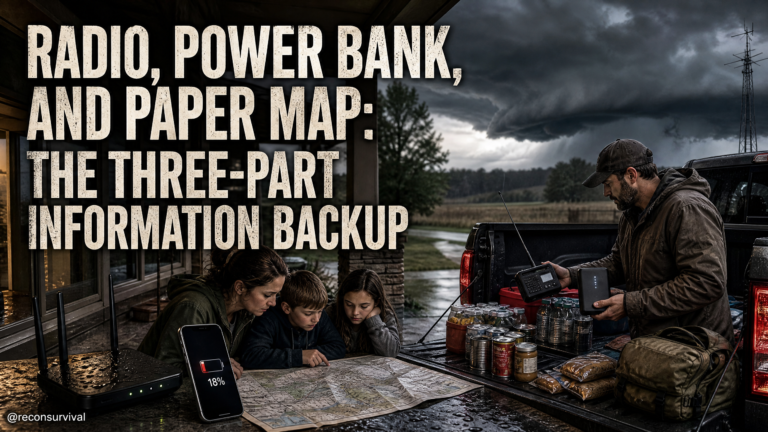
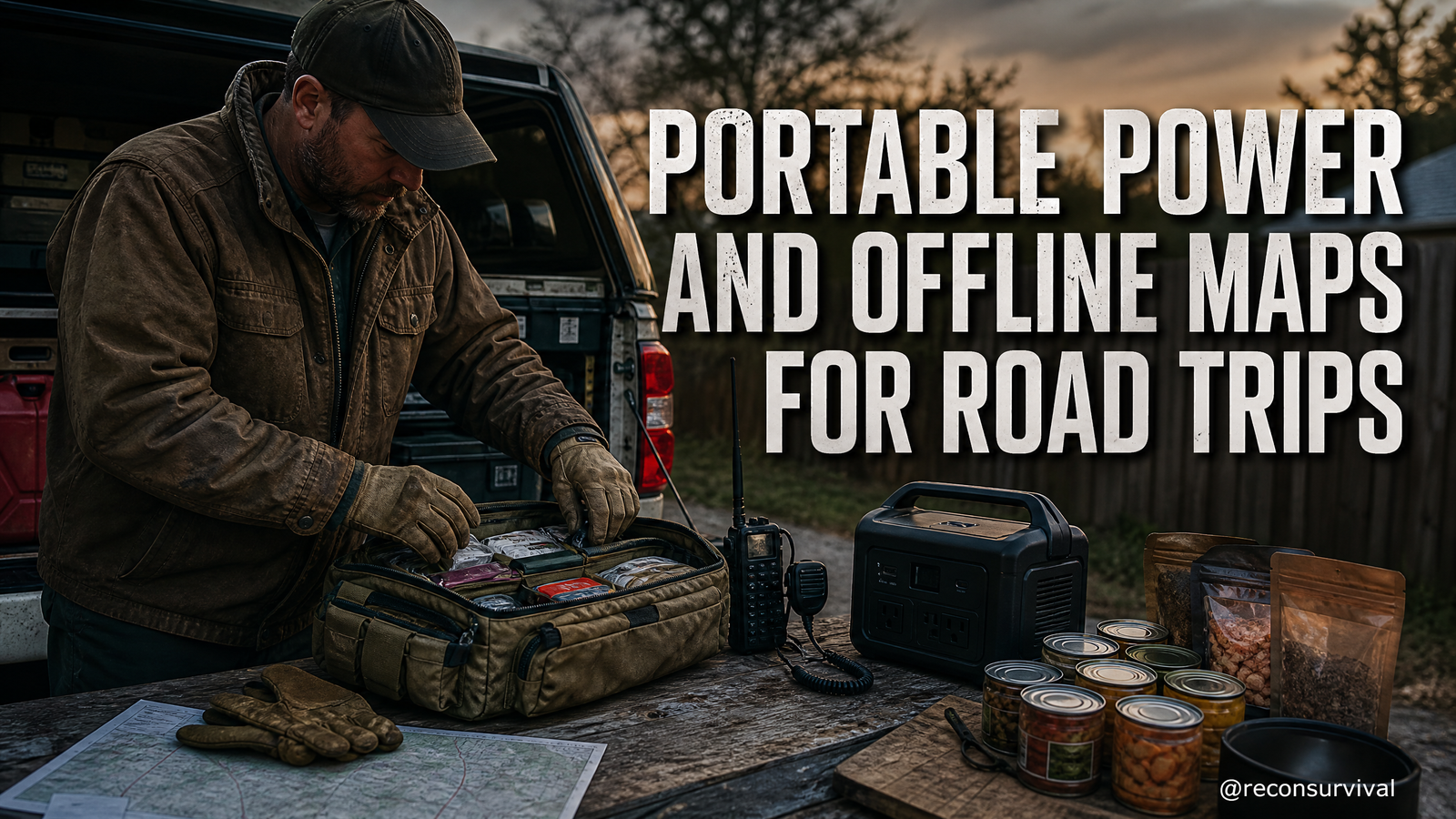
Park in your driveway, set a 30 minute timer, and turn off cellular data and Wi‑Fi on your phone. Now ask a simple question: with only what's already in your car and bags, can you navigate to a gas station 10 miles away, send a status update to a trusted contact, and charge two phones at once? If you hesitate, this drill is for you.
As an Amazon Associate, I earn from qualifying purchases.
30-Minute Driveway Drill: No‑Signal Road Test
Run this drill in your driveway before a long drive. You're practicing three things that fail most often on the road: navigation without live data, communication when networks are spotty, and charging when outlets are scarce.
Set up
- On each phone: disable Wi‑Fi and cellular data so GPS remains active. Keep Bluetooth on if you use it for car audio. Location/GPS should stay on.
- Put one phone at 30 to 50% battery to make charging changes visible. – Place your paper map or atlas on the front passenger seat. Put a pen on the center console.
Navigation task
- Open your mapping app with data off. Can you see your location dot? Can you route to a nearby gas station or highway exit 8 to 15 miles away? If routing fails, try following the map in "free explore" mode to sketch your own turn sequence on a scrap card.
- Make a detour: pick a second stop 3 miles off the main route. See if step‑by‑step directions still work offline. If not, write a three‑line route card (Road A to Exit 12, County B Rd for 2 mi, Right on Main).
Communication task
- Compose a short prewritten text like: "No data. On the road. ETA 7:10. Will update at next stop." Save it in Notes.
- Try sending an SMS to a trusted contact with data off. If it doesn't send, note that you'll need to send once service returns and practice using your radio or leaving a voicemail at the next stop. – Pull your laminated contact card from the visor. Make sure it has at least four numbers: partner, roadside assistance, lodging front desk, and a neighbor watching the house.
Charging task
- Plug two devices in at once using your 12V socket and battery bank. Note starting percentages and cable types. After 10 minutes, record the new percentages.
- If you have a small power meter inline with your cable, note the charging wattage. If not, the percentage gain is enough to judge real performance.
Score yourself at the end with pass/fix/retest: did you route to two stops, send or queue a status message, and add at least 10% to a low phone in 10 minutes without rearranging your entire car? If not, the next sections give you fast fixes.
Road Trips and an Empty House: Why Power and Maps Matter
Navigation, communication, and charging mistakes don't just waste time. They create real stress points when you're far from help, especially on unfamiliar roads or late at night. Losing data signal is common in canyons, rural stretches, and construction zones. Devices drain faster when running GPS, music, and hotspot features at once. If you can't keep phones alive or find your way without live map tiles, simple delays can turn into bad decisions at the wrong exit.
Vacation home security rides on these same systems. If you can't charge, you can't view a camera thumbnail, adjust a light timer, call a neighbor to move a package off the porch, or check a door alert. A dead battery in the car means silence back home. Keep the signal chain alive, and your house looks occupied while you're away.
The most common mistake isn't lack of gear. It's timing. Families wait until the morning of departure to download maps, charge banks, and find the right cable, only to discover hotel Wi‑Fi is slow and the car's USB port doesn't fast‑charge a modern phone.
Glovebox Power Kit: Cords, Banks, and Car Ports
Build a glovebox kit you can grab with one hand. Use a quart‑size zip bag or a small pouch with a label on the zipper pull.
What to stage
- Cables: two USB‑C to USB‑C cords, one USB‑A to Lightning (or whatever your family phones use), and one USB‑A to Micro‑USB for headlamps/radios. Wrap each with a small Velcro tie and label the tag "C1, C2, L, M" with a fine marker.
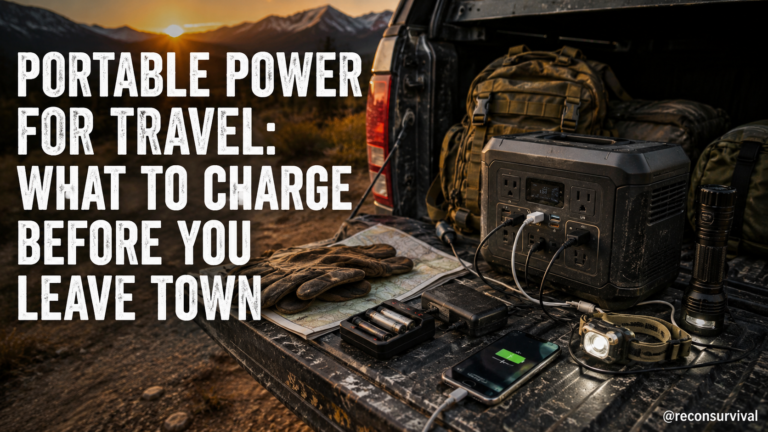
- Battery banks: two units in the 10,000 to 20,000 mAh range. Mark purchase date on the back with a paint pen. Store at mid‑charge and top off monthly. – Car adapter: a dual‑port 12V USB adapter. One port should be able to fast‑charge a phone; the second can be standard speed for a second device. – Spare fuses for the 12V socket, if your car uses them. Keep them in a tiny coin envelope in the same pouch and write the fuse rating on the envelope. – Short note card with "Charging Order" written on it: 1) Low phone, 2) Navigation phone, 3) Battery bank, 4) Tablets.
How to test
- In the driveway, plug both phones into the dual‑port adapter. If one barely gains charge, swap ports and try a different cable. Cables fail more than adapters. Move failed cables to a "trash" sandwich bag so they don't shuffle back into service.
- Check the 12V socket by wiggling the adapter gently. If it cuts out with bumps, the socket may be loose or the adapter is poor fit. Replace the adapter before a long trip.
Offline Maps: Phone Downloads and Paper Foldouts
Digital maps are your primary, but paper is the failsafe. Do both.
Phone downloads
- At home on Wi‑Fi, open your map app and look for "Offline maps" or "Download map." Download your entire home state and the states along your route. Expect several gigabytes across multiple states; clear space by deleting old videos and unused apps first.
- Set a reminder on your calendar to refresh offline maps the week before travel. Some apps require periodic updates to keep data current. – In the app settings, enable "Use device GPS" so location works with data off. Test by turning off data and seeing your dot move while you walk down your street.
Paper foldouts
- Buy a current state road map or a spiral atlas for your region. Write your route name and date on the cover (ex: "Beach Trip Route A, July"). Use a highlighter to mark the main route and two detours that bypass your biggest city and your biggest construction zone if you know them.
- Make two route cards on index cards:
- Outbound: start, key highways, planned fuel stop at mile X, lodging address, a rural crossover route if the main highway closes. – Return: same details in reverse. Tuck both behind the atlas cover. – Store the atlas flat under the driver's seat or in the door pocket. Put a fine‑tip pen in the center console so you can mark changes at a rest area table.
Car Charging: 12V Sockets, Fuses, and Inverters
Your car is a rolling generator, but only if you understand its limits.
12V sockets and fuses
- Open the driver's side fuse panel and find the 12V accessory fuse location. Write the fuse number and rating on a small Post‑it inside the fuse panel cover. Keep two spare fuses of that rating in your glovebox pouch.
- With the car running in the driveway, plug in the dual‑port adapter and two phones. If the adapter gets excessively hot or the fuse blows, you're overloading it or the device is faulty. Replace the adapter before the trip. – Note which 12V sockets are always on versus ignition‑switched. In some vehicles, the cargo‑area socket is always on. Test by plugging in a USB nightlight or power meter with the engine off. Write a label next to always‑on ports: "Hot at rest." This keeps you from draining the battery overnight.
Small inverter use
- A small inverter can run a laptop charger or power a camera battery charger in a pinch. Keep the inverter accessible, not buried under bags where it can overheat. Do not place it on upholstery where vents are blocked.
- Engine off charging drains the starter battery quickly. If you must use the inverter, run the engine outside in open air. Never idle in a garage or enclosed carport. Follow manufacturer instructions and your vehicle manual for power limits and safe use.
Simple sizing for expectations
- Example: a typical smartphone battery is roughly 10 to 15 watt‑hours. A 10,000 mAh bank stores roughly 30 to 35 watt‑hours at 3.6-3.7 V before conversion losses. Plan on 2 full phone charges from a 10,000 mAh bank, not 3 or 4.
- Label each bank with "2 phone fills" or "1 phone + 1 tablet to 60%" so family members don't drain them on games.
Family Communications: Contact Cards and Radios
Power and maps handle movement. Communication handles coordination.
Contact cards
- Print and laminate one contact card per person. Include:
- Two in‑family cell numbers
- Roadside assistance
- Primary lodging front desk
- Trusted neighbor or local family
- One out‑of‑area relative
- Write your vehicle's plate number and insurance member ID on the back. Tape a copy behind the driver's visor and stash a duplicate in the center console.
- Assign a "check‑in trigger": if the car has no data for 30 minutes, next exit or rest area gets a short SMS or voicemail with location and ETA.
FRS/GMRS radios for caravans
- If traveling with two vehicles, pair handheld radios and agree on a channel. Practice a radio check in your driveway. Keep the spare AA/AAA cells in a labeled zip bag next to the radios.
- Keep expectations realistic: range is often under a mile in hills and urban areas. Privacy codes do not encrypt. Use short, plain messages ("Exit 123 in 2 miles. Fuel next.").
Scoring Your Drill: Pass, Fix, Retest
Use a simple standard so you know where you stand.
Pass
- Navigation: You routed to two nearby points with data off and wrote a three‑line route card as a fallback.
- Communication: You sent or queued a status message and confirmed your contact card numbers are current. – Charging: You charged two devices at once and gained at least 10% on the low phone in 10 minutes without moving half the cabin to find cables. – Paper: Atlas reachable from the driver's seat and marked with your route.
Fix
- Any failure above is a fix. Replace bad cables. Download maps for the entire route. Add a second battery bank. Print and laminate contact cards. Buy a current atlas. Add spare fuses. Label ports and bags.
Retest
- Run the same 30 minute drill in the driveway the night before departure. Set a reminder to run it again at the first fuel stop of a long trip: 10 minutes to verify maps, send a check‑in, and top off the battery bank.
Minimum Viable Road Power and Map Setup
Start small, then upgrade.
Minimum viable for a family of four
- Maps: Offline maps downloaded for home state and destination state. One current paper state map or regional atlas in the front row.
- Route cards: Two index cards with main route, detours, lodging address, and fuel stop mileage targets. – Cables: Four labeled phone cables (two per connector type you need). – Power: Two 10,000 to 20,000 mAh battery banks, both charged and dated. One dual‑port 12V USB adapter. – Contacts: Laminated contact cards for each person and one visor copy for the car. – Radios (optional but useful for two‑car trips): One pair of FRS handhelds with spare batteries. – Storage: One zip pouch labeled "GLovebox Power" with everything above except the atlas.
Upgrades once the basics are solid
- Add a compact 12V inverter if you must charge a laptop or camera batteries on the road. Keep wattage low and ventilation clear.
- Add a short USB‑C PD cable and a power meter to verify charge rates quickly. – Add a small solar charger only if you camp off‑grid and can manage panel placement, heat, and secure storage. Vehicle dashboards get hot and are poor charging environments; store panels flat in the trunk and deploy only when parked in open air. – Add a hard‑copy list of hospital ERs and urgent cares along your corridor if traveling with medical needs. Tape it inside the atlas cover.
Safety Limits and Maintenance: Heat, Batteries, and Idle Risks
Heat is the silent killer of electronics, especially on summer road trips. A sealed car trunks and dashboards can reach dangerous temperatures. Treat your power gear like food: don't cook it.
Battery and cable safety
- Do not leave battery banks or phones on the dash or in direct sun. Store in the center console, door pocket, or a soft case under a seat.
- Follow manufacturer instructions for operating and storage temperatures. If a battery swells, smells sweet/chemical, or gets hot while idle, stop using it and dispose of it per local guidance. – Inspect cables monthly. If the insulation is cracked, the connector is loose, or charging is inconsistent, retire it. Mark failed gear with masking tape so it doesn't creep back into the kit.
Vehicle and inverter safety
- Never idle in a closed space. If you must run the engine to charge or use an inverter, park outside and keep the exhaust clear of snow, shrubs, or walls. Install and maintain a carbon monoxide alarm in your home garage and follow local fire department guidance.
- Don't exceed your vehicle's accessory power ratings. If your 12V socket fuse keeps blowing, step back. Reduce the number of devices or choose lower‑draw chargers.
Maintenance rhythm
- On the first Saturday of each month, plug both battery banks into wall chargers in the kitchen and top them off while you make breakfast. Put a sticky note on the fridge as a reminder until it's habit.
- Refresh offline maps on home Wi‑Fi. Delete the oldest map areas you don't need to keep storage free. – Open the glovebox pouch, run a quick inventory, and replace anything missing. Snap a photo of the contents so you can compare month to month.
Recon Survival Principle
Redundancy beats perfection on the road. You don't need a rolling data center. You need two ways to navigate, two ways to communicate, and two ways to charge, staged where you can reach them without thinking. Backups only count if they're already in the glovebox and already tested in your driveway.
Do Today
- Put two index cards on the kitchen table and write outbound and return route cards with one detour each. Tuck them into your atlas.
- Build a glovebox power pouch: two labeled cables per phone type, one dual‑port 12V adapter, two battery banks with purchase dates, and spare 12V fuses.
- On each phone, download offline maps for your home state and destination while connected to home Wi‑Fi. Set a reminder to refresh them before departure.
- Create and laminate two contact cards with family numbers, roadside assistance, lodging, neighbor, and an out‑of‑area contact. Slide one behind the driver's visor and one into the center console.
- Run the 30 minute driveway drill: data off, route to two points, send or queue a status message, and add 10% charge to a low phone in 10 minutes.
- Label one 12V socket "Hot at rest" if it stays powered with the engine off. Move any charging that could drain the battery to ignition‑switched ports.
- Move all power gear out of direct sun. Relocate banks and radios from the dash to the center console or door pocket, and toss any frayed cables into a "trash" bag so they don't get reused.
- Add a recurring calendar reminder for the first Saturday of the month: "Top off banks, refresh maps, glovebox check – 15 minutes."