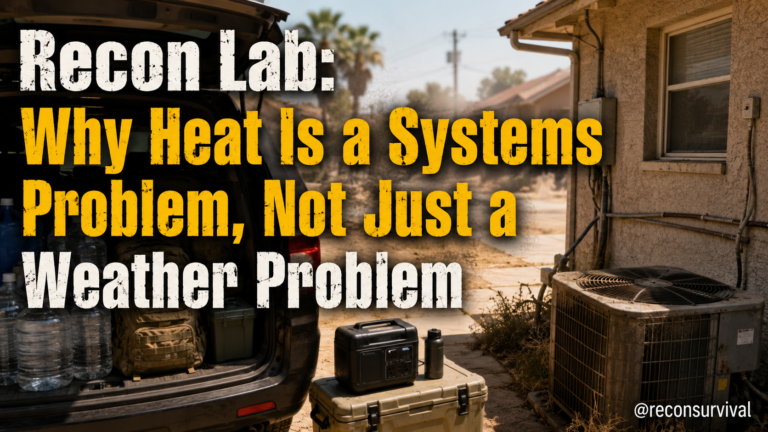
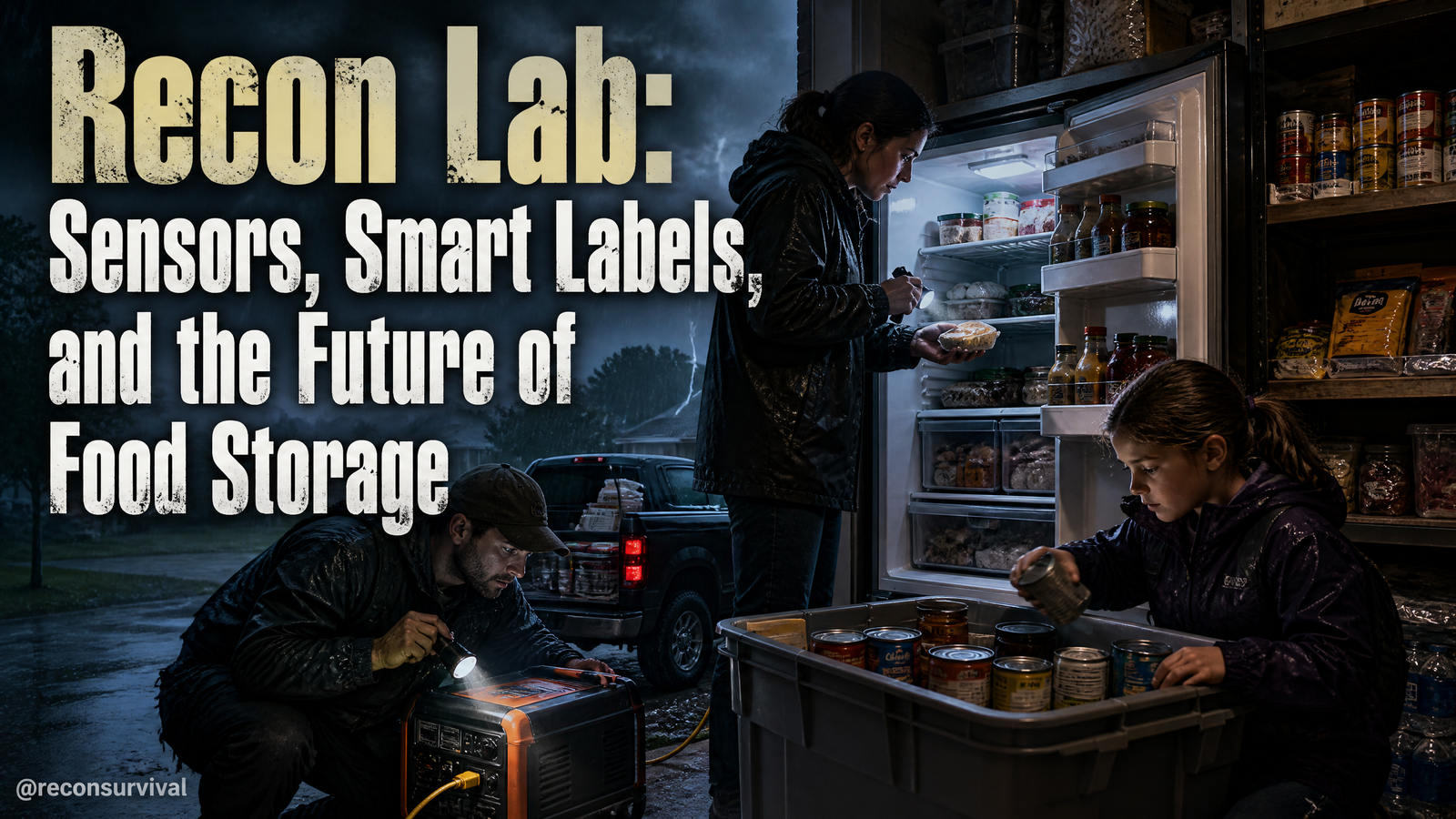
Heat outside drives compressor cycles inside, which warms food on the door, which accelerates spoilage, which increases ice demand, which pulls power, which shortens your outage runway. The chain is real. If you can see it early and measure it, you can break it where it's cheapest: with placement, labels, and a few quiet sensors before your kitchen becomes a guesswork zone.
Heat, Load, and the Hidden Clock in Your Kitchen
Peak summer heat can increase the load on refrigerators and freezers, especially in warm kitchens and garages. Sound and touch cannot establish whether food is safe; temperatures and elapsed time can.
Watch two chains:
- Rising room temperature can lead to longer compressor cycles, temperature drift, harder food decisions, and avoidable waste.
- An outage can increase demand for ice and backup power, shortening the household's fuel or battery runway.
Start with appliance thermometers and a written log. Current FDA refrigerator guidance is to keep the refrigerator at 40°F (4°C) or below and the freezer at 0°F (-18°C).
The Common Miss: Late Gadgets, No Triggers, Random Stickers
The common mistake is buying a sensor after a scare without deciding what its reading should trigger. The app gets ignored, labels go stale, and the household falls back to guessing.
Avoid three pitfalls:
- Single-point sensing. Temperatures can vary across an appliance, so one reading may miss a local warm spot.
- Data without action. Put the official keep-or-discard chart beside the log.
- Cloud-only tools. Keep local displays, printed guidance, and a battery-powered way to track time.
Recon Lab System: Map, Measure, Decide
Build a small decision loop that anyone in the household can run:
- Map: Draw the refrigerator, freezer, cooler, and pantry. Show what moves where during an outage.
- Measure: Place thermometers according to their instructions. Label extra sensor locations and log readings regularly so you know the normal range.
- Decide: Prewrite the actions: keep doors closed, verify the temperature, stage a monitored cooler if needed, and use official guidance for each food.
An analog appliance thermometer works. A wireless sensor with a local display can add alerts. The system matters more than the interface.
Temperature Sensors in Real Rooms: Fridge, Freezer, Cooler
Use the thermometer and appliance manufacturers' placement instructions. If you add sensors to map variation, label each location so a door, shelf, drawer, or basket reading is not mistaken for the whole appliance.
For a food thermometer that supports calibration, follow its manufacturer's instructions. USDA food-thermometer guidance describes an ice-water check for suitable food thermometers. Appliance sensors and wireless pucks may use a different procedure or may not be adjustable.
For the freezer, inspect the gasket for dirt, damage, and visible gaps, then clean, adjust, or replace it only as the appliance manual directs. For a backup cooler, use a clean appliance thermometer and enough ice or frozen gel packs to hold 40°F (4°C) or below. Record date, time, location, reading, and action in the cold-chain log.
Smart Labels: QR, NFC, and Color-change Stickers
Labels turn measurements into usable household memory:
- QR codes can open an inventory with the food, storage date, and location. Keep a printed copy on the appliance as the offline fallback.
- Near-field communication (NFC) tags can open the same inventory or a no-cook meal card, but the paper version still works without a phone.
- Time-temperature indicators (TTIs) track exposure under the conditions specified by their manufacturer. Treat them as experimental unless the product is intended for your use; they do not replace a thermometer or official discard guidance.
Low-tech labels remain useful. Mark leftovers and freezer additions with contents and storage date, then use the FoodSafety.gov cold-storage chart instead of inventing an "eat by" date.
Inventory and Household Logistics: Whiteboard, Bins, and Roles
Divide a refrigerator-side whiteboard into "Fridge Now," "Freezer Check First," "Cooler Contents," and "Use Me First." A red Check First bin can group food that needs evaluation after a temperature problem; it never means the food is automatically safe to cook.
Keep truly no-cook meal cards beside the board, chosen for the household's dietary and allergy needs. Assign names to four roles: Cooler, Power, Pets, and Temperature Log.
When a refrigerator reading rises above 40°F, the log role records the time and reading, everyone keeps the doors closed, and the cooler role prepares enough ice to hold 40°F or below. Then check each food against official guidance. Never rely on smell or taste to decide safety.
Practical Today vs Experimental Tomorrow
Practical tools today include refrigerator and freezer appliance thermometers, optional wireless sensors with local displays, a paper log and inventory, and a monitored hard-sided cooler with ice or frozen gel packs. Record each device's exact battery type and keep the correct spare.
Experimental tools include consumer spoilage-gas sensors, vision apps, electronic shelf labels, time-temperature indicators, predictive shelf-life software, and cloud data loggers. Test them for inventory or early alerts, not as final food-safety judges. Retain local readings and paper fallbacks, and keep official time-and-temperature guidance as the decision rule.
Action Thresholds: What Triggers a Discard, Refreeze, or Keep Decision
Write the following checks where everyone can see them.
Fridge Check Is the refrigerator at 40°F or below? If not, keep the door closed, verify the reading, record when it crossed 40°F, and use the FoodSafety.gov outage chart for each food. A cooler is useful only if it remains at 40°F or below.
Freezer Check Does the food still contain ice crystals, or is it 40°F or below? FDA guidance says it may then be refrozen or cooked. Otherwise, follow the official chart for that food and discard it when directed. Never taste-test it.
Doors and Power Check Keep appliance doors closed as much as possible. Test backup power only under the appliance and power-equipment manufacturers' ventilation, transfer, and load instructions.
Labels and Devices Check Date new food, rotate items within official storage guidance, replace low batteries, and use the accuracy-check procedure specified for each thermometer.
Future-Facing Ideas in Plain Language
- Time-temperature indicators (TTIs): Labels that respond to cumulative exposure under defined conditions. The label experiences the environment; it does not know the food's full history.
- Bluetooth Low Energy (BLE) sensors: Battery devices that send short-range readings to a phone or gateway. They form a mesh only when the specific product supports that feature.
- Predictive spoilage models: Software that estimates shelf life from time and temperature. Use it for inventory planning, not in place of official guidance.
- Electronic noses: Sensors intended to detect gases associated with spoilage. Treat consumer versions as experimental alerts, not keep-or-discard tools.
The useful future is not a kitchen full of dashboards. It is earlier notice connected to a safe, rehearsed decision.
Household Takeaway: Sensors Serve Decisions, Not the Other Way Around
Sensors reveal trends, labels carry memory, and a whiteboard assigns action. The goal is a short household routine that still works when power, internet, or attention is limited. Placement, written triggers, and a monitored cooler matter more than another dashboard.
Recon Survival Principle
Early warning beats late reaction. For cold storage, useful signals include thermometer trends, the outage start time, door discipline, and gasket condition. Each signal should prompt verification and a prewritten action based on official guidance. That is the Oracle AXIS connection: awareness, signal separation, and calm decision triggers, not a claim of predicting events. The household still makes the final, evidence-based choice.
Do Today
- Put an appliance thermometer in the refrigerator and another in the freezer, following their placement instructions.
- Print or save the FoodSafety.gov outage and cold-storage charts, then put paper copies by the cold-chain log.
- Stage a hard-sided cooler, a clean appliance thermometer, and enough ice or frozen gel packs to hold 40°F or below.
- Label food with its contents, storage date, and location; keep an offline inventory on the appliance.
- Assign the Cooler, Power, Pets, and Temperature Log roles, then rehearse them in a tabletop drill without unplugging the appliance.
- Check thermometers and replace batteries according to the device instructions. Record the result and date.
- Inspect the freezer gasket and test backup power only as the relevant manufacturers direct.
- Post two triggers: "Refrigerator above 40°F: note the time, close the door, verify, and open the official chart" and "Frozen food has no ice crystals and is above 40°F: follow the chart; never taste-test it."