Why a Pantry is Still Just Piles Until You Turn It Into a Plan
The first thing to fail isn't the food; it's the label. It's the jar of dried beans in the back corner marked "Miscellaneous" that sits in a plastic bin for three years while the rot sets in from unseen moisture or, worse, the panic of realizing it's expired the day a storm hits. It's the water jug with a vague "2022" scrawled in disappearing marker that turns into a mystery you can't solve when the lights go out. You can stockpile a warehouse of groceries, but without a system to convert that inventory into actual meals, you are sitting on a pile of risk, not a plan.
As an Amazon Associate, I earn from qualifying purchases.
A pantry is not a plan unless the food becomes actual meals. The difference between survival and starvation in a crisis is not the volume of your storage; it is the speed of your retrieval and the clarity of your usage. If you cannot immediately identify what you have, where it is, and how long you have left to eat it, your storage is a liability.
The Rot That Sets In Before the Storm
Before the winds pick up, a different kind of erosion begins in the home pantry. It is the slow, silent rot of mismanagement. This isn't about running out of food; it's about food becoming inedible while still in the pantry, or worse, becoming a health hazard.
The First Hour Check: The Visibility Audit
The first thing to break is organization. In a high-stress situation, you cannot afford to dig through three shelves of unlabeled containers. * Immediate Action: Walk to your storage area. Identify any container that lacks a clear date (bought or expiration) and contents. * The Triage: If a container has no label, write on it now. If the contents are unknown, discard it. * The Rule: No unlabeled container stays. Period.
The Same-Day Check: The Rotation and Safety Audit
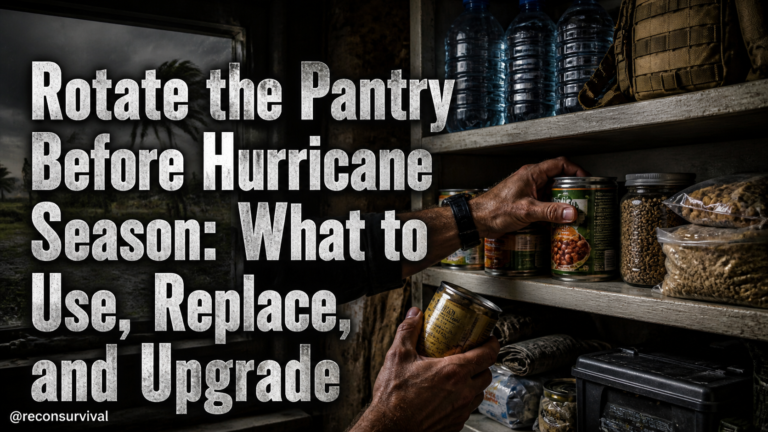
The next thing to fail is safety and rotation. Food sits in a pantry in a static state. It doesn't "wait" for you; it degrades based on temperature, humidity, and time. * Immediate Action: Perform a "FIFO" (First In, First Out) sweep. Pull out the oldest items and check for puffed cans, rust, bulging lids, or signs of pests. * The Triage: Move items that are close to expiration to the front of the "Ready to Eat" zone. Move items that are damaged to the "Discard or Repurpose" bin. * The Rule: Old food is the first food you must consume. If it's not safe, it doesn't get a second chance in a crisis.
The Next-Day Check: The Meal Integration Audit
The final thing to fail is usability. You have labeled everything and rotated your stock, but can you actually make a meal? * Immediate Action: Take three items from your "Ready to Eat" zone. Can you make a complete meal with just those items without needing exotic ingredients you haven't stocked? * The Triage: If the answer is no, adjust your storage strategy. You need a baseline of staple foods (grains, proteins, fats) that combine. * The Rule: Storage is only valid if it converts to calories you can consume today.
The Label Everything Habit
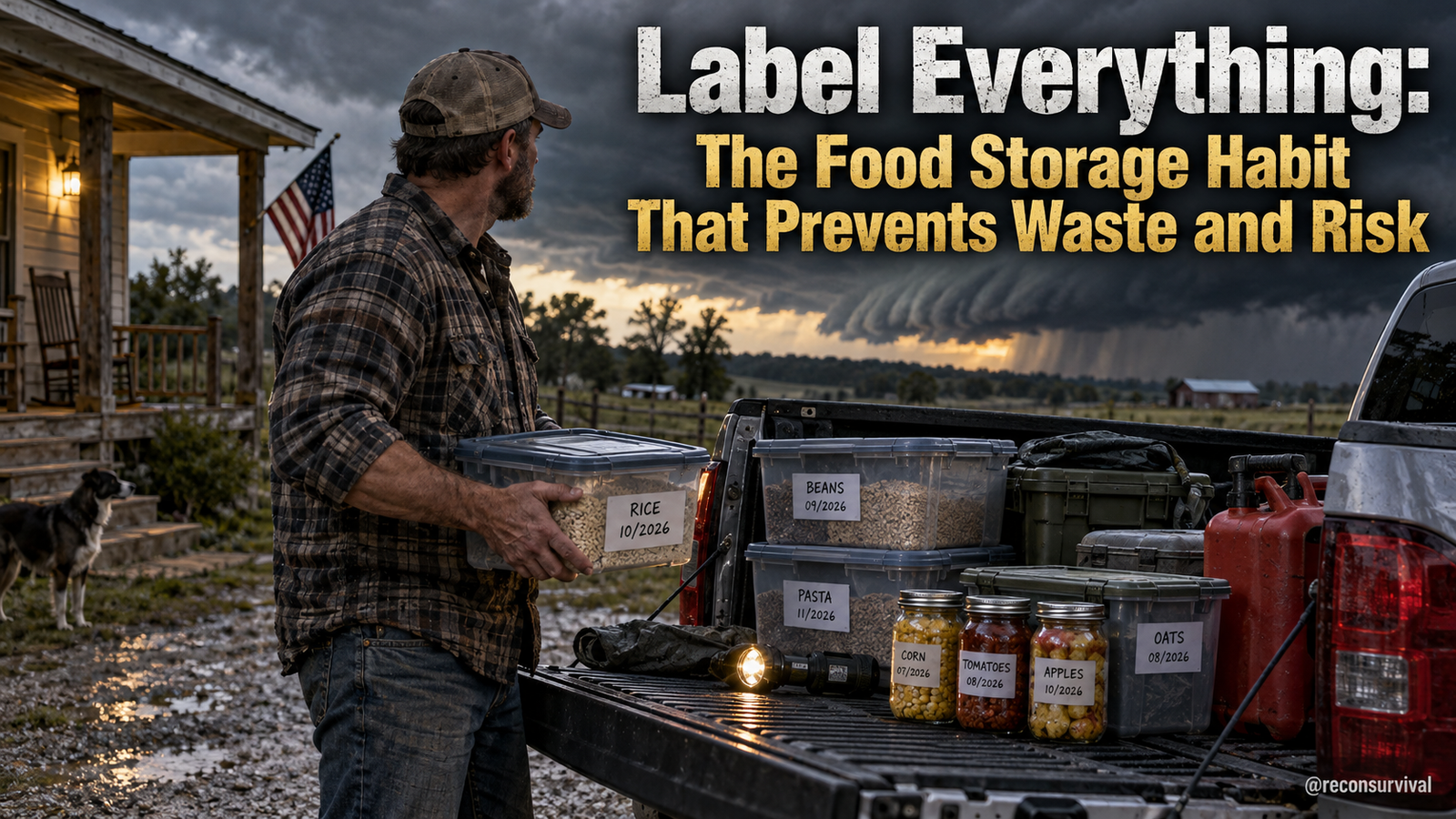
To stop the rot and turn your pantry into a plan, you must adopt the single most effective habit in food storage: Label Everything.
This is not just about writing "Rice" on a container. It is a systematic approach to tracking the lifecycle of your food. A properly labeled system prevents waste, reduces risk, and ensures that when the moment of need arrives, you are executing a plan, not a guess.
The Anatomy of a Perfect Label
A standard label should answer four questions instantly:
- What is it? (e.g., "Quinoa, Uncooked")
- When was it stored or bought? (e.g., "Stored: Oct 2023")
- What is the expiration or use-by date? (e.g., "Best By: Oct 2025")
- Where is it? (e.g., "Bin 3, Shelf 2" or "Kitchen Cabinet A")
This information turns a generic container into a data point in your survival database. It allows you to prioritize consumption logically. When you see a label reading "Expired: Today," you don't hesitate; you eat it. When you see "Expires: 5 Years," you know it's for the long-term reserve.
The Rotation System: Making the Label Matter
Labels are useless without a system to act on them. The Rotation System is the mechanism that ensures your food is consumed in the right order. * The Workflow: When you buy a new item, it goes to the back or bottom. You place the oldest item at the front or top. * The Trigger: When you use an item from the front, you immediately replace it with the new one. * The Result: Your pantry is a moving loop of fresh food, not a graveyard of stale supplies.
Visualizing the System
Imagine a clean pantry where every shelf is a section of a map. * Zone 1 (Immediate Use): Labeled containers of ready-to-eat meals, snacks, and staples. Dates are bold. * Zone 2 (Rotation Reserve): Bulk items labeled with purchase dates, scheduled to be moved to Zone 1 within the next 6 months. * Zone 3 (Long-Term Reserve): Sealed containers with long shelf-lives, clearly marked with expiration dates years out.
This visual hierarchy prevents the "forgetting" that kills food. You don't have to remember what you have; the system shows you.
Decision Points for the Crisis
When the storm hits and the power goes out, your decision-making power is compromised. You need pre-made decisions embedded in your storage system.
The "Unknown" Protocol
If you encounter a container with a faded or missing label during a crisis, the decision is binary:
- Do not guess. If the contents are ambiguous or the date is illegible, the risk of foodborne illness in a compromised environment is too high. * Action: Discard or, if in a severe shortage scenario, boil/heat thoroughly if the item is high-acid or canned and the container is intact.
The "Priority" Protocol
When food is scarce, you must decide what to eat first. * Decision: Prioritize items that are most perishable and those that require the least preparation energy. * Logic: A can of peaches with a clear expiration date is a higher priority than a bag of rice that has been sitting for two years. Eat the perishable first, then the long-stable staples.
The "Inventory" Protocol
When planning your next supply run, your decision is based on the data on your labels. * Decision: Replenish items that are closest to expiration first. * Logic: This keeps your "Ready to Eat" zone full of fresh food, maintaining the rotation cycle without wasting money on items you don't need yet.
Recon Survival Principle
A pantry is not a plan unless the food becomes actual meals.
The value of your storage is not in the number of calories you have locked away, but in the speed and safety with which you can convert those calories into sustenance when you need them most. The Label Everything habit is the bridge between a pile of groceries and a functional survival strategy. It eliminates the ambiguity that leads to waste, prevents the panic of the unknown, and ensures that your system is resilient against the very thing that kills most survival attempts: the failure to use what you have.
Do Today
Your goal for today is to stop the rot of ambiguity. You do not need a complete overhaul of your pantry today; you need to start the labeling process.
- Pick Your First Zone: Choose one shelf, one bin, or one cabinet in your storage area.
- Grab Your Marker: Get a permanent marker, masking tape, or a dedicated label maker.
- Label Three Items: Take three containers that currently lack clear labels. Write on them: Contents, Date, and Expiration.
- Move the Oldest: Identify the oldest item in that specific zone and move it to the front of the line.
- Commit to the Habit: Make a mental note that from now on, every new item bought must be labeled before it is put away.
This single action today transforms your pantry from a storage closet into a Recon Survival asset. It is the first step in ensuring that when the next crisis comes, you are ready to eat.