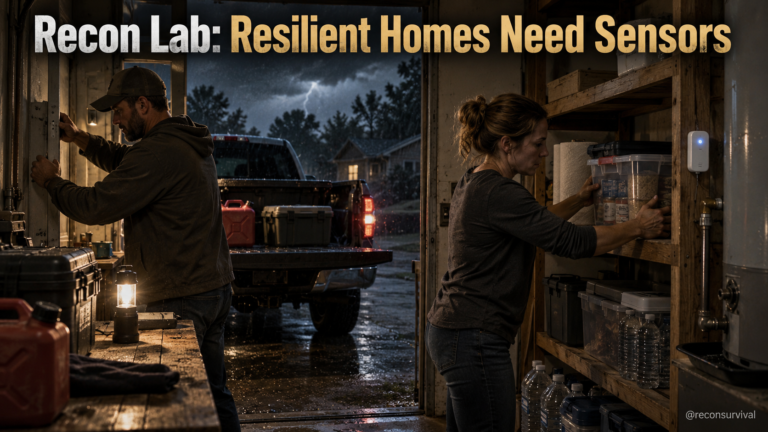
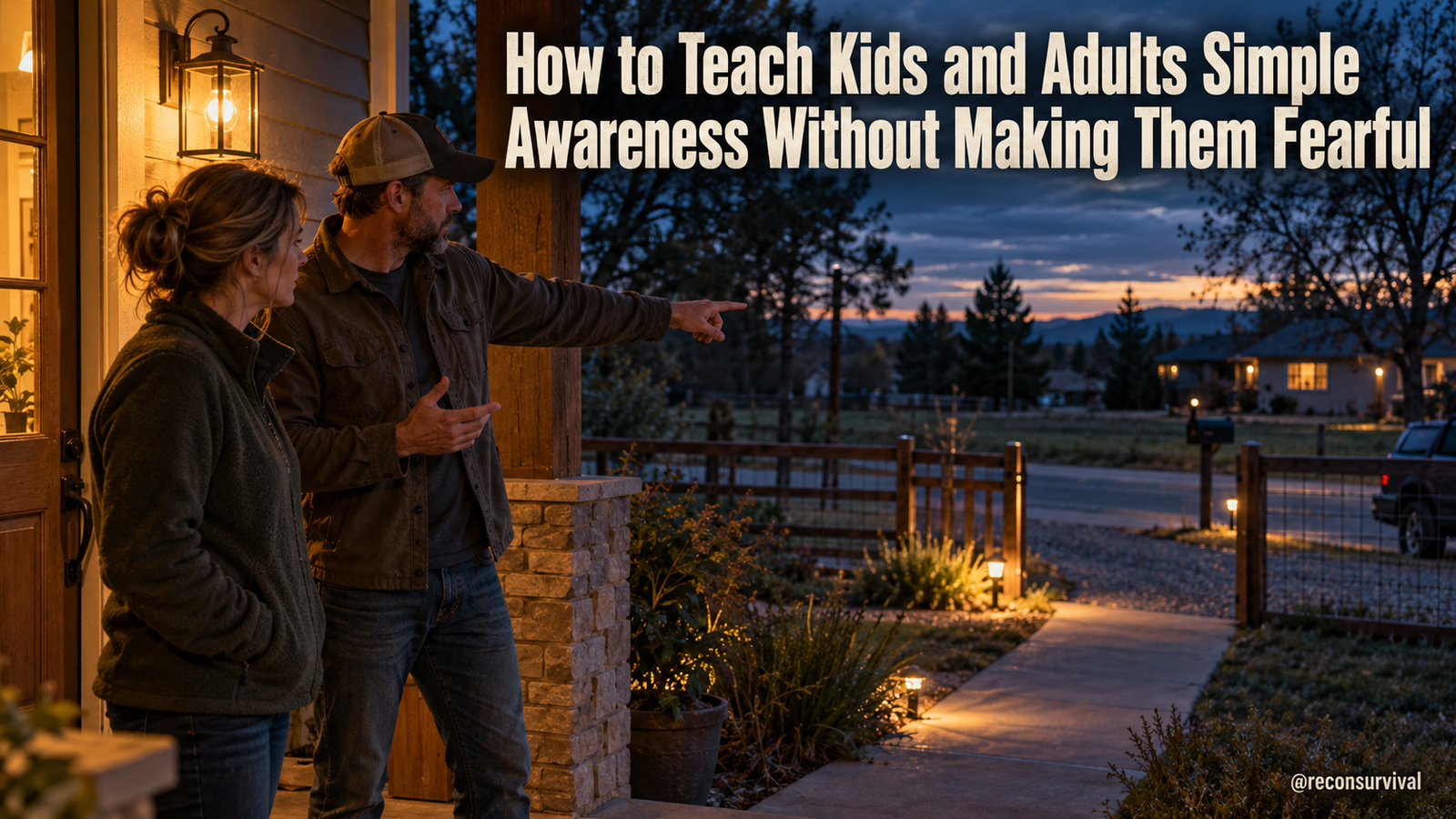
If a storm knocked out the power and the streets filled with noise tonight, would your household know exactly what to do? The end of October brings more darkness, earlier sunsets, and shifting routines. These changes increase exposure to hazards while crowds gather for events and scams rise. Most advice on staying alert fails here because it is either too generic, focused on obscure gear, or arrives only after a crisis has started. The result is panic, confusion, or a dangerous delay. The practical fix is to practice calm observation, check-ins, exits, buddy systems, and safe movement while things are quiet. This approach builds a reliable habit without feeding fear. You do not need special equipment or a drill instructor. You need a clear plan that anyone in the house can follow. The most common mistake is waiting for a scary story to decide what to do. When a household creates a plan only after hearing about a local incident, the conversation starts with alarm. People feel threatened, and the focus shifts to worst-case scenarios rather than simple, repeatable actions. A plan born of fear often breaks under stress because the brain prioritizes protection over logic. Instead, start with the Recon Survival practical system. This system treats awareness as a daily skill, not a reaction to an emergency. It relies on five interconnected actions that work together to keep the household grounded and moving safely. ## The System: Observation, Check-ins, Exits, Buddy Systems, Safe Movement
Step 1: Calm Observation
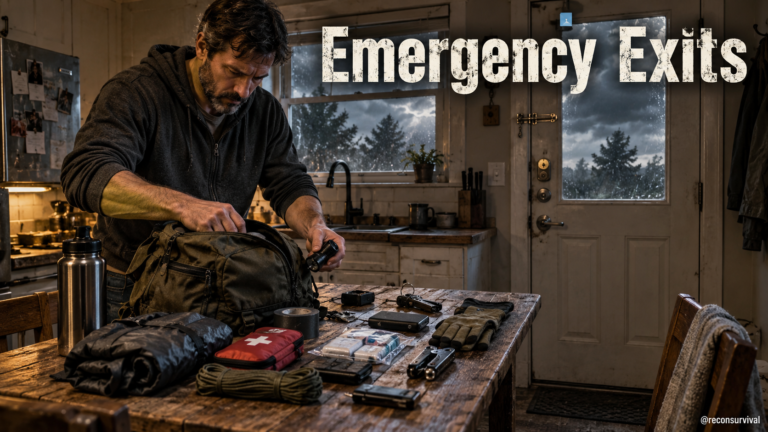
Pay attention to your surroundings without scanning for threats. Notice normal patterns so changes stand out clearly. ## Step 2: Check-ins Establish a routine for confirming everyone is where they should be. This happens automatically during transitions, like when leaving for school or arriving home. A simple visual or verbal confirmation prevents the assumption that everyone is safe until the group actually meets. ## Step 3: Exits Identify at least two ways out of your current location. In a home, this means knowing the door and a window if the door is blocked. In a public space, it means spotting the nearest emergency exit before you sit down or join a crowd. ## Step 4: Buddy Systems Assign people to stay with each other. One person is not responsible for the whole group. A child watches a sibling, and an adult watches the others. This keeps the group connected and ensures no one is left behind if the path splits. ## Step 5: Safe Movement Move with purpose toward the exit or meeting point. This means staying low if there is smoke, keeping hands free for balance, and avoiding sudden sprints that cause falls. Movement is controlled, not panicked. ## Breaking the System into Household Steps
You can practice these steps in a living room, on a driveway, or at a kitchen table. Start by writing a single household action on a piece of cardstock. The text should be: "If power goes or lights fail, we watch, we check, we move to the porch." Place this card by the front door or a main light switch where everyone sees it daily. This physical reminder beats a mental one because it triggers the habit without requiring recall. Next, run a quick drill during a calm evening. Pick a room in the house. Ask one person to point out the two exits. Ask another to name the person they are paired with for that location. Have the group walk to the designated meeting spot outside, like the front porch or driveway. Repeat this practice regularly to build comfort. Then, practice the buddy system with age-appropriate roles. A young child can hold an older sibling's hand. An adult can stand near the door to guide the group. The rule is simple: no one moves without their partner. ## A Safe Beginner Practice Drill
Try a "Five-Minute Walk" at a local park or shopping center during daylight hours. Before you enter, agree on a meeting point if someone gets separated. As you walk, ask each person to notice one unusual detail, like a locked gate or a person loitering near a corner, and then share it later. After the walk, sit together and review. Did anyone get separated? Did you know where the exits were in the store or park? Did you stay together? This drill is safe because it happens in a low-risk environment and focuses on observation rather than threat detection. ## Measuring Improvement
You know the skill is improving when the review takes less time and answers become more immediate. Initially, people may hesitate to answer questions about exits or buddies. After several practice sessions, the answers should be calm and direct. Look for these signs of progress:
- No one asks, "Where do we go?" during a simulated delay. * The group stays together without constant verbal reminders. * People notice environmental changes without becoming anxious. If the practice feels like a game of "gotcha" or causes visible distress, slow down. The goal is calm competence, not a perfect score. ## The Recon Survival Takeaway
The prepared version of you is the one who can check the list while others search for batteries. Awareness is not about fearing the dark; it is about trusting your plan enough to act. By practicing calm observation, check-ins, exits, buddy systems, and safe movement, you turn uncertainty into a routine. ## Action Checklist
Copy this checklist and keep it on your refrigerator or near the entryway:
- [ ] Write the household action "If power goes or lights fail, we watch, we check, we move to the porch" on a card. * [ ] Place the card by the front door or a central light switch. * [ ] Identify two exits from every major room in your home. * [ ] Assign a buddy partner for each family member and child. * [ ] Conduct a short walk drill to test observation and movement. * [ ] Review the results with the group to ensure everyone knows their role. If this happened tonight, would your household already know how to handle it?