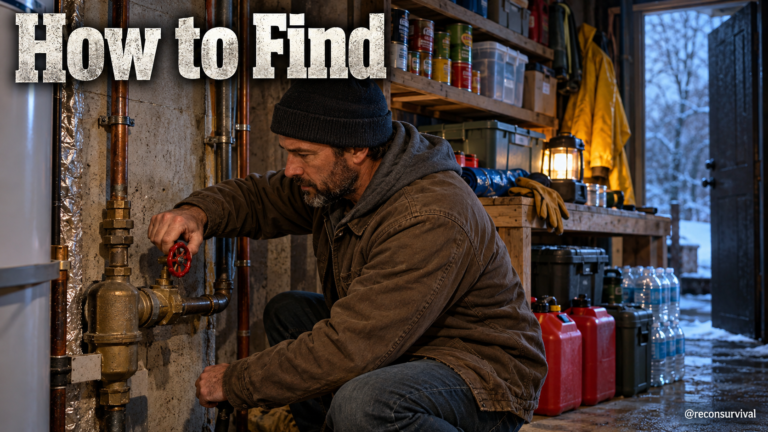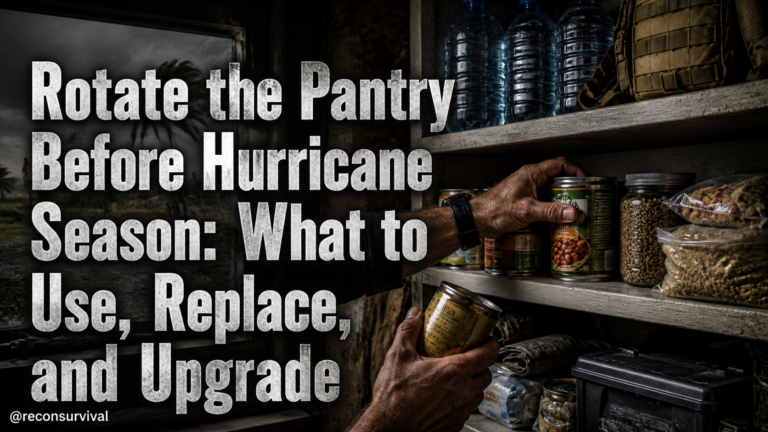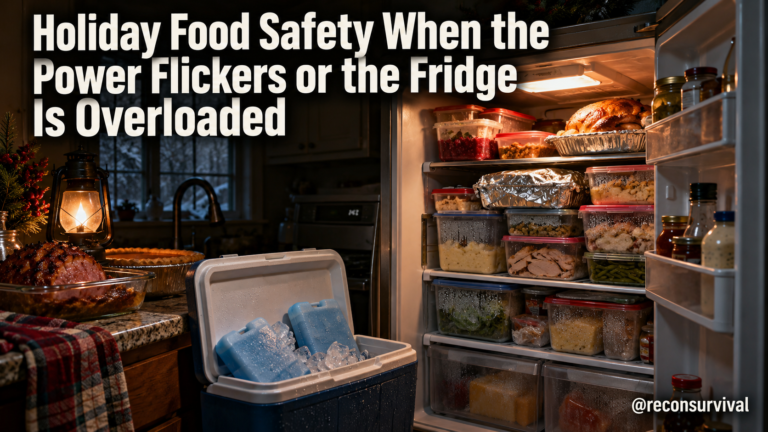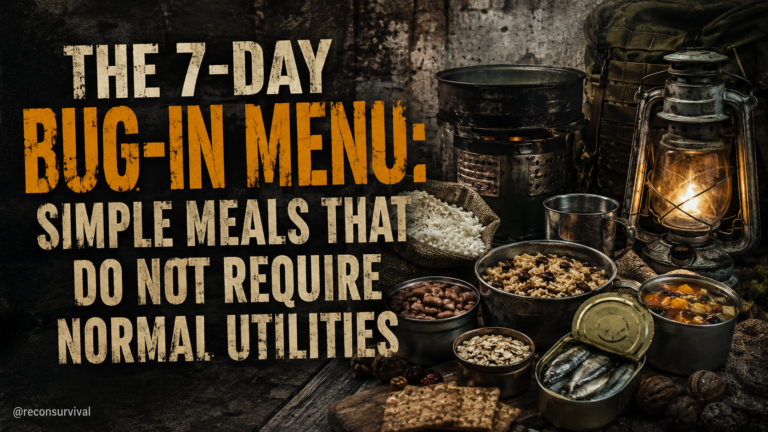
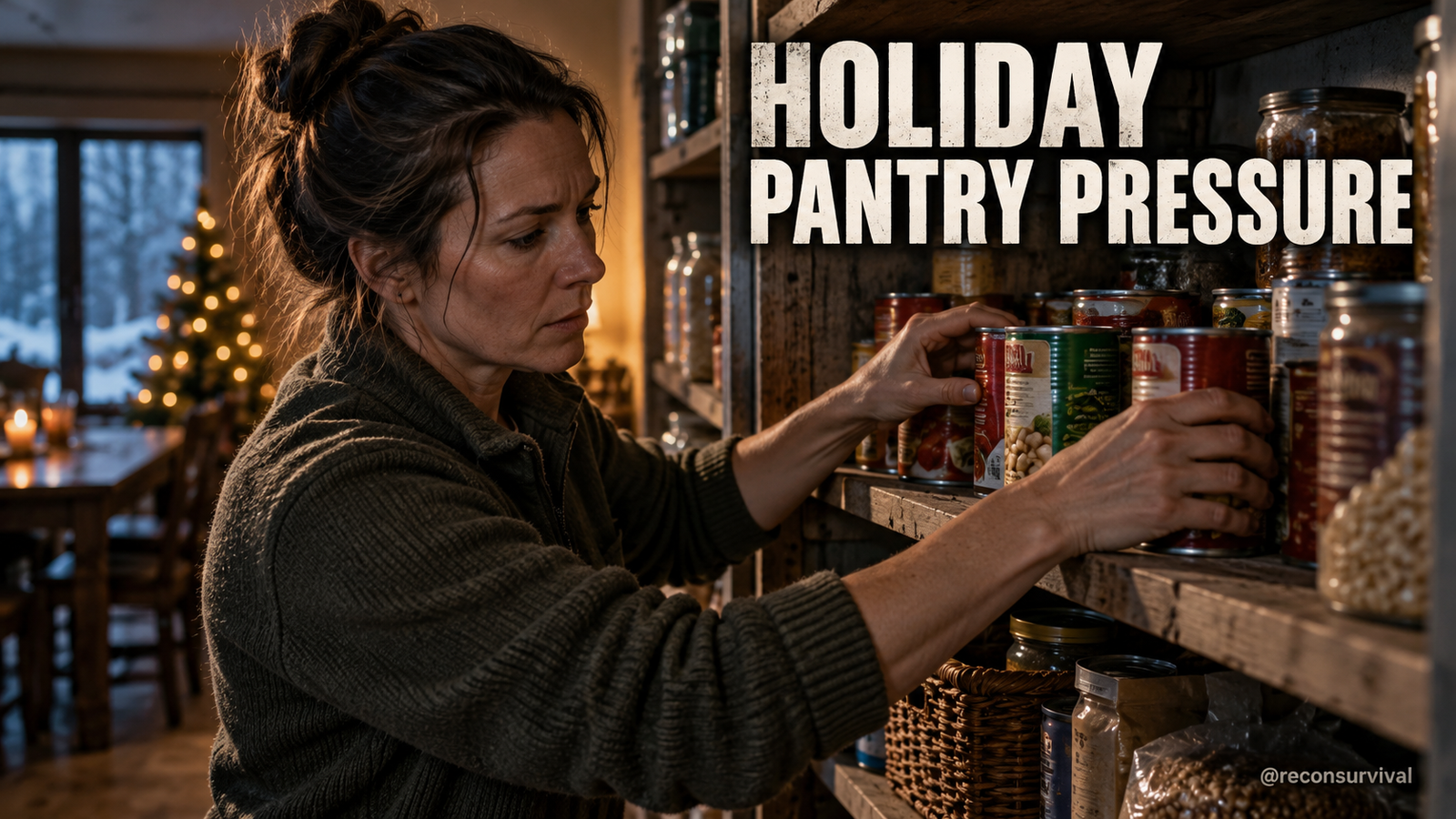
Next: keep emergency food separate from holiday cooking and household turnover before stress makes the decisions harder. If this happened tonight, would your household already know how to handle it? Most advice on holiday preparedness is either too generic, too gear-focused, or arrives too late. You buy the extra cans, then they get buried under fresh groceries, holiday cookies, and last-minute shopping trips. When the power goes out or the roads become blocked, you open the pantry to find only the food you needed for Thanksgiving dinner, not the supplies you need for survival.
As an Amazon Associate, I earn from qualifying purchases.
The Seasonal Reality Check
This isn't about preparing for a catastrophe; it's about maintaining situational awareness during the darkest part of the year. Winter storms, power outages, and local disruptions happen with higher frequency now. The risk isn't that everything will fail; the risk is that your daily routine will crowd out your emergency resources.
The Most Common Mistake
People wait too long to keep emergency food separate from holiday cooking and household turnover. The mistake is treating the pantry as a single, undifferentiated space. You add a bag of holiday candy, a new jar of sauce, or a case of soda, and the emergency cans slide to the back or bottom of the shelf. They become part of the "general food" pile. By the time you need them, they are forgotten, expired, or worse, you've used them for a meal and don't know you've depleted your reserve. You cannot rely on memory or a generic "check your pantry" reminder. You need a physical system that forces you to see the difference between what you are eating today and what you are saving for later.
The Recon Survival System: Separate and Visible
The practical system is straightforward: create a physical and visual boundary between your holiday food and your emergency reserve. This requires a dedicated space and a specific rotation habit. You do not need special equipment. You need a corner of the pantry, a shelf, or a storage bin that is reserved strictly for emergency food. The rule is absolute: no holiday items, no fresh produce, and no "maybe" items.
Step 1: Define the Boundary Choose a specific location for your emergency food. It should be a shelf, a bin, or a corner that is accessible but clearly separated from your daily shopping and holiday prep area. Label this area clearly. A piece of tape and a marker works. Write "EMERGENCY FOOD – DO NOT TOUCH" or similar clear text. If you use bins, use a distinct color or a bright label. The visual cue must tell your eyes immediately: "This is not for today's dinner."
Step 2: Pull the Oldest Item
Move all emergency food items into their dedicated zone. If you have items that are expired or damaged, move them to a separate "use first" bin that is clearly marked but distinct from the emergency reserve. Do not mix holiday food with emergency food. If you are cooking for a holiday gathering, use the fresh groceries and the "use first" bin. The emergency reserve stays behind the line you drew in Step 1.
Connecting Supplies to Reality
This system works because it connects supplies to actual meals and rotation. You treat your emergency food as a distinct category, not a backup stash of "random cans."
When you stock the emergency zone, you are building a buffer against the holiday rush. You are ensuring that if the power goes out for three days, you have food you know is there, in its original condition, and ready to eat. Rotation becomes automatic. When you add new supplies to your emergency zone, you move the oldest items to the front. When you cook, you check the "use first" bin before you check the pantry. This prevents the accidental consumption of your reserve.
The Pantry and Water Checklist
Use this checklist to audit your pantry and ensure your emergency food remains distinct from your holiday stock.
Emergency Food Zone Check:
- [ ] Is there a clearly labeled area for emergency food only? – [ ] Are all emergency cans placed at the front of the shelf or bin for easy access? – [ ] Are there any dented, bulging, or expired cans mixed in with the holiday food? – [ ] Is the emergency food physically separated from fresh groceries and holiday treats? – [ ] Do you know exactly what is in the emergency zone without opening every container? ## Water Storage Check:
- [ ] Is your emergency water stored in a dedicated, labeled container? – [ ] Is the water stored away from holiday cleaning supplies or chemicals? – [ ] Is the water container sealed and labeled with the fill date? ## Rotation Check:
- [ ] Have you checked the dates on your emergency food this month? – [ ] Is there a plan to replace any used or expired items before the holidays? ### The Recon Survival Takeaway
A pantry is not a plan unless the food becomes actual meals. The difference between a stocked pantry and a prepared household is not the quantity of food, but the clarity of its organization. You cannot rely on a generic reminder or a "maybe" system. You need a physical boundary that survives the holiday rush.
Your Action Step
Do one readiness action today: keep emergency food separate from holiday cooking and household turnover. 1. Identify a specific shelf or bin for your emergency food. 2. Label it clearly so no one mistakes it for holiday supplies. 3. Move all emergency cans to this zone, placing the oldest dated can at the front. This is the practical move. It takes five minutes. It prevents the confusion of the holiday season. It ensures that when you need your reserve, you have it.