The Hidden Cost of a Burst Pipe
Late October brings a specific shift: the first hard freeze often arrives before the holidays, and travel plans start to clutter the calendar. Water systems are usually the first to fail when temperatures drop, yet most households prepare food supplies long before they check their plumbing. The real problem isn't a lack of information; it's that most advice is too generic or arrives too late. When a pipe bursts or a freeze threat hits, you cannot afford to hunt for a handle while water is rising or time is running out. Next: locate shutoffs, label them, teach the household, and prepare tools before stress makes the decisions harder. <p class="rs-affiliate-disclosure"><em>As an Amazon Associate, I earn from qualifying purchases.</em></p>
As an Amazon Associate, I earn from qualifying purchases.
Why This Matters Before the Freeze
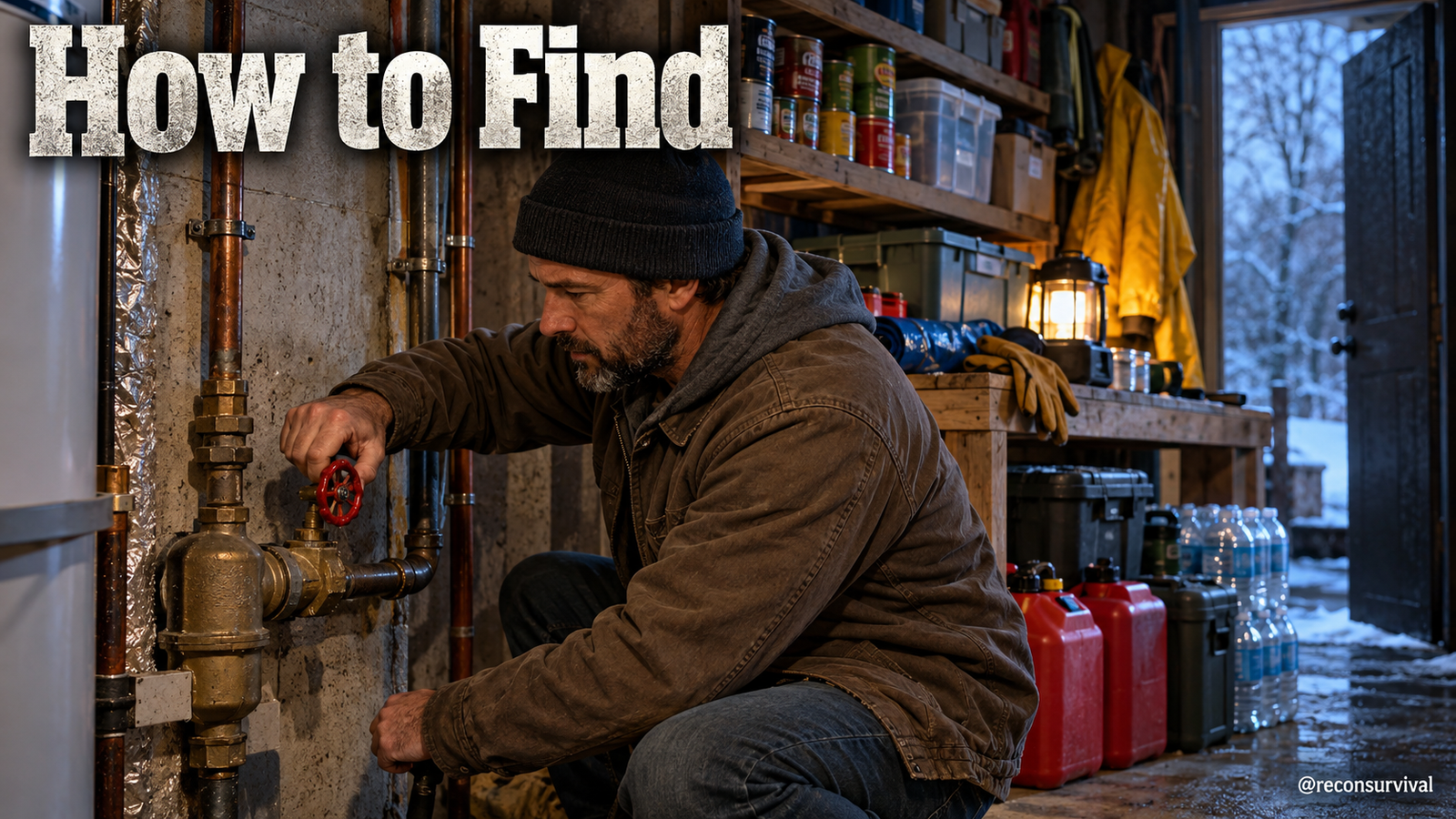
This matters because water damage and burst pipes are the most common household emergencies in cold weather. A frozen pipe can split and flood a basement, garage, or crawlspace in minutes. Shutting off the main line stops the flow immediately. Without a practiced plan, you might waste precious minutes searching for a valve behind a sink, in a dark corner, or under a floor panel. Time is the enemy. Every minute of delay allows more water to escape, turning a small repair into a structural disaster. ## The Common Mistake The most common mistake is waiting until you hear the damage to find the shutoff. People often assume they know where the valve is because they moved in years ago. They assume they can turn it because a plumber or previous owner showed them once. But handles can get painted over, valves can rust in place, and new residents rarely learn the location until a crisis occurs. If you don't have a plan, you won't find the shutoff quickly enough to stop the flow. ## The Recon Survival System This system relies on visibility, communication, and basic tools you likely already own. ### 1. Locate the Shutoffs Every water supply has a main shutoff valve and, often, branch valves for specific fixtures like the washing machine or water heater. Start with the main. In many homes, the main valve is located where the water line enters the house. This is frequently in the basement near the front wall, in the garage, or in a utility closet. If you live in a warmer climate, it might be outside in an underground box near the street meter. Do not guess. Walk the perimeter of your home. Open the basement door. Follow the pipe coming from the street. Look for a wheel-handle, a ball handle, or a lever. Once you find the main, look for smaller valves under sinks, behind the toilet, or near appliances. If a leak happens in the kitchen, you don't need to turn off the whole house. But if the leak is large or frozen pipes are suspected, you need the main. ### 2. Label Them A valve without a label is a guess. If you find the main shutoff, put a bright, durable tag on it. Use a heavy-duty plastic tag or a marker on the pipe if the handle allows it. Write "MAIN WATER SHUTOFF" clearly. If you have a family, write the label in a font size that is readable from a distance. In an emergency, people forget words. They remember colors and big text. A bright red tag or a distinct neon tag works better than white tape. ### 3. Teach the Household Knowing where the valve is useless if you are unconscious or away when the crisis happens. You must teach every household member how to operate the shutoffs. Stand at the valve with each person. Show them which way to turn to stop the water. For a wheel-handle, turn it clockwise until it stops. For a ball handle, turn it a quarter-turn so it sits perpendicular to the pipe. For a lever, push it 90 degrees to the off position. Do not assume they know how to turn a stuck valve. Demonstrate the force required. If a valve is stiff, show them how to use a wrench or how to apply gentle, steady pressure. If a valve is completely rusted in place, that is a different problem that requires a professional plumber, but at least they know not to force it further. ### 4. Prepare Tools Keep the tools you need to operate these valves near the main shutoff. Do not store them in a garage that is full of boxes or a basement that floods. You need a pair of channel-lock pliers or a dedicated water shut-off wrench. A small adjustable wrench works too. For rusted valves, a penetrating spray like silicone lubricant or a dedicated rust penetrant can help. Keep these tools in a small pouch or on a hook right next to the valve. If you keep tools under a sink, ensure they are accessible without moving heavy items. If the shutoff is in a cold spot, check that the tools don't freeze to the pipe or get stuck in the cold. ## A Safe Beginner Practice Drill You cannot practice turning off the water, but you can practice the movement. Set a time on your phone. Pick a day when you are home and no water is actively flowing. Place a dry paper towel under the water container or the appliance you are checking. Check it again later. This initial check confirms you can find the valve without searching. Then, perform the motion. Stand at the main shutoff. Without actually closing it, turn the handle to the "off" position and back to "on." Do this slowly. Feel the resistance. Note if the handle is stiff or if it requires a tool. Ask a household member to do the same. Watch them turn the handle. Ask them to explain where the handle went to stop the flow. If they hesitate, correct the motion immediately. This drill takes five minutes. It builds muscle memory so that when a real leak happens, your hand knows what to do. ## Measuring Improvement You know the skill is improving when you can locate the valve without searching or moving boxes. You know it is improving when a household member can describe the motion to turn the water off without asking for help. If you have to search a dark corner or ask "which one is it?" every time you visit the shutoff, the skill has not improved. The goal is not just finding the valve. The goal is finding it without thinking. When water is spraying, you do not want to read instructions. You want to react. ## Final Takeaway Preparedness is about removing the friction between the problem and the solution. When a pipe bursts, you need to stop the water. The most reliable way to do that is to know exactly where the valve is, have it clearly marked, and have practiced turning it. ## Action Checklist
- [ ] Walk to the main water shutoff and locate it. – [ ] Label the main valve with a bright tag saying "MAIN WATER SHUTOFF."
- [ ] Label any branch valves you find. – [ ] Identify one household member who needs to learn the operation. – [ ] Practice turning the handle to "off" and back to "on" without using tools. – [ ] Place channel-lock pliers or a wrench next to the main shutoff. – [ ] Verify the tools are accessible and not buried under boxes.