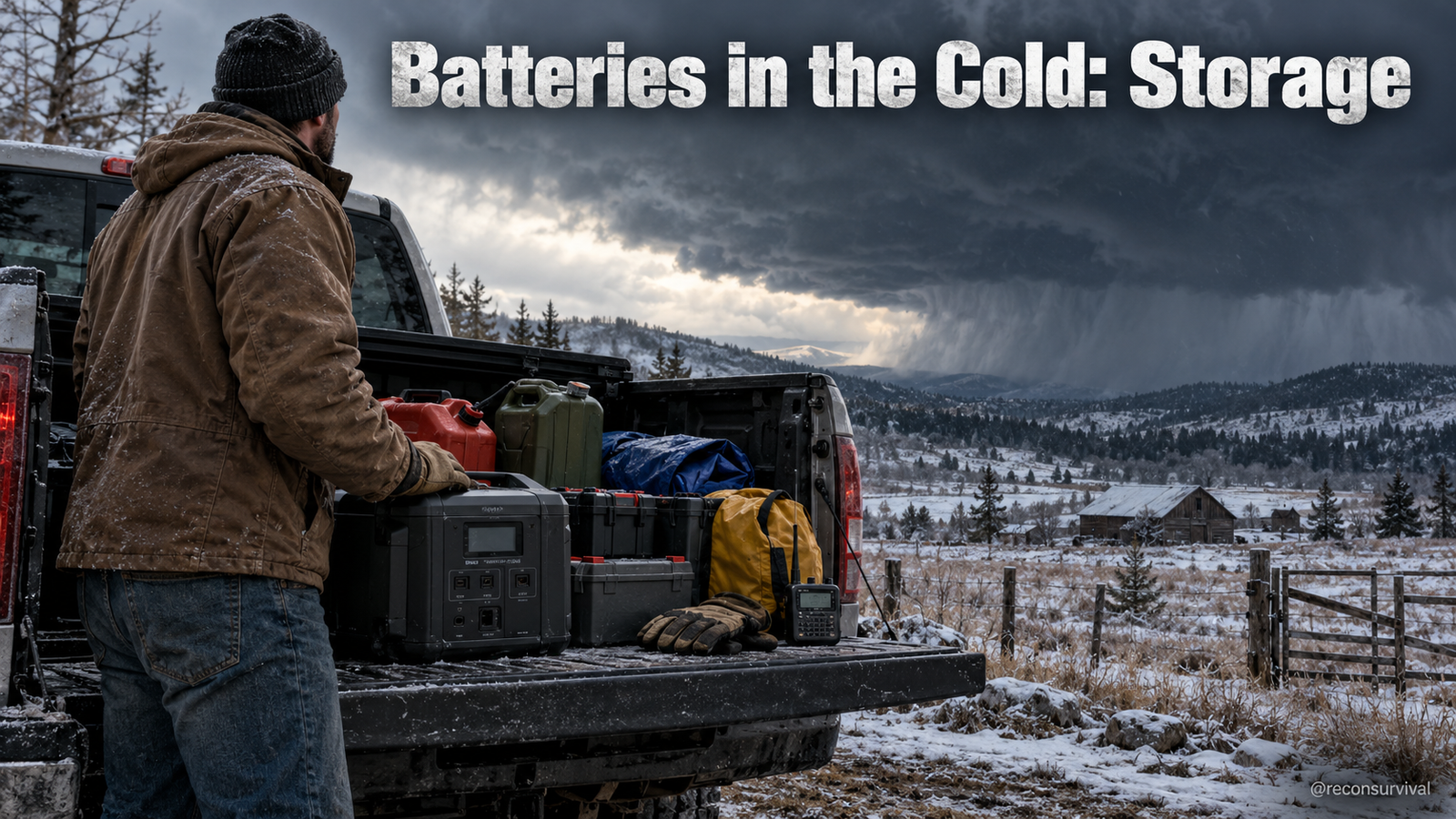
As temperatures drop, batteries often become the first component to struggle in a winter power system. Cold weather slows chemical reactions, reducing the amount of energy a battery can deliver. Ignoring these changes can lead to unexpected power loss or attempts to charge a battery in conditions that may cause permanent damage or safety hazards. Mid-October offers a practical window to review your backup power readiness before winter conditions make mistakes more costly. The core question for household readiness remains: If a power failure occurred tonight, would your household know exactly how to protect and use your batteries safely? Cold weather changes how batteries behave, regardless of their brand or capacity. A battery that performs reliably in a warm garage may deliver significantly less runtime when exposed to freezing temperatures. This reduction is a physical characteristic of the chemistry, not necessarily a sign that the equipment is broken. Treating a cold battery the same as a warm one often leads to underestimating available power or attempting to charge a cell that is too cold, which can degrade the battery or create safety risks. The most common mistake is storing batteries in unheated spaces like garages or sheds and then immediately connecting them to a charger once they are needed. Charging a battery that is below freezing can damage internal components, leading to a rapid loss of capacity. Most manufacturer manuals explicitly warn against charging below a specific temperature threshold, yet these instructions are frequently overlooked. A practical system for protecting batteries during cold conditions begins with a rule: the battery must be warm enough to charge and to deliver power efficiently. You do not need specialized heating equipment to achieve this; you only need a consistent approach to where you store your backup power and how you manage its use. The minimum viable system requires moving your battery bank to a location that stays above freezing. This typically means a heated interior room, a climate-controlled basement, or an insulated enclosure that tracks the ambient temperature of your home. Large battery banks, such as deep-cycle lead-acid units or lithium home storage systems, should be located inside the conditioned envelope of the house. Smaller portable units should be moved to a warm spot, such as a cupboard in a heated room or a storage bin lined with insulating material. Once the location is secure, manage the charging and discharging cycle with a seasonal mindset. During cold snaps, expect your runtime to drop significantly compared to warm-weather performance. A device that operates for an extended period in summer may run for a much shorter duration in winter due to the ambient temperature. This is expected physics, not a fault. Do not attempt to charge a battery that feels cold to the touch or has been in an unheated space for an extended period. If a battery is cold, allow it to warm up to room temperature naturally before connecting any charger. Always follow the manufacturer's instructions for your specific device. Some modern lithium batteries include internal mechanisms that activate only when the cell reaches a specific low temperature. These units may allow charging at lower temperatures than older lead-acid types, but they still have a defined minimum threshold. Check the label on your battery or the manual for the specific "safe charging temperature" limit. If you cannot locate that number, consult the manufacturer's support resources. Maintenance and failure points for cold-weather batteries focus on visual inspection and performance expectations:
As an Amazon Associate, I earn from qualifying purchases.
- Visual Signs: Check the battery casing for swelling or bulging. Repeated freezing and charging cycles can cause internal pressure to build up. * Charging Behavior: If a charger indicates a fault or stops charging immediately upon connection to a cold battery, do not force it. Disconnect the charger and allow the battery to warm up. * Runtime Drop: If a device runs for a significantly shorter time than expected, the battery is likely suffering from cold-induced capacity loss. This is often temporary; once the battery returns to a normal temperature, performance usually recovers. However, repeated exposure to freezing conditions can lead to permanent degradation. * Safety Limits: Never use a battery charger that lacks a temperature compensation feature or a specific cold-charge safety cutoff. Ensure your charging area has adequate ventilation, especially if charging lead-acid batteries that can release gases. Carbon monoxide alarms must be functional in any space where you charge batteries or run generators, even if the generator is in a garage with the door open. Upgrades beyond the minimum system might include insulated battery boxes with passive heat retention materials or dedicated thermostatically controlled heating pads designed for battery storage. These are useful if you cannot keep your battery bank in a heated room. However, before investing in new equipment, verify that your current storage location meets the basic requirement of staying above the manufacturer's minimum charging temperature. The simplest action is often the most effective: a shift in location, not a shift in gear. The Recon Survival takeaway is that winter power is a matter of managing the battery's environment, not just managing the load. You cannot out-power a frozen battery. The most reliable way to protect your investment is to ensure the battery stays warm before you try to charge it or draw power from it. <p class="rs-affiliate-disclosure"><em>As an Amazon Associate, I earn from qualifying purchases.</em></p>
Action Step
Write a household action card for Batteries in the Cold: Storage, Charging, and Runtime Expectations and place it by your main door. The card should list:
- The minimum safe charging temperature for your specific battery bank (check the label). 2. The location where the battery bank must be stored in winter (heated interior). 3. The rule: Do not charge if the battery feels cold; wait for it to warm to room temperature first. This simple physical check beats a generic reminder. It forces you to know where your power lives and how to treat it before the first cold snap hits.