When a power flickers during a holiday dinner or a guest asks where the water shut-off is, the gap between knowing a skill exists and showing it becomes visible. The practical solution is not a lecture or a gear dump, but a brief demonstration that grounds the conversation in a tangible action.
As an Amazon Associate, I earn from qualifying purchases.
The Timing Window
Late November offers a natural context where water, light, and food are already top-of-mind for families. This is the window to normalize preparedness before stress makes decisions harder. A calm demonstration on a normal day ensures the household has a practiced routine before a supply interruption forces urgent choices.
Common Preparation Gaps
The most frequent error is waiting until stress degrades memory and fine motor skills before attempting to teach. In a crisis, complex procedures vanish, and a simple, practiced action is the only reliable guide. The demonstration must be accessible enough to perform with one hand while others are distracted.
Recon Survival Principle
Prepare by anchoring the skill to a physical trigger and a visible cue. This approach moves the household from theoretical knowledge to muscle memory without requiring special equipment or creating anxiety.
Practical Demonstrations
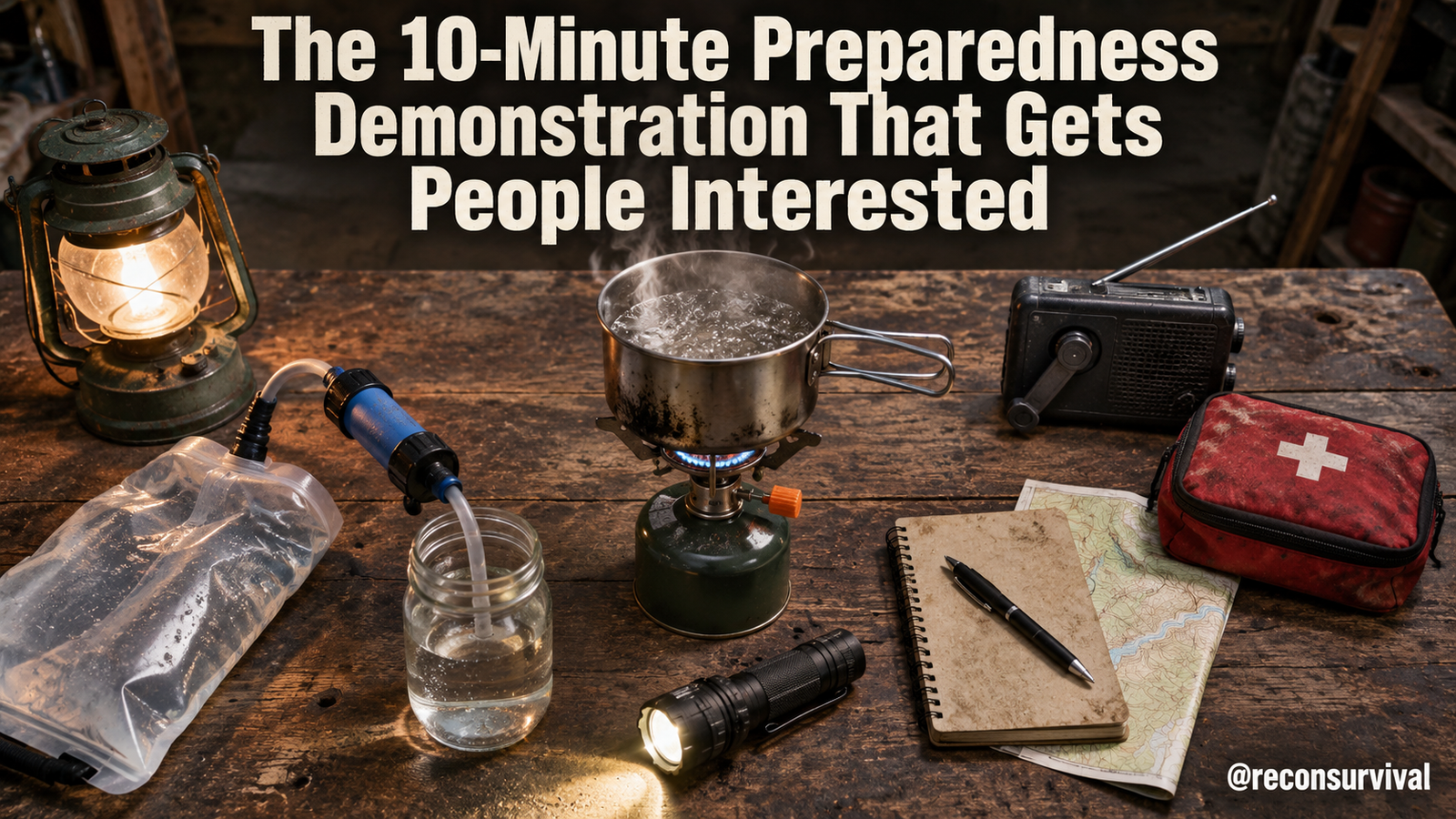
Use these three triggers to show a simple practical skill like water, light, radio, or meal planning without lecturing. Follow the specific action for each scenario and refer to the device's manual if troubleshooting is needed.
- The Holiday Guest Check: When a guest asks about emergency supplies, avoid a safety speech. Instead, pull out a paper card with a single instruction and show where the flashlight is located. Turn the device on to demonstrate it works.
- Success Check: The guest locates the item and turns it on without hesitation or detailed questions.
- The Meal Planning Pause: While preparing a holiday meal, pause to identify a non-perishable item in the pantry that does not require cooking. Explain briefly that this item serves as a meal plan backup for a power outage.
- Success Check: The household member identifies the item and understands it is for immediate use during an outage.
- The Light Test: During a moment, briefly turn off the main lights. Hand a flashlight to a family member and ask them to turn it on.
- Success Check: The family member performs the action immediately, confirming they know the location and operation.
Household Action Checklist
Execute this single step today to close the gap between knowledge and action. Do not wait for a crisis to create this anchor.
- Select one skill: Choose one of the following: water, light, radio, or meal planning. Do not attempt all four at once.
- Write the action: On a standard piece of paper, write one clear step for that specific skill in large, simple text.
- Place the card: Put the card by the door or on the kitchen counter where it is visible to the whole household.
- Perform the demonstration: Invite a family member or guest to read the card and perform the action immediately.
This creates a physical anchor for the skill. When the next decision is needed, the household has a clear path forward rather than searching for batteries or instructions in the dark.