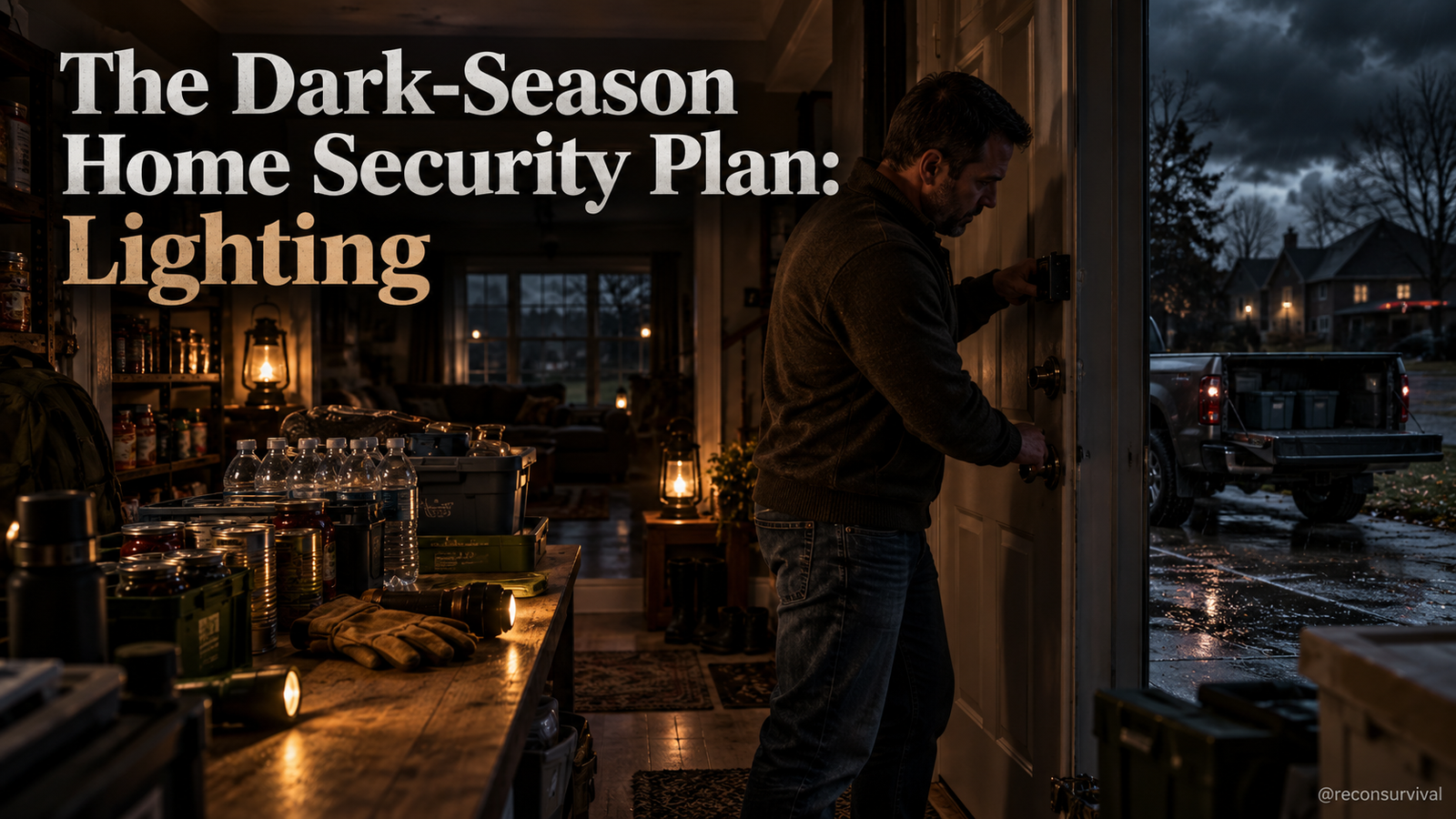
As the evenings shorten and the leaves turn, the routine that kept your home safe in August no longer fits the days in November. Visibility drops earlier. Family schedules tighten. The most common advice online waits for a storm, or it sells you a device, rather than asking you to check what you already own. Home security at this time of year starts with boring habits most people skip, yet skipping them is where vulnerability creeps in. <p class="rs-affiliate-disclosure"><em>As an Amazon Associate, I earn from qualifying purchases.</em></p>
As an Amazon Associate, I earn from qualifying purchases.
Why hardening matters before dark season
Hardening your home isn't about building a fortress; it's about making a bad decision harder for an intruder and easier for you. Darkness reduces your field of view and increases your reliance on artificial light. If your porch light fails or you leave it off because it feels like "just walking to the car," you've handed a potential visitor a clear path to your front door. A well-lit exterior creates a visible perimeter. Locked doors and windows define the boundary. Knowing your exit route keeps your household calm if you need to leave quickly. These steps reduce the time and effort a would-be intruder needs, which is often enough to make them move on. This matters because once the clock hits dark hours and routines are busy, stress makes decisions harder. Doing the work now keeps the path clear later. ### The common mistake: waiting for the season to change
People often treat security as a gear purchase or a checklist they fill out in March. The mistake is waiting until the first heavy rain or the first early sunset to build a practical home security plan. By then, the lights may be dim, the locks may have stuck all summer, and the family route out the back door might be blocked by fallen leaves or garden clutter. Most advice arrives too late because it focuses on buying new tools instead of fixing what exists. You cannot rely on a generic reminder when the days are short and the household is busy. ### The Recon Survival system for shorter days
The system here is simple: verify your perimeter, clear your routes, and lock in a habit. You do not need a new security system or expensive gadgets to make this work. You need to check the lights, test the locks, and walk the path you use when you leave or when you return. ## Step 1: Test the exterior light and place a charged flashlight by the door. This is the first physical check that beats a generic reminder. * Go outside at night and flip the switch for your porch, garage, and yard lights. * If a bulb is out, replace it. If a sensor fails to trip when you walk past it, note it. * Place a charged flashlight on a hook or in a cup right inside the entry door you use most. It should be ready to grab without searching. * Prerequisite: Ensure the flashlight batteries are fresh and the light actually turns on. * Why this works: A working light makes your home visible. A flashlight by the door gives you immediate illumination if you need to step out into the dark without hunting for a device. ## Step 2: Clear the route and test the locks. * Walk the path from your front door to the car, and from the back door to the yard or a safe neighbor. Move any debris, loose potted plants, or garden hoses that could block a quick exit or hide someone. * Test every lock on exterior doors. Turn the key in the lock cylinder. Engage the deadbolt. Open and close the latch. If a lock sticks, wiggles loosely, or the key doesn't turn smoothly, apply a graphite lubricant or call a qualified technician. Do not force it. * Check the windows you use as exits. Ensure the sash opens fully and the latch closes tightly. * Constraint: If a lock or window mechanism feels damaged or unsafe, do not attempt complex internal repairs. Call a qualified technician. ## Step 3: Lock in the habit. * Choose one exit you will always use when you leave the house after dark. * Make it a rule: stop at the door, check the light, engage the lock, and then walk the cleared path. * Do the same for every family member. This creates a consistent pattern that reduces the chance of a door left ajar or a light left off by accident. ### Decision tree: Is your home ready? Use this quick check to see where you stand today:
- Can you see your front door and walkway in the dark without turning on a main light?
- Yes: Proceed to checking locks. * No: Replace bulbs or adjust fixtures before doing anything else. * Do all exterior locks turn smoothly and latch fully?
- Yes: Proceed to clearing routes. * No: Lubricate or schedule a repair. Do not leave the door unlocked to "wait until tomorrow."
- Is there a clear, unobstructed path from the exit to the car or safe zone?
- Yes: Move to habit training. * No: Move debris now. ### Timeline: Today, this week, and later
Today:
Test the exterior light and place a charged flashlight by the door. If the light doesn't work, swap the bulb. If the flashlight is dead, replace the batteries. This single action covers the most critical failure point: being in the dark when you need to move. ## This week: Walk every exit route and clear the path of seasonal debris. Test every exterior door and window lock. If you find a sticking lock, lubricate it or note it for repair. Ensure all family members know where the flashlight is and how to use it. ## Later this season: As the weather turns colder, re-check the paths for ice or new leaf litter. If you add holiday decorations, ensure they do not block lights or hide entry points. Keep the flashlight charged and stored in the same spot. ### Recon Survival takeaway
The prepared version of you checking the list while everyone else is searching for batteries is the goal. Security in the dark season is less about buying more gear and more about ensuring the basics work when you need them most. It is about visibility, clear exits, and a habit that works when stress is high. ### Your action step
- Go outside now and test one exterior light. 2. Grab a flashlight, verify it works, and place it by your primary entry door. 3. Walk your exit route to ensure it is clear of debris. Once these three things are done, you have completed the core of your dark-season security plan.