A practical way to harden the home before outages and storms create easy targets, but most advice is either too generic, too gear-focused, or too late.
As an Amazon Associate, I earn from qualifying purchases.
By the time the first named storm has grabbed your attention on the news, the best window for preparation is often closing. Today's Recon Survival lesson addresses the real-world problem that most households face during the spring and early summer transition: they wait for a disaster to feel urgent, only to find their home is an easy target when the grid fails or the weather turns violent. We are looking at the late-April readiness audit, a critical time to find and fix weak points before hurricane season, summer heat, and grid stress arrive. The useful part is simple: harden the home before outages and storms create easy targets before stress makes the decisions harder.
Why This Matters for the Late-Spring Readiness Audit
Late April is not just another month on the calendar; it is the intersection of winter's lingering instability and the approaching threats of summer. As we move into the pre-hurricane season window, systems like power grids begin to face higher loads, and humidity increases, creating conditions that favor both electrical failures and severe weather. The goal here is not fearmongering but realistic situational awareness.
If you are waiting for an official warning to begin your home security review, you are likely too late to implement the most effective changes. A door that lacks a deadbolt or a porch light that burns dimly in the evenings is not a minor inconvenience; it is a liability that invites risk. When the lights go out, visibility becomes your primary defense. When the power fails, your entry points become your primary vulnerability. This article solves the problem of generic advice that ignores the specific seasonal risks you face right now. We need to shift from reactive panic to proactive hardening, ensuring your household is calm and secure regardless of the weather forecast.
The Most Common Mistake with Home Security
The single most common mistake people make with home security is buying more gear while the back door still has bad lighting and a weak routine. It is a classic failure point known as "gear envy." Readers often see a high-tech smart lock or a battery-operated floodlight and assume that purchasing the item will solve their problem. However, these tools are useless if the foundation of your security is broken. You cannot upgrade the operating system while the hard drive is failing.
People focus on the visible perimeter – the fence, the gate, the expensive alarm – while ignoring the internal habits that maintain safety. They neglect the simple reality that a door must physically close, a window must securely latch, and a path must be illuminated to be effective. When you prioritize the shiny new gadget over the fundamental function of the existing infrastructure, you create a false sense of security. That false sense of security is the very thing that allows an emergency to escalate quickly once the grid goes down. The mistake is assuming that hardware fixes everything, ignoring the need for routine checks and the establishment of clear communication protocols.
The Recon Survival Practical System for Hardening the Home
The Recon Survival practical system for hardening the home focuses on the sequence of defense: prevention, visibility, communication, and then gear. This system is designed for normal households, not just survivalist bunkers. It prioritizes habits that can be established today, ensuring that your home is resilient against outages and storms.
The core concept is "harden before the event." This means identifying potential failure points in your current setup and addressing them before they become vulnerabilities. We are not building a fortress; we are building a robust house that maintains its integrity when conditions change. The system relies on a structured walkthrough that covers your exterior entry points, your lighting strategy, and your internal communication loop.
Step-by-Step Guide to Hardening Your Home
To break the system down into clear steps a normal household can use, we will move from the exterior to the interior, then to the systems that keep you informed.
1. Exterior Doors and Latch Integrity
Start with your main entry points. Walk through the exterior of your home and check every door.
- Check the Strike Plate: Open your front and back doors. Look at the strike plate on the frame. Is it flush with the doorframe? If there is a gap larger than a quarter-inch, the screw from your deadbolt may not engage the frame deeply enough.
- Upgrade the Screws: Remove the existing screws in the strike plate and replace them with three-inch security screws. This creates a much stronger anchor point against leverage.
- Check the Deadbolt: Ensure your deadbolt extends at least one inch into the strike plate. If you have a single-cylinder lock on the inside of a door that faces the street, consider replacing it with a double-cylinder lock, but ensure you have a key readily available in a safe, accessible location.
- The Bottom Seal: Inspect the bottom of the door for weather stripping. Gaps here can allow water to seep in during a storm and compromise the mechanical operation of the lock.
2. Windows and Shutters
Windows are often the weakest link in a storm, not just for structural failure but for ease of forced entry.
- Shutter Maintenance: If you have roll-down or storm shutters, test the mechanism today. They should open and close smoothly without rust or corrosion. Lubricate the tracks if necessary.
- Glass Integrity: If you have older single-pane windows, consider applying a safety film. This film holds glass together if it shatters, preventing shards from becoming projectiles inside the home.
- Latching Mechanisms: Ensure all casement windows have a functional stop latch that prevents them from being pushed open. If a latch is weak, tighten the screws or replace the mechanism.
3. Lighting and Visibility
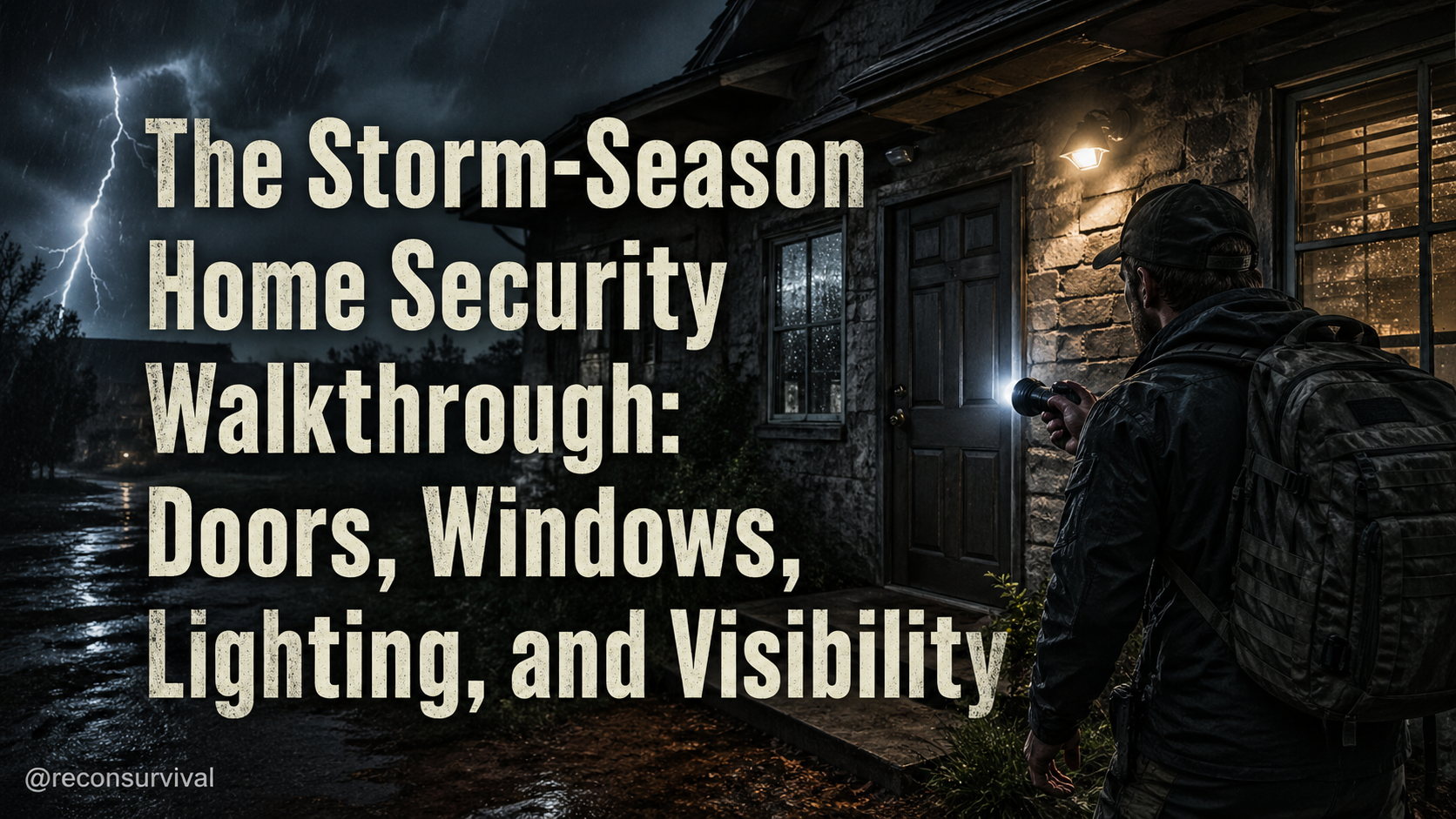
Lighting is your most effective non-electrical tool for preventing unauthorized access and maintaining order.
- Battery-Operated Sconces: Install or replace outdoor light fixtures with battery-operated sconces. These should be placed to illuminate the path to your front door and the immediate area around your back entrance.
- Motion Activation: If possible, use motion-activated lights. However, do not rely solely on them. Motion lights can sometimes be triggered by debris or wind, so ensure they are set to a moderate delay.
- Backup Power: Keep a small, reliable flashlight or a dedicated emergency lantern near your main entry door. Do not assume your porch light will work when the grid fails.
Recon Survival Principle
Recon Survival Principle: Visibility Is Prevention
The principle guiding our home security strategy is that visibility is prevention. When a potential intruder or emergency responder cannot see you, they are less likely to engage in a confrontation, and you are less likely to become a target. By illuminating your home, you establish a psychological boundary that protects your family. This is not about aggression; it is about making your home difficult to breach and easy to navigate for legitimate help. Furthermore, in the event of a grid failure, your ability to see your surroundings is directly tied to your ability to make safe decisions. Do not underestimate the value of a simple, well-placed light source that functions without power.
Internal Communication and Protocols
Hardware is only as good as the habits that support it. You need a system for checking in with your family members, especially during severe weather events.
- Designated Meeting Points: Establish a safe room within the home that can be accessed quickly.
- Check-In Routines: Set a specific time during a storm event to ensure every family member is accounted for. Use a whiteboard or a dedicated logbook if digital devices are unavailable.
- Non-Electronic Alerts: Agree on a signal, such as a specific tap code or a knock pattern, to alert the family to danger without relying on a power-dependent alarm system.
A Defensive, Lawful, Non-Escalatory Household Checklist
Finally, here is a practical checklist to review your home and secure it against common vulnerabilities. These steps are defensive, lawful, and focused on prevention.
- Inspect All Deadbolts: Ensure every exterior door has a deadbolt that extends at least one inch. Replace loose screws with three-inch security screws.
- Test Shutters: Operate all storm shutters to ensure they deploy and lock correctly. Lubricate tracks if they stick.
- Check Light Batteries: Test all battery-operated outdoor lights. Replace batteries immediately. Ensure you have a manual backup light source for each entry point.
- Seal Gaps: Apply weather stripping to doors and windows to prevent water intrusion and ensure mechanical operation remains smooth during high winds.
- Verify Window Latches: Test all window latches. Ensure they are tight and cannot be forced open.
- Map Emergency Exits: Identify alternative exits from every room in case a primary route is blocked by water or debris.
- Review Family Plan: Sit down with your family and review your communication plan for when the grid goes down.
Recon Survival Takeaway
The key takeaway is that preparation is a process of removing vulnerabilities before they become liabilities. You do not need to wait for a disaster to start making changes. The calm, realistic approach is to audit your home now, fix the mechanical failures, establish your lighting protocols, and set your family communication routines. When the stress of a storm hits, you will have already done the hard work, allowing you to focus on safety rather than scrambling to secure your home.
Do Today
Take one small readiness action today. Do not wait for the next forecast to change your mind. Here are seven concrete actions you can complete within the next few hours to harden your home.
- Perform a Door Sweep Check: Open and close every exterior door. Check the strike plate for gaps. If a screw is not tight, tighten it immediately with a wrench.
- Test Your Shutters: Open and close your storm shutters. Note any resistance or rust. If you find an issue, schedule a repair or replacement.
- Inspect Outdoor Lights: Walk around your property at dusk. Identify any lights that are out or dim. Plan to install or replace them with battery-operated units.
- Review Window Latches: Check all windows for loose latches. Tighten or replace them to prevent forced entry.
- context: this is for a article titled "Harden the Home Before Outages and Storms"
- Put a working flashlight and charged battery bank where people sleep.
- Write the household contact plan on paper and place it with the radio or main flashlight.
- Assign one person to recheck the list after the next storm, outage, or heat alert.