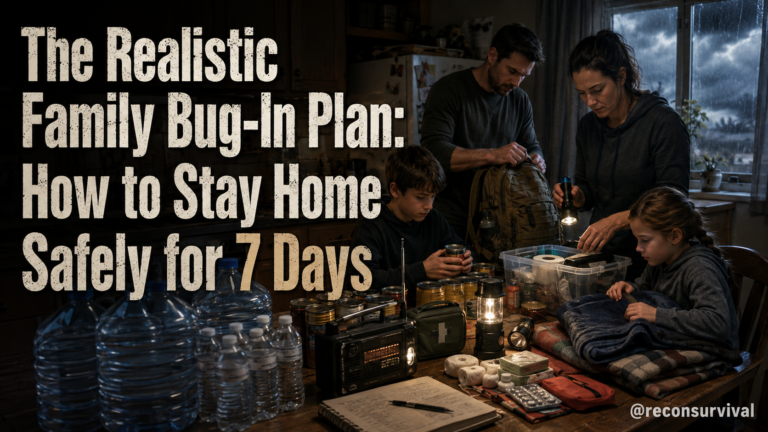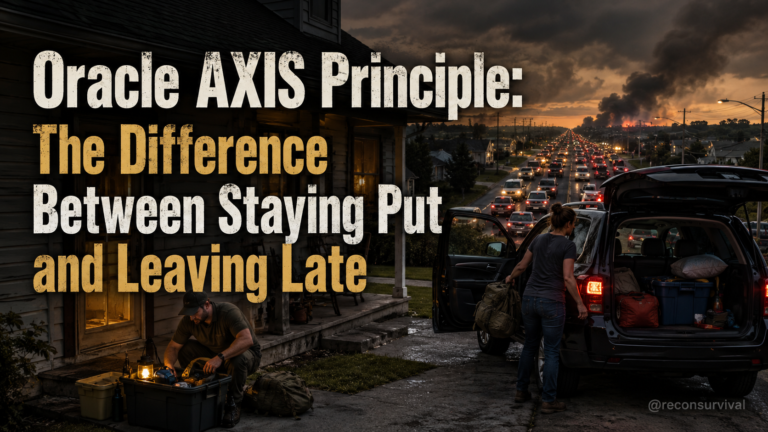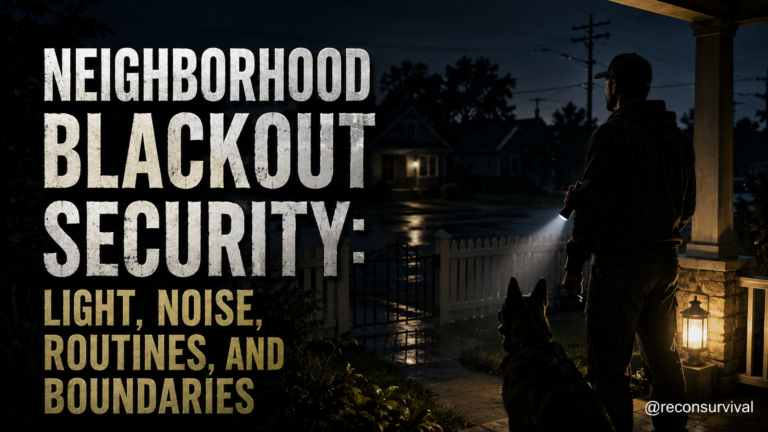
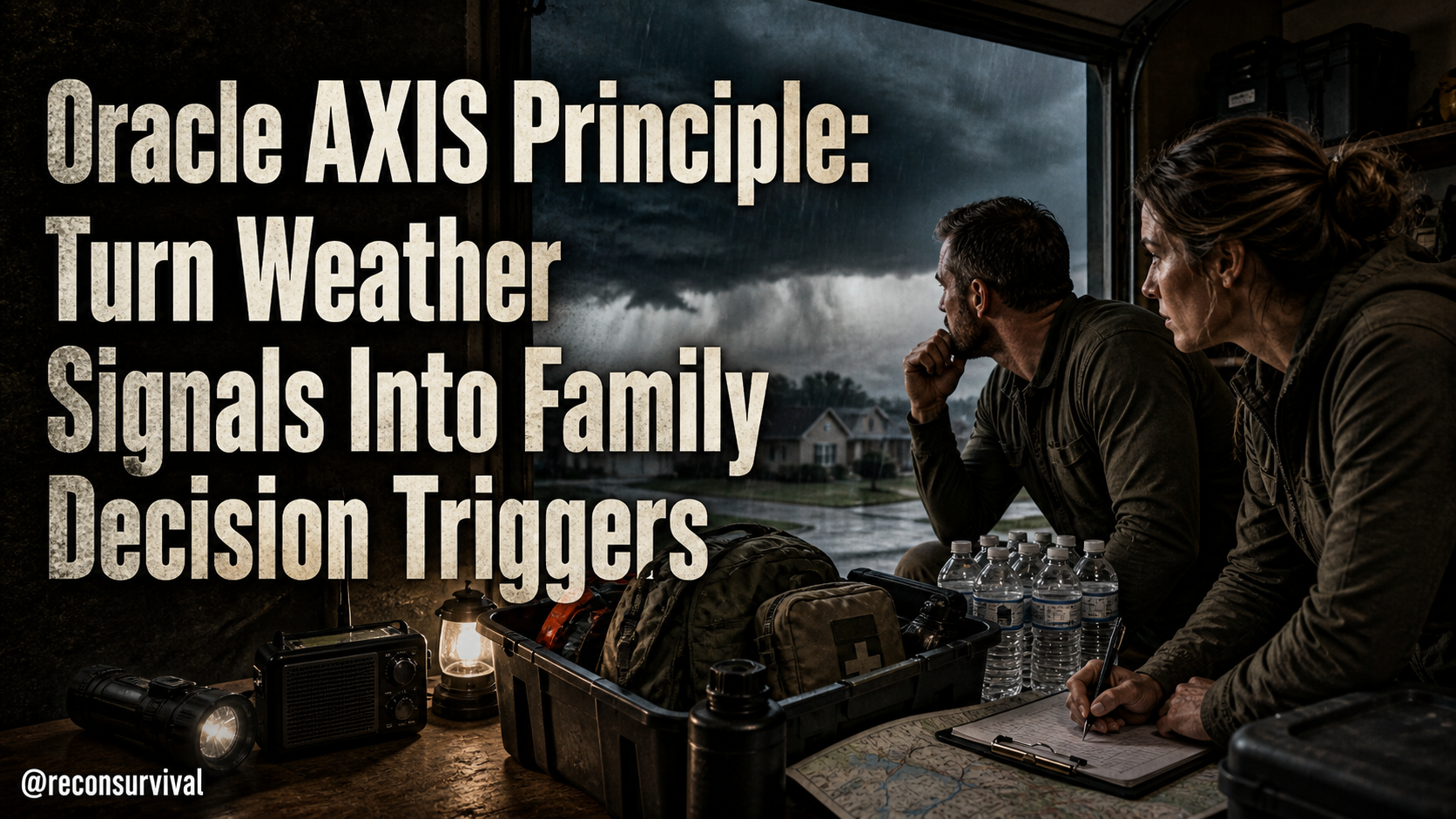
The weather radio in the kitchen crackles with a standard statement, but the pattern in the voice tone or the specific phrasing of the warning often signals a shift in the storm model before the official alert hits your news feed. Many households wait until the sirens sound or the news breaks to take action, only to find themselves scrambling when the grid fails or the road conditions worsen. This article solves that specific problem: it provides a practical method to convert those early, often subtle meteorological signals into pre-defined family decisions before stress makes the choice difficult or impossible. By the time you are reading this, the seasonal window for preparing for late-spring volatility has opened, and this guide offers a calm, realistic way to navigate the coming storm season.
As an Amazon Associate, I earn from qualifying purchases.
The Late-Spring Context: Why This Matters Now
Late April is the critical window for a readiness audit, not because disaster is imminent, but because the atmospheric systems that drive hurricane season, intense summer heat, and grid stress begin to organize in the Gulf and Atlantic in early May. The ocean warms, and the jet stream shifts, creating conditions where a small pocket of instability can grow rapidly. If you wait for the news to panic about an incoming system, you are already reacting to the tail end of the forecast rather than the beginning of the event.
For a realistic household, this matters because the most dangerous moments in a disaster cycle are often the first few hours of a storm, not the peak. This is when the decision is required to move from "watching the news" to "securing the environment." Waiting for the official warning creates a false sense of security. Your goal for this late-spring readiness audit is to build a decision layer that operates independently of the news cycle. You are looking to find weak points in your household's response plan before the grid stress of June and July makes execution difficult.
The Most Common Mistake: Decision Paralysis
The primary mistake people make when weather signals are present is waiting for the noise to die down. When a meteorologist discusses a "watch" versus a "warning," or when a neighbor asks about a storm tracker, attention is fragmented. The common error is assuming that the information flow will remain clear until the moment of action. In reality, as conditions worsen, information degrades. Internet outages occur, phone lines jam, and social media fills with unverified rumors.
People wait too long to turn these early storm signals into simple household decisions. They tell themselves they will wait for the 6 p.m. news or a clearer forecast. By the time they decide to act, the decision is no longer simple; it is a crisis reaction. Panic rises, and logical thinking drops. The goal here is to remove the decision from the crisis context entirely. You want the decision to be made when the weather is calm, based on the early signals, so that when the storm arrives, you are already in motion.
The Recon Survival Practical System
To turn early storm signals into simple household decisions without waiting for panic or rumors, we use a specific system that separates observation from action. This system relies on pre-defined triggers that map directly to pre-defined actions. It is not about predicting the exact path of a storm, which no one can do with certainty. It is about recognizing the state of the atmosphere and knowing exactly what your household must do in response to that state.
This approach treats weather data as an input for a logic gate. When the input changes, the output changes automatically. This removes the need for constant monitoring during a storm. You do not need to stare at a screen all night. Instead, you establish a protocol where specific signal strengths or forecast changes automatically trigger specific household adjustments. This ensures that every family member knows what to do without needing to consult a phone or check a group chat.
Step-by-Step Implementation for a Normal Household
Here is how a normal household breaks this system into daily use, starting with the setup phase before the storm arrives.
- Define Your Signal Thresholds. Identify three specific signal levels relevant to your area. Level 1 is a "watch" or a model suggesting a possible threat within the next 48 hours. Level 2 is an "alert" or a forecast indicating a high probability of impact within 24 hours. Level 3 is an official "warning" or observed severe weather. For each level, write down exactly what action the household must take.
- Map Actions to Signals. For Level 1, the action is often mental and preparatory: review the checklist, confirm the water supply is full, and ensure the generator fuel is accessible. For Level 2, the action becomes physical: move vehicles to high ground, secure loose outdoor items, and begin gathering the emergency kit. For Level 3, the action is execution: seal the home, disconnect utilities if necessary, and assume the shelter-in-place posture.
- Create a Family Decision Card. Print a single sheet of paper that lists these signals and actions. Place it where everyone can see it, but also keep a backup in a waterproof case. This card translates the complex weather data into a yes/no checklist. If the signal matches the Level 2 criteria, the answer is "yes, go to the Level 2 list." This prevents confusion during high-stress moments.
- Assign Roles and Verification. Designate specific family members to verify the signal status. One person might be responsible for the local weather radio, another for the smartphone alert. They do not debate the news; they report the signal level found on the card. If the Level 1 signal is confirmed, the family executes the Level 1 actions immediately.
- Test the Logic. Do this during a calm week, perhaps when a minor spring squall is forecast. Practice moving through the levels. See if the household can identify the correct action for the observed signal without hesitation. This builds the muscle memory needed when the real storm hits.
Understanding the Future-Facing Idea
This concept is future-facing because it anticipates the breakdown of traditional communication channels. In a scenario where the internet is down and cell service is spotty, relying on a single app to get news is a failure point. The system described above is resilient because it relies on pre-determined logic rather than real-time information retrieval. It prepares the household for a world where the grid is stressed and information is delayed.
The idea is to create a closed-loop response system. You input the signal, you output the action. You do not need to invent new plans as the storm approaches. You simply follow the path laid out by the early signal. This reduces cognitive load significantly. When you are cold, hungry, and scared, you do not want to think about whether the next hour is safe or not. You want to know that you are following the plan you made yesterday. This is the essence of turning weather signals into household decisions: automation through preparation.
Separating the practical from the experimental is crucial. Turning weather signals into simple decisions is practical because it uses standard household items and common sense logic. It is not about buying expensive predictive software or relying on unverified rumors. It is about using the existing weather warnings and applying a logical framework to them. The experimental or future-looking elements involve assuming that the grid might fail completely and that the neighbors might not be able to communicate with you. The system adapts to that reality by ensuring the household is self-sufficient for the duration of the signal.
A Recon Survival Takeaway
The takeaway from this lesson is that readiness is not a static state; it is a dynamic process that must track environmental signals. You cannot wait for a disaster to happen to be ready. You must be ready to react to the warning signs that precede the disaster. The Oracle AXIS Principle connects late-spring readiness audit to early warning, signal awareness, and calm household action. It serves as a mission for awareness, providing a platform for signal tracking and decision support that integrates into daily life without adding unnecessary complexity.
You are turning the early storm signals into simple household decisions without waiting for panic or rumors. This mindset shift alone improves the safety of the household by days. It ensures that when the storm arrives, you are not starting from zero. You are continuing a process that began days ago.
Recon Survival Principle
Recon Survival is not about waiting for stress to make the decision. It is about turning weak signals into household action while the fix is still small. A practical way to turn early storm signals into simple household decisions without waiting for panic or rumors, but most advice is either too generic, too gear-focused, or too late.
Do Today
Execute the following actions today to turn early storm signals into simple household decisions:
- Write down three specific weather signal phrases that you want to monitor, such as "Watch for possible tornadoes" or "Conditions favorable for severe thunderstorms."
- List the exact physical actions required for each signal, ensuring they are distinct and do not overlap. For example, "Signal A" could be "Check fuel," while "Signal B" is "Move car to garage."
- Print this list and place a copy in a location accessible to the driver and a copy in the kitchen near the weather radio.
- Assign one family member to check the weather radio at 7:00 a.m. and report the specific signal phrase to the rest of the household.
- Verify that your emergency kit is stored where it can be grabbed immediately after the decision is made, not in the basement behind boxes.
- Review your generator fuel plan and ensure the quantity is sufficient for the Level 2 signal scenario.
- Conduct a mental rehearsal of the decision flow, imagining the household receiving the early signal and executing the actions without hesitation.