A practical way to practice safe lighting, safe water handling, and household communication routines, but most advice is either too generic, too gear-focused, or too late.
As an Amazon Associate, I earn from qualifying purchases.
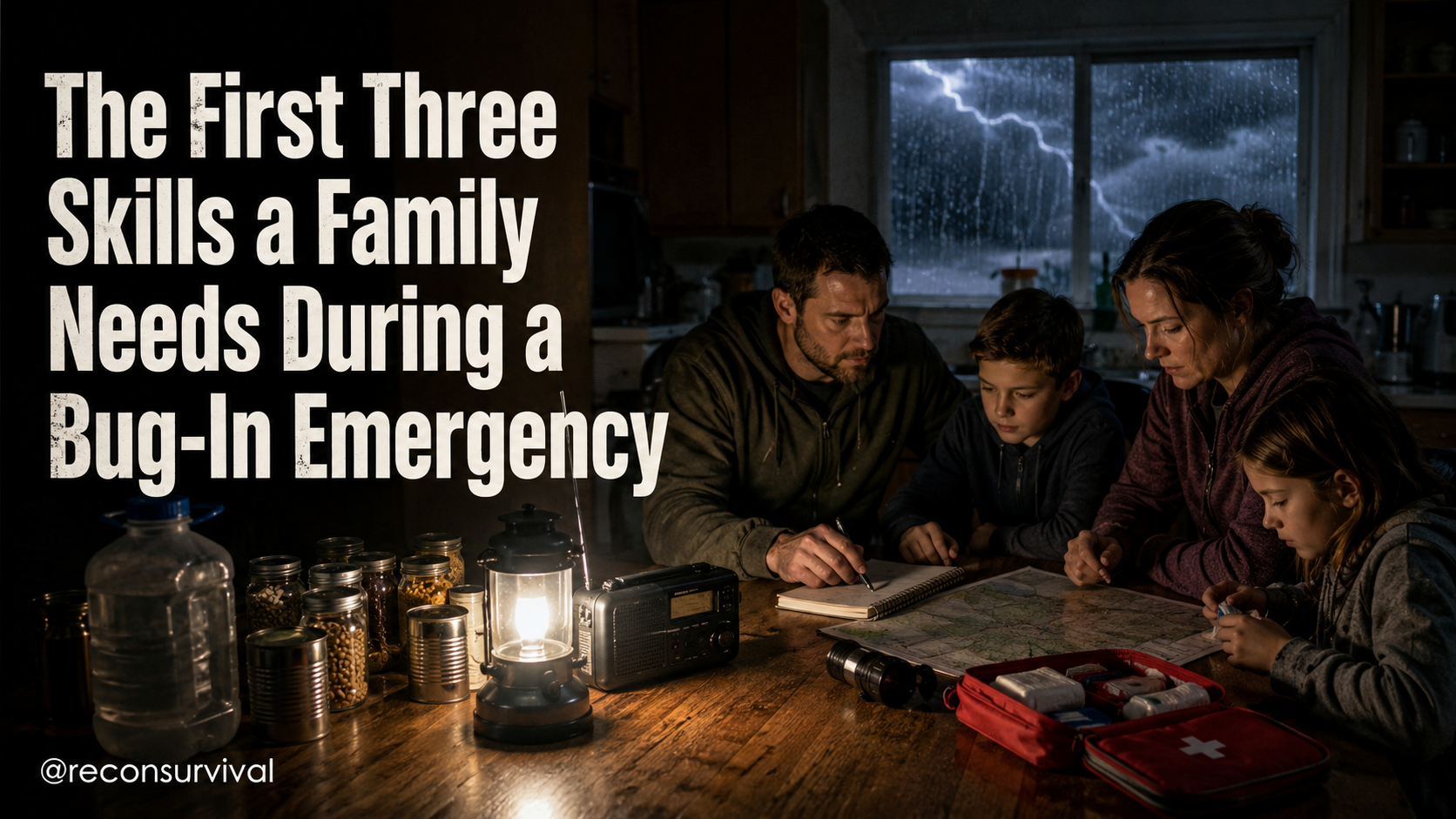
When power grids falter and water mains fail, the first twenty-four hours of a household disruption can determine the outcome. Most families do not face immediate violence or total societal collapse, but they do face a transition into a state of uncertainty where normal conveniences vanish. Today's focus is on the first three skills a family needs during a bug-in emergency: safe lighting, safe water handling, and household communication routines. These are the foundational elements that keep a home safe without relying on the infrastructure that will likely be stressed or downgraded.
Why These Three Skills Define the Bug-In Plan
The realistic family bug-in plan is not about surviving a zombie apocalypse or a nuclear strike; it is about maintaining order during a power outage, a storm, or a water main break. When you stay home during an event, you are surrounded by the hazards of your own environment. A dark house is dangerous, especially for children or pets. Lack of clean water compromises hygiene and health. Confusion regarding communication can lead to families missing critical updates or getting separated.
These three skills matter because they represent the minimum viable requirements for a functional household. They are the difference between a house that feels like a sanctuary and a house that feels like a trap. The goal is not to survive for years in a bunker; it is to navigate the first few hours of a disruption without panic, injury, or the spread of illness. By mastering safe lighting, water, and communication, you remove the variables that cause stress to escalate. You give the family a predictable path forward, which is the primary antidote to fear.
The Common Mistake: Waiting Until Disaster Strikes
The most common mistake people make with this topic is waiting until the event starts to practice these skills. Families believe they have covered the basics because they own a flashlight, have a gallon of water stored, or have a phone number list saved in the cloud. However, possession of equipment does not equal the ability to use it under pressure. When the power goes out at night, a flashlight becomes difficult to see, and batteries drain. When the water supply is compromised, boiling instructions are forgotten in the heat of the moment.
People assume that because they live in an area with reliable services, they are prepared. This is a false sense of security. The transition from a world with full infrastructure to one without it happens in seconds. If your family has never practiced turning on a lantern or finding clean water from a stored supply, the muscle memory will be weak. You cannot learn these skills by reading a manual once a year; you must practice them until they are second nature. The mistake is treating preparedness as a static inventory list rather than a dynamic set of practiced behaviors.
The Recon Survival Practical System for Three Core Skills
The Recon Survival practical system for practicing these skills focuses on repetition and safety. The objective is to perform these actions calmly and correctly, simulating the conditions of an actual event. We will address safe lighting, safe water handling, and household communication routines as distinct but interconnected disciplines.
First, safe lighting involves more than just flipping a switch on a lamp. It requires understanding the limitations of different light sources, how to position them to minimize shadows, and how to handle them without dropping them. Second, safe water handling means knowing where the stored water is located, how to filter or boil it if necessary, and how to distribute it without waste or contamination. Third, household communication routines involve establishing a chain of command for information flow and ensuring every family member knows what to do when the main lines are down.
By breaking these down into specific components, we create a system that is easy to teach and easy to practice. This system allows you to build competence in your own home without needing specialized gear or expensive training courses. The focus is on the human element of the emergency.
Breaking the System into Clear Steps
To implement this system, follow these specific steps for each of the three core skills.
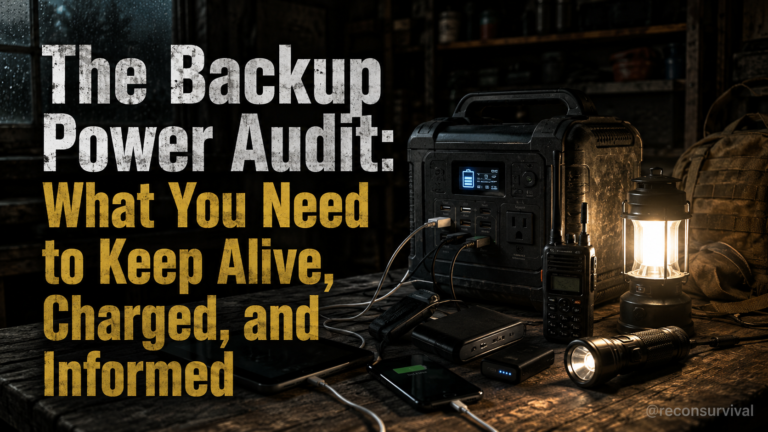
Step 1: Safe Lighting. Begin by identifying all light sources available in your home. Determine which ones work without electricity. Practice setting up a portable lantern or headlamp in a darkened room. Focus on how you hold the light source to ensure it does not fall and break. Practice moving from room to room to assess visibility. Learn to adjust the angle of the light to illuminate escape routes clearly without blinding yourself or others.
Step 2: Safe Water Handling. Locate your stored water. Practice lifting a heavy container safely to avoid strain or spilling. Review the protocol for boiling water if the source is questionable. Practice pouring water into clean containers to avoid contamination. Establish a distribution schedule for the family to ensure everyone gets enough to drink without running out. Learn how to store water in a way that prevents freezing in winter or excessive heat in summer.
Step 3: Household Communication Routines. Identify who the primary decision-maker is for communication when the phone lines are down. Practice memorizing the location of the family radio and the frequency to listen to. Establish a signal system, such as a hand signal or a specific knock pattern, for calling a family meeting. Ensure that every family member knows the address of the local emergency management office or a designated family meeting point.
Step 4: Equipment Maintenance. Check your gear monthly. Replace batteries before they die. Test your headlamp to ensure the switch works. Inspect your water containers for cracks or mold. Verify that your radio has a clear antenna and sufficient power.
A Safe Beginner Practice Drill
To build confidence, start with the safe beginner practice drill called the "Dark House Simulation." This drill takes place in your own home but with the lights turned off and the main breaker switched off if possible, or using a generator if you have one.
Begin by having all family members gather in a safe, well-lit room. Once the room is darkened, have each person locate their assigned light source within thirty seconds. Test the light source by turning it on and moving it to simulate searching for something on the floor. Next, have the family member responsible for water handling locate the stored water and demonstrate how to open the container safely without spilling. Finally, have the family member responsible for communication check the radio and announce that the drill is underway.
Keep the drill short, lasting no more than twenty minutes to avoid fatigue or frustration. If a child cannot find the light, assist them gently. If a parent struggles to lift the water, use the correct form yourself. The goal is to identify gaps in your knowledge, not to pass a test. After the drill, review what went wrong. Did someone drop the light? Was the water difficult to open? Adjust your plan based on these observations. Repeat the drill every two weeks to maintain the skills.
How to Measure Whether the Skill is Actually Improving
You can measure improvement by tracking your time and your confidence. For safe lighting, measure how quickly you can find and illuminate a specific area in a dark room. If you can do this in under ten seconds consistently, your skill is solid. For safe water handling, measure how little water is lost during the transfer process. If you spill less than half a cup, your technique is improving. For household communication, measure the clarity of your instructions. If every family member can repeat the action you assigned them, your communication routine is effective.
Another way to measure improvement is the level of stress you feel during the drill. In the beginning, you may feel anxious when the lights go out. As you practice, this anxiety should decrease, and you should feel a sense of calm. This emotional shift indicates that your brain has moved these actions from the conscious processing center to the unconscious, where they can be executed under stress. If you still feel panic or confusion, slow down and practice the specific step you struggled with.
Recon Survival Principle
Recon Survival Principle: Competence is Built Through Repetition
The core truth of emergency preparedness is that skill is built through repetition, not just planning. You cannot know how to handle an emergency until you have done it many times. The human brain learns new behaviors through muscle memory and pattern recognition. When you practice safe lighting, safe water handling, and household communication routines, you are programming your brain to respond automatically to the stress of the moment. This principle applies to all aspects of survival. Whether you are learning to tie a knot, start a fire, or navigate a map, the method is the same. Practice until the action becomes second nature. This is the only way to ensure that your family is safe when it matters most.
Do Today
Here is a clear checklist of actions you can take today to improve your readiness. These steps are practical and require minimal time or cost.
- Perform a Lighting Check: Identify all light sources in your home that do not require electricity. Turn off all electric lights and practice finding your way to the bathroom and kitchen within sixty seconds.
- Test Your Headlamp: If you have a headlamp, turn off all the lights in your living room and practice putting it on and taking it off. Ensure you know which switch turns the light on and off.
- Locate Stored Water: Go to your storage area and locate your stored water. Open one container to ensure the seal is not broken and the water is still good.
- Practice Lifting: Lift one gallon of water from the floor to a high shelf and back down. Ensure you use your legs, not your back, to avoid injury.
- Check the Radio: Plug in your family radio or turn on a battery-operated one. Set it to the local emergency frequency. Listen for the local weather forecast or news update to get a sense of the range of signals available.
- Review the Communication List: Gather your family and review the list of contact numbers for local emergency management, the local police non-emergency line, and a designated family meeting point.
- Schedule the Next Drill: Set a date for your next lighting and water drill. Mark it on your calendar. Commit to repeating the drill every two weeks until you can do it without hesitation.
By taking these steps, you are building the foundation for a safe and functional household. You are moving from a state of uncertainty to a state of readiness. This is the first step toward a more secure future for your family.