A practical way to define household triggers for staying home, relocating early, or waiting for official instructions, but most advice is either too generic, too gear-focused, or too late.
Many households assume they know when to pack a bag until an emergency actually happens. That assumption often leads to panic at the wrong moment or unnecessary evacuation during manageable disruptions. The core issue is not fear of disaster but the inability to define clear, objective criteria for staying put, relocating early, or waiting for official instructions.
Why Household Triggers Matter for a Realistic Plan
A realistic family bug-in plan is built on the difference between reacting to chaos and acting on data. Without defined triggers, decisions are made under stress, which leads to poor choices. For example, a sudden rise in temperatures or an announcement of a severe weather event requires specific actions. If you lack a pre-agreed standard for what constitutes "actionable," you might wait for the last moment, or worse, evacuate when it is not necessary.
The Common Mistake in Family Relocation Decisions
The most common mistake people make is waiting for official evacuation orders to determine if they need to leave. This is a dangerous fallacy. When authorities issue an order, it is often because the situation has already reached a critical point. By that time, resources may be stretched, roads may be blocked, or conditions may be worsening rapidly.
Another common error is focusing too much on gear and not enough on decision logic. Many households spend months acquiring supplies but never define the conditions that trigger their use. They have the equipment but lack the plan for when to activate it. This creates a gap between preparation and reality. When a crisis hits, having a full kit is good, but knowing exactly when to deploy it is essential. The mistake is treating the plan as a static document rather than a dynamic system of thresholds and signals.
How to Define Your Household Decision Triggers
To fix this, you need a practical system for defining triggers. This system relies on translating broad warning signals into specific household-level actions. The framework involves three distinct stages: staying put, relocating early, and waiting for official instructions. Each stage has its own criteria.
The first step is to identify the specific indicators that signal a change in the environment. These indicators should be observable and measurable. For instance, instead of saying "a storm is coming," you define specific wind speeds or barometric pressure changes. This removes ambiguity. You also need to consider personal thresholds, such as medical needs or the presence of young children or elderly family members.
Next, you must establish a communication protocol. Who makes the call? What information sources do you trust? It is not enough to say you will check the news. You must designate specific local sources, such as local emergency management alerts, that provide actionable data. You also need to agree on what "waiting for official instructions" means. Does it mean staying at home until an order is issued, or checking in with neighbors? The definition must be precise to avoid confusion.
Finally, you need to link these triggers to specific actions. If a specific indicator is met, the action is to pack the go-bag. If another indicator is met, the action is to prepare to drive to the safe haven. If no indicator is met, the action is to continue normal routines. This link between signal and action creates a predictable and reliable system.
Step-by-Step Guide to Building Your Trigger List
Building your trigger list involves breaking the system into clear, manageable steps. Start by mapping the potential scenarios relevant to your location. These include severe weather events, infrastructure failures like power or water outages, and regional emergencies. For each scenario, list the observable signs that indicate the situation is moving toward a critical point.
Create a simple matrix for your household. On one axis, list the scenarios. On the other, list the corresponding actions. Fill in the conditions that trigger each action. For example, a drop in barometric pressure might trigger checking the weather updates. A specific wind speed might trigger moving outdoor furniture to the shelter. An official warning might trigger starting the evacuation route.
Review this matrix with your household. Ensure everyone understands the differences between the triggers. Use a notebook or a digital document to record these triggers. Make it accessible to everyone in the family. Discuss the plan regularly to ensure it remains relevant. Update the triggers if you live in a new area or if your risk profile changes.
This step-by-step process ensures that the plan is grounded in reality. It allows you to prepare for a range of situations without getting lost in speculation. The result is a plan that can be executed quickly and accurately under pressure.
Translating Big-Picture Signals into Household Decisions
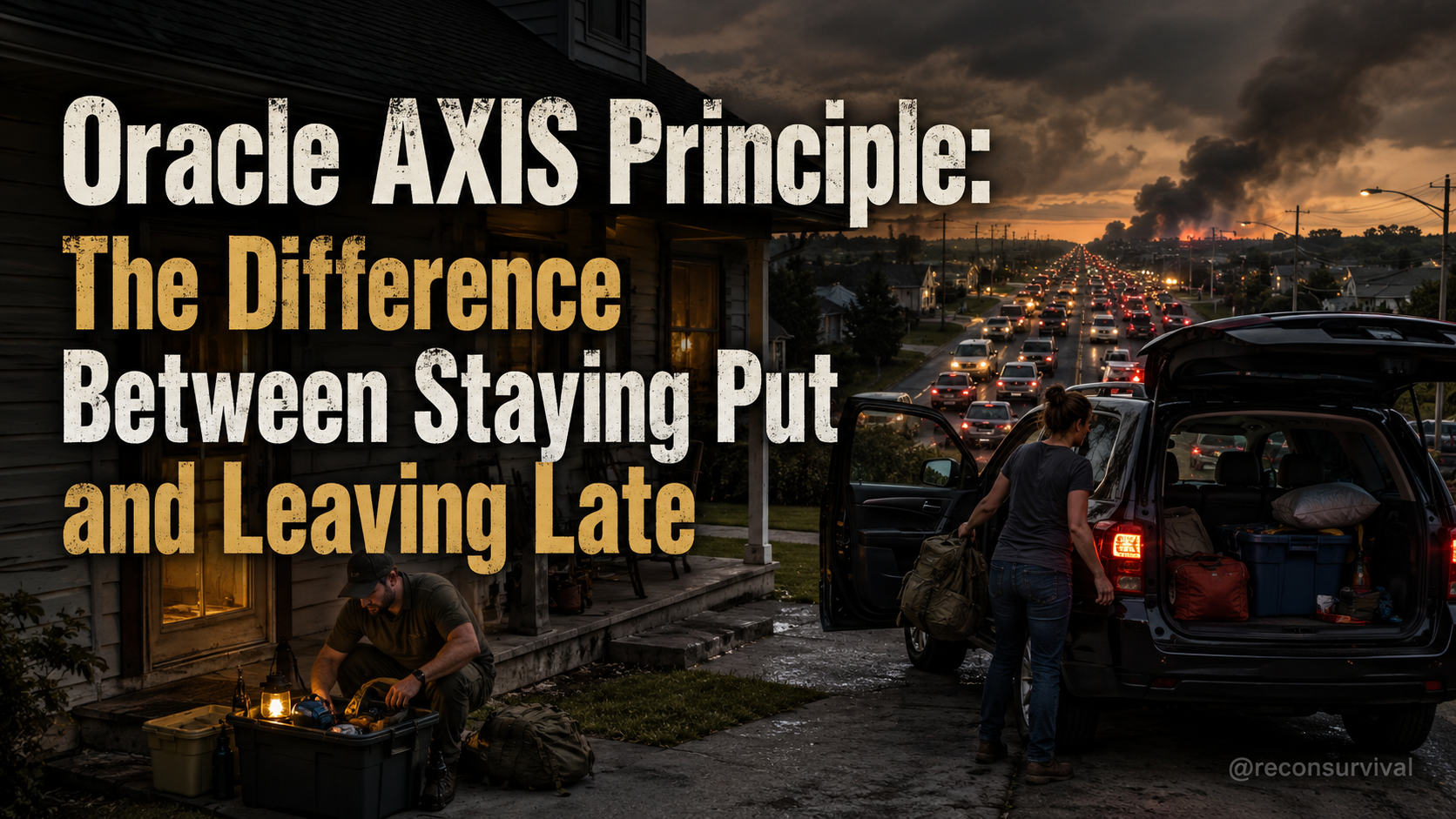
Translating big-picture signals into household-level decisions is the essence of the Oracle AXIS Principle: The Difference Between Staying Put and Leaving Late. This principle connects early warning signals to calm household action. It does not rely on predicting the future but on monitoring specific data points that signal a shift in conditions.
When you see a regional alert or hear about a developing situation, do not immediately assume disaster. Instead, compare the situation to your defined triggers. If the data matches your criteria, take action. If the data does not match, continue monitoring. This approach prevents premature reaction while ensuring you are ready when necessary.
This system also helps you manage the emotional weight of crisis situations. By focusing on data and defined thresholds, you remove the fear of the unknown. You can assess the situation with a clear mind. This clarity is crucial for protecting your family. It ensures that your decisions are based on facts rather than anxiety.
Recon Survival Principle
The Oracle AXIS Principle operates on the distinction between staying put and leaving late. It emphasizes that the difference between success and failure in a crisis often lies in the timing of the decision. Waiting too long can lead to being caught without options, while leaving too early can deplete resources.
The principle advocates for a calm, value-first approach to decision support. It encourages households to define their own triggers based on their specific needs and local context. This is not about fearmongering but about maintaining situational awareness. By understanding the signals and the thresholds, you gain the ability to act with confidence.
This mission focuses on awareness, signal interpretation, and the support needed for calm decision-making. It provides a framework for households to evaluate their readiness without relying on fantasy scenarios. The goal is to build resilience through clarity and preparation.
Do Today
Take a small readiness action today by defining your household triggers. Write down the specific conditions that would prompt you to stay home, pack, or move. Ensure everyone in the household understands these conditions.
- Review your current go-bag and safe haven plans to ensure they are complete.
- List three specific local signals that indicate a worsening situation in your area.
- Define the threshold for when you would start moving toward your safe haven.
- Identify one reliable local information source for weather and emergency updates.
- Discuss your triggers with a trusted neighbor to ensure you have external verification.
- Create a simple checklist for your household that includes these defined triggers.
- Store this checklist in a location where every family member can access it quickly.
Keep the standard practical: if the household cannot find it, use it, explain it, and repeat it under mild stress, the system is not finished. Write the owner and review date beside the item so the fix survives busy schedules, school nights, travel, and the first weather alert.
Close with a hands-on check. Touch the item, read the label, test the battery, confirm the contact, or walk the route. A plan that only exists in memory tends to fail at the first interruption.