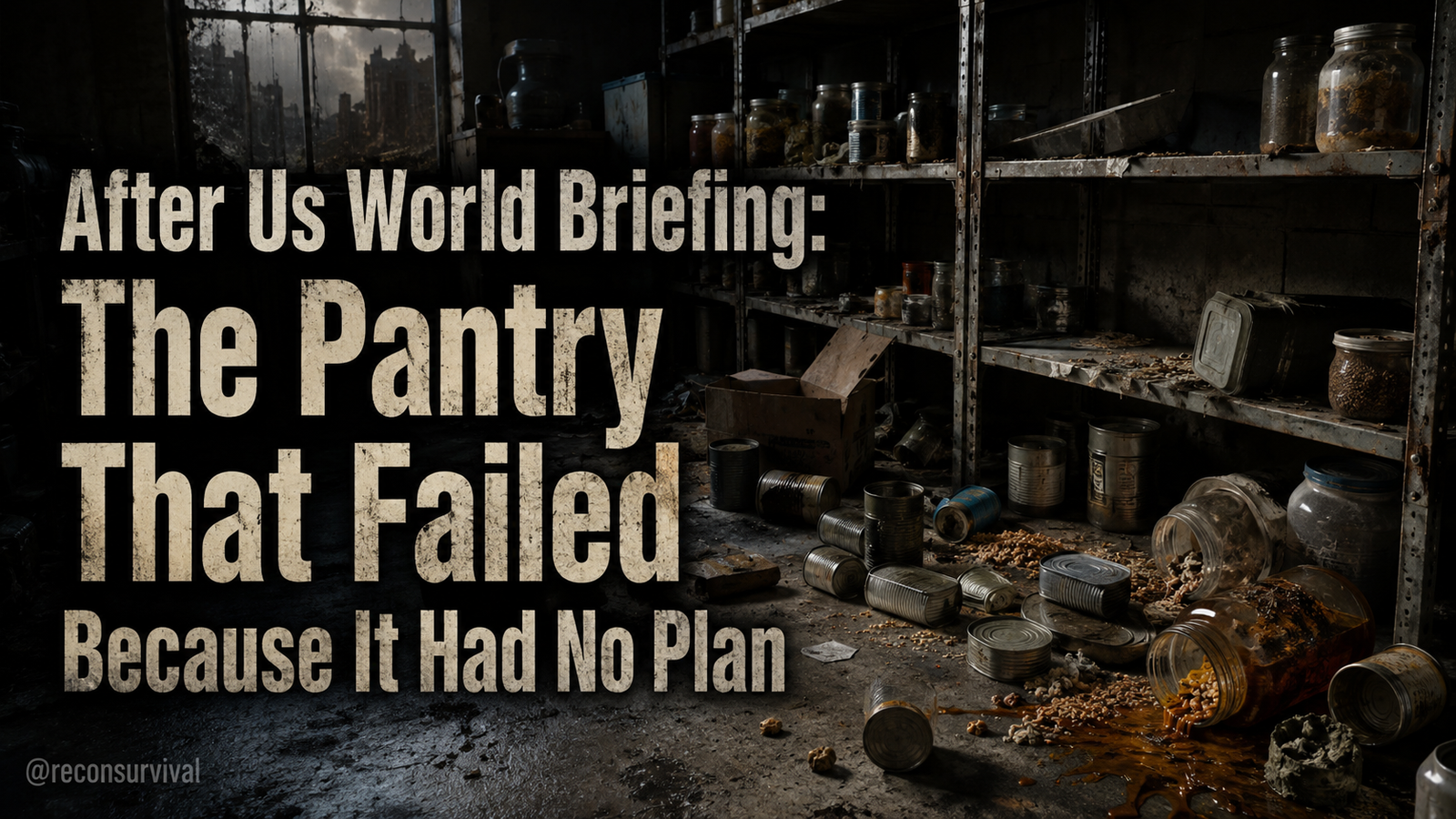
When you look at a pantry failure report in the After Us timeline, the first item to fail isn't usually the food itself; it's the schedule. On June 27, early summer is arriving with heat, potential travel disruptions, and the first storms of the season. These conditions collide quickly. For most households, the real-world problem this solves is not just having extra cans, but understanding exactly how to use an in-universe failure report to teach rotation, calories, water needs, and meal planning before stress makes those decisions harder.
The Pantry That Failed Because It Had No Plan
In the After Us world, a family received a digital transmission on the morning of June 24: a report that their local supply chain had fractured three days prior. They had built a stockpile, yet the report detailed how they had consumed zero calories from dry goods by Day 14. The reason was simple: their rotation method relied on a calendar that stopped working when the grid went down, and their meal plan was built around fresh protein that spoiled before the next delivery truck could arrive.
This scenario mirrors a very common real-world failure point. Most people think a pantry failure is about lack of volume. The After Us report reveals it is often about a lack of a plan for how that volume is accessed. When heat waves arrive, metabolic rates increase, and water demand rises. If your rotation system does not account for this increase, you are looking at a shelf of food that is technically edible but nutritionally insufficient or physically unsafe to eat.
Why Summer Food Security Demands a Different Rotation
Summer heat accelerates the degradation of non-perishables. High temperatures above 75 degrees Fahrenheit (24°C) can cause moisture migration in dry goods like rice, pasta, and oats, leading to clumping or mold growth that renders them unsafe. In the After Us narrative, the family ignored the thermal warning on their storage bins because they were focused on quantity rather than quality maintenance.
This matters for food security without fearmongering because supply chains are vulnerable to weather. Travel disruptions due to storms or travel restrictions can isolate a household for weeks. When you have a summer stockpile, you must assume that your primary delivery vehicle will not be moving on schedule. You need a system that teaches you to use an in-universe pantry failure report to identify which items are high-risk in heat.
The mistake most people make is treating their emergency supply as a static warehouse rather than a dynamic kitchen. They hoard food but do not integrate it into their cooking. In the After Us account, the family had a massive volume of canned beans but no way to reheat them using only a camping stove, forcing them to rely on spoiled refrigerated goods. They failed to teach their household to rotate the dry calories that actually survive the summer.
The Recon Survival Principle
The core lesson from the After Us failure report is that preparedness is a function of flow, not just storage. If you do not move your stock through your kitchen on a regular basis, it becomes dead weight that cannot be accessed when you need it most.
The Failure-Triage System for Summer Pantries
To prevent the scenario seen in the After Us timeline, you need a practical system that uses an in-universe pantry failure report to teach rotation, calories, water, and meal planning. This system is broken down into a triage ladder: first-hour, same-day, and next-day checks. This approach ensures that when a disruption occurs, you know exactly what you can eat and how to stretch your water supply.
Step One: The First-Hour Check (Immediate Access)
The first thing that fails is often access. When the disruption hits, you cannot search for food if you are locked out or if the power is off and you are unsure of safety protocols. In the After Us report, the family had their most critical water filters on the second floor, but their water bottles were scattered in the basement where they froze and cracked.
Use this step to audit your immediate water access. Ensure you have at least one gallon of water per person for the first 24 hours, stored in a location that is easily accessible without light or power. In the After Us universe, the family's first-hour check revealed that their "safe" water supply was frozen in the garage, making it unusable in the first six hours of a storm. Rotate your water supply so that the oldest water is always in a convenient location.
Step Two: The Same-Day Check (Calorie Density)
Next, you must address calories. The report highlighted that the family ate fresh fruit and vegetables that had gone soft, ignoring the dry goods that could have sustained them for days. High-calorie density is your priority when food becomes scarce.
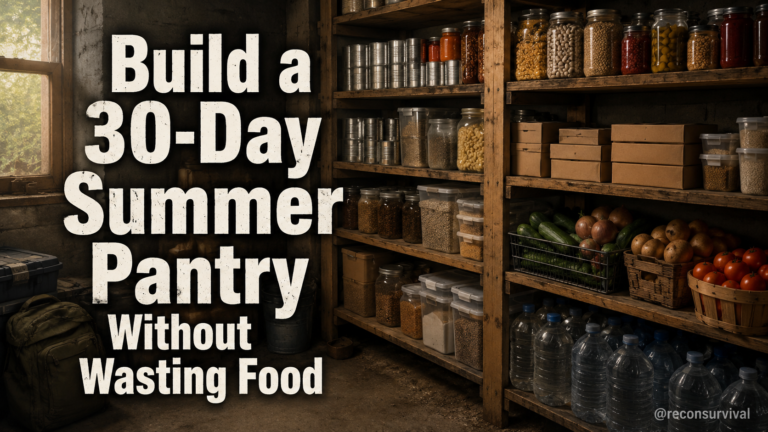
Identify your dry carbohydrate sources: rice, pasta, oats, and canned legumes. Check their expiration dates and their moisture content. If your humidity levels are high, use desiccant packs to prevent moisture migration. In the After Us timeline, the family failed to rotate these items, leading to a situation where they had to throw away edible rice because it was covered in mold. Use an in-universe pantry failure report to learn which items spoil fastest in your specific climate. For example, if you live in a hot, humid region, your dry goods are at risk faster than those stored in a cool garage.
Step Three: The Next-Day Check (Water and Heat Management)
Finally, assess your water management. Heat increases water loss through perspiration and respiration. If you are not careful, a standard water supply can be depleted faster than expected. In the After Us world, the family had a plan for drinking water but no plan for cooking water. They burned through their supply making tea and boiling water without a backup source for hygiene or cooking.
Ensure you have a water storage plan that includes boiling or filtration protocols. Teach your household to prioritize drinking water over cooking water if necessary. Use the failure report to see how they managed to extend their water supply by using water-efficient cooking methods. This step completes the cycle of using an in-universe pantry failure report to teach rotation, calories, water, and meal planning.
Practical Steps for Your Household
To implement this, start with a simple audit. Walk through your pantry and identify the oldest items. If you see items that are near expiration, move them to the front. If you see items that are safe but rarely used, create a meal plan that uses them as the base for dishes.
- Audit Expiration Dates: Write down the date every food item will expire.
- Check Moisture Content: Look for clumping in dry goods. If found, replace or seal with a moisture barrier.
- Verify Water Storage: Ensure water is accessible without power.
- Review Cooking Methods: Confirm you can cook your dry calories with limited fuel.
- Rotate Weekly: Move the oldest items to the front of the shelf every week.
- Test Gear: Check that your filters and stoves are functional.
- Plan Meals: Create a menu that uses your current dry stock.
The After Us Lesson Applied
In the After Us timeline, the family eventually realized that their failure was not a lack of food, but a lack of organization. They used the recovered document to reconstruct their supply chain. They found that by using a simple rotation system, they could have prevented the spoilage of dry goods. They also learned that by integrating their dry calories into their daily meals, they maintained their morale and energy levels.
This fiction serves as a teaching device to show that a plan is better than a panic reaction. The family in the story did not wait for disaster to strike before fixing their system. They used the failure report as a diagnostic tool to improve their readiness. By following their new protocol, they survived the summer without resorting to unsafe food practices.
Real-World Lessons from the Fiction
The lesson from the After Us world is clear: a pantry failure report is most useful when used proactively. Do not wait for a storm to find out if your water filters work. Do not wait for heat to discover that your dry goods are clumped. Use the failure report to teach your household how to handle stress.
The family in the story also demonstrated the importance of water management. They adjusted their cooking habits to reduce water consumption, ensuring they had enough for hygiene and drinking. This lesson applies directly to real-world scenarios where water scarcity is a risk.
Decision Points for Your Preparation
Before you conclude, review your decision triggers. When do you rotate your stock? When do you restock? When do you evacuate? Use the failure report to help answer these questions. If your water supply drops below 70% capacity, it is time to restock. If your dry goods show signs of moisture damage, it is time to replace them. If your cooking fuel is low, it is time to refill it.
Make these decisions based on data, not fear. In the After Us world, the family used the failure report to make calculated decisions that kept them safe. You can do the same. Use the failure report to teach your household how to handle a disruption. This approach ensures that you are ready for whatever comes.
Recon Survival Principle
Recon Survival is not about waiting for stress to make the decision. It is about turning weak signals into household action while the fix is still small. Use an in-universe pantry failure report to teach rotation, calories, water, and meal planning.
Do Today
Start by auditing your pantry today. Write down the expiration dates of your dry goods. Move the oldest items to the front of the shelf. Check your water storage and ensure it is accessible. Create a meal plan that uses your current stock. Review your cooking methods to ensure they are water-efficient. Use an in-universe pantry failure report to learn which items are high-risk in heat.
Take one step at a time. Do not try to fix everything in one day. Focus on the first-hour, same-day, and next-day checks. By doing so, you will build a system that uses an in-universe pantry failure report to teach rotation, calories, water, and meal planning. This system will help you survive any disruption.
- Walk the main system named in the brief and write down the first weak point.
- Assign one person to own that fix before the day ends.
- Check the related supplies, tools, batteries, labels, or documents by hand.
- Put the next review date on a calendar instead of relying on memory.
- Move one critical item to the place where it will actually be used.
- Tell the household what changed and where the updated item now lives.
- Repeat the check after the next outage, storm warning, trip, or schedule change.