A practical way to operate backup power in a safer, quieter, more discreet, and neighbor-aware way, but most advice is either too generic, too gear-focused, or too late.
Mid-May brings a specific reality to every home with a backup power plan: the grid is about to get tested. As temperatures climb and air conditioning demand rises, even short outages become more common. For many families, this is not a fantasy scenario but an operational expectation. The problem this guide solves is immediate and practical: how to start and run your generator without creating noise, heat, or security risks that draw unwanted attention when your neighborhood power fails. This is about operating your backup systems in a safer, quieter, more discreet, and neighbor-aware way.
The Cost of Noise and Heat in an Outage
When the main grid fails, the neighborhood changes character. Without the constant hum of transformers and street traffic, a running generator becomes a focal point. The sound of the engine is not just noise; it can be a beacon. In a standard outage, that sound is easily heard from two blocks away. If your engine is running at full load or idling near the peak, you are broadcasting that your house has power while neighbors struggle in the dark. This dynamic shifts your household from a secure unit to a potential target.
The Common Mistake
The most common mistake people make with this topic is treating the generator as a utility they simply turn on without context. The assumption is that because the device has fuel and runs, it is secure. However, the environment around the device is where the risks actually live. Many readers wait until the power goes out for the first time to test the system or set up the perimeter. By then, it is too late to adjust the noise discipline or fueling habits. Another mistake is hiding the generator in plain sight, such as under the porch steps or behind a large bush. If the area is dimly lit or lacks visibility, the equipment becomes a dark spot that invites trespassing, which can turn into a dangerous situation if a thief realizes a running engine is present. You cannot secure what you cannot see.
Recon Survival System for Backup Power Operation
The Recon Survival system for backup power focuses on the integration of the generator into the home ecosystem rather than treating it as an isolated machine. This approach prioritizes habits, visibility, communication, and prevention before gear. The system is built on the principle that a secure power setup looks normal, sounds controlled, and operates within strict safety parameters. It ensures that your neighbor-friendly approach does not compromise your safety while keeping your household discreet.
The system breaks down into three operational phases: positioning, operation protocol, and post-operation security. Each phase relies on simple, verifiable checks. You do not need expensive new equipment to implement this. The focus is on how you use the equipment you already own and how you manage the environment around it. By standardizing the way you run the generator, you remove the guesswork and reduce the risk profile of your household.
Step 1: Visibility and Positioning
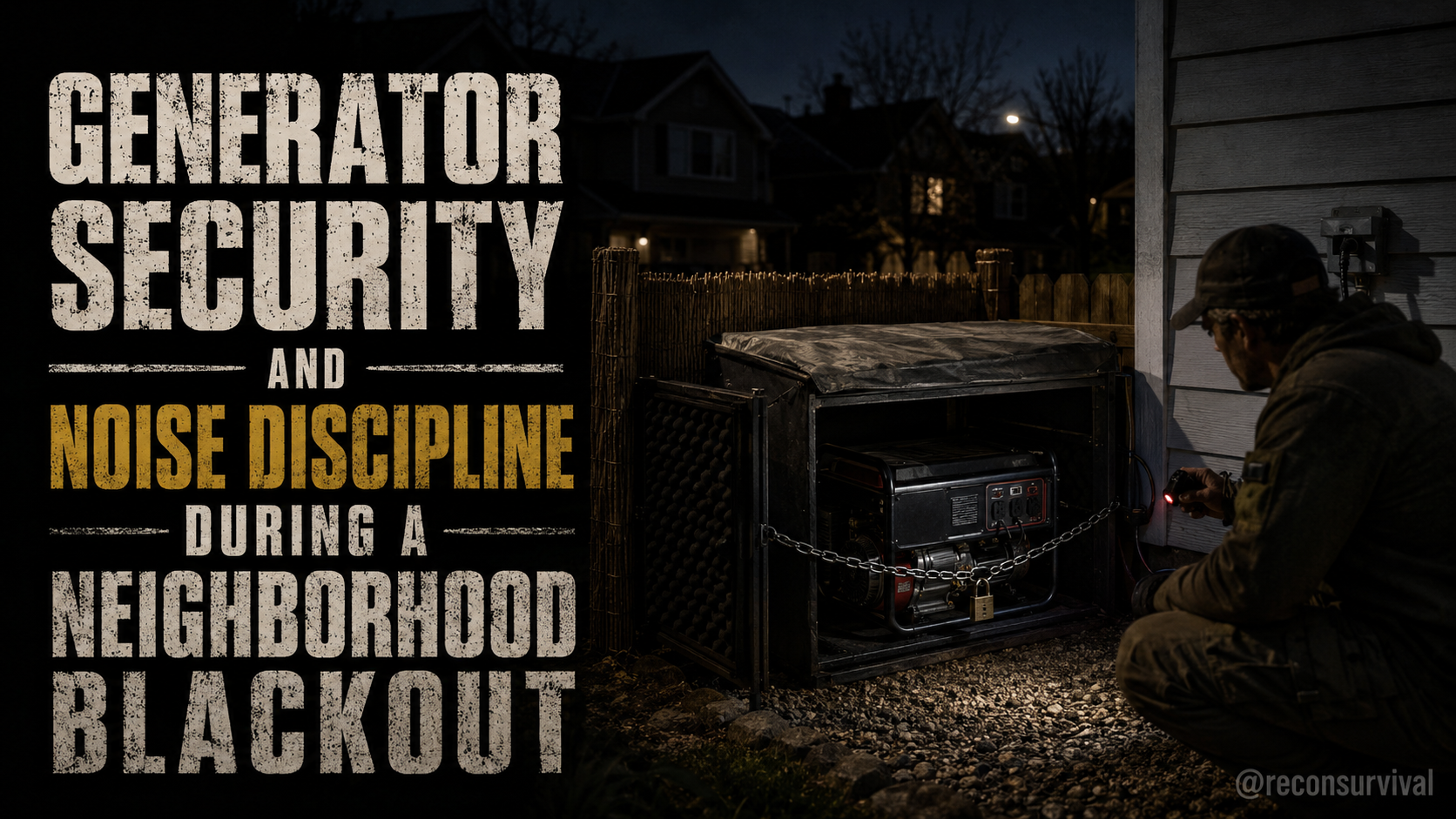
Select a location that is shielded by natural landscaping or structural elements, such as a solid fence or the side of the house, to reduce noise and exhaust noise. However, avoid dense shrubbery that traps heat or hides the unit. The ideal spot is near the main power transfer switch but away from windows and air intakes. Ensure there is at least three feet of clearance on all sides for airflow and safety. Use a fixed mount or a weighted stand to prevent the unit from becoming a tripping hazard or being knocked over. If you have multiple units, stagger their operation so that only one runs at a time, reducing the cumulative acoustic signature. This step is about making your backup power a known quantity rather than a mysterious sound.
Step 2: Noise Discipline and Timing
Noise discipline is the second pillar of the system. It involves controlling when and how long the engine runs. Start the engine only when necessary. If you are switching to battery or inverter power, do not run the generator if the demand can be met by stored energy. This prevents unnecessary fuel consumption and heat generation.
Operate the generator at the lowest stable speed required to produce your output. Many generators have a low-speed mode that produces the same power with significantly less noise and heat. Schedule maintenance and fuel checks during daylight hours. Avoid running the unit late in the evening when the ambient noise of the neighborhood drops. If the area is quiet, the hum of your engine will carry further. If you must run the generator during low-light conditions, ensure the area is adequately lit with motion-activated lights to deter approach. Do not run the generator if the exhaust heat is causing discomfort inside the home. If you notice the heat building up, increase airflow to the engine or move it to a more ventilated location.
Step 3: Communication and Protocol
The third step is establishing a clear communication protocol within the household. Every member of the family must understand the rules of operation. This includes knowing the location of the transfer switch, where the fuel is stored, and the procedure for starting the unit. If a storm is approaching, decide in advance when the generator will start. Do not wait for the power to fail before making a plan.
Use a simple code or signal to indicate that the backup system is active. If you live with roommates or housemates, ensure they are aware that running a generator is a scheduled event, not an anomaly. If neighbors are close, a simple check-in via text or doorbell can confirm that the noise is expected. This prevents confusion if the power flickers or if a neighbor sees a light turn on. If you suspect a neighbor is having difficulty, you can run your generator for a short period to assist, but do not run it continuously if you know your neighbors cannot match that level of heat or noise.
Defensive, Lawful Household Checklist
Maintaining a secure environment involves more than just the generator. It requires a defensive, lawful, and non-escalatory household checklist. This list focuses on prevention, awareness, and de-escalation. It is designed to keep the family safe and the property secure.
- Verify Locks: Ensure all doors and windows are locked. Check that deadbolts engage fully and latches are working. If a door feels loose, tighten the hinges.
- Lighting Plan: Set up a lighting schedule for the outage. Motion-activated lights should cover all entry points. Keep porch lights on if possible, or use a timer.
- Fuel Security: Store fuel in approved containers, away from living spaces and ventilation intakes. Keep the amount on hand for no more than one week.
- Carbon Monoxide Alarms: Test all carbon monoxide alarms before running the generator. Place them outside sleeping areas and near the unit if permitted by local codes.
- Ventilation: Ensure the generator area has at least 6 inches of clearance from the home structure to prevent exhaust fumes from entering.
- Communication: Have a plan for contacting neighbors or emergency services if the generator fails to start or runs for too long.
- Noise Monitoring: Use a decibel meter or smartphone app to check if the unit is louder than expected. Adjust the position if necessary.
Recon Survival Principle: Security is a function of visibility and control.
In a high-stress environment like a neighborhood blackout, the most secure position is the one where you have complete control over your assets and your environment. Hiding the generator does not make it secure; it makes it a target. A secure generator is one that is visible, well-maintained, and operated within a known protocol. By prioritizing visibility, you prevent the generator from becoming a black box that an intruder can exploit. By controlling the noise and heat, you maintain the initiative. You are not reacting to the situation; you are managing it. This principle applies to all aspects of household security. A visible perimeter, clear lighting, and a known routine are the foundation of safety. When you adhere to these standards, you reduce the chance of accidental discovery and increase your resilience.
Do Today
Take one small readiness action today to operate your backup power in a safer, quieter, more discreet, and neighbor-aware way. Follow these concrete steps to update your system immediately.
- Inspect the Location: Walk to your generator position. Check for obstructions, debris, or vegetation within three feet. Remove any items that could block airflow or create a trip hazard.
- Test the Transfer Switch: With the generator off and the main power on, flip the transfer switch to ensure it resets correctly. This verifies your electrical system is ready for a clean transition.
- Check Fuel Levels: Verify that the fuel tank is at least half full. If you are near the bottom, fill up now, but ensure the fuel is stored outside and away from the house.
- Review Lighting: Turn on all outdoor lights connected to the outage plan. Ensure motion sensors are functional. If you have a battery backup for lights, test them now.
- Set a Schedule: Decide on a schedule for generator operation for the next outage. Write it down. For example, "Start generator only if power is down for more than 15 minutes."
- Communicate: Send a quick message to your household members reminding them of the protocol. Remind them of the location of the transfer switch and the safety rules.
- Check Carbon Monoxide Alarms: Test all detectors. Replace batteries if necessary. Ensure they are not expired.
- Observe the Neighborhood: Stand near the generator location and listen to the ambient noise. If your engine would be louder than normal conversation at that distance, consider adjusting the position or reducing the load.
By completing these tasks, you build a foundation of readiness that goes beyond the generator itself. You are creating a household that is resilient, secure, and aware. This is not about paranoia; it is about common sense applied to a high-stress environment. When the power goes out, you will not be scrambling to set up your system. You will be operating within a proven framework that keeps you safe and respectful of your neighbors. This is how you turn a backup plan into a security advantage.