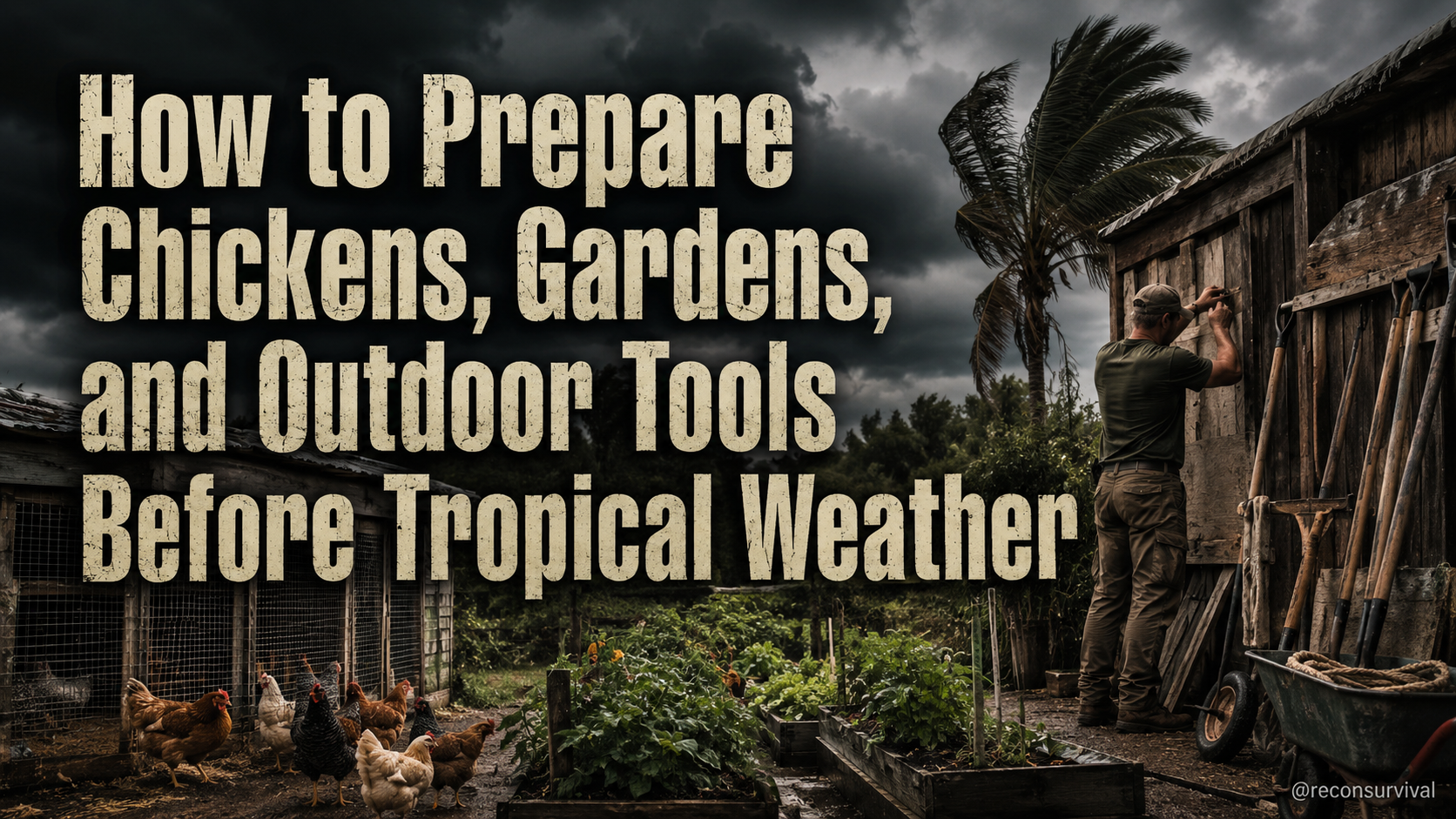
A practical way to secure small livestock, garden structures, loose tools, feed, water, and shade before storms, but most advice is either too generic, too gear-focused, or too late.
As an Amazon Associate, I earn from qualifying purchases.
When the weather forecast shifts from sunshine to the possibility of tropical activity, the difference between safety and panic often comes down to what is secured in the backyard before the first wind picks up. Many households find themselves scrambling to move furniture and cover garden beds when the news warns of a storm approaching. This reaction creates unnecessary stress and puts fragile items, livestock, and water supplies at risk. The real-world problem this guide solves is the transition from reactive panic to proactive preparation. It provides a method to secure small livestock, garden structures, loose tools, feed, water, and shade before the conditions become dangerous or the decision fatigue sets in.
Why This Matters for Your Hurricane Season Ready Kit
Preparing for the potential approach of tropical weather is a fundamental component of any serious hurricane season ready kit, but it is distinct from emergency food storage or first aid kits. This category of readiness focuses on the physical assets that make up a small homestead and the daily operations that keep a household functional. When a storm system is active, power grids often fail, and transportation networks can be severed for days. If your garden trellises, chicken coops, or tool sheds are unsecured, you are not only risking the loss of growing food but also the structural integrity of your storage and the safety of your animals.
Securing these elements early prevents damage that could compromise your ability to recover after an event. A collapsed trellis can block access to other garden beds. A compromised water tank can lead to contamination if debris falls in. A panicked flock of chickens in a flapping coop can be injured or lost. This preparation is about asset protection and risk mitigation. It ensures that your homestead remains a productive, sheltering place even when the outside world is disrupted. By addressing these items in advance, you reduce the number of tasks you need to handle during a crisis, allowing you to focus on family safety and essential decision-making.
The Most Common Mistake with Storm Preparation
The most frequent error people make regarding storm preparation is waiting until the first warning or seeing rain falling to begin securing their property. Decision fatigue is a real phenomenon that occurs when individuals are under pressure, tired, or stressed. If you wait until the storm is imminent, you are likely to skip steps, leave items unsecured, or move slowly because you are overwhelmed. This reactive approach often leads to the very damage the ready kit is meant to prevent.
Another common mistake is focusing solely on the house while ignoring the perimeter and the yard. Many homeowners secure the exterior door but leave loose ladders, unanchored compost bins, and lightweight garden structures vulnerable to wind. These are often overlooked because they are not part of the standard interior safety checklist. The delay in action is the critical failure point. Addressing these issues when the weather is calm and you are fresh is the only reliable way to complete the necessary tasks thoroughly.
The Recon Survival Practical System for Securing Your Homestead
The Recon Survival practical system for securing a homestead breaks the process down into logical categories. This approach ensures that nothing is missed and that the work is organized by function rather than by location. The system is designed to be executed over a short period, ideally spread across a weekend or a few hours on a day off, rather than rushed in the evening before a storm.
This method covers five key areas:
- Small Livestock: Ensuring animals are safe from wind, rain, and escape. 2. Garden Structures: Securing trellises, raised beds, and heavy pots. 3. Loose Tools: Storing or ancharding equipment that could become projectiles. 4. Feed and Water: Protecting supplies from moisture and pests. 5. Shade and Canopies: Securing tarps, shade cloth, and overhead structures.
By treating each category with specific attention, the system turns a vague sense of urgency into a concrete set of actions. This structured approach reduces anxiety because the list of tasks is finite and manageable.
Step-by-Step System for a Normal Household
The system begins with a walk-through of the yard to identify loose items. This is the foundation of the process. Once identified, items are either stored indoors or anchored down. The system prioritizes weight distribution and anchoring points. For example, a heavy stone or concrete block is better for anchoring a garden trellis than a thin stake. For water containers, the system dictates that full tanks should be weighted down or emptied to a safe level if they are not structurally rated for the load.
Next, the system addresses livestock. Animals should be moved to a secure shelter where ventilation is maintained but the doors are closed. Latches should be double-checked. Feed bins need lids that are tight and waterproof. Tools should be gathered and hung on racks or placed in locked containers. Shade structures must have their corners staked down or clipped to the frame. Every step is a binary choice: secured or not. There is no middle ground in storm preparation.
Application for Small Backyards and Homesteads
Applying this system to a small backyard or a small homestead requires an understanding of scale. You may not have acres of land to clear, but a small area can still harbor significant risk if unmanaged. In a small space, a single large tree with high branches can damage a trellis if it falls. A small tarp used to shade a compost bin can catch wind easily if not weighed down with sandbags or rocks.
For small-scale operations, the focus is on the cumulative effect of small vulnerabilities. A small flock of chickens might escape through a latch that seems fine until the wind blows them. A small garden bed with a lightweight cover can be destroyed by a sudden gust. The system helps the user prioritize these small risks. It forces the user to look at the smallest item and ask if it can fly. If the answer is yes, it needs to be addressed. The goal is to create a resilient environment where a few hours of work prevents a day of recovery.
Low-Cost Options and Durable Upgrade Paths
There are practical ways to secure these items without spending a large amount of money initially, followed by a path to more durable solutions. For garden structures, wooden stakes and heavy-duty zip ties can be low-cost, initial solutions. They are effective for temporary or light-duty applications. However, metal stakes and heavy-duty ratchet straps offer a more durable upgrade path that can last for years.
For livestock, simple wooden pallets with a roof can serve as a low-cost shelter. The upgrade path involves building a permanent coop with proper ventilation and reinforced walls. For tools, a basic plastic bin can be used, but a weather-proof storage shed or a wall-mounted rack is a better long-term investment. The key is to start with a solution that works and upgrade when the current solution shows signs of failure or wear. This prevents the need to replace everything at once while ensuring the homestead is never left vulnerable.
Recon Survival Principle
Preparation beats reaction every time. A hurricane season ready kit is only as strong as the weakest link in the chain of readiness. Securing your homestead before the storm arrives is a matter of habit and discipline, not just luck. By completing these tasks when you are calm and prepared, you build a foundation of confidence that allows you to handle the unexpected with ease. This principle applies to every aspect of survival readiness: know your resources, secure your assets, and never rely on the kindness of others to save your supplies.
Low-Cost vs. Durable: Final Comparison
Before moving to the action items, consider the trade-offs between low-cost and durable options. Low-cost options like sandbags or simple stakes are good for immediate, temporary needs. They are cheap and easy to find at a hardware store. Durable options like concrete anchors and galvanized steel hardware are more expensive upfront but save money in the long run by preventing loss and damage. The Recon Survival recommendation is to use low-cost items as a temporary measure while saving for the durable upgrade. This ensures you are always safe while building toward a more resilient system.
Do Today
The following checklist is designed to be completed over a single day or a weekend. Review each item and ensure it is addressed according to the system described above.
- Inspect all garden trellises and ensure at least two stakes per trellis are driven deep into the ground.
- Weigh down all loose pots and containers with rocks or move them to a sheltered area.
- Secure all shade cloth and tarps using heavy-duty stakes or clips, ensuring no loose edges are present.
- Check all livestock coop latches and reinforce the door with a secondary lock or bar.
- Cover any open feed bins with a waterproof lid or heavy-duty plastic sheeting secured with tape.
- Anchor all loose tools to a rack or hang them on a wall to prevent them from becoming projectiles.
- Ensure all water containers are either emptied to a safe level or weighted down with heavy objects.
Completing this checklist will leave your homestead in a state of readiness. You will have eliminated the variables that cause stress during a storm. This is the difference between a family that survives an event and one that endures it with minimal disruption. Use this guide to build a habit of regular storm checks throughout the year, ensuring that your preparations are always ahead of the seasonal risks.