The Calm Before the Name
There is a specific kind of silence that exists just before a major weather event is named. In this window, the air feels heavy, but the pressure is dropping slowly. The public notices are light. The news cycle is filled with lighter topics because the meteorological models have not yet locked in a forecast strong enough to warrant a name. By the time a system earns a name like "Helene," "Idalia," or "Ian," the window for effective, low-stress preparation has already narrowed significantly.
As an Amazon Associate, I earn from qualifying purchases.
This quiet period, occurring in the last full week of May, is often treated as "off-season." However, for the Recon Survival mindset, this is the critical pivot point between casual maintenance and serious readiness. The real-world problem this addresses is the delay between recognizing a threat and the onset of the conditions that make action difficult. When a household waits until a storm is named to act, they are reacting to a crisis rather than managing risk. The goal here is not to induce panic, but to leverage the time available to secure a household against the specific threats of the upcoming hurricane season.
The Logic of the Hurricane Season Ready Kit
Understanding why preparation is critical does not require fearmongering or sensationalism. It requires a clear look at the logistics of a storm event. A "Hurricane Season Ready Kit" is not merely a collection of canned goods and bottled water. It is a system designed to maintain functionality when infrastructure fails.
When the season officially begins, the probability of exposure increases. The primary function of the kit is to allow a household to remain in place or move to safety without losing the ability to communicate, navigate, or sustain basic life functions for a minimum period. The kit acts as a buffer against the chaos of power outages and supply chain interruptions.
The value of this kit lies in its redundancy. If the primary method of securing a home fails – such as a standard generator running out of fuel or a standard water filter becoming clogged – the kit provides the secondary, and often final, layer of protection. Without this redundancy, a household becomes vulnerable the moment the external grid fails. The season does not wait for a household to finish shopping online or waiting for a delivery truck.
The Most Common Mistake: The Waiting Game
The most common mistake people make with this topic is the belief that there is always time to gather supplies once the news reports a threat. This is an illusion created by the time it takes to move from a threat to an impact.
Many individuals wait until a specific weather advisory is issued. Once that alert is received, the mental shift from "peace of mind" to "preparation mode" is often delayed by hours or even days. During that delay, stores experience massive inventory depletions. Traffic becomes gridlocked. The ability to leave town becomes difficult, and the stress of an approaching storm can impair decision-making, leading to poor choices about what to stock or where to go.
This waiting game is dangerous because it assumes that the current conditions are identical to the conditions of the immediate future. A tropical wave today can organize into a hurricane tomorrow. By the time the first storm of the season is confirmed, the second one might be forming. Waiting for the first wave to clear before starting preparation often means the household is unprepared for the second, third, or fourth storm of the same season.
The Recon Survival Storm Briefing System
To counter the tendency to react too late, Recon Survival utilizes a practical system for using an "in-universe storm briefing" to anchor preparation actions. In the context of this system, a storm briefing is a narrative or scenario that simulates a future event, forcing the reader to visualize the consequences of inaction.
The system treats the briefing as a diagnostic tool. Instead of reading a generic list of supplies, the reader views a briefing that outlines a specific failure scenario: a power outage lasting 72 hours in late May with rising temperatures. This visualization creates an immediate emotional and intellectual connection to the need for preparation.
The briefing is not a fantasy novel; it is a structured case study. It outlines the timeline of events from the first warning of a storm to the point of impact, highlighting exactly where a prepared household gains an advantage. The advantage is not in surviving the wind or rain, but in maintaining order, health, and communication during the chaos.
By using the briefing, the reader understands that preparation is a decision to be made before the storm is named, not after. The system breaks down the logic of risk management into actionable steps. It shows that the "calm" period is the only time when logistical constraints are low, traffic is light, and mental bandwidth is high.
Step 1: Define Your Exposure Window
The first step a normal household can use is to define their specific exposure window. This means looking at the official start dates provided by the National Weather Service and local emergency management agencies. For the hurricane season, this officially begins on June 1st, but the precursor activity often starts in late May.
The practical action here is to review the current sea surface temperatures and wind shear patterns without becoming an amateur meteorologist. The household should identify which systems they are most vulnerable to based on their geography. Coastal properties must focus on flood defense and water supply. Inland properties might focus on wind damage and debris.
This step involves inventorying the current state of the home. Is the roof in good condition? Are the gutters clear? Does the emergency generator have a maintenance schedule? These are the tangible assets that reduce risk. The briefing helps translate these assets into a plan. If the roof is weak, the "storm" scenario in the briefing highlights the need for roof inspections or temporary covers long before the rain falls.
Step 2: Establish the Communication Protocol
The second step is to establish the communication protocol for the household. During a storm, cellular networks often overload. The standard practice of waiting for a text message is risky.
The practical system requires households to have a designated meeting point and a plan for re-establishing contact if the home is inaccessible. This includes identifying neighbors or friends who live in different zones and who can serve as communication relays.
In the briefing scenario, this looks like a character trying to find a way to call home but having no battery power and no signal. The lesson is to practice the protocol now. Write down phone numbers for local emergency services and out-of-area contacts. Store these in a physical card, not just on a phone screen. Test the family's ability to reach the meeting point without relying on technology. This step ensures that if the storm hits, the family remains a cohesive unit rather than a scattered set of panicked individuals.
Step 3: The Water and Food Buffer
The third step is to build the physical buffer of water and food. This is the core of the hurricane season ready kit. A household should aim for a minimum of one gallon of water per person per day, plus a supply of food that does not require cooking, refrigeration, or running water to prepare.
The briefing teaches that water is the most critical resource. The supply chain for bottled water is long and fragile. If a major storm hits, stores may be empty within days. The household needs to stockpile water now, not when the news breaks.
This step involves checking the dates on current supplies. Expired food is a liability, not an asset. Rotate the stock so that older items are consumed or donated. Add new supplies to the back. This is a mechanical, non-magical process. It requires discipline and a willingness to spend the money and time now so that it is not needed during a crisis.
The After Us Field Note
To reinforce the practical lesson behind the hurricane season ready kit, consider a brief excerpt from a recovered document found in the After Us world. This is not fiction for fiction's sake, but a teaching device to illustrate the consequences of delayed action.
Recovered Field Log: Site 44, Coastal Sector
Subject: Initial Assessment of Supply Depots
The team observed a distinct pattern in the local depots during the pre-season lull. Most citizens believed that the official start of the hurricane season, June 1st, was the appropriate time to begin serious stocking. By this logic, we observed that the "storm" had not yet materialized. However, the logistical pressure was already mounting. >
We noted that households waiting for the "named" storms had their supply windows closed. When the first major system formed, the supply lines were already strained. Those who had utilized the "calm" days of late May to secure their kits were able to move with ease, carrying their supplies from secure storage to safe locations before the evacuation orders were fully enforced. >
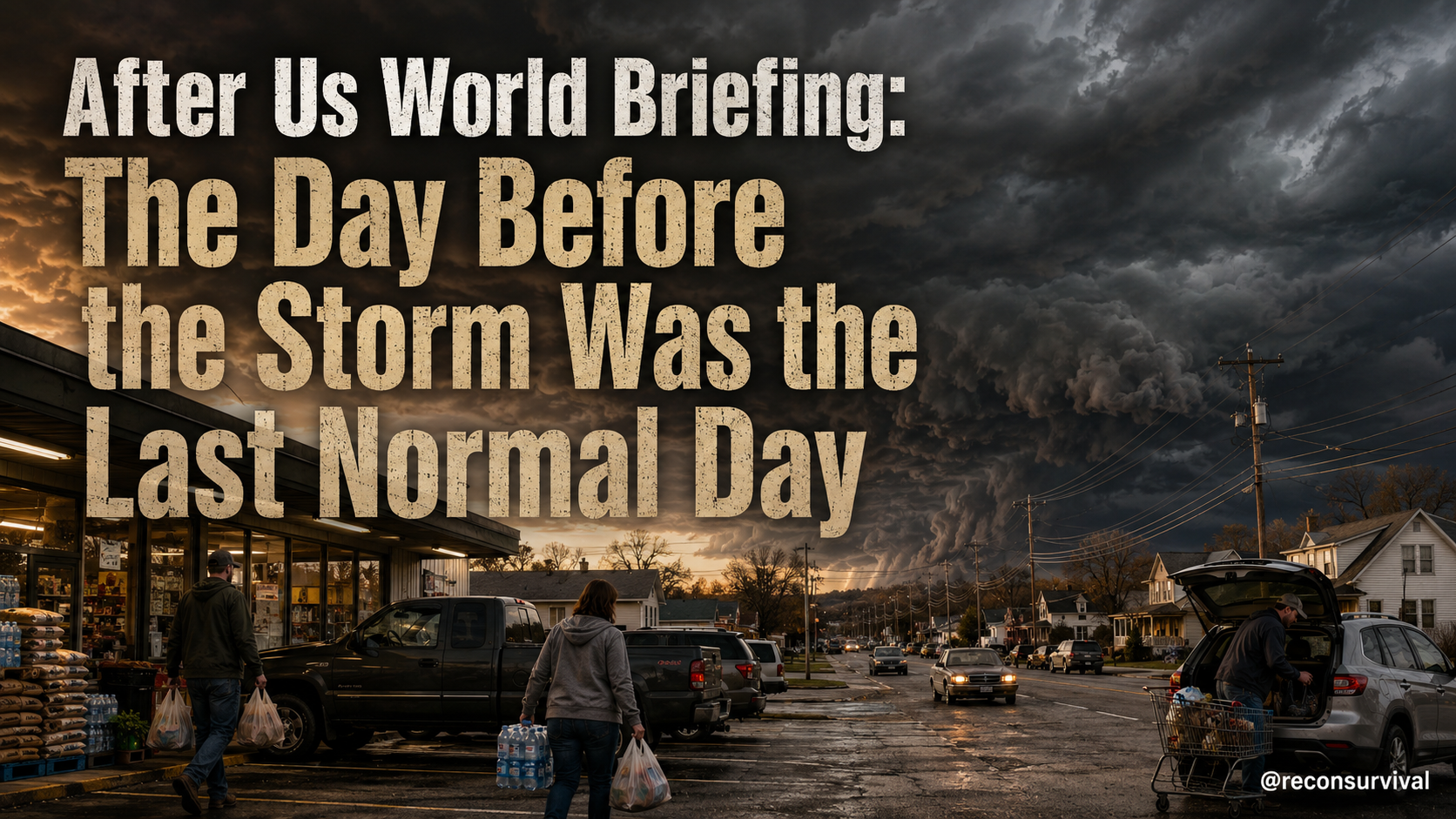
The key takeaway from this field note is that the "calm" is an asset. It is a window of opportunity that closes rapidly. The decision to wait is a decision to gamble on infrastructure that is not guaranteed to hold. The "Last Normal Day" is not a celebration; it is a deadline. The data shows that preparation done in the pre-season window reduces the total time required for recovery.
Real-World Lessons and the Practical Checklist
The lesson from the After Us world is clear: preparation is a logistical necessity, not a hobby. The "calm" period is the most efficient time to work.
The practical checklist derived from this system includes the following actions:
- Inventory Current Gear: Walk through your home. Identify gaps in your emergency kit. Are you missing a manual can opener? Do you have a first-aid kit that expires soon? 2. Rotate Supplies: Check expiration dates. Use the oldest items first. Replace with non-expired stock. 3. Review Documentation: Ensure insurance policies are up to date. Document the condition of the home with photos. 4. Establish Protocols: Practice your communication plan. Test your ability to meet at a location without a phone. 5. Maintain Equipment: Service generators and check batteries. These are mechanical systems that require maintenance to function when needed.
By following these steps, a household transforms its readiness from a passive hope into an active strategy. This strategy ensures that when the wind picks up and the rain falls, the household is not scrambling but standing firm.
The Final Word: Readiness is a Choice
The hurricane season is a reality that will not stop waiting for us to be ready. The storms will come whether we acknowledge them or not. The only variable we can control is our response. The decision to use the time between the "calm" and the storm to prepare is a choice that protects the family.
The Recon Survival approach to this topic is grounded in the belief that survival is a skill, not a miracle. It is built on the foundation of a well-stocked kit, a practiced plan, and the discipline to act before the pressure drops.
For those who are serious about their safety, this is the moment to act. The "storm" has not yet formed, but the threat is real. The logic is simple: prepare now, so that when the time comes, you are already there, ready to handle whatever the sky brings. The calm is precious; do not waste it. Use it to build a fortress of preparedness that will stand when the winds howl.
Recon Survival Principle
Recon Survival is not about waiting for stress to make the decision. It is about turning weak signals into household action while the fix is still small. A practical way to use an in-universe storm briefing to show why pre-season preparation beats last-minute reaction, but most advice is either too generic, too gear-focused, or too late.
Do Today
- Walk the main system named in the brief and write down the first weak point.
- Assign one person to own that fix before the day ends.
- Check the related supplies, tools, batteries, labels, or documents by hand.
- Put the next review date on a calendar instead of relying on memory.
- Move one critical item to the place where it will actually be used.
- Tell the household what changed and where the updated item now lives.
- Repeat the check after the next outage, storm warning, trip, or schedule change.