A practical way to use shade, airflow, wet towels, room selection, timing, and low-energy habits to reduce heat stress, but most advice is either too generic, too gear-focused, or too late.
As an Amazon Associate, I earn from qualifying purchases.
The Reality of Power Loss in a Heat Wave
If the air conditioning in your home suddenly went out tonight, what would fail first? It would not be your ability to cook, it would not be your capacity to sleep, and it would not be your safety from the elements. It would be your ability to make calm decisions. The real-world problem this article solves is the sudden return to manual temperature control. When the grid falters during a storm or an outage, the house does not automatically become a warm place; it becomes a trap if you do not intervene quickly. This guide explains how to use shade, airflow, wet towels, room selection, timing, and low-energy habits to reduce heat stress before it makes your decisions harder.
Why This Matters for Extreme Heat Readiness
The Most Common Mistake People Make
The most common mistake people make with this topic is waiting. People often wait for the weather forecast to turn bad, or they wait for the power to actually go out before taking action. This delay is dangerous because the transition from a cool evening to a hot morning is often the most critical part of the cycle. If you wait until the temperature inside the house reaches uncomfortable levels, you have already lost the advantage of time. Another mistake is focusing solely on cooling devices while ignoring the building envelope. People often buy portable fans that are ineffective because they are placed in direct sunlight. They often forget that windows are the primary source of heat gain. By the time you realize you need shade, the sun has already burned the house for hours. The mistake is reacting to the heat rather than preventing it from entering your living space.
The Recon Survival Practical System for Heat Reduction
The Recon Survival practical system for how to use shade, airflow, wet towels, room selection, timing, and low-energy habits to reduce heat stress is built on a foundation of passive management. This system does not rely on high-energy solutions. Instead, it leverages the environment to keep you cool. Shade blocks radiant heat before it enters the home. Airflow moves heat away from the body, not just by blowing air but by exhausting hot air. Wet towels utilize evaporative cooling to lower skin temperature. Room selection moves you out of direct sun and into cooler areas. Timing ensures you act before the sun rises high enough to overwhelm your defenses. Low-energy habits preserve your resources for when you need them most. Together, these elements form a cohesive strategy to reduce heat stress in a calm, realistic, value-first way.
Breaking the System Into Clear Steps
A normal household can use these steps to implement the system effectively. First, identify your heat sources. Look for windows facing the equator, typically south and west, which receive the most intense radiation. Second, deploy shade. Use awnings, shutters, or even temporary tarps to block direct sunlight. Third, manage airflow. Open windows on the side of the house opposite the prevailing wind to create a cross-breeze. Close interior doors to prevent hot air from moving into your living space. Fourth, utilize evaporative cooling. Place wet towels near fans or at your bed to create a local cooling effect. Fifth, select your rooms wisely. Keep your activities in the coolest parts of the house, usually those with no direct sunlight. Sixth, adjust your timing. Do the most strenuous activities in the early morning or late evening. Finally, adopt low-energy habits. Limit the use of appliances that generate waste heat, such as ovens and dryers. These steps are specific and actionable for anyone looking to improve their readiness.
A Safe Beginner Practice Drill
To practice this skill safely, begin with a simple drill at home. Pick a day when the weather is mild but sunny. Go outside for ten minutes before the sun is high. Return inside and measure the temperature difference between the inside and outside using a standard thermometer. Next, apply shade to one window and observe the change in light intensity and heat radiating from the glass. Then, set up a wet towel near a fan in a central room. Sit in that room for thirty minutes and note how you feel compared to sitting in a different room. Record your observations. This practice helps you understand the impact of shade, airflow, and evaporative cooling on your immediate environment. It reinforces the habit of checking your setup before conditions worsen.
How to Measure Whether the Skill Is Actually Improving
To measure whether the skill is actually improving, you must track your subjective and objective conditions. Subjective measures include how quickly you feel warm, how many hours you can sleep without overheating, and how difficult your movements feel in the heat. Objective measures involve tracking the temperature inside your home during peak hours. If your indoor temperature is consistently lower than outside, your system is working. If you are able to maintain normal body temperature without excessive sweating, your cooling methods are effective. If you notice that you are feeling less fatigued in the afternoons, this indicates that your low-energy habits are successful. You should also monitor your resource usage. If you are using less water or electricity to stay comfortable, your efficiency is increasing. Improvement is visible when you stop feeling the heat before it starts.
Recon Survival Principle: The Heat is in the Glass
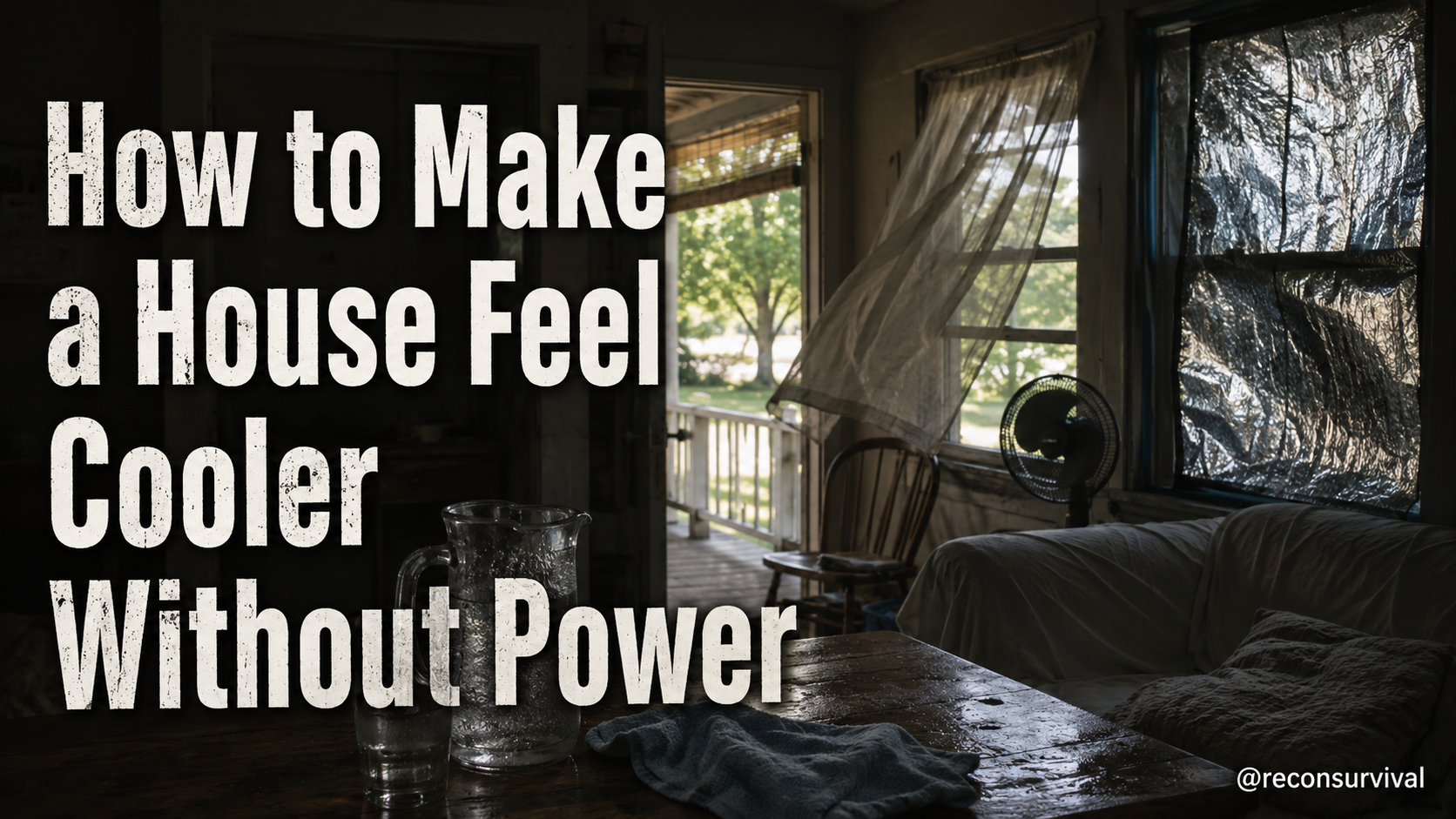
In a situation where power is lost, the walls of your house will insulate you, but the glass will not. Radiant heat passes through windows much faster than it escapes. The principle is that blocking radiant heat is the single most effective way to keep a space cool without power. Shade does not just block the sun; it blocks the infrared radiation that heats surfaces. When a surface absorbs heat, it re-radiates that heat into the room. By shading the glass, you prevent the heat from entering the building envelope in the first place. This is a fundamental rule of thermal management. You can apply this to any window facing a strong sun path. Even simple solutions like aluminum foil covered with a towel, or reflective plastic sheeting taped to the window frame, can significantly reduce heat gain. Do not rely on curtains alone, as they are often too warm to be effective. The principle is to stop the heat before it crosses the threshold.
Measuring Success Without Fancy Tools
You do not need specialized equipment to measure your success. Use the simple touch test to check for radiant heat. Stand near a window on a hot afternoon. If you can feel the heat radiating from the glass onto your arm, the window is acting as a radiator. Move that window or add shading immediately. Use a standard digital thermometer placed inside the room facing a window. Compare this reading to the same thermometer placed in a room with no direct sun. The difference tells you how much shade is working. If the difference is large, your shading is effective. If the difference is small, you need to adjust your strategy. You can also measure airflow by holding a piece of tissue paper near an open window. If the paper moves consistently, airflow is active. These simple checks allow you to verify your readiness without relying on technology that may fail during an outage.
Do Today
- Walk the main system named in the brief and write down the first weak point.
- Assign one person to own that fix before the day ends.
- Check the related supplies, tools, batteries, labels, or documents by hand.
- Put the next review date on a calendar instead of relying on memory.
- Move one critical item to the place where it will actually be used.
- Tell the household what changed and where the updated item now lives.
- Repeat the check after the next outage, storm warning, trip, or schedule change.
Do Today: Implement Your Cooling Checklist
To finish with a clear checklist or action plan for how to use shade, airflow, wet towels, room selection, timing, and low-energy habits to reduce heat stress, follow these seven concrete actions.
- Inspect all windows for direct sunlight. Identify which ones are most likely to overheat your room during the day.
- Apply shade to those windows. Install awnings, close blinds, or hang reflective material to block radiant heat.
- Create a cross-breeze plan. Determine which windows should be open and which should be closed to allow air to flow through the house.
- Prepare evaporative coolers. Soak towels in cool water and set them near fans or in your sleeping area to lower humidity and temperature.
- Select your coolest room. Choose a room with no direct sunlight for sleeping or resting during the hottest parts of the day.
- Schedule your activities. Plan strenuous tasks for early morning or late evening when the air is cooler.
- Limit high-heat appliances. Avoid using ovens, toasters, or lamps that generate significant waste heat until the sun goes down.
By following these steps, you ensure that your home is ready for extreme heat conditions. You can maintain comfort and safety even when the grid fails. This approach is practical, calm, and effective for any household.