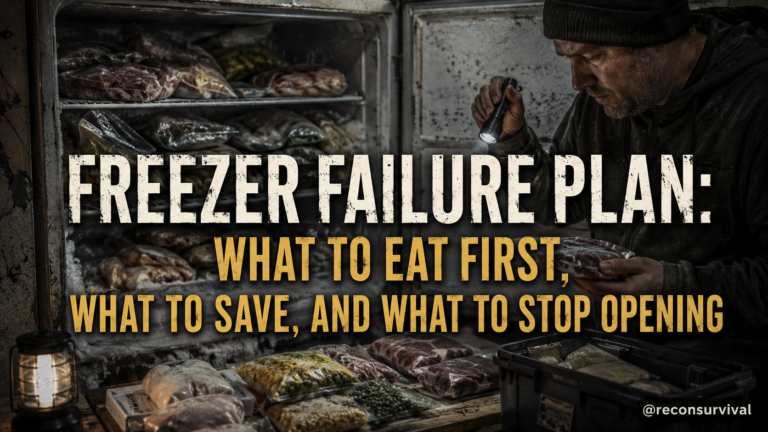
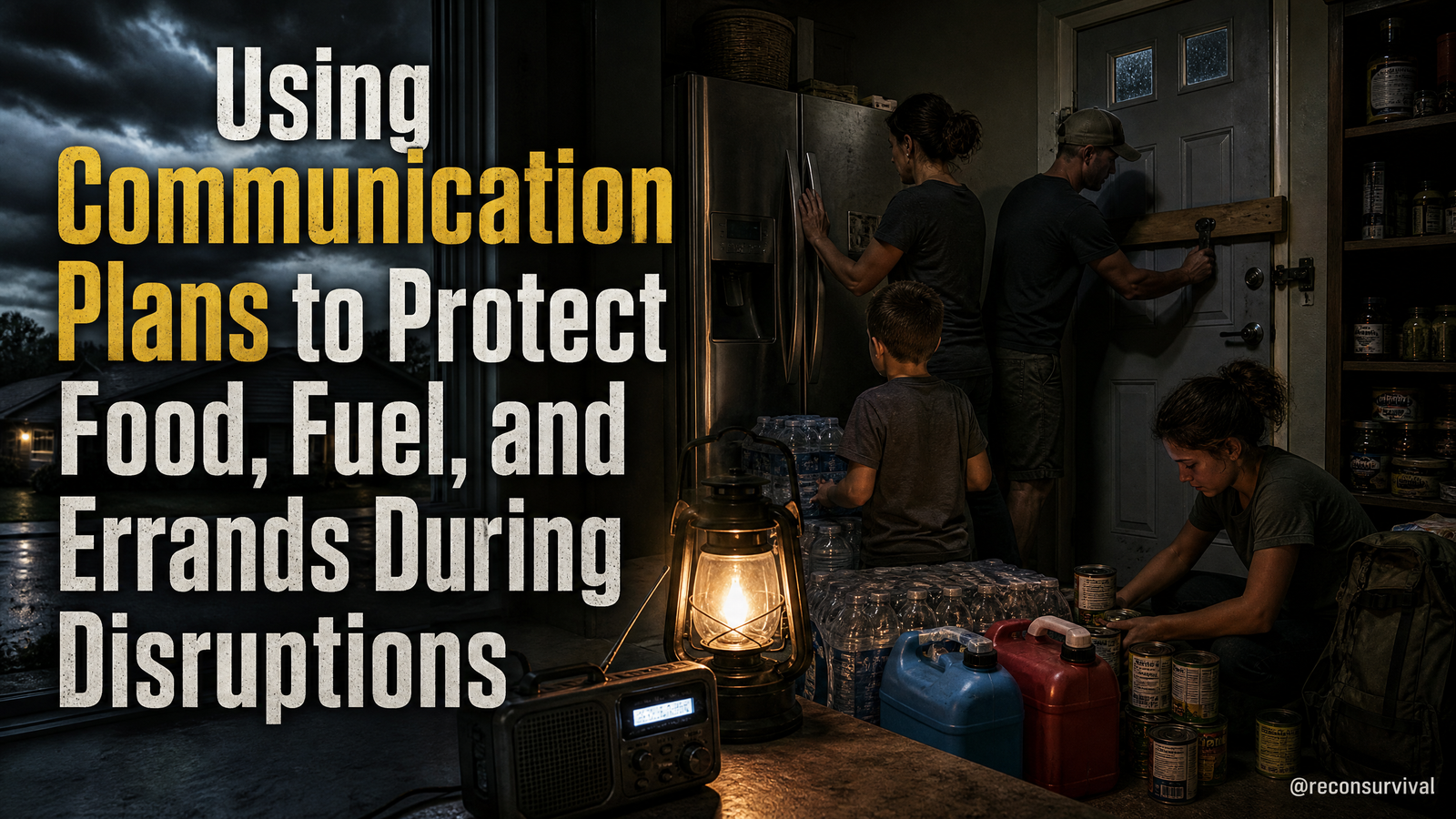
Your fridge is the first thing that lies to you. The light still turns on, the door still seals, but warm air is creeping in and your cold chain is slipping. Meat and milk turn risky long before the freezer looks soft. If storms hit and travel plans scatter your people, a simple communication plan is what keeps food cold, fuel in the cans, and errands from duplicating.
As an Amazon Associate, I earn from qualifying purchases.
Fridge, Freezer, and Cooler: What Fails First
Cold food safety is about time and temperature. When the power blinks out, you need a thermometer and a plan, not a panic run for ice. Keep one appliance thermometer on the top shelf of the fridge and another in the freezer door. Tape a small notepad and pen to the side of the fridge; that pad becomes your time log.
What to do in the kitchen the minute power drops:
- Close both doors. Put a sticky note on the fridge handle that says "Doors Closed" to stop casual opening.
- Read and write down the current fridge and freezer temperatures and the time. If you have a battery kitchen timer, clip it to the fridge handle and set it for your first recheck interval. – Stage your cooler on the floor by the sink. Check that the drain plug is tight, the lid gasket is clean, and the ice packs or bagged ice are in the freezer. Put a clean towel in the bottom to catch meltwater and keep packaging from sitting in it.
You are buying time for yourself. If the fridge temp rises toward unsafe levels, move high-risk items into the cooler with fresh ice packs and keep that lid closed. [FACT CHECK REQUIRED: verify safe refrigerator temperature threshold and time limits for perishable foods with USDA or local guidance.]
The Mistake: Driving First, Planning Later
Most households waste the first hour. Someone opens the fridge five times to "check," someone else drives out to hunt ice, another person stops for gas without telling anyone, and half the day is burned on duplicate errands.
The mistake is moving without a common picture. Your household needs a single running list and a single channel before a single car leaves the driveway. That is how you protect food and fuel. You do not fix disrupted days with more trips. You fix them by staging, timing, and handing off.
Communications That Protect Cold Food and Fuel
Emergency communications are not about fancy radios or apps. They are about making sure one person does not open the fridge while another is buying ice, and your only car is not gone when the pharmacy calls. You do that with two simple layers: a paper ops sheet in the kitchen and a single digital thread everyone already uses.
In the kitchen:
- Put a laminated "Kitchen Ops" sheet in a plastic sleeve on the fridge door with a dry-erase marker on a string. Columns: Time, Fridge Temp, Freezer Temp, Cooler Status, Meals, Water Use, Fuel, Errands, Assignments.
- Under "Errands," list needs as they appear, not as people think of them. Example entries: "Ice 10 lb," "Gas 5 gal can top-off," "Pharmacy pickup QTY 2," "Propane exchange," "Neighbor check 2 blocks south."
On phones:
- Create one family group thread labeled "House Ops." Pin it. Agree that all requests and departures go there first.
- Use quick tags to reduce confusion. Examples to type at the start of messages: NEED:, OUTBOUND:, INBOUND:, TEMP:, ICE:, FUEL:, MEALS:. "OUTBOUND: Sam leaving in 10 minutes; route includes Gas-N-Go and pharmacy."
- If home internet is out, send SMS and keep messages short. If SMS is also unreliable, tape a paper note by the front door titled "Out and Back" with departure times, destination, and a return-by time.
Good communication buys you fewer trips and tighter timing. It keeps a cooler closed at home while one person fetches ice once instead of three people doing it three times.
The Counterplan: One Sheet, One Thread, One Runner
You need a lightweight system you can use on a hot kitchen counter with a flashlight between your teeth. This one takes under five minutes to start and scales to a day of disruption.
- One Sheet. The Kitchen Ops sheet is the anchor. Date it. Write down the first fridge and freezer temps, what time you will recheck, and what meals you can make without opening cold storage. Add water use estimates and fuel levels. Put it where anyone can add to it.
- One Thread. Use the group text so there is a single source of truth. Post a photo of the Kitchen Ops sheet to the thread after every major update. That way the person stuck in traffic knows what the fridge temp is and what errands are already covered.
- One Runner. Name one primary runner in the thread. Only the runner leaves for supply runs until the plan changes. If the runner is away from home, name a backup. Everyone else stays on kitchen timing and messaging.
Add one more rule: no one leaves without a shopping list photo and a route. "Fuel loop" or "Ice loop" posted to the thread with stops in order keeps fuel use efficient.
First Hour, Same Day, Next Day: Kitchen and Fuel Triage
You are working a simple ladder. First, protect what spoils. Second, protect your ability to move. Third, tighten everything else.
First Hour
- Count and write: number of people, pets, and days you need to cover. Write "PAX: 3 + 1 small dog" on the sheet.
- Take temps and log them. Clip a small flashlight to the fridge handle if the kitchen is dark. – Stage the cooler on the floor, set it up with two frozen gel packs and two frozen water bottles. Put a Sharpie next to it and write the time you closed the lid on the lid. – Touch fuel. Open the garage cabinet and check fuel cans. Write the numbers. Example: "gas cans: 2 x 5 gal, 1 x 2 gal. One can at 50%." Check the car's dash for tank level; write it down. – Begin the thread. "NEED: 20 lb ice. NEED: top-off car + fill 1 can. MEALS: beans + rice + canned chicken tonight."
Same Day
- Recheck temps on your timer interval and decide if you need to transfer high-risk foods to the cooler. [FACT CHECK REQUIRED: confirm which foods are considered high-risk and safe handling time guidance.]
- Build an errands loop: ice, gas, pharmacy, one grocery top-up if power is still out widely. The runner leaves with: hard-sided cooler in trunk, two towels, bungee to secure lid, 12V car charger, paper list with quantities, and cash. Post departure and ETA.
- At home, convert perishables into stable meals. Example: boil pasta on a camp stove on the patio, toss with canned tuna and olive oil, portion into containers, and put into the cooler. Never use a grill or camp stove inside. – Manage water. Aim for at least 1 gallon per person per day and write the math on the sheet. Fill pitchers and clean bottles while tap water pressure is normal. If you have a bathtub liner, assign someone to fill it and write time filled. Label it "non-potable" if you plan to use it for washing or flushing only. – Rotate ice smartly. Do not keep opening the cooler. Swap packs on a set schedule, and log each swap.
Next Day
- If power is still out, move the freezer triage forward. Do a quick inventory with the door open once. Prioritize meats for cooking all at once on an outdoor grill or camp stove, then cool and move to the cooler.
- Top off fuel in the morning when lines are shortest. If your runner can add propane exchange, do it in the same loop. Weigh small propane cylinders on a kitchen scale and write the weights with tape on the valve guard to track what is full. – Consolidate errands into one loop per half day. Use the thread to shut down extra trips. "All, ICE: covered until 1800. FUEL: next top-off at 0900 tomorrow."
Turn Pantry Lines Into Meals and Water Use
A pantry is just potential. Meals are what carry your household through a long day when the fridge is closed and the stove is questionable. Build a short meal plan from what you can cook with a single burner or eat without cooking.
Single-burner meal examples:
- One-pot rice (1 cup dry per two people) with canned black beans, cumin, and shelf-stable salsa. Portion with a measuring cup and pack into the cooler once cooled.
- Instant mashed potatoes with canned chicken and gravy from a jar. Add frozen peas from the freezer early to use them before they thaw fully. – Pasta with olive oil, garlic powder, and canned mushrooms. Grate from a hard cheese block if you have one; harder cheeses often last longer unrefrigerated than soft dairy. [FACT CHECK REQUIRED: verify safe storage guidance for cheeses.]
No-cook meal examples:
- Crackers, peanut butter, canned fruit cups.
- Pouches of tuna with mayo packets and tortillas. – Shelf-stable milk or plant milk with granola.
Water pairing:
- Write "1 gallon per person per day" at the top of the Kitchen Ops sheet. For a family of four, that is 4 gallons per day minimum. Assign one person to fill and cap containers. Use a Sharpie on each jug cap with the fill date.
- Pair meals with water use. One-pot meals use less water for washing. Keep a dishpan in the sink to capture rinse water for later non-potable uses. Use paper plates if trash pickup continues; if it stops, switch to durable plates and wipe instead of full washes.
Storage conditions matter:
- Move shelf-stable items you will use today to the counter so you stop fishing in the pantry with a flashlight. Keep a manual can opener in the top-right drawer so no one wastes time looking.
- Keep coolers out of direct sun, lids bungeed closed. Put a digital thermometer probe through the lid gasket if you have one to avoid opening. Log temps on the sheet. [FACT CHECK REQUIRED: verify recommended cooler internal temperature for food safety.]
Pantry and Water Waste-Reduction Checklist
The fastest way to save money and food in a disruption is to stop guessing. Use this checklist to cut waste.
- Date and label:
- Write the open date on every jar and bottle with a Sharpie.
- Put painter's tape labels on casseroles or cooked meat containers with the cook date and contents before they go into the cooler.
- Rotate:
- Move oldest canned goods to the front of the pantry shelf. Stack by month; write the month on the top can of each stack.
- Rotate frozen gel packs. Keep a second set freezing if power returns intermittently.
- Count:
- Count ready-to-eat meals. Aim for at least 3 days of no-cook options per person. For four people, that is 12 no-cook meals total.
- Count drinking water. For four people, stock and stage at least 12 gallons within reach, plus pet water.
- Stage:
- Put one flashlight and one battery bank on the kitchen counter. Plug the bank into a wall if power is up, then move it to the group runner's bag.
- Put trash bags and a permanent marker under the sink for waste segregation if municipal pickup pauses.
- Tools:
- Keep the manual can opener, a lighter, a long matchstick tube, and a small bottle of dish soap in the same drawer. Tape a list to the inside of the drawer so nothing walks.
- Temperature:
- Place one appliance thermometer on the top shelf of the fridge and one in the freezer. Write readings on your Kitchen Ops sheet every few hours. [FACT CHECK REQUIRED: confirm recommended reading intervals if using USDA guidance.]
Errand Consolidation: Fuel, Ice, and Pharmacy in One Loop
Errands are where fuel gets burned. Build a standard loop and stick to it unless new information arrives on the thread.
- Before departure, the runner posts a route. Example: "Loop: Gas-N-Go (top-off car + fill 1 can), Market Square (10 lb ice + bread + shelf-stable milk), Pharmacy (Rx #123 pick-up), Home." Attach a photo of the written list from the Kitchen Ops sheet.
- Gear the trunk: a hard cooler, two towels, a bungee cord, cash, a small folding crate, and a printed list. Keep a cheap windscreen sunshade in the trunk to shade ice in the backseat if the trunk is hot.
- Timing: leave on the hour or the half-hour only, unless it is a safety issue. Midday ice runs often see the longest lines; early morning or late afternoon is better.
- Mix-in: If a neighbor on your block needs the same items and offers cash, add theirs to reduce two trips into one. Post it to the thread so everyone knows what is on the car.
- Return discipline: the runner texts INBOUND with ETA and asks for a porch handoff. One person meets the car with a dolly or tote to move ice and fuel quickly, keeping cooler lids closed and fuel cans upright in the garage.
Recon Survival Principle
Movement without a shared picture wastes the two things that disappear fastest in a disruption: cold and fuel. Lock your kitchen to a simple paper log, lock your people to one message thread, and lock your errands to one runner and one loop. Make communications the gate for movement. That single habit protects food, reduces fuel burn, and stops duplicate trips when nerves and heat pull you in different directions.
Do Today
- Print a one-page Kitchen Ops sheet with columns for Time, Fridge Temp, Freezer Temp, Cooler Status, Meals, Water Use, Fuel, Errands, Assignments. Slip it into a plastic sleeve and tape it to the fridge with a dry-erase marker.
- Place two appliance thermometers: one on the top fridge shelf, one in the freezer door. If you do not have them, add them to your next store run.
- Start a family group text named "House Ops." Pin it. Post "Thread created for outages and errand coordination."
- Assign roles on a sticky note by the fridge: "Runner: __; Backup: ; Kitchen lead: ; Water lead: __."
- Stage your cooler: clean it, check the drain plug, put two gel packs in the freezer, and write "cooler ready" with today's date on painter's tape on the lid.
- Make a 3-day no-cook meal bin in the pantry. Count and place at least 12 ready-to-eat meal components for a family of four. Put a manual can opener in the same bin.
- Count water and write it down. Stage at least 1 gallon per person per day for 3 days within reach. Label caps with today's date.
- Build a standard fuel loop list on paper and put it in the glove box: "Gas top-off, 1 can fill, 10 lb ice, pharmacy." Add cash to a small envelope next to it.
- Put a porch "Out and Back" clipboard by the front door with a pen. First line reads "Departure, route, return-by." Use it any time someone leaves during a disruption.
- Practice a 30-minute drill tonight: post an OUTBOUND plan in the thread, stage the cooler, log fridge/freezer temps, and run one consolidated errand loop. Debrief at the kitchen table and adjust your Kitchen Ops sheet.