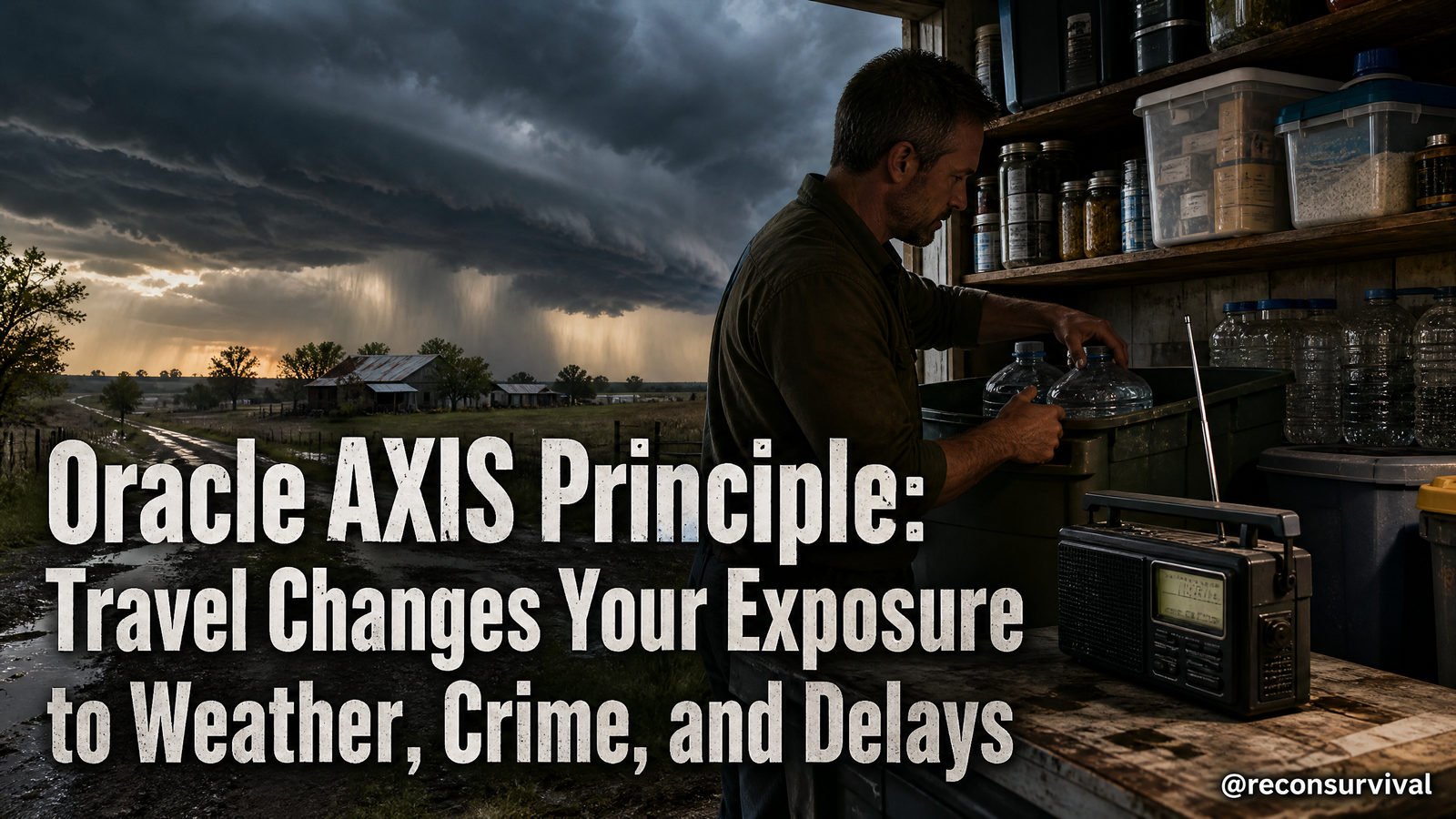
The moment a vehicle leaves the driveway or a suitcase closes, the household's risk profile shifts. You are no longer managing a static home environment; you are entering a moving variable where weather patterns, local crime rates, and infrastructure delays change by the hour. This shift creates a predictable gap: families often plan the destination and the timeline but neglect the dynamic data required to navigate the journey and the home left behind. The problem isn't a lack of preparation; it's a failure to track the specific moving parts that dictate safety while in transit.
As an Amazon Associate, I earn from qualifying purchases.
Route Risk and Local Alert Monitoring
Most travelers assume a route is static once they load the car. In reality, road conditions, weather fronts, and civil disturbances evolve rapidly. Relying solely on a generic navigation app provides a map, not a risk assessment. You need a system to identify what makes a specific road or neighborhood dangerous before you commit to it.
Start by checking local emergency management websites and the National Weather Service for your destination and the corridor you will cross. Look beyond the "clear skies" summary. Identify flash flood warnings, severe thunderstorm watches, or wildfire smoke alerts that could trigger road closures.
Create a dedicated folder on your phone and a printed copy in your glove box. This folder should contain links to the Department of Transportation traffic pages for every state you cross, local police non-emergency lines, and county sheriff updates. Do not wait for a traffic jam to form. If a road has a history of flooding or landslides during summer storms, know the alternate route and fuel up before you leave the valley.
For home security, the risk changes when you are gone. Neighbors may not be as observant, and the rhythm of activity stops. Use a simple visual indicator. If you have a porch light, a timer is useful, but a more robust measure is a neighborhood watch app or a local community group page. Subscribe to alerts for your address code. If a burglary wave hits your zip code, you can adjust your habits or ask a trusted neighbor to increase their patrols.
Weather and Fuel Management Decisions
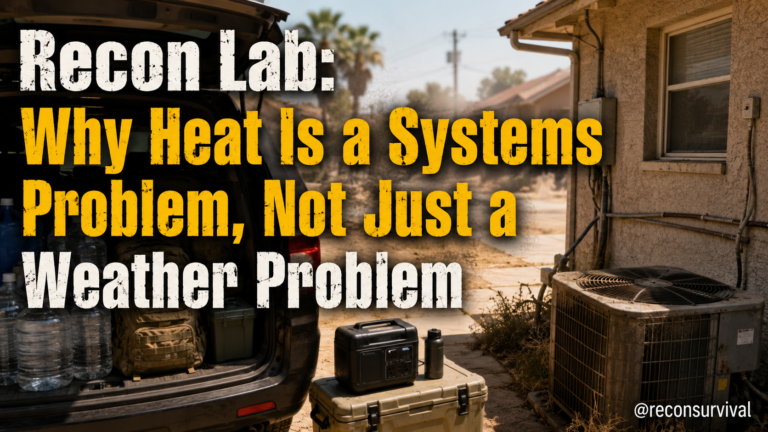
Heat and fuel are the twin enemies of long-distance travel. A vehicle running low on fuel is a significant vulnerability, especially in rural stretches where stations may be sparse or closed for maintenance. Similarly, extreme heat can cause tire blowouts and engine overheating, turning a minor delay into a dangerous situation.
You need to calculate fuel needs with a safety buffer, not just the distance between gas stations. In late summer, the sun is at an angle that can bake engines faster. Check your vehicle's manual for heat tolerance ratings. If you are driving through a desert or a region prone to heatwaves, plan to stop every two hours to check coolant levels and tire pressure. Do not rely on the dashboard warning light; it often comes on too late.
Create a fuel tracking routine. Before every major leg of your trip, note the current mileage and the distance to the next full-service station. If that distance exceeds 60% of your tank's range, you must refuel immediately, regardless of how much fuel the gauge suggests. Keep a printed map of gas stations along your route in the glove box. Digital screens can fail; paper maps do not.
For weather, monitor the forecast for your overnight stops as critically as your departure. If a thunderstorm is predicted for your arrival city, have a backup lodging option that is not in a flood zone or near loose debris. A 30-minute drive to a safer town is a smart investment when the sky darkens.
Communication and Handoff Protocols
When you travel, your communication channels expand but also fragment. Cell towers may be overloaded or out of service, and you may lose contact with family, work, or emergency services. A single point of failure in your communication plan can isolate your household during a crisis.
Establish a clear handoff protocol before you leave. Assign a specific role to a trusted person back home – a "Household Liaison." This person is responsible for monitoring your home security and acting as the point of contact if you are delayed or unreachable. Give them your full itinerary, including times you plan to stop and the expected arrival time.
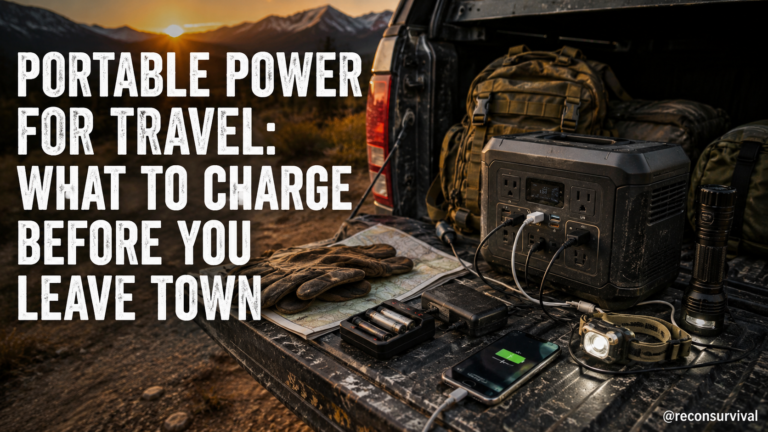
Test your communication tools the night before departure. Ensure your satellite messenger or emergency radio is fully charged and you know the battery life. If you rely on cell phones, have a low-power mode strategy. Turn off non-essential apps and save the battery for emergency calls. Keep a written list of emergency numbers on a card in your wallet and another in the vehicle.
During the trip, check in at designated intervals. If you miss a check-in window, the Household Liaison knows to take the next step, such as contacting local authorities if a specific time has passed. This turns a vague worry into a defined action sequence.
The Failure Triage Ladder
Not every delay is a crisis, but every delay has the potential to become one. The most common mistake is reacting to every anomaly with the same level of intensity, which wastes time and energy. Instead, use a triage ladder to rank your risks by what breaks first, what becomes unsafe next, and what can wait.
First-Hour Checks: These are the immediate deal-breakers. * Vehicle won't start: Check battery and fuses. If not resolved, call roadside assistance immediately. * Sudden weather change: Pull over to a safe, high ground if flooding is possible. Do not drive into water. * Communication loss: If you cannot reach your Household Liaison, follow the pre-agreed protocol to contact local authorities.
Same-Day Adjustments: These are significant disruptions that require a change of plan. * Road closure due to accident or weather: Execute the alternate route plan. * Vehicle overheating: Stop and let the engine cool. Do not open the radiator cap while hot. * Health emergency: Locate the nearest urgent care or hospital using your printed map.
Next-Day Priorities: These are logistical issues that can be resolved without immediate danger. * Minor mechanical issues: Check fluid levels and tire pressure. * Delays in arrival: Update the Household Liaison. * Minor food shortages: Resupply at the next available safe location.
This ladder ensures you address the most critical failures first, keeping your household safe and your decision-making calm.
Translating Signals into Household Decisions
Big-picture signals like a national weather advisory or a regional security alert often feel abstract until they touch your specific situation. The key is to translate these signals into household-level decisions that are easy to execute under stress.
If a severe storm is forecast for your destination, the signal is not just "stay inside." The decision is "rebook the trip" or "switch to an inland hotel away from water." If a civil disturbance is reported in a specific city, the decision is "bypass that city entirely" or "limit time in that area to daylight hours."
Keep a "Decision Trigger" card in the car. List the specific conditions that force a change. For example: "If wind speed exceeds 50 mph, turn back." "If fuel gauge drops below 1/4 tank in rural areas, refuel now." "If local news reports active shooter or civil unrest, do not enter town limits."
This moves you from a reactive stance, where you scramble to find answers, to a proactive stance where the answers are pre-defined. You are no longer guessing; you are executing a plan that has already been stress-tested.
Recon Survival Principle
The core of any successful travel plan is not the destination, but the ability to assess and adapt to changing conditions without panic. The Recon Survival Principle is simple: Verify before you move. This applies to your vehicle, your route, and your home security. Every action you take should be preceded by a quick check of the current reality against your plan. If the reality matches, proceed. If it diverges, pause and reassess. This habit turns potential crises into manageable detours.
Do Today
The best time to prepare is before the wheels start turning. You can immediately reduce your household's risk profile with these three concrete steps.
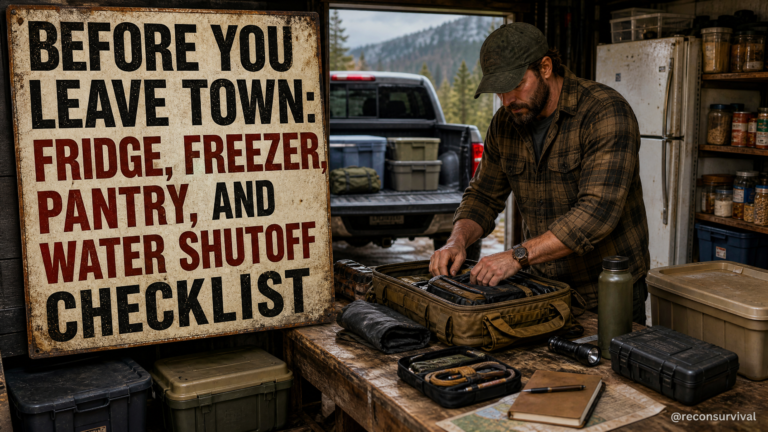
- Label your contact cards. Write your name, your Household Liaison's name, and emergency numbers on a card. Place one in your wallet and another in your glove box.
- Test your backup power. Charge your satellite messenger, emergency radio, and power banks fully. Verify that your vehicle's spare tire and tools are present and accessible.
- Date your route map. Print a map of your route with fuel stations and emergency services marked. Write today's date on it. If you need it next week, you will know it might be outdated.
By taking these steps now, you ensure that when the day comes to leave, you are not starting from scratch. You are moving forward with a plan that has been tested, labeled, and ready for the road.
- Check carbon monoxide alarms before any generator, grill, or fuel-burning backup plan.
- Write the generator placement rule on paper and keep it with the cords.
- Stage extension cords, chargers, and lights where they will be used first.
- Assign one person to run the light check after sunset.