Late summer heat waves often mask the true cost of power loss: a house that feels uncomfortable for a few hours becomes a security risk when the grid fails for days. The transition from a comfortable living space to a compromised environment rarely happens because of an intruder's skill; it happens because routine breaks down under fatigue and the heat. When the air conditioning stops, the house itself becomes an adversary, driving stress levels up and decision-making down. This is where the practical work begins, not with buying gear, but with establishing a calm security routine that functions without the grid.
As an Amazon Associate, I earn from qualifying purchases.
The Hidden Load of an Extended Blackout
Security during a power outage is often misinterpreted as a tactical challenge involving weapons or fortification. In reality, the greatest threat is the human factor. As temperatures rise inside a sealed home, dehydration and heat stress degrade cognitive function within hours. A family that can coordinate a complex response on day one may be arguing over basic water distribution by day two. The load on the household shifts from physical security to physiological management.
When the air turns stagnant, the need for water increases even as the ability to move through the house decreases. This creates a failure point where the most vulnerable household members become the most exposed. The heat drives everyone to the lowest levels of the home, crowding spaces designed for ventilation, not occupancy. This density creates friction. A simple argument over a water bottle can escalate into a physical altercation when everyone is dehydrated and irritable. The security perimeter shrinks as people retreat to shared spaces, making the interior of the home the primary battlefield.
The Routine Collapse Mistake
The most common error households make is waiting for the crisis to fully manifest before establishing new routines. Many families rely on a pre-written emergency plan that assumes normal behavior and normal hours. This plan fails immediately when the power goes out because the context has changed. The mistake is treating the outage as a temporary inconvenience rather than a sustained shift in household dynamics.
Families often skip the critical step of assigning roles for the "comfort to security" transition. They assume everyone will know what to do when the temperature rises and the power blinks. Without explicit instructions, the first hour of an extended outage is wasted in confusion. People scramble to find flashlights, check for food, or try to reboot the thermostat, leaving doors unlocked and windows open. The lack of a rehearsed, low-stress protocol means the family is reactive rather than proactive. The initial confusion sets a tone of panic that is difficult to reverse once the heat and darkness set in.
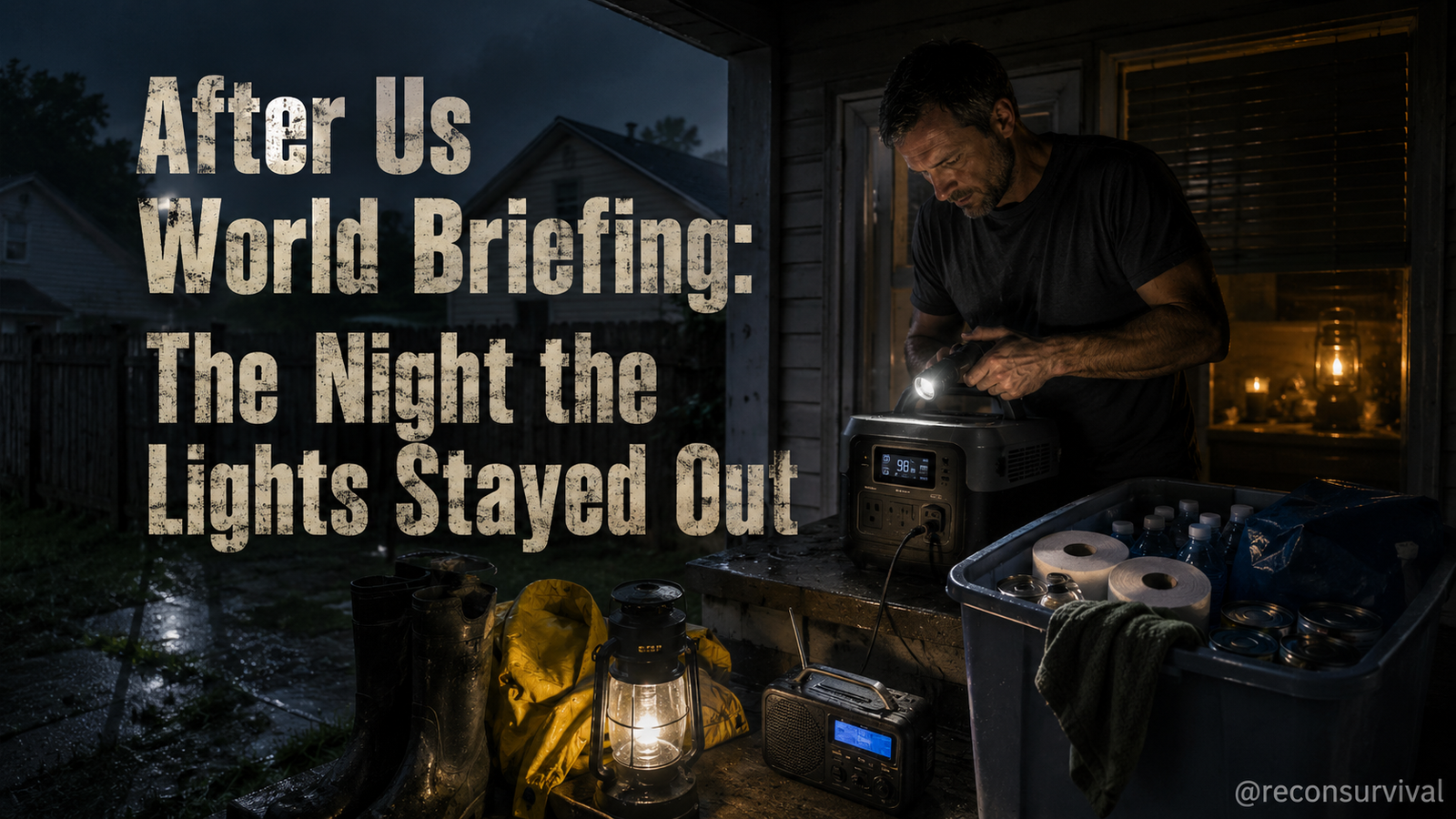
After Us: The Night the Lights Stayed Out
To understand the mechanics of this transition, we look to the recovered field notes from a similar scenario. In the aftermath of the grid failures, a community near Archer's Field documented their experience during a prolonged blackout in late August. The notes from the local watch group, recovered from a burned-out community center, offer a stark look at how quickly routine collapses.
Archer's Field Field Note – Day 3 of Outage
Date: Unknown. Location: Sector 4. Status: Critical Heat.
The power was supposed to be back by noon on the first day. By the second evening, the silence of the streetlights was more unnerving than the noise. The heat inside the block houses rose ten degrees above the outdoor temperature. We assumed the windows would suffice, but the glass trapped the warmth. >
On day three, the argument started over the last gallon of water. It wasn't about the water; it was about the heat. Three neighbors, usually cooperative, were shouting over the sound of their own breathing. The lock on the side gate was rusted because no one had oiled it in weeks; we had left it open for "fresh air" until the darkness felt unsafe. >
The breakthrough came only when the older residents forced the younger ones to sit down. They stopped talking about fixing the generator and started talking about who slept where. They moved the water jugs to the center of the living room, not the kitchen. They assigned a specific person to check the perimeter every four hours, not every twelve. >
By day five, the shouting had stopped. The house was dark, hot, and quiet. Security was no longer a matter of who watched the door, but who managed the heat. The routine had shifted from "wait for power" to "survive the night."
The notes highlight a crucial realization: the house itself became the enemy. The security perimeter was compromised not by an outsider, but by the internal environment. The family that survived was the one that stopped fighting the conditions and started managing the flow of people and resources. The shift from "waiting for the grid" to "operating without it" is the only path to safety.
The Recon Survival System for Outage Routines
The practical application of these lessons is a system designed to maintain calm and security without relying on technology. This system, the Recon Survival Outage Protocol, focuses on three specific shifts: physical environment, role assignment, and resource flow. It replaces the vague "be ready" mindset with concrete actions that must happen before the power fails.
The system operates on the principle that comfort dictates security. If a household member is uncomfortable, they are a liability. The goal is to keep the household functional long enough for the grid to return or for help to arrive. This requires moving beyond checking a box and into active management of the home environment.
Step 1: The Heat-Load Audit
Before an outage occurs, identify the rooms that become heat traps. In most homes, this is the bedroom on the top floor or the interior hallway. Perform a walk-through and mark these zones. The goal is to know exactly where the heat will concentrate.
- Action: On a sunny day, use a thermometer to record the temperature in every room at 2:00 PM. Note which rooms exceed the others by five degrees.
- Preparation: Clear the path from the kitchen to the coolest room. Move water jugs and sleeping bags to this designated cool zone now. Ensure the path is free of toys, shoes, or clutter that could trip someone in the dark.
- Trigger: If the outdoor temperature forecast exceeds 85°F, move the family's "night kit" to the cool zone. This kit includes water, a first-aid kit, and a flashlight.
Step 2: Role Rotation and Handoff
In a prolonged outage, decision fatigue is real. Assigning a rotating schedule for security and hydration checks prevents burnout. This is not about being a soldier; it is about sharing the burden of vigilance.
- Action: Create a physical schedule on a piece of paper and post it near the main water source.
- Assignment: Assign specific time slots for "Perimeter Check" and "Hydration Station."
- Perimeter Check: Every 4 hours. Check locks, lights (if safe), and neighbors.
- Hydration Station: Every 2 hours. Distribute water and monitor for signs of heat stress.
- Handoff: The person ending their shift must report status to the person starting. "All lights checked," "Water levels at 50%," "No issues." This verbal confirmation keeps the chain active.
Step 3: The Door and Window Protocol
Windows and doors are the primary failure points for both security and heat. The protocol is simple: minimize the number of open entry points while maximizing airflow in the cool zone.
- Action: Decide which doors and windows will remain closed permanently during the day and which can be cracked for air.
- Protocol: Keep the cool zone sealed during the hottest part of the day. Only open windows during the cooler night hours. Lock all secondary doors.
- Check: Every time you enter or leave the house, verify the door is locked and the cool zone windows are closed to prevent hot air from entering.
Step 4: The Water and Rest Cycle
Hydration is the single most critical factor in maintaining cognitive function. The system requires a disciplined approach to water consumption and rest.
- Action: Store at least one gallon per person per day for a minimum of three days.
- Distribution: Use a measured cup system. Do not allow anyone to drink more than their share.
- Rest: Rotate sleepers. One person must remain awake at all times to monitor the environment. Others rest in shifts.
- Trigger: If the temperature in the cool zone exceeds 90°F, initiate the night-shift protocol. Close all windows and move to the lowest level of the house.
The Heat to Load to Water Demand to Decision Trigger
The operational logic of this system is a simple chain of events that dictates every action. The process begins with the external condition and moves through the internal response to a specific decision. 1. Heat: The outdoor temperature rises, causing the internal temperature to climb. 2. Load: The internal heat increases the physiological load on the body, raising heart rate and fatigue. 3. Water Demand: As the body works harder to cool itself, the demand for water increases proportionally. 4. Decision Trigger: When the internal temperature hits the set point (e.g., 85°F) or when a family member shows signs of heat stress, the protocol triggers the next phase of the plan. This could mean opening the night windows, initiating a rest shift, or distributing additional water.
This chain ensures that actions are not arbitrary but are driven by observable conditions. It removes the need for guesswork. When the heat rises, the water demand rises, and the decision is made automatically based on the trigger. This clarity is what prevents panic.
Recon Survival Principle
Recon Survival is not about waiting for stress to make the decision. It is about turning weak signals into household action while the fix is still small. Use an in-universe outage briefing to teach calm security routines and human factors.
Do Today
The transition from a prepared home to a functioning safe haven happens in the quiet moments before a crisis. Start by identifying the coolest room in your house. Place a water jug and a flashlight there. Write down the schedule for the next 24 hours: who checks the perimeter, who monitors the water, and who sleeps. Post this schedule where everyone can see it. This is not about fear; it is about readiness. By knowing exactly what to do when the power goes out, you remove the uncertainty that leads to poor decisions.
The goal is to create a household that can withstand the stress of a long outage without collapsing. The Recon Survival Outage Protocol is not a set of rules to follow blindly; it is a framework for maintaining human function in the face of environmental stress. By understanding the chain of heat, load, and water demand, you can make the right decisions when it matters most. The difference between a disaster and a manageable situation is often just a well-rehearsed routine. Start building that routine today.
- Put a working flashlight or headlamp where each person sleeps.
- Charge one backup battery per critical phone and pair it with the right cable.
- Test the weather radio, spare batteries, and the room where everyone will gather.
- Check carbon monoxide alarms before any generator, grill, or fuel-burning backup plan.
- Write the generator placement rule on paper and keep it with the cords.
- Stage extension cords, chargers, and lights where they will be used first.
- Assign one person to run the light check after sunset.